
Ultimate Lake Mutanda Safari: Canoeing, Volcano Views and Gorilla Trekking
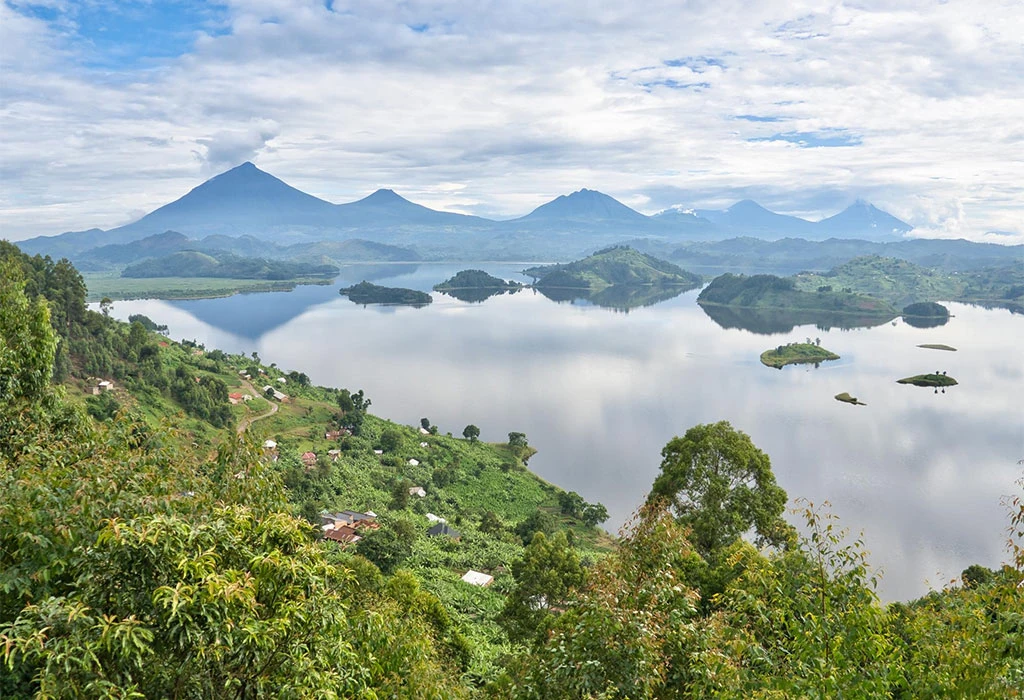
Lake Mutanda sits quietly in the far southwestern corner of Uganda, framed by towering Virunga volcanoes and wrapped in a stillness that few destinations in East Africa can match. Travelers who reach this freshwater lake often describe it as the most photogenic body of water on the continent. This guide covers every activity, viewpoint, lodge and travel tip needed to plan an unforgettable Lake Mutanda safari from start to finish.
Unlike the more crowded lakes of East Africa, Mutanda remains a genuine hidden gem, visited mostly by travelers who are already heading toward Bwindi Impenetrable Forest for gorilla trekking or crossing between Uganda and Rwanda. Its calm waters, scattered islands and dramatic mountain backdrop make it a natural, restful stopover that quickly turns into one of the single most memorable parts of any Uganda itinerary.
Lake Mutanda at a Glance
Before diving into the full guide, here is a quick snapshot of what makes this destination special. Iconic Africa Safaris regularly crafts these experiences into tailor made itineraries such as the 4 Day Mgahinga Gorillas and Lake Mutanda Safari.
- Location: Kisoro District, southwestern Uganda, at 1,800 meters above sea level
- Signature view: Three Virunga volcanoes, Muhabura, Sabyinyo and Gahinga, reflected in calm water
- Top activities: Dugout canoeing, volcano hiking, gorilla trekking, golden monkey tracking and Batwa cultural walks
- Best base for: Rushaga and Nkuringo gorilla trekking sectors of Bwindi Impenetrable Forest
- Ideal stay length: Two to three nights, extendable with Mgahinga and Rwanda add ons
- Safety note: No hippos or crocodiles, making the lake genuinely safe for canoeing and swimming
Where Is Lake Mutanda Located
Lake Mutanda lies in Kisoro District, in the extreme southwestern tip of Uganda, close to the borders of Rwanda and the Democratic Republic of Congo. Sitting at an altitude of about 1,800 meters (5,900 feet) above sea level, the lake enjoys refreshingly cool mountain air year round. It is roughly five hours by road from Kigali, nine hours from Kampala and about ten hours from Entebbe International Airport.
Because of its central position, Lake Mutanda functions as a natural meeting point between Uganda’s gorilla trekking sectors of Rushaga and Nkuringo and Rwanda’s Volcanoes National Park. Many travelers fly into Kigali, trek gorillas in Rwanda, then cross the border overland to Kisoro to continue their safari in Uganda, stopping at Lake Mutanda along the scenic way to rest and fully unwind after the mountains.
Why Lake Mutanda Is Called Uganda’s Most Scenic Lake
The single biggest draw of Lake Mutanda is its uninterrupted view of three Virunga volcanoes at once, Muhabura, Sabyinyo and Gahinga. Few places in Africa allow you to see three volcanic peaks reflected in calm water from one vantage point. Locals say every spot around the shoreline offers its own unique angle, so a full day spent simply gazing at the lake counts as a legitimate activity on its own.
The lake is dotted with twenty nine small islands, many still inhabited by fishing families, and its shoreline is lined with terraced hills, banana groves and eucalyptus trees. The light changes constantly throughout the day, turning the water gold at sunrise and deep blue by afternoon, which explains why photographers and filmmakers regularly rank Lake Mutanda among the most striking landscapes in the whole of East Africa.
The History and Meaning of Lake Mutanda
Long before it appeared on any travel map, Lake Mutanda was central to the daily life of the Bafumbira and Bakiga communities who settled these volcanic hills generations ago, relying on its waters for fishing, transport between islands and irrigation of the surrounding terraced farmland. Local oral history links the lake closely to the wider Virunga landscape, treating the volcanoes and the water as one continuous, sacred natural system.
Today those same communities still live along the shoreline and on several of the inhabited islands, continuing traditions of dugout canoe building and fishing that predate Iconic Africa Safaris or any lodge in the area. Visiting Lake Mutanda therefore offers more than scenery alone, connecting travelers to a living culture that has shaped, and been shaped by, this dramatic volcanic corner of Uganda for many generations.
Top Activities and Things to Do at Lake Mutanda
Lake Mutanda offers far more than a pretty picture. From dugout canoeing and volcano hikes to gorilla trekking, cultural encounters and mountain biking, the area around the lake has quietly become one of southwestern Uganda’s richest adventure hubs. Below is a complete breakdown of every major activity available to travelers who base themselves at Lake Mutanda during their Uganda safari.
Canoeing on Lake Mutanda in a Traditional Dugout Canoe
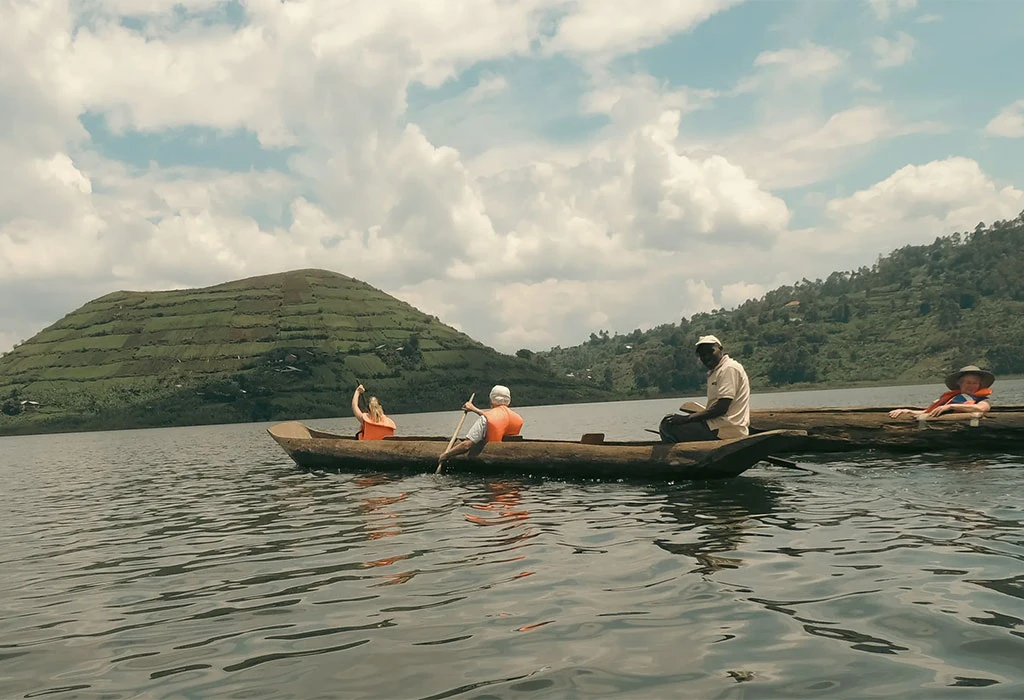
The single most iconic activity at Lake Mutanda is riding in a traditional wooden dugout canoe, a boat hollowed out of a single large tree trunk by local craftsmen. These canoes have been used by fishing communities on the lake for generations, long before motorized boats arrived in the region, and gliding across the water in one remains the most authentic way to experience Mutanda.
Paddling out from the shore, visitors drift silently past scattered islands, fishing villages and reed beds while the three volcanoes rise directly ahead. Guides steer the canoe close to island communities, giving travelers a genuine glimpse of daily life on the water. Some lodges even allow adventurous guests to try their hand at carving or paddling the canoe themselves under close local supervision.
Canoe trips typically last between one and three hours depending on the route chosen, and can be timed for sunrise or sunset to catch the volcanoes bathed in golden light. Because the lake has no hippos or crocodiles, canoeing here is considered one of the safest water activities in the region, suitable for families, couples and solo travelers of almost any age or fitness level.
Insider Tip: Book your canoe ride for the very first hour after sunrise. The water is almost always glassy calm at that time, giving you the sharpest possible reflection of the three volcanoes before the wind picks up later in the morning.
Volcano Views: Muhabura, Sabyinyo and Gahinga
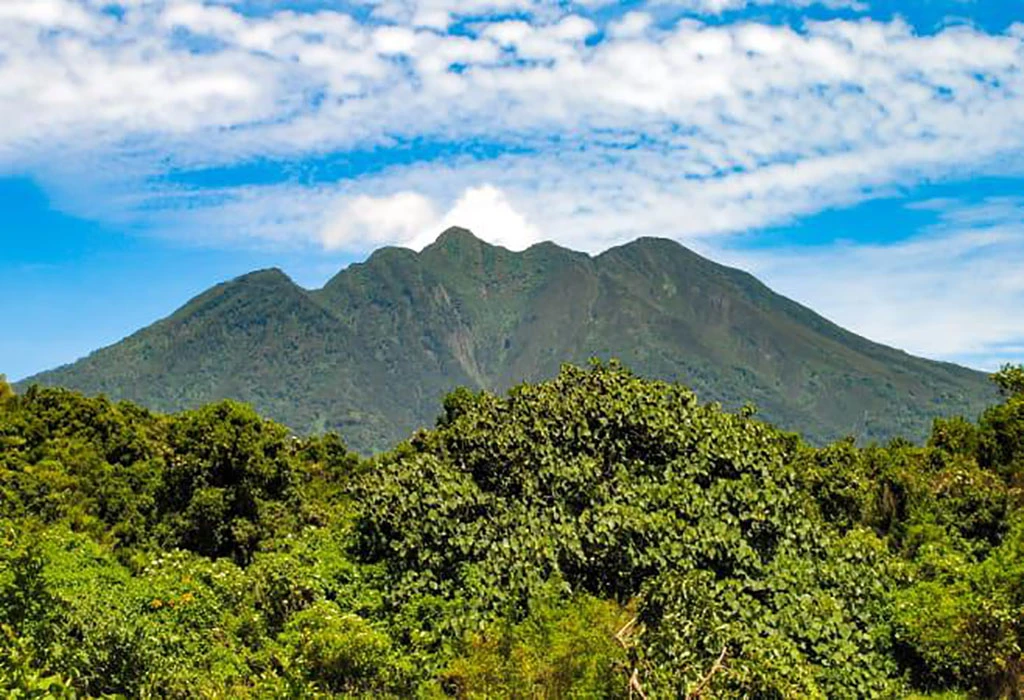
Lake Mutanda is famous above all for its uninterrupted panorama of three Virunga volcanoes, Muhabura, Sabyinyo and Gahinga, which rise directly behind its calm waters. On a clear morning the peaks appear to float above the lake, creating one of the most photographed scenes in Uganda. Many lodges are built specifically to face this view, with private decks and fireplaces angled toward the mountains.
Muhabura, meaning the guide, is the tallest of the three at over 4,100 meters and its near perfect cone shape dominates the eastern skyline. Sabyinyo, with its jagged crown of peaks, straddles the borders of Uganda, Rwanda and Congo, while Gahinga, the smallest and most rounded, once held a crater lake at its summit. Together they form a backdrop that changes character with every hour of daylight.
Beyond simply admiring the volcanoes from the shore, travelers can arrange guided hikes to the summits of any of the three peaks through Mgahinga Gorilla National Park. These climbs range from a half day ascent for Gahinga to a full and demanding day for Muhabura or Sabyinyo, rewarding hikers with sweeping views across three countries and, on clear days, a distant glimpse of Lake Mutanda far below. Travelers wanting to combine this climb with gorilla trekking often choose Iconic Africa Safaris’ 5 Day Bwindi and Mgahinga Gorillas with Sabinyo Hike.
Insider Tip: Pack a warm fleece even for a short volcano hike. Temperatures near the summit of Muhabura or Sabyinyo can drop sharply below what you feel at lake level, especially once cloud rolls in during the early afternoon.
Gorilla Trekking near Lake Mutanda
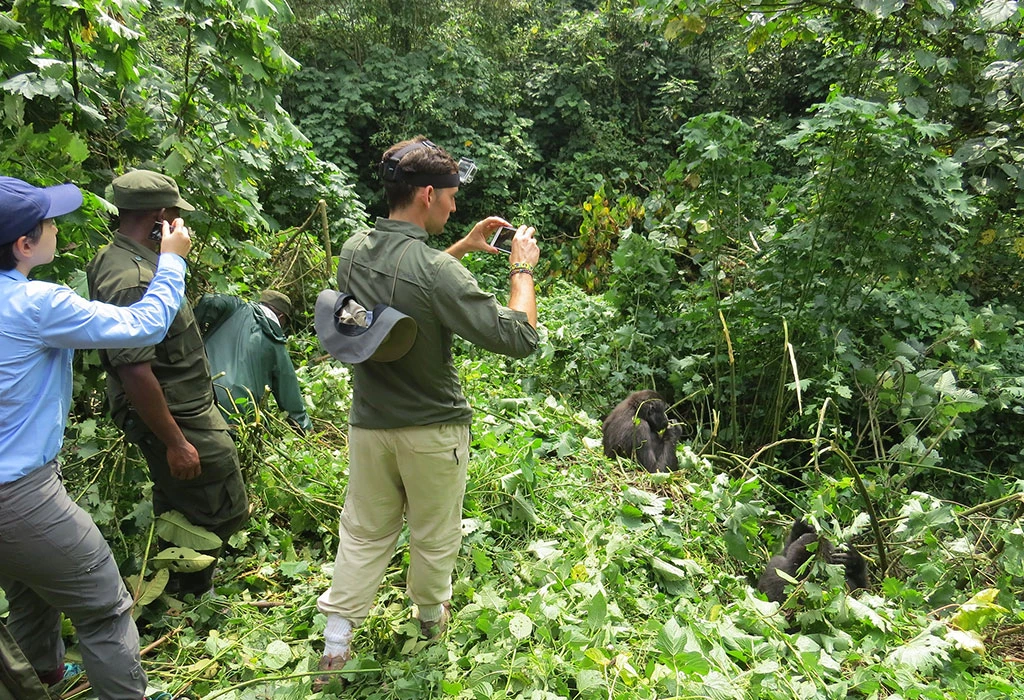
Lake Mutanda sits within easy reach of the Rushaga and Nkuringo sectors of Bwindi Impenetrable Forest, two of the finest gorilla trekking areas in the world. Iconic Africa Safaris regularly bases clients at lodges around the lake specifically because of this proximity, allowing travelers to trek mountain gorillas in the morning and unwind beside Mutanda’s calm waters that same afternoon.
Rushaga is home to the greatest concentration of habituated gorilla families in Bwindi, making it the top choice for travelers seeking a reliable trekking experience with a strong chance of close encounters. Nkuringo, perched on a ridge overlooking the forest, offers a slightly more strenuous trek but rewards hikers with dramatic scenery and a smaller, more intimate group experience away from the busier trailheads elsewhere in the park.
A standard gorilla trekking permit allows visitors exactly one hour with a habituated gorilla family once they are located, though the total hike itself can range from two to eight hours depending on the movement of the group that day. Staying at Lake Mutanda the night before a trek is a popular strategy, since it places travelers within a short drive of both trailheads.
Gorilla Habituation Experience in Rushaga
For travelers who want more than the standard one hour visit, the gorilla habituation experience based in Rushaga offers up to four full hours with a gorilla family that is still being acclimatized to human presence. This extended encounter is limited to a small number of permits per day, making it a rare and highly sought after alternative to the traditional trekking permit, featured in Iconic Africa Safaris’ 5 Day Uganda Gorilla Habituation and Chimp Trekking Safari.
Because habituation experiences require more physical stamina and a longer day in the forest, many travelers choose to rest afterward at a lodge on Lake Mutanda, arriving in time for a late canoe ride or a quiet evening watching the sun set behind Sabyinyo. The combination of an intense forest morning followed by a peaceful lake afternoon has become a signature pairing for serious primate enthusiasts.
Mgahinga National Park and Golden Monkey Tracking
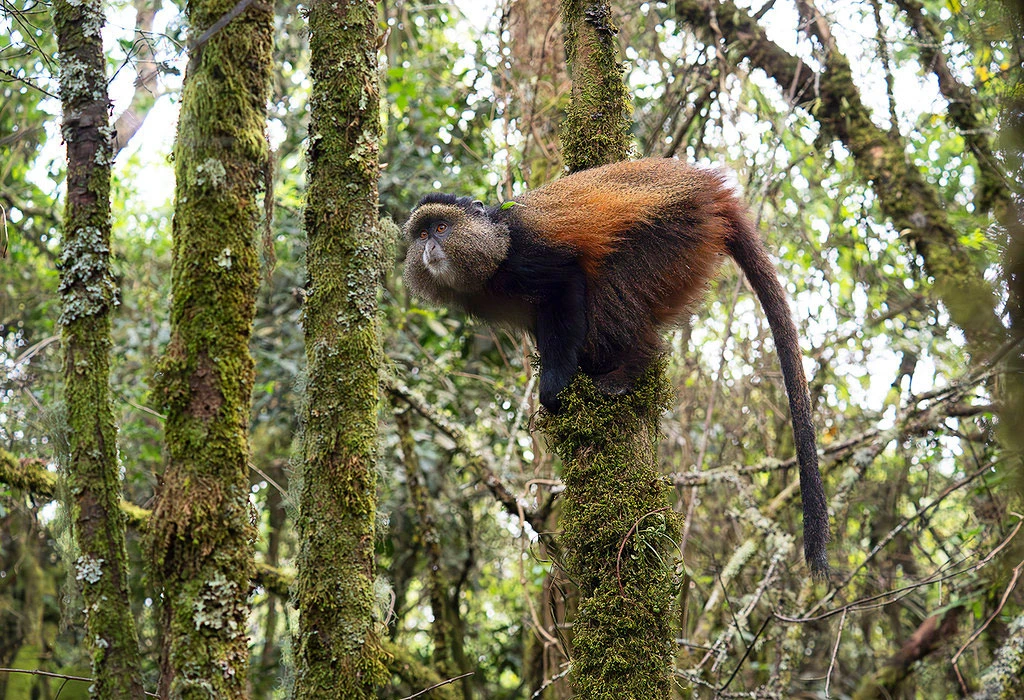
A short drive from Lake Mutanda brings travelers to Mgahinga Gorilla National Park, Uganda’s smallest national park and home to the country’s only side of the Virunga volcanoes. While the park’s single gorilla group, the Nyakagezi family, is known to cross unpredictably into neighboring Rwanda or Congo, Mgahinga remains one of the best places in Africa to track golden monkeys with near guaranteed success.
Golden monkey tracking involves following troops of these endangered, strikingly colored primates through dense bamboo forest, usually taking between one and three hours round trip. The playful, fast moving monkeys leap between bamboo stems in large family groups, offering photographers near constant action and a completely different primate experience compared to the slower, more deliberate movements of mountain gorillas found deeper within Bwindi.
Mgahinga also offers a Batwa cultural trail led by former forest dwellers, along with guided hikes up any of the three volcanoes that give the park its name. Travelers based at Lake Mutanda can easily combine a morning of golden monkey tracking with an afternoon volcano hike or a Batwa cultural walk, making Mgahinga one of the most activity rich single day excursions in southwestern Uganda.
Batwa Pygmy Cultural Experience
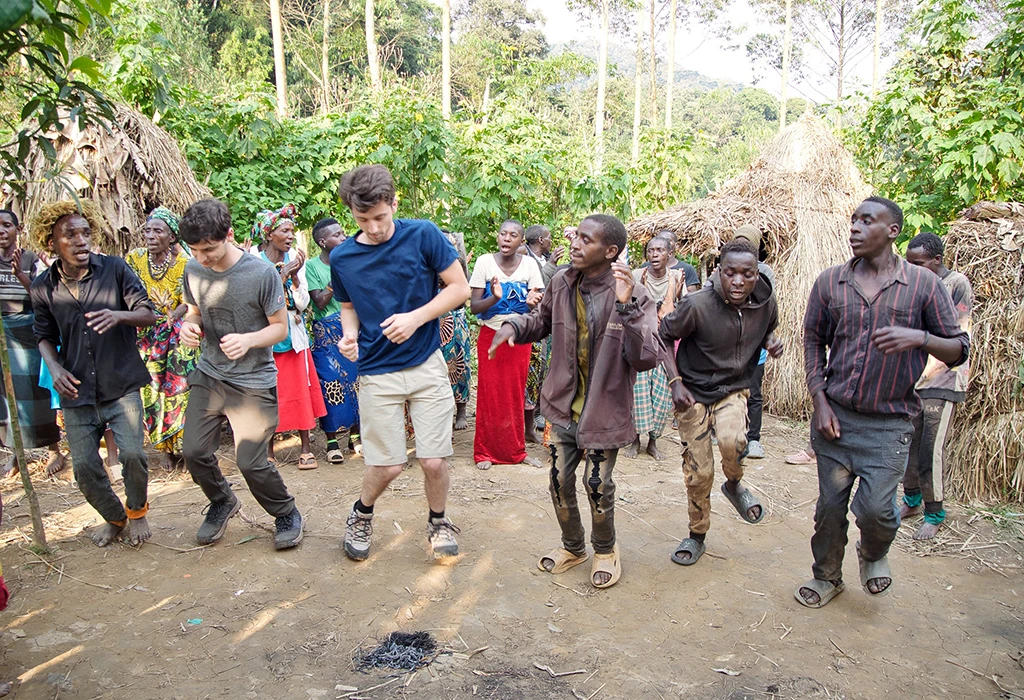
Long before Bwindi and Mgahinga became protected national parks, the Batwa people lived deep within these forests as hunters and gatherers, sheltering in tree canopies and caves and surviving on small forest antelope such as duikers alongside wild fruits. When the parks were gazetted for conservation, the Batwa were resettled outside the forest boundary, and many now share their heritage through guided cultural experiences.
Near Lake Mutanda, travelers can visit either the Batwa community of Buniga Forest or the Batwa settlement near Mgahinga National Park. Guided walks typically include traditional hunting demonstrations, fire making without matches, herbal medicine explanations, dance performances and storytelling around a fire, giving visitors genuine insight into a rich cultural heritage that thrived in these mountains for centuries before conservation policy changed their way of life.
These cultural visits are usually arranged as a half day activity and can be combined easily with a morning of golden monkey tracking or a canoe trip on Lake Mutanda. Many travelers describe the Batwa experience as one of the most moving parts of their entire Uganda safari, offering a human dimension to a trip otherwise focused mainly on wildlife, volcanoes and dramatic mountain scenery.
Fishing on Lake Mutanda
Fishing remains a genuine part of daily life for the communities living around Lake Mutanda, and visitors staying at nearby lodges can easily arrange to join local fishermen for an authentic dugout fishing outing. Small dugout canoes dot the water at dawn and dusk, and travelers are welcome to climb aboard and try their hand at traditional line fishing alongside experienced local guides.
Lodges such as Chameleon Hill Lodge, Mutanda Lake Resort and Bwindi Jungle Lodge all sit close enough to the water to arrange fishing trips on request, often paired with a sunrise or sunset canoe paddle. While Lake Mutanda is not typically marketed as a sport fishing destination, the experience offers a quiet, unhurried way to connect with local culture away from the more structured wildlife activities nearby.
Guided Hikes and the Buhoma to Kisoro Walking Safari
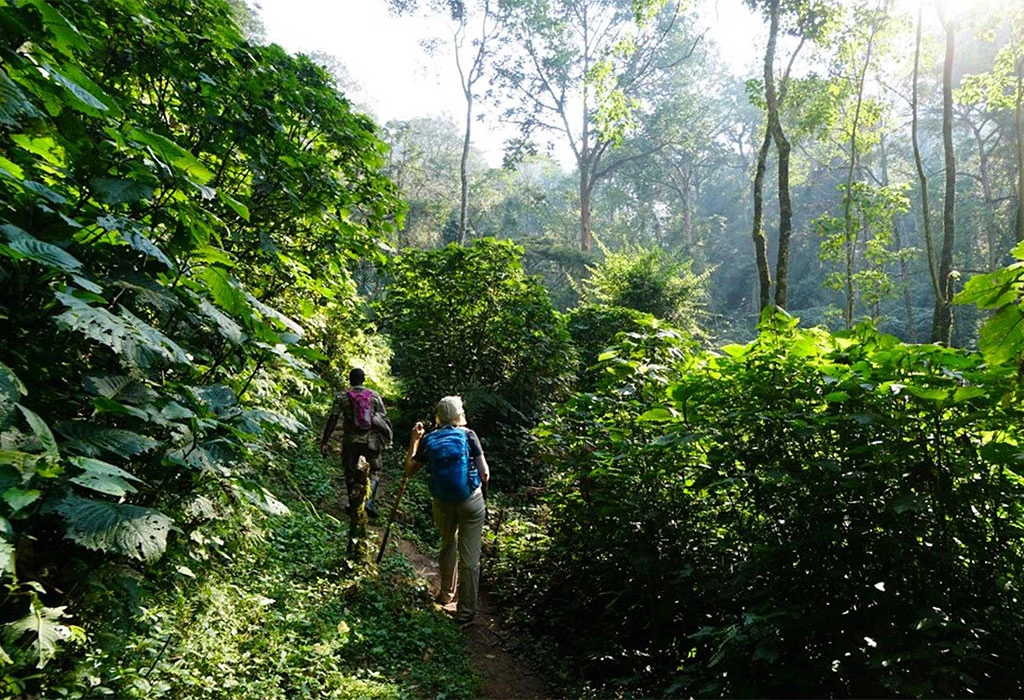
For travelers who prefer to explore on foot, the Buhoma to Nkuringo to Kisoro walking safari is widely regarded as the finest multi day trekking route that passes through Lake Mutanda. The journey begins near Buhoma, close to the northern edge of Bwindi Impenetrable Forest, and typically spans two full days of hiking through forest edges, terraced farmland and rolling volcanic hills toward Kisoro town.
Most travelers spend the first night at Nkuringo Gorilla Safari Lodge, perched on a ridge with sweeping views directly into the Bwindi forest canopy below. The second day of walking leads hikers down toward the shores of Lake Mutanda, where the route continues by traditional dugout canoe across the water, finishing the journey in Kisoro town rather than by road, a rare and rewarding way to travel.
This walking safari can be extended or shortened depending on fitness level and available time, and many travelers choose to add extra activities such as Batwa cultural visits, golden monkey tracking or a volcano hike along the way. Because the trail passes directly through some of the region’s most scenic terrain, it consistently ranks among the top rated hiking experiences available anywhere in Uganda.
Mountain Biking around Lake Mutanda
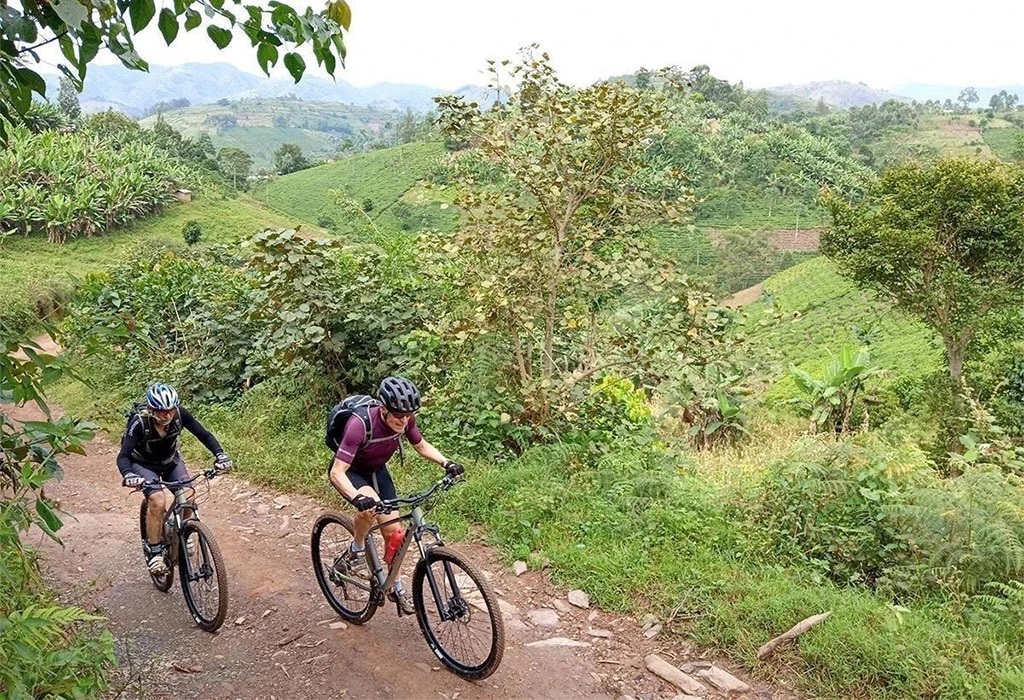
Cycling around Lake Mutanda offers a faster, more physically demanding way to take in the volcanic scenery, following red dirt roads that trace the lake’s irregular shoreline through small villages and terraced hillsides. The terrain is genuinely rugged in places, climbing and descending steep ridges, but the constant backdrop of Muhabura, Sabyinyo and Gahinga makes every uphill stretch worthwhile for cyclists chasing a rewarding view.
Several lodges around the lake can arrange mountain bikes and local guides for half day or full day rides, tailored to different fitness levels. Riders pass fishing communities, banana plantations and small trading centers along the way, offering a far more intimate look at rural Kisoro life than a standard vehicle transfer ever could, while still delivering some of the best volcano views in the region.
Bird Watching around the Lake
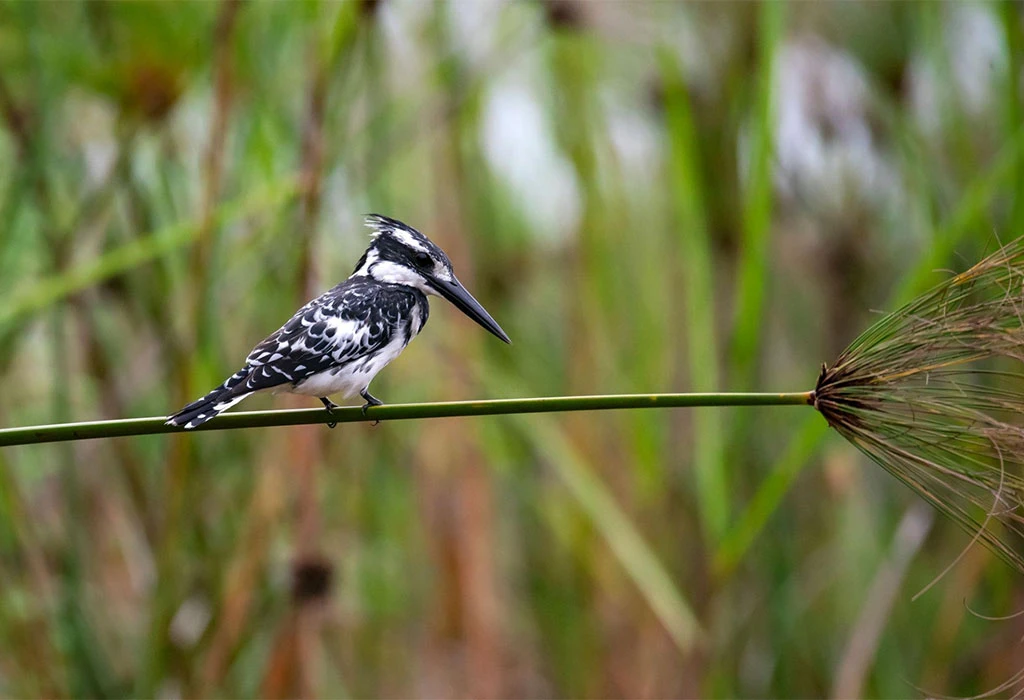
Lake Mutanda and its surrounding wetlands, papyrus swamps and terraced farmland support a healthy population of both water birds and forest species, making it a rewarding stop for birding enthusiasts traveling between Bwindi and Mgahinga. Species commonly recorded around the shoreline include various herons, kingfishers, weavers and sunbirds, alongside occasional sightings of rarer forest species that stray down from the nearby Virunga slopes.
Early morning canoe rides double as excellent birding outings, since paddling silently along the reed lined shore allows closer approach than a vehicle or a noisy motorboat ever could. Guides based at lodges around Lake Mutanda are generally well versed in local bird calls and can point out species that casual visitors would otherwise miss entirely, making this a worthwhile add on to almost any itinerary.
Flora and Wildlife around Lake Mutanda
Beyond birdlife, the hills surrounding Lake Mutanda support a patchwork of eucalyptus groves, banana plantations, papyrus wetlands and small remnant patches of indigenous forest, all shaped over decades by the terraced farming style typical of southwestern Uganda. This mix of cultivated and wild vegetation gives the landscape a layered, textured quality that photographers and nature lovers consistently find more interesting than the more uniform savannah scenery found elsewhere on safari.
While Lake Mutanda itself holds no dangerous large animals, its proximity to Bwindi and Mgahinga means forest elephants, buffalo and even the occasional gorilla family can occasionally be spotted moving through community land bordering the parks, particularly near Mgahinga. Local guides are well placed to point out these signs of wildlife movement, adding an extra layer of interest to canoe trips, cycling routes and community walks around the lake.
Community Visits and Cultural Encounters
Beyond the dedicated Batwa cultural walks, travelers based around Lake Mutanda can arrange informal visits to local Bakiga and Bafumbira farming communities, learning about banana beer brewing, traditional cooking methods and terraced agriculture that has shaped these hillsides for generations. Such visits are usually organized directly through lodges and offer a relaxed, low key way to understand daily rural life in Kisoro District.
Local markets in Kisoro town also make for an interesting stop, offering a genuine, unpolished look at regional trade in produce, textiles and household goods. Combined with a lake based stay, these community encounters round out a Lake Mutanda safari with a strong cultural dimension, balancing the more adrenaline focused activities such as gorilla trekking, volcano hiking and canoeing with slower, people centered experiences.
Getting to Lake Mutanda
Most travelers reach Lake Mutanda by road, either driving south from Kampala through Mbarara and Kabale, or crossing overland from Kigali through the Cyanika or Katuna border points. The drive from Kampala takes roughly nine full hours, while the route from Kigali is considerably shorter at about five hours, making Rwanda a popular entry point for travelers hoping to save valuable time on the road.
For travelers arriving from outside East Africa, most international flights land at either Entebbe International Airport in Uganda or Kigali International Airport in Rwanda, both of which connect easily to Kisoro through a mix of domestic flights and scenic road transfers arranged by Iconic Africa Safaris.
For those short on time, domestic flights connect Entebbe to Kisoro Airstrip, cutting travel time down to roughly ninety minutes in the air rather than a full day on winding rural roads. From Kisoro town, it is only a short drive of around twenty to thirty minutes to reach the shores of Lake Mutanda, where most lodges happily arrange private transfers for guests arriving by either road or air.
Best Time to Visit Lake Mutanda
Lake Mutanda can be visited comfortably at any time of year, though the two dry seasons, from June to September and from December to February, offer the clearest skies and the best chances of seeing the Virunga volcanoes without cloud cover. These months also align perfectly with peak gorilla trekking season in nearby Bwindi and Mgahinga, making them the most popular window for combined itineraries.
The wetter months, from March to May and October to November, bring lush green scenery, dramatic skies and far fewer travelers, which appeals to photographers and those who prefer quieter trails. Rain typically falls in short afternoon showers rather than all day, so canoeing, hiking and gorilla trekking all remain possible throughout the year once the right rain gear is packed.
Photography Tips for Lake Mutanda
Photographers consistently rate Lake Mutanda among the finest landscape locations in East Africa, largely because the three volcanoes sit so close to the water that reflections form on almost every still morning. The strongest light generally falls within the first hour after sunrise and the final hour before sunset, when the mountains take on warm golden tones and mist often lingers gently across the surrounding hillsides and terraced slopes.
For the sharpest reflection shots, guides recommend timing a canoe trip for early morning before wind picks up and disturbs the water’s surface. A wide angle lens captures the full sweep of Muhabura, Sabyinyo and Gahinga together, while a longer lens works well for isolating fishing canoes, island villages or individual peaks rising dramatically above the surrounding patchwork of green terraced farmland below.
Where to Stay around Lake Mutanda
Accommodation around Lake Mutanda ranges from comfortable mid range lodges to more upscale properties, nearly all of them positioned to take full advantage of the volcano views across the water.
- Chameleon Hill Lodge: Distinctive, colorful architecture along the shoreline, with private decks facing Muhabura, Sabyinyo and Gahinga, ideal for travelers who prioritize scenery and atmosphere above all else
- Mutanda Lake Resort: Classic safari lodge feel, cottages set directly on the water’s edge, easy access to canoe trips, fishing outings and sunset cruises without traveling far
- Bwindi Jungle Lodge: Slightly further from the lakeshore but close to both the gorilla trekking trailheads and the wider Lake Mutanda activity circuit, a solid choice for gorilla focused travelers
Most lodges in the area can arrange canoe trips, fishing outings, cultural visits and transfers to nearby national parks directly through their own guides, removing the need for travelers to organize separate transport for every activity. Booking accommodation on the lakeshore itself, rather than further inland, is strongly recommended for anyone hoping to combine gorilla trekking with genuine relaxation time beside the water.
Sample Lake Mutanda Safari Itinerary
A well balanced Lake Mutanda safari typically spans between four and seven days, combining gorilla trekking in Bwindi or Mgahinga with at least two nights based on the lakeshore. A common structure begins with an overnight stay near Lake Mutanda, followed by a full day of gorilla trekking in Rushaga or Nkuringo, then a return to the lodge for canoeing, fishing or simply resting beside the water.
Travelers with additional time often add a day for golden monkey tracking or a volcano hike in Mgahinga National Park, followed by a Batwa cultural visit and a final morning canoe trip before departing toward Kigali, Kampala or onward into Rwanda’s Volcanoes National Park. This structure allows for a genuine mix of adrenaline, culture and rest without feeling rushed at any point along the journey.
For travelers combining Uganda and Rwanda in a single trip, Lake Mutanda works particularly well as a midpoint stop, sitting almost exactly between Kigali and the gorilla trekking sectors of southwestern Uganda. Crossing overland through Cyanika border, rather than flying separately into each country, saves both time and money while adding one of the most scenic stretches of road found anywhere in the region.
Insider Tip: If your schedule allows only one lake stop in southwestern Uganda, choose Mutanda over Bunyonyi for its unobstructed volcano panorama. Travelers wanting both lakes on one trip can look at Iconic Africa Safaris’ 6 Day Uganda Gorillas and Lake Bunyonyi Safari for a structured way to combine them.
Combining Lake Mutanda with Rwanda’s Volcanoes National Park
Because Lake Mutanda sits so close to the Rwandan border, many travelers choose to combine their visit with a gorilla trekking excursion into Rwanda’s Volcanoes National Park, home to some of the most famous habituated gorilla families anywhere in the world. Crossing at Cyanika border takes well under an hour, making a genuine multi country safari entirely practical within a single well planned itinerary.
This combination allows travelers to compare two distinct gorilla trekking experiences, Uganda’s Bwindi sectors and Rwanda’s Volcanoes National Park, while enjoying Lake Mutanda’s scenery as a relaxed midpoint between the two countries. Iconic Africa Safaris specializes in arranging these seamless border crossings, handling permits, transport, timing and accommodation so travelers can simply focus on enjoying the entire experience itself, worry free.
What to Pack for a Lake Mutanda Safari
Because Lake Mutanda sits at a relatively high altitude, mornings and evenings can feel surprisingly cool even during the dry season, so packing a warm layer alongside standard safari clothing is essential. A light rain jacket is also recommended year round, since short afternoon showers remain possible even outside the official wet season.
- Warm layer: Fleece or light jacket for cool mornings and evenings at altitude
- Rain jacket: Lightweight and packable, useful in any season near the volcano slopes
- Waterproof hiking boots: Essential for gorilla trekking and volcano hikes on muddy terrain
- Gardening gloves: Protect hands from stinging nettles while trekking through the forest
- Long sleeved shirts and trousers: Reduce scratches and nettle stings on forest trails
- Swimsuit and sun hat: For canoeing, lake swimming and time spent on the water
- Reef safe sunscreen: Cool climate does not mean less sun exposure at this altitude
- Dry bag: Protects cameras and phones during canoe rides and sudden showers
Health and Safety Tips for Lake Mutanda
Kisoro District sits at a high enough altitude that malaria risk is lower than in Uganda’s lowland parks, though travelers are still advised to take antimalarial medication as a precaution and to use insect repellent during evening hours. Drinking only bottled or properly treated water, applying sunscreen despite the cooler climate and carrying basic personal medication are all sensible steps for a smooth, comfortable safari.
Gorilla trekking and volcano hikes both demand a reasonable level of fitness, since trails can be steep, muddy and physically demanding at altitude. Travelers with health concerns should consult a doctor before booking a strenuous trek and inform their guide of any conditions in advance, since porters are readily available in both Bwindi and Mgahinga to assist hikers who need extra support along the way.
Frequently Asked Questions about Lake Mutanda
Is Lake Mutanda safe for swimming and canoeing?
Yes. Unlike many East African lakes, Mutanda has no resident hippos or crocodiles, making it one of the safer freshwater lakes for canoeing and even swimming in certain designated areas. Guides still recommend staying close to shore and following local advice, since water conditions and currents can vary slightly depending on the season and the specific spot chosen along the extensive shoreline.
How far is Lake Mutanda from Bwindi Impenetrable Forest?
Lake Mutanda sits roughly one hour from the Rushaga and Nkuringo trailheads in Bwindi Impenetrable Forest, making it an ideal base for gorilla trekking without needing to stay inside the park boundary. This short driving distance is the main reason Iconic Africa Safaris chooses lodges around the lake for clients trekking in southern Bwindi.
Can Lake Mutanda be visited without a car?
Most travelers reach Lake Mutanda as part of an organized safari package that includes private road transport or a domestic flight into Kisoro Airstrip followed by a short transfer. Independent travel by public transport is technically possible but far less comfortable and slower, so booking transfers through Iconic Africa Safaris remains the most practical and reliable option for most visitors.
How many days should I spend at Lake Mutanda?
Two to three nights is generally enough time to enjoy canoeing, a gorilla trek, a cultural visit and genuine relaxation beside the water without feeling rushed. Travelers with more flexible schedules often extend their stay to include golden monkey tracking, a volcano hike or the multi day Buhoma to Kisoro walking safari, which passes through Lake Mutanda on its final leg.
What makes Lake Mutanda different from Lake Bunyonyi?
While both lakes sit in southwestern Uganda and offer scenic canoeing, Lake Mutanda is distinguished by its direct, unobstructed view of three Virunga volcanoes and its closer proximity to the Rushaga and Nkuringo gorilla trekking sectors. Lake Bunyonyi, further north, is larger and deeper but lacks the same dramatic volcanic backdrop that makes Mutanda such a distinctive and widely photographed destination.
Do I need a permit to visit Lake Mutanda itself?
No permit is required simply to visit Lake Mutanda, stay at a lakeshore lodge or go canoeing, fishing or hiking around its shores. Permits are only required for specific national park activities nearby, such as gorilla trekking, golden monkey tracking or volcano climbs, and these should be booked well in advance through Iconic Africa Safaris.
What currency and payment methods work around Lake Mutanda?
Uganda’s official currency, the Ugandan Shilling, is used throughout Kisoro District, though many lodges and Iconic Africa Safaris also accept United States Dollars for larger payments such as accommodation and permits. Cash remains king in rural areas around the lake, so travelers should carry sufficient dollars or shillings for markets, tips and small purchases before arriving in this remote region.
Why Combine Canoeing, Volcano Views and Gorilla Trekking
Few destinations in Africa allow travelers to move between three completely different types of experience within a single day the way Lake Mutanda does. A morning spent trekking through dense forest in search of mountain gorillas can be followed, just hours later, by a slow canoe paddle across still water with volcanic peaks rising directly ahead, a contrast that few other safari regions can genuinely offer.
This combination also makes efficient use of travel time, since gorilla permits, volcano hikes and lake based relaxation are all available within a tight geographic cluster around Kisoro District. Rather than spending days moving between distant regions, travelers based at Lake Mutanda can pack an extraordinary range of activities into a compact, well organized itinerary without excessive time lost to long distance driving.
Planning Your Lake Mutanda Safari with Iconic Africa Safaris
Because gorilla trekking permits are strictly limited and issued months in advance, and because the best lodges around Lake Mutanda fill up quickly during peak season, planning ahead with Iconic Africa Safaris is essential. Our knowledgeable team can secure permits early, match travelers with the right lodge for their budget and combine activities into a smooth, logical route rather than a scattered checklist. Browsing the full range of Uganda Safaris offered by Iconic Africa Safaris is a useful starting point for comparing itinerary lengths and combinations.
Iconic Africa Safaris also understands the practical details that make or break a Lake Mutanda safari, from arranging border crossings between Uganda and Rwanda to timing canoe trips around the best light for photography, to knowing which lodges offer the clearest volcano views. This local expertise turns a good itinerary into a genuinely exceptional one, tailored precisely to each traveler’s interests and pace.
Ready to Book Your Lake Mutanda Safari with Iconic Africa Safaris?
Iconic Africa Safaris offers three simple, reliable ways to secure your next unforgettable Ugandan adventure today. Simply complete our quick online booking form to start planning your dream safari experience right away. Our friendly team also welcomes direct emails at info@iconicafricasafaris.com or info@gorillatrekug-rw.com to discuss your specific travel plans and preferences. For instant assistance, tap the green WhatsApp icon in your screen’s bottom right corner anytime.