18-Day Kenya, Tanzania and Uganda Safari
- Pickup : Jomo Kenyatta International Airport
- Drop-off : Kigali International Airport
Tour Overview
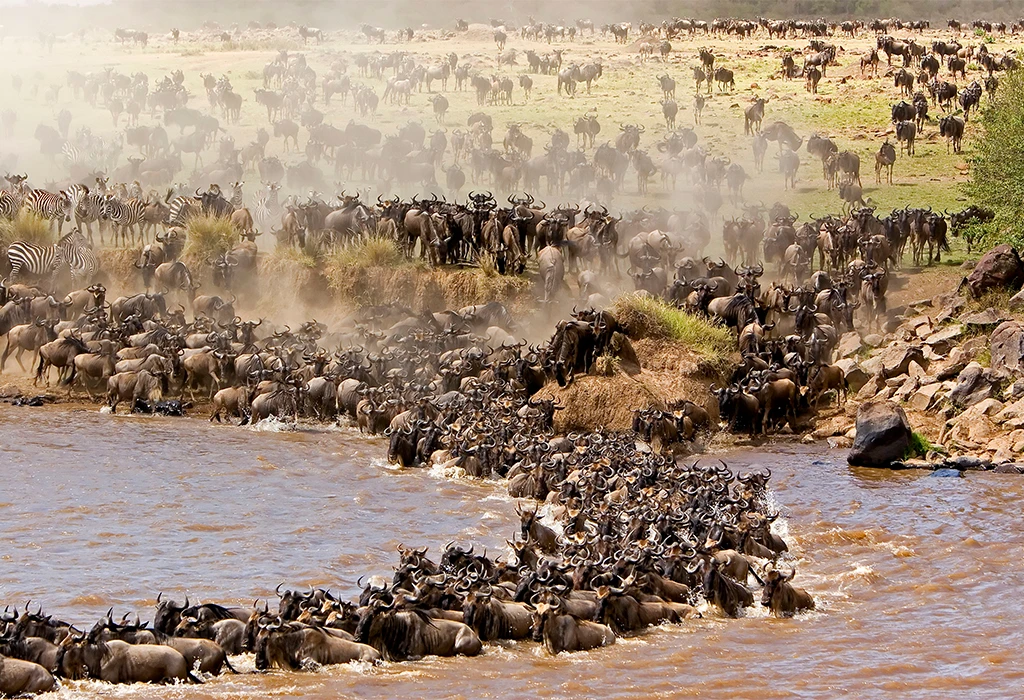
This 18-Day Kenya, Tanzania and Uganda Safari takes you deep into three of Africa’s most rewarding wildlife destinations. Between July and October, you can follow the Great Migration across the Serengeti and Masai Mara, watching enormous herds of wildebeest and zebras thunder across the plains in search of fresh grass. The adventure continues with thrilling Big Five game drives through Kenya and Tanzania, before heading into Uganda’s misty Bwindi Impenetrable Forest to trek through dense jungle in search of endangered mountain gorillas. You will also descend into the Ngorongoro Crater for a full day surrounded by extraordinary wildlife. From open savannahs to tropical forests, this journey combines three countries, two migration hotspots, and a once-in-a-lifetime gorilla trek.
- Transportation (Car, Fuel, Driver Guide)
- Meals & Accommodation as mentioned
- Gorilla Trekking Permit
- Flight from Kilimanjaro to Kigali
- Park Entrance Fees
- Game Drive and Boat Cruise
- Bottled Drinking Water
- Government Taxes
Cost Includes
- International Flightsfrom and to your home country
- Accommodation Before and After your Trip
- Optional Batwa Cultural Experience
- Sourvenirs
- Tips & Bwindi Porter Hiring
Cost Excludes
Travel Plan
Day 1: Arrival in Nairobi, Airport Pickup and Hotel Transfer
On arrival at Jomo Kenyatta International Airport in Nairobi, your guide meets you at the arrivals hall and welcomes you to the start of your Uganda, Kenya and Tanzania Safari. From there, you transfer to the Best Western Hotel for dinner and an overnight rest, ready for an early start the next morning.
- Meal Plan: Half Board (Lunch and Dinner)
- Accommodation: Best Western Hotel
Day 2: Drive to Masai Mara, with a Stop at the Great Rift Valley
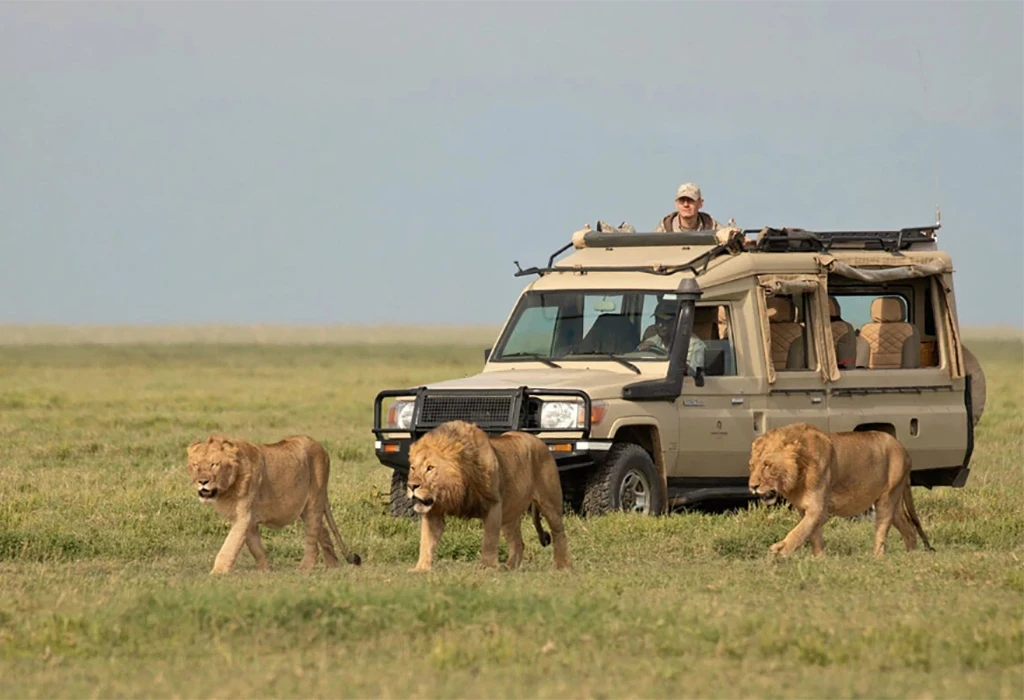
After breakfast, your driver guide collects you from the hotel and sets off for the Masai Mara. On the way, you stop at the Great Rift Valley viewpoint, where the escarpment opens up into one of the most photographed views in Kenya. The Masai Mara itself is made up of open grassland, rolling hills, and some of the highest densities of wildlife in Africa. You arrive in time for lunch at the lodge, then head out on your first game drive of the trip in search of lions, elephants, giraffes, and more.
- Meal Plan: Full Board (Breakfast, Lunch and Dinner)
- Accommodation: Masai Mara Sopa Lodge
Day 3: Full Day Game Drive in the Masai Mara Reserve
After breakfast, you spend the full day exploring the Masai Mara’s savannahs. This reserve forms the northern extension of Tanzania’s Serengeti ecosystem, and it holds an impressive number of predators, including lions, cheetahs, and leopards, alongside large herds of zebra, wildebeest, and elephant.
- Meal Plan: Full Board (Breakfast, Lunch and Dinner)
- Accommodation: Masai Mara Sopa Lodge
Day 4: Second Game Drive on the Masai Mara Plains
An early breakfast is followed by a full day of game viewing across the Mara’s plains. This is prime territory for watching lions, cheetahs, and leopards on the hunt, and you’re also likely to spot warthogs, impalas, hyenas, and a wide variety of birdlife. Once the drive wraps up, you return to camp to relax for the evening.
- Meal Plan: Full Board (Breakfast, Lunch and Dinner)
- Accommodation: Masai Mara Sopa Lodge
Day 5: Transfer to Lake Nakuru, with a Game Drive in Lake Nakuru National Park
After breakfast, you leave the Masai Mara and drive towards Lake Nakuru, stopping for lunch in Narok town along the way. You enter Lake Nakuru National Park in the early afternoon for a game drive around its shallow, alkaline lake, a compact sanctuary known for its healthy population of both black and white rhino.
Rothschild’s giraffe, buffalo, waterbuck, zebra, and baboon are common sightings, along with tree climbing lions and resident leopard on the cliffs. A stop at Baboon Cliff offers sweeping lake views and, water levels permitting, flocks of flamingo. By late afternoon, you check in at your accommodation for the night.
- Meal Plan: Full Board (Breakfast, Lunch and Dinner)
- Accommodation: Buraha Zezoni Resort
Day 6: Transfer to Lake Naivasha, Optional Boat Ride
After breakfast, you leave Lake Nakuru and drive on to Lake Naivasha, arriving around midday. Once you’ve checked in and had lunch, the afternoon is free for an optional boat ride on the lake, a relaxed way to spot hippos, fish eagles, pelicans, and other waterbirds up close.
- Meal Plan: Full Board (Breakfast, Lunch and Dinner)
- Accommodation: Lake Naivasha Sopa Resort
Day 7: Transfer to Amboseli National Park
Breakfast is followed by the drive from Lake Naivasha to Amboseli, passing through more of the Great Rift Valley’s dramatic scenery along the way. Lunch is taken at a local restaurant en route, and by the time you reach Amboseli, there’s time to settle in at the lodge and relax. A late afternoon drive around the lodge grounds often turns up elephant, giraffe, and various antelope silhouetted against Kilimanjaro.
- Meal Plan: Full Board (Breakfast, Lunch and Dinner)
- Accommodation: Amboseli Sopa Lodge
Day 8: Full Day Game Drive in Amboseli, with Views of Mount Kilimanjaro
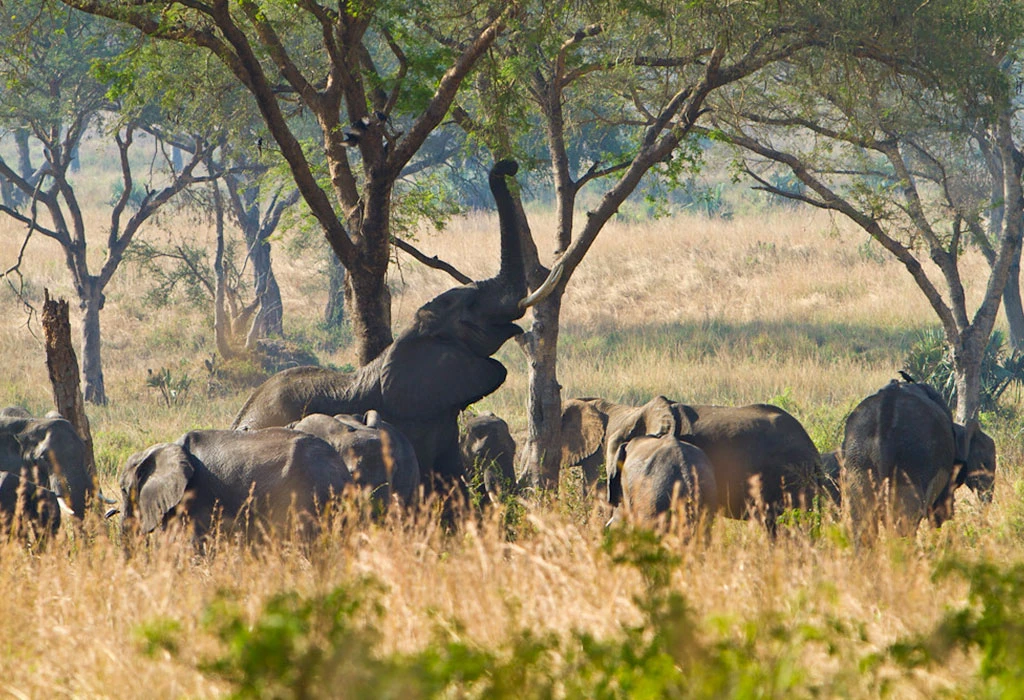
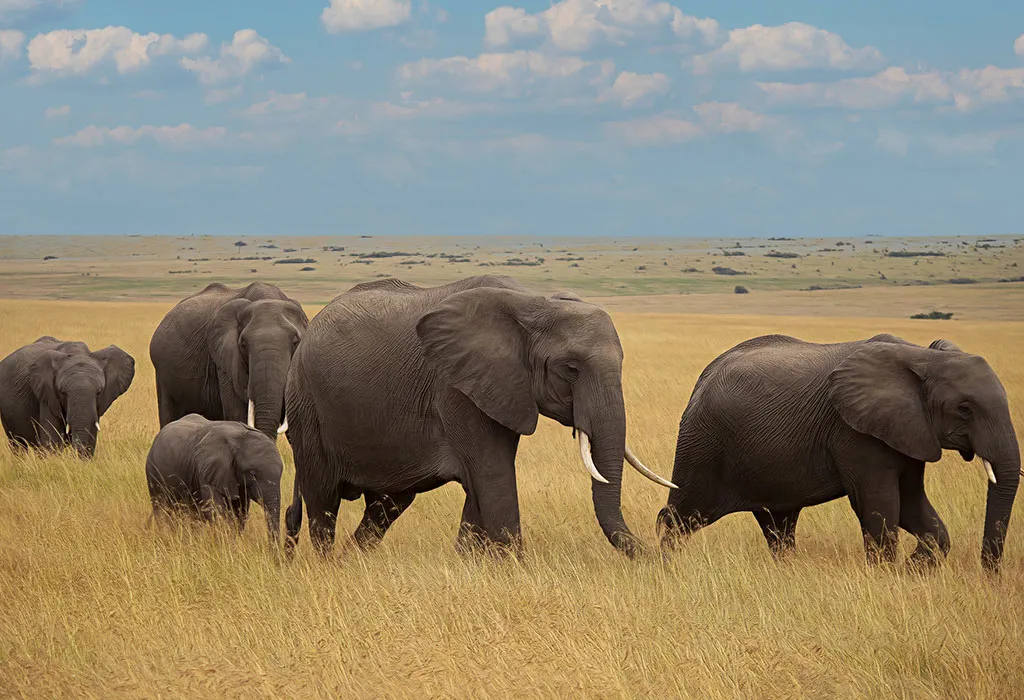
This day is spent exploring Amboseli National Park in full, with a picnic lunch enjoyed at a scenic viewpoint. Amboseli is best known for its large elephant herds and its unmatched views of Mount Kilimanjaro rising just across the Tanzanian border. Buffalo, lions, jackals, zebra, hyena, hippo, and a long list of antelope species, including Grant’s gazelle, impala, and wildebeest, also make regular appearances here, alongside over 400 recorded bird species.
- Meal Plan: Full Board (Breakfast, Lunch and Dinner)
- Accommodation: Amboseli Sopa Lodge
Day 9: Morning Game Drive and Border Crossing into Tanzania
One last early morning game drive in Amboseli rounds off your time in Kenya, with a final chance to see elephant, buffalo, lion, and zebra against the backdrop of Mount Kilimanjaro. From there, you drive to the Namanga border, where your Tanzanian guide meets you and helps with the immigration process. This crossing marks the halfway point of your Uganda, Kenya and Tanzania Safari, and from Namanga, it’s on to Arusha for the night.
- Meal Plan: Full Board (Breakfast, Lunch and Dinner)
- Accommodation: Farm of Dreams Lodge
Day 10: Transfer to Tarangire National Park
Your guide drives you to Tarangire National Park after breakfast, where a game drive and picnic lunch await. Tarangire is known for its large elephant populations, its towering baobab trees, and its rare tree climbing pythons. During the dry season, the Tarangire River becomes a magnet for wildlife from across the region, and you can expect to see buffalo, giraffe, zebra, waterbuck, impala, and the striking fringe eared oryx and gerenuk, alongside good numbers of lion and, occasionally, leopard.
- Meal Plan: Full Board (Breakfast, Lunch and Dinner)
- Accommodation: Farm of Dreams Lodge
Day 11: Drive to Ngorongoro Crater
After breakfast, you head to the Ngorongoro Crater, a closed ecosystem that supports an estimated 30,000 animals within its walls. A picnic lunch is enjoyed during the game drive, with good chances of spotting lions, buffalo, elephants, leopards on a good day, black rhino, hippo, zebra, wildebeest, hyena, jackal, and flamingos gathered along the shores of Lake Magadi, while Maasai herders graze their cattle along the crater rim.
- Meal Plan: Full Board (Breakfast, Lunch and Dinner)
- Accommodation: Tukaone Camp Serengeti
Day 12: Transfer to the Serengeti
Breakfast comes first, then you leave Ngorongoro and drive through the Conservation Area into the Serengeti, with game drives and a packed lunch along the way. The Serengeti’s scale is hard to describe until you’re in it, and it doesn’t take long before zebra, wildebeest, giraffe, gazelle, and big cats such as lion and cheetah start appearing.
- Meal Plan: Full Board (Breakfast, Lunch and Dinner)
- Accommodation: Classic View Migration Camp
Day 13: Northern Serengeti Game Drive
A short morning game drive through Central Serengeti is followed by a picnic lunch and the drive north. From mid July to mid October, this is where the Great Migration crosses the Mara River, one of the most dramatic wildlife spectacles anywhere in the world, with crocodiles waiting in the shallows as wildebeest attempt the crossing. Giraffe, elephant, rhino, zebra, topi, and lion are also regularly seen in the northern Serengeti.
- Meal Plan: Full Board (Breakfast, Lunch and Dinner)
- Accommodation: Classic View Migration Camp
Day 14: Second Day Along the Mara River
Another early breakfast sets you up for a further game drive along the Mara River, one of the best spots on this Kenya, Tanzania and Uganda Safari for watching the Great Migration and its predators up close. Lions, leopards, cheetahs, crocodiles, hippos, wildebeest, and zebra are all active here, before you head back towards Central Serengeti later in the day.
- Meal Plan: Full Board (Breakfast, Lunch and Dinner)
- Accommodation: Classic View Migration Camp
Day 15: Fly to Kigali, Rwanda
Depending on your flight time, the morning is free to relax or shop before you’re driven to Kilimanjaro International Airport for your flight to Kigali. On arrival, your Rwandan guide picks you up and transfers you to your hotel for the night.
- Meal Plan: Full Board (Breakfast, Lunch and Dinner)
- Accommodation: Onomo Hotel
Day 16: Optional Kigali City Tour, Drive to Bwindi National Park
After breakfast, you have the option of a Kigali city tour, taking in sites such as the Kigali Genocide Memorial, Kimironko Market, or Inema Art Centre, before setting off on the drive from Kigali to Bwindi Impenetrable Forest in Uganda. Bwindi is home to roughly half of the world’s remaining mountain gorillas, and this leg brings you into the final country on your Uganda, Kenya and Tanzania Safari. On arrival, you settle into the lodge and rest up for the following day’s trek. The surrounding forest is also home to forest elephant, golden monkey, and over 350 recorded bird species, so it’s worth keeping your camera close even before the trekking begins.
- Meal Plan: Full Board (Breakfast, Lunch and Dinner)
- Accommodation: Ichumbi Gorilla Lodge
Day 17: Gorilla Trekking in Bwindi, Optional Evening Activities
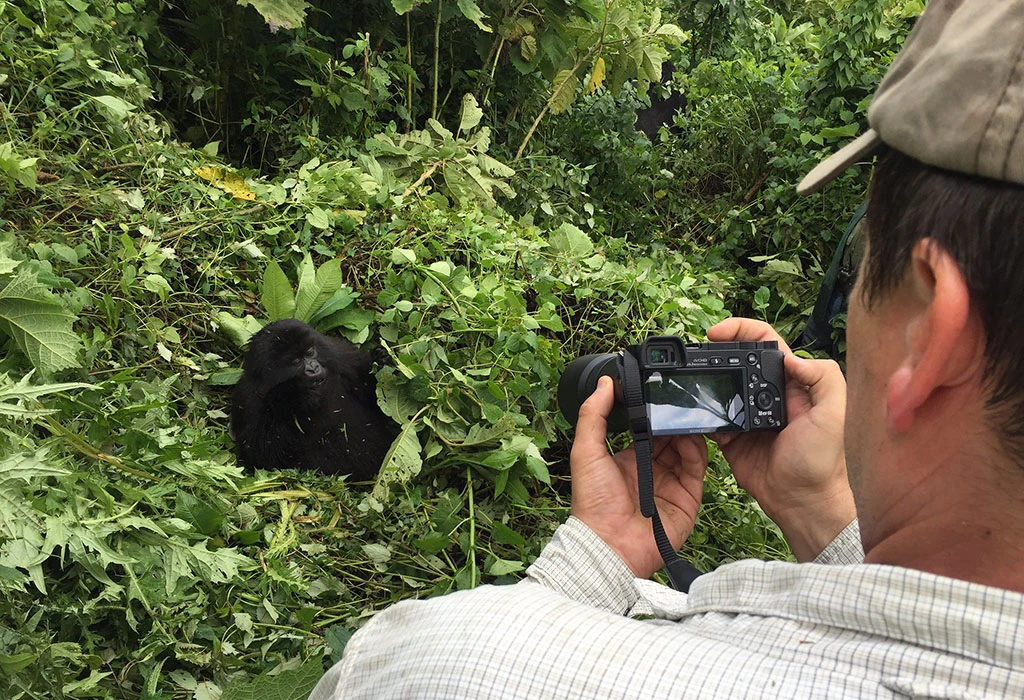
This is the day many travelers are ever counting down to. You will be up at 5:30am for breakfast, then head to the park headquarters for a 7:30am briefing. Rangers walk you through the trekking rules: keeping a distance of at least 7 metres from the gorillas, speaking quietly, and limiting contact time to exactly 1 hour to keep stress on the animals to a minimum. Groups are capped at 8 trekkers per gorilla family, which keeps the experience intimate.
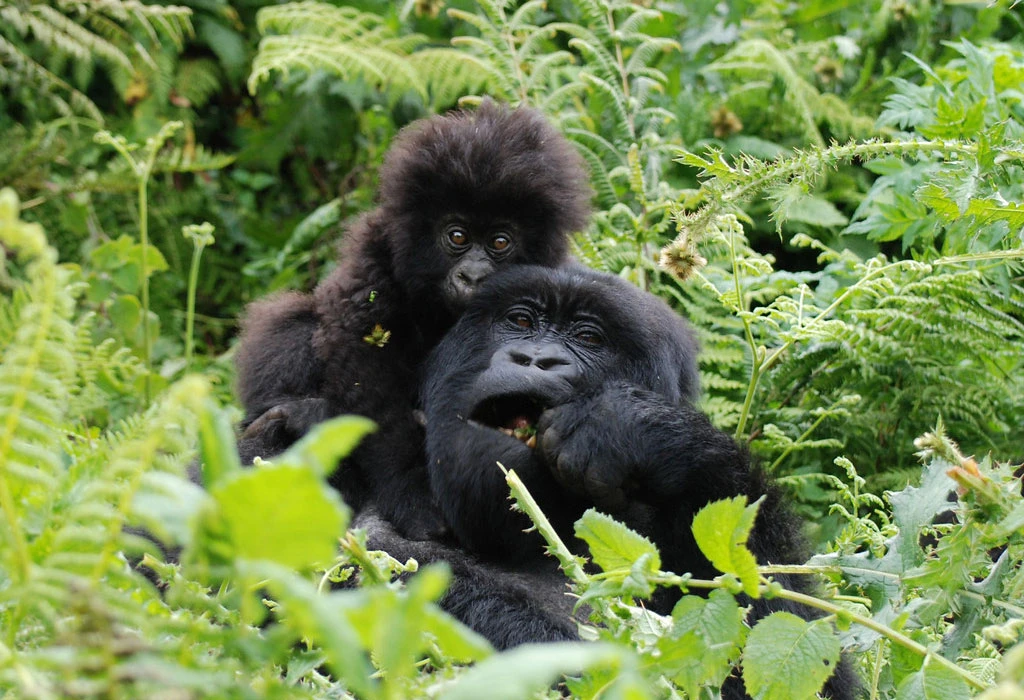
From there, you set off into the forest with your ranger guides. The trek itself can take anywhere from 1 to 6 hours, depending on where the family has moved to overnight. Once you find them, you spend a full hour watching a habituated mountain gorilla family go about its day: silverbacks beating their chests, mothers nursing infants, juveniles play fighting, and the group feeding on leaves, stems, and wild fruit. Most visitors describe it as one of the most emotional and humbling experiences of their lives. Along the trail, you may also spot forest elephant tracks, black and white colobus monkeys, duiker, and a striking variety of forest birds.
After the trek, you return to the lodge for a well earned lunch and some rest. The evening leaves you with a few choices. You can join a Batwa Cultural Experience, where the Batwa, the original forest dwelling people of Bwindi, share their traditional songs, dances, and forest survival skills. You could also browse the craft markets in the nearby villages for handmade baskets, carvings, and jewellery, which directly supports the local community, or simply stay at the lodge and reflect on the day.
Meal Plan: Full Board (Breakfast, Lunch and Dinner)
Accommodation: Ichumbi Gorilla Lodge
Day 18: Drive to Kigali for Departure
Breakfast is followed by the drive from Bwindi back to Kigali, Rwanda’s capital, a journey of around 4 to 6 hours depending on the border crossing and road conditions. If your flight time allows, there’s an opportunity to visit the Kigali Genocide Memorial, a sobering and important site that documents the 1994 Rwandan genocide, in which an estimated 800,000 to 1 million people lost their lives. It’s a place built for reflection, remembrance, and hope, and a fitting final stop on this Uganda, Kenya and Tanzania Safari.
Your driver guide then drops you at Kigali International Airport for your onward flight, or at your lodge in Kigali if you’d prefer to spend one more night before departing.
- Meal Plan: Half Board (Breakfast and Lunch)
- Accommodation: None (available at extra cost)
Answered FAQs
How much does this safari cost?
Based on 2 people sharing, in upper mid range accommodation, this itinerary costs $7,600 per person.
Tour cost includes:
- Transportation in a 4×4 Land Cruiser, with professional driver guide and fuel
- Gorilla trekking permit ($800)
- Accommodation and meals as listed in the itinerary
- Bottled drinking water
- Park entrance fees
- Flight from Kilimanjaro to Kigali
- Government taxes
Tour cost excludes:
- International flights from and to your home country
- Porters (optional, if needed)
Optional activities - Personal expenses such as tips and souvenirs
Group size and choice of accommodation both affect the final price, so let us know how many people are travelling and whether you’d like to upgrade any of the lodges listed above, and we’ll come back to you with an exact cost per person.
How physically demanding is this safari?
Most of this trip is easy going. Game drives are done from the comfort of a 4×4 vehicle, and walking is minimal in Kenya and Tanzania. The one exception is gorilla trekking in Bwindi, which can be moderately to quite strenuous. Treks last anywhere from 1 to 6 hours through dense forest, on steep and sometimes muddy terrain, at altitudes between 1,160 and 2,607 metres. A reasonable level of fitness is recommended, and porters are available to carry your daypack and assist on the trail if you’d rather not carry your own gear.
What is the best time of year to go on this trip?
The Great Migration river crossings in the northern Serengeti and Masai Mara typically happen between July and October, which makes this window the most popular time to travel. December to February is also excellent, with calving season in the southern Serengeti and generally dry, clear weather across all 3 countries. For gorilla trekking, the driest months (June to September and December to February) offer the easiest trail conditions, though trekking is possible year round since Bwindi’s permits are available every month.
What should I pack for safari?
We recommend packing:
- Neutral coloured clothing (khaki, olive, brown) for game drives; avoid bright colours and all black or dark blue near Tsetse fly areas
- A warm jacket or fleece for early morning game drives and cool evenings at higher altitude
- Waterproof hiking boots for gorilla trekking, plus gardening gloves for grabbing vegetation on the trail
- Long sleeved shirts and trousers, tucked into socks, for gorilla trekking (protection against nettles and insects)
- A rain jacket, since Bwindi’s forest can bring sudden showers at any time of year
- Face masks, which are required for the hour spent near the gorillas, to reduce the risk of transmitting respiratory illness to them
- Insect repellent and sunscreen
- Binoculars and a camera with a good zoom lens
- A reusable water bottle
- Personal medication and a basic first aid kit
- A valid passport, visa documents, and your gorilla permit confirmation
Can this itinerary be customized?
Yes. This Uganda, Kenya and Tanzania Safari can be shortened, extended, or rearranged to suit your interests and schedule. Popular additions include chimpanzee trekking in Uganda’s Kibale Forest, an extra day in the Serengeti or Masai Mara, or a beach extension to Zanzibar at the end of the trip. Accommodation can also be upgraded or adjusted at any point along the route.
Are the gorilla and chimpanzee permits guaranteed?
Permits are issued in limited numbers by the Uganda Wildlife Authority through Tour Operators to protect the gorilla population, so availability is checked before your booking is confirmed. Once we’ve confirmed a permit is available and purchased it on your behalf, your trekking spot is guaranteed. Demand is high during peak months, so we recommend booking this itinerary 4 to 6 months in advance, especially if you’re travelling in the July to October or December to February peak seasons.
What type of vehicle is used for transportation?
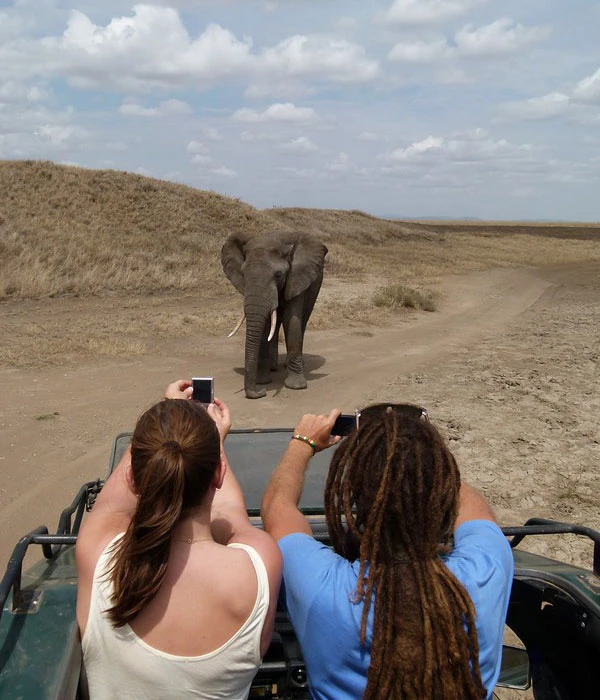
You’ll travel in a customized 4×4 safari Land Cruiser fitted with a pop up roof for wildlife viewing and photography. It has four wheel drive to handle rough park tracks and rural dirt roads, comes stocked with bottled drinking water, and is built with an extended chassis so every passenger gets a window seat.
Do I need a visa for Kenya, Tanzania, Uganda, or Rwanda?
Yes, most nationalities need a visa for all 4 countries visited on this route. Kenya, Tanzania, and Rwanda all offer e-visas that can be applied for online before you travel, while Uganda also offers an e-visa system. Alternatively, the East Africa Tourist Visa covers Kenya, Uganda, and Rwanda in a single application, though it does not include Tanzania, which requires a separate visa. We recommend applying at least 4 to 6 weeks before departure and checking current requirements for your nationality, since rules do change from time to time.
Do I need any vaccinations before travelling?
Yellow fever vaccination is required for entry into several of the countries on this route, and proof of vaccination may be requested at borders. Vaccinations for hepatitis A and B, typhoid, and tetanus are commonly recommended, and malaria prophylaxis is strongly advised for the entire trip, since all 4 countries are malaria risk areas. We recommend consulting a travel clinic or doctor 4 to 6 weeks before departure for personalised advice.
Is it safe to travel across Kenya, Tanzania, Uganda, and Rwanda?
What is included in the meal plans listed each day?
“Full Board” means breakfast, lunch, and dinner are included, while “Half Board” covers 2 of those 3 meals, as noted for Day 1 and Day 18. Meals are generally served at your lodge or camp, with picnic lunches provided on days that include long game drives, so you don’t have to interrupt your wildlife viewing to return to camp.
Will I have internet or phone signal during the trip?
Signal is generally good in towns such as Nairobi, Arusha, and Kigali, and most lodges and camps offer Wi-Fi, though the connection can be slow or intermittent in remote areas like the Serengeti, Masai Mara, and Bwindi. Local SIM cards are inexpensive and widely available, and are a useful backup if you need reliable data throughout your Uganda, Kenya and Tanzania Safari.
Request A free Quote