
Volcanoes National Park Rwanda: Gorilla Trekking & Safari Guide
Volcanoes National Park Rwanda is one of Africa’s best known destinations for mountain gorilla trekking. Located in northwestern Rwanda, the park protects part of the Virunga Mountains and offers much more than gorilla encounters. Visitors can trek golden monkeys, hike volcanic peaks, explore the forest and learn about the conservation work that has helped protect mountain gorillas for decades.
The park is also a convenient destination for travelers staying in Kigali. The journey from Rwanda’s capital to the Volcanoes region can be completed comfortably by road, making it possible to enjoy a short gorilla safari or combine the park with a longer Rwanda wildlife itinerary.
At Iconic Africa Safaris, we help travelers plan Rwanda gorilla safaris based on their time, budget, fitness level and preferred accommodation. This guide explains everything you need to know before visiting Volcanoes National Park, from activities and costs to transportation, accommodation and suggested itineraries.
Volcanoes National Park at a Glance
| Information | Details |
|---|---|
| Country | Rwanda |
| Location | Northwestern Rwanda |
| Main gateway | Musanze/Kinigi area |
| Main attraction | Mountain gorilla trekking |
| Other primates | Golden monkeys |
| Major mountains | Karisimbi, Bisoke, Sabyinyo, Gahinga and Muhabura |
| Main activities | Gorilla trekking, golden monkey trekking, hiking and cultural experiences |
| Nearest major airport | Kigali International Airport |
| Recommended stay | 2 to 4 days for a focused visit |
| Best known wildlife experience | Mountain gorilla trekking |
Volcanoes National Park protects the steep slopes of the Virunga volcanic range. The park contains montane forest, bamboo forest, grassland, swamp and heath habitats, all packed into a relatively compact area. The Virunga volcanic chain includes Mount Karisimbi, Mount Bisoke, Mount Sabyinyo, Mount Gahinga and Mount Muhabura. Karisimbi is the tallest of the five at 4,507 metres, and its silhouette dominates the skyline across much of northern Rwanda.
Where Is Volcanoes National Park?
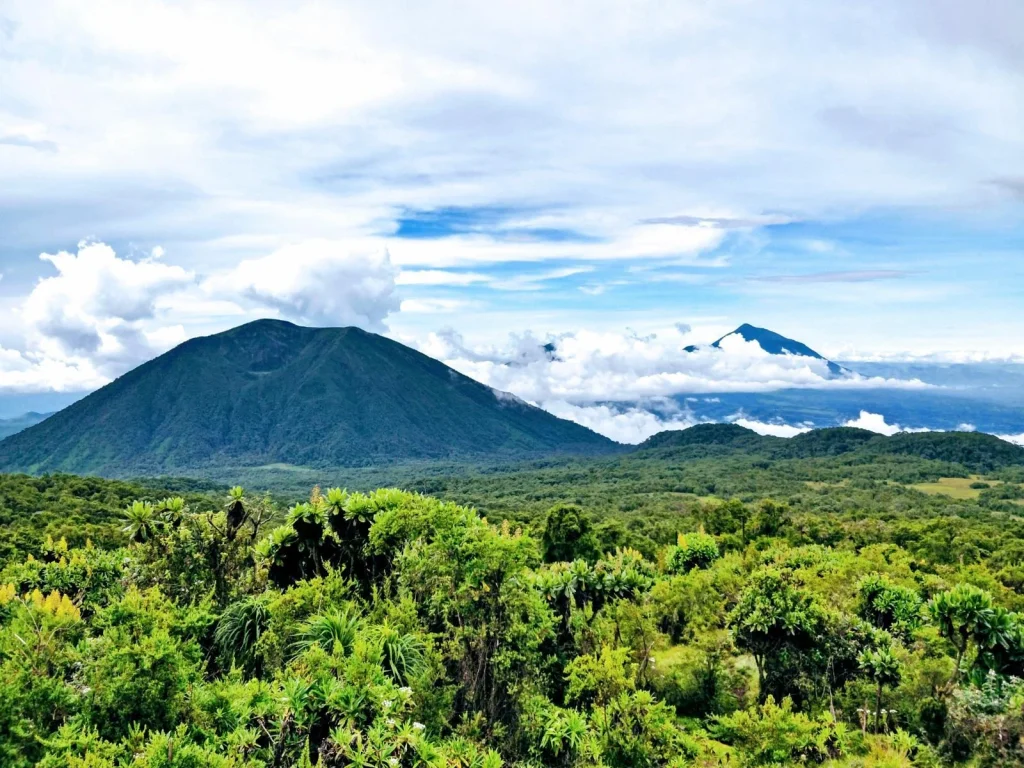
Volcanoes National Park sits in the far northwest of Rwanda, close to the borders with Uganda and the Democratic Republic of the Congo.
The main tourist area is around Musanze, while most gorilla trekking activities begin at the park headquarters in Kinigi, a short drive from town.
Its location makes the park particularly attractive to visitors arriving through Kigali. Travelers can spend a night near the park before trekking the following morning rather than spending several days moving between destinations.
The area also forms part of the larger Virunga conservation landscape, a network of protected forest that stretches across Rwanda, Uganda and the Democratic Republic of the Congo and shelters one of the last remaining mountain gorilla populations on Earth. You can read more about the park’s location, terrain and wildlife on the Volcanoes National Park destination page.
Why Visit Volcanoes National Park Rwanda?
There are several reasons to include Volcanoes National Park in a Rwanda itinerary.
- Mountain gorilla trekking. The park is one of the very few places in the world where travelers can see endangered mountain gorillas in their natural habitat. Gorilla visits are carefully managed, with trained guides and trackers leading small groups through the forest to spend time with a habituated family.
- Golden monkey trekking. Volcanoes National Park is also home to endangered golden monkeys, playful primates found in the bamboo zones of the Virunga Mountains, giving visitors a second unique primate experience alongside gorilla trekking.
- Volcano hiking. Travelers who want a more physical adventure can hike some of the region’s volcanic peaks, including Mount Bisoke, which rewards climbers with a crater lake at its summit.
- Dian Fossey history. The region is closely tied to the work of primatologist Dian Fossey, whose decades of research helped bring international attention to mountain gorilla conservation and shaped how the species is protected today.
- Easy combination with other Rwanda destinations. Volcanoes National Park can be paired with Kigali, Akagera National Park, Nyungwe National Park and Lake Kivu to build a longer, more varied Rwanda safari.
Gorilla Trekking in Volcanoes National Park
Gorilla trekking is the main reason most international travelers visit Volcanoes National Park.
The experience begins with an early morning briefing at the park headquarters in Kinigi. Visitors are allocated a gorilla family and receive instructions on how to behave around the animals before setting off toward the forest with their guide and trackers.
The length of the trek varies considerably. Some groups reach their gorilla family after a relatively short walk, while others need several hours of hiking over steep and sometimes muddy terrain. Treks can range from around 30 minutes to four or more hours, and take place at elevations of roughly 2,500 to 4,000 metres, so a reasonable level of fitness is helpful.
Once the gorilla family is located, visitors are given a strictly managed viewing period, usually around one hour. The rules around distance, noise and behaviour are designed to limit disturbance to the animals while still allowing travelers to observe their natural routines up close.
What Can You See During Gorilla Trekking?
A gorilla trek can include sightings of the following, though every visit unfolds differently because gorillas move freely through their habitat:
- Silverbacks, the dominant adult males who lead each family group and are often the most striking members to observe.
- Adult females, who make up the core of the family and are frequently seen grooming, feeding or resting near the group.
- Juveniles, young gorillas that are typically more active and curious than the adults around them.
- Infants, the youngest members of the family, often seen clinging to their mothers or playing nearby.
- Feeding gorillas, observed foraging on vegetation, a routine part of daily life in the forest.
- Resting gorillas, particularly common around midday when the group settles into a quiet patch of forest.
- Gorillas on the move, traveling as a family unit through dense vegetation.
- Other forest wildlife and birds, encountered along the trail on the way to and from the gorilla family.
How Much Does Gorilla Trekking Cost in Rwanda?
The standard international tourist gorilla trekking permit in Rwanda currently costs US$1,500 per person per trek. The minimum age for gorilla trekking is 15 years. Special rates can apply to Rwandan citizens, East African citizens and certain residents under applicable offers.
A permit is only one part of the total safari cost. Your overall Volcanoes National Park safari may also include the following:
- Accommodation, which can range from simple guesthouses to high end lodges depending on your budget and comfort preferences.
- 4×4 safari transportation, needed for road transfers between Kigali, your lodge and the park headquarters.
- A driver guide, who manages logistics, provides local knowledge and supports you throughout the trip.
- Meals, typically included as part of your lodge or safari package.
- Airport or hotel transfers, arranged to move you smoothly between key points of your journey.
- Park related services, covering park entry and coordination on trekking day.
- Porter services, an optional but worthwhile expense that supports local communities while easing your trek.
- Cultural experiences, such as community and village visits that add context to your safari.
- Optional activities, including golden monkey trekking or volcano hiking if you choose to add them.
- Travel insurance, which is strongly recommended for any gorilla trekking trip given the physical nature of the activity.
This is why two travelers paying the same gorilla permit price can end up with very different total safari costs.
Rwanda Gorilla Trekking Permit Categories
| Traveler category | Permit price |
|---|---|
| International visitor | US$1,500 |
| African visitor under applicable special offer | US$500 |
| Foreign resident under applicable special offer | US$500 |
| East African citizen under applicable special offer | US$200 |
| Rwandan citizen under applicable special offer | US$200 |
Special promotional rates can carry conditions and validity periods, so travelers should always confirm the applicable price at the time of booking. Contact Iconic Africa Safaris to check current permit pricing and availability before you commit to your travel dates.
How Difficult Is Gorilla Trekking?
Gorilla trekking is not a simple wildlife drive. You walk through mountain forest, sometimes over steep and slippery ground, and the pace is set by the terrain rather than a fixed schedule.
Your trekking time depends largely on where the assigned gorilla family happens to be located on the day of your visit, which is not something anyone can predict in advance.
Fitness matters, but you do not need to be an athlete to enjoy the experience. The important thing is to prepare properly and tell your safari operator about any mobility concerns before the trek so the right arrangements can be made.
Tips for Making Gorilla Trekking Easier
- Wear sturdy hiking shoes with good grip, since the forest floor can be uneven, muddy and steep in places.
- Carry waterproof clothing, because mountain weather can change quickly, even during the drier months.
- Wear long trousers and long sleeves to protect your skin from stinging nettles and other dense vegetation along the trail.
- Use gardening or hiking gloves when pushing through thick undergrowth, which can be surprisingly rough on bare hands.
- Carry enough drinking water, as treks can last several hours and there are no facilities along the way.
- Keep your camera equipment protected from rain, using a dry bag or waterproof cover given the unpredictable mountain weather.
- Consider hiring a porter to carry your backpack, which noticeably lightens the physical demands of the hike while supporting the local community.
- Follow your guide’s instructions throughout the trek, since they know the terrain, the gorillas and how to keep everyone safe.
Golden Monkey Trekking in Volcanoes National Park
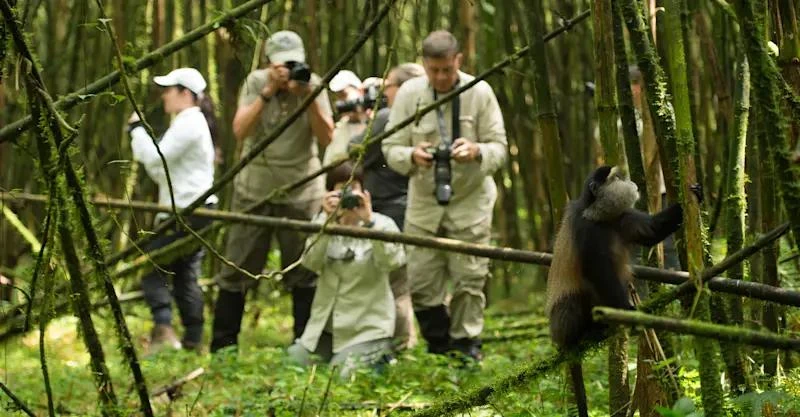
Gorillas are not the only primates that draw visitors to Volcanoes National Park.
Golden monkey trekking offers the chance to search for the endangered golden monkey in the bamboo and forest habitat of the Virunga Mountains. These agile, brightly coloured monkeys move in large troops and are known for their acrobatic behaviour in the bamboo canopy.
This can be an excellent alternative for travelers who cannot secure a gorilla permit, or for those who simply want to add another primate experience to their Rwanda safari.
Golden monkey trekking also pairs well with a gorilla trek on a longer itinerary, since it requires less time and a lower level of physical exertion. Golden monkeys can also be tracked just across the border in Uganda’s Mgahinga Gorilla National Park, and our 4-Day Mgahinga Gorillas and Lake Mutanda Safari shows how that experience fits into a wider itinerary.
Mount Bisoke Hiking
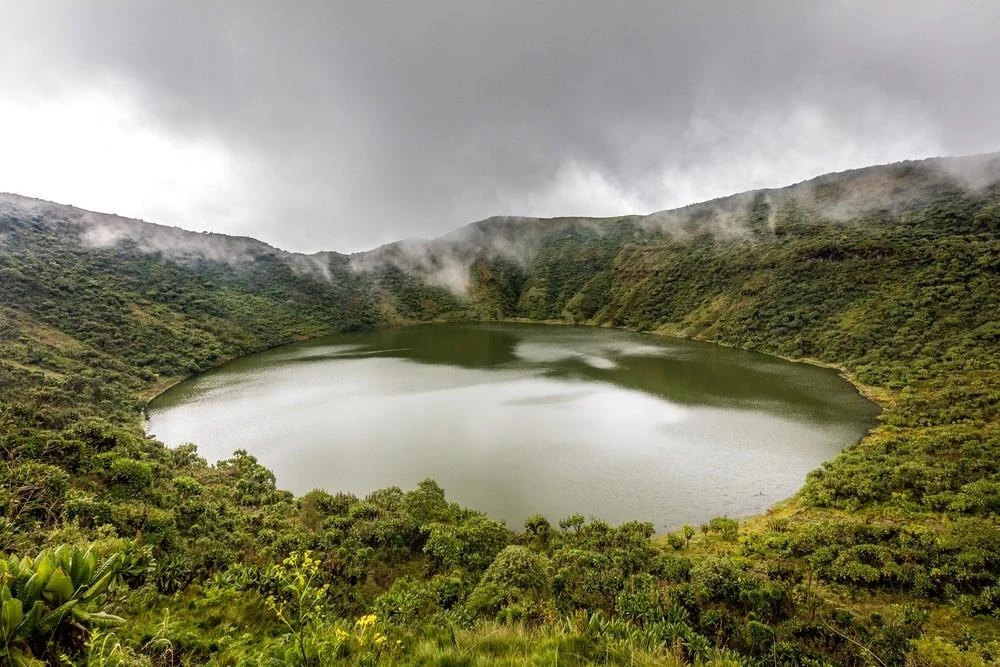
Mount Bisoke is one of the most popular hiking destinations around Volcanoes National Park.
The mountain is known for its crater lake, and the hike offers a very different experience from gorilla trekking, since the goal is reaching the summit rather than searching for a particular animal family.
Instead of tracking wildlife, hikers focus on steadily gaining elevation while taking in sweeping views of the volcanic landscape and, on a clear day, neighbouring peaks across the Virunga range.
The hike demands solid physical preparation, since altitude and steep sections can make the final stretch challenging even for reasonably fit travelers.
Travelers interested in hiking should discuss their fitness level with their tour operator before booking, so the right expectations are set from the start.
Dian Fossey and Gorilla Conservation
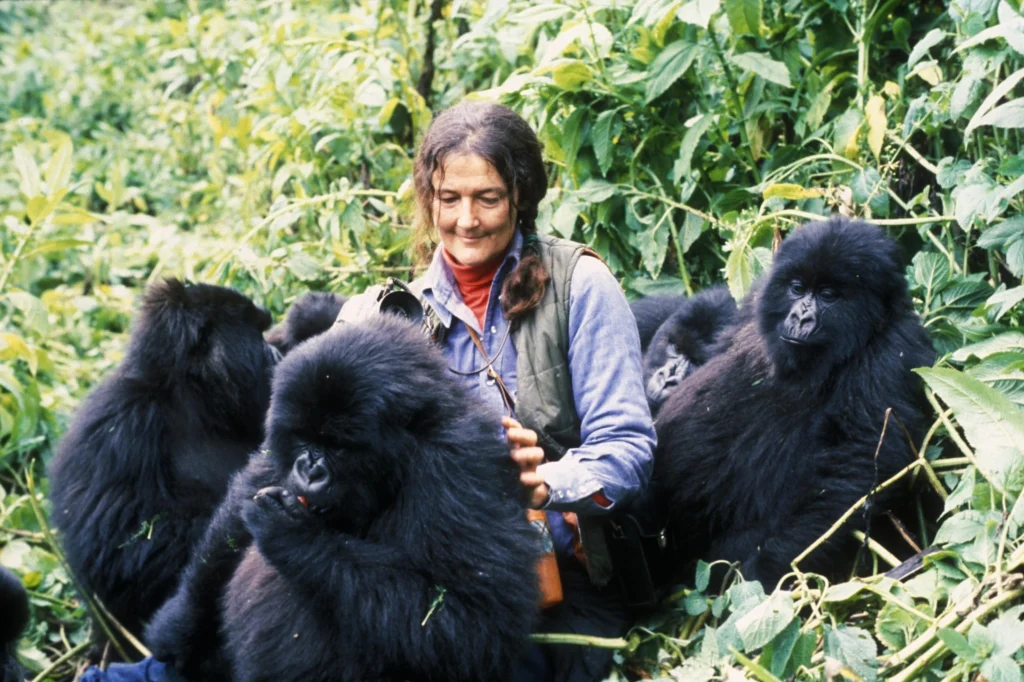
Volcanoes National Park has a deep connection to the history of mountain gorilla conservation.
Dian Fossey spent years studying mountain gorillas in the Virunga region. Her research helped increase international awareness of the threats facing these animals and laid the groundwork for the conservation efforts that continue today.
Visitors interested in this history can hike to the site associated with her former research station and tomb, a journey that involves a drive from the park headquarters followed by a forest hike to elevations above 3,000 metres.
For travelers interested in conservation, this experience adds meaningful context to a gorilla safari and honours the work that made today’s protections possible.
Other Things to Do Around Volcanoes National Park
A visit does not have to end after gorilla trekking. The Musanze and Kinigi area has grown into a destination in its own right, and many travelers find that the experiences below stay with them just as much as the morning they spent with the gorillas, since they slow the pace down and bring you closer to the people and landscape of northern Rwanda.
Iby’Iwacu Cultural Village
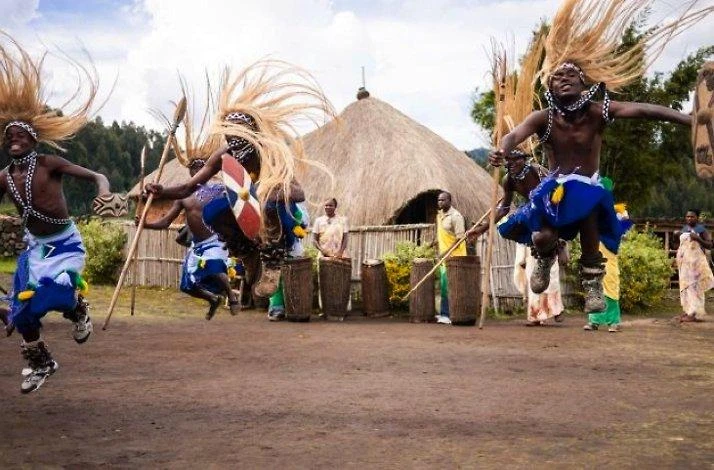
Iby’Iwacu, also known as the Gorilla Guardians Village, sits a short drive from Kinigi in the village of Nyabigoma. Its name means roughly “treasures of our home” in Kinyarwanda, and the story behind it is genuinely moving. The village was founded by former poachers who once hunted in the park for bushmeat, honey and firewood, and who now earn a living by sharing their culture with visitors instead of relying on the forest.
A typical visit runs a few hours and feels closer to taking part in a community event than watching a staged show. A local guide walks you past banana and vegetable plots before leading you into a cluster of traditional grass thatched houses, where elders sit down with visitors to share stories about Rwandan history and daily life. You can try grinding sorghum with a mortar and pestle, have a go at weaving a basket from papyrus reeds, and listen to a traditional healer explain which forest plants were once used to treat common ailments.
The visit usually builds toward a recreation of a royal court, where a visitor is dressed as a Rwandan king for a few minutes and given the chance to hear a case and pass judgment, much as a traditional ruler once would have. It closes with live drumming and dance, and the energy of the performers tends to pull guests up to join in rather than let them just watch from the sidelines. Because the village is community owned, the money spent there goes directly back into local households, including many that once depended on poaching for income. You can read more about experiences like this on our cultural experience page.
Musanze Caves
Just outside town, the Musanze Caves are a network of lava tubes formed by volcanic activity long ago. A guided walk takes you underground with a headlamp, past chambers where bats roost overhead and past rock formations shaped by cooling lava. The walk is not physically demanding, which makes it a good half day activity to pair with a rest morning after a trek, since it involves far less exertion than a hike while still connecting you to the volcanic landscape that defines the region.
Buhanga Eco Park
Buhanga is a small, quiet forest reserve believed locally to be the site where early Rwandan kings were once crowned. Walking trails lead through indigenous forest past sacred sites and a natural spring, with a guide explaining the folklore attached to different trees and clearings along the way. It is a gentle, reflective stop, well suited to travelers who want a slower activity between more strenuous days.
The Dian Fossey Tomb Hike
This is one of the more physically demanding add on hikes in the area, involving a drive from the park headquarters followed by a climb through the forest to elevations above 3,000 metres. The trail leads to the site of the Karisoke Research Center, where Dian Fossey lived and worked for years, and to the graveyard where she and several of the gorillas she studied and lost to poachers are buried. Travelers who have already been gorilla trekking often describe this hike as an emotional way to close the loop, connecting the animals they saw in the forest to the decades of research that made their protection possible.
Golden Monkey Trekking
Covered in more detail earlier in this guide, golden monkey trekking is worth mentioning again here as a genuine option for a second or third day in the park. It takes less time than gorilla trekking, usually wrapping up within two to three hours, and involves an easier walk through bamboo forest, which makes it a good choice for travelers recovering from a harder trek the day before.
Mount Bisoke Hiking
Also detailed earlier, a Bisoke hike is a full day undertaking that rewards climbers with a view down into the volcano’s crater lake. It suits travelers with a spare full day in the park and a genuine appetite for a strenuous mountain hike rather than a leisurely walk.
Bird Watching
The park’s mix of montane forest, bamboo, swamp and heath habitat supports close to 200 recorded bird species, a number of which are found only in this part of the Albertine Rift. A guided birding walk along the lower forest trails, away from the main gorilla trekking routes, is a rewarding way to spend a quieter morning, particularly for travelers with a specific interest in birdlife rather than primates.
Twin Lakes Burera and Ruhondo
A short drive from Musanze brings you to Lake Burera and Lake Ruhondo, two scenic lakes set among terraced hillsides. Options here include a relaxed boat ride, a walk along the shoreline, or simply stopping for photographs and a break from the forest. It is a popular half day addition for travelers who want to see more of the rural scenery that surrounds the park.
Village Walks and Canoeing
Beyond the organised cultural village, some lodges and operators can arrange informal walks through nearby farming communities, giving you a closer look at daily life in the terraced hills around Musanze. Canoeing on the calmer waters near the twin lakes is another relaxed option for travelers who want a day away from hiking.
Mountain Biking
For a more active way to see the countryside, mountain biking routes wind through the hills around Musanze, passing through farmland and small villages. This works well as a change of pace activity for travelers spending three or more days in the region.
Wildlife in Volcanoes National Park
Mountain gorillas are the park’s main attraction, but the forest supports a much wider range of wildlife.
Visitors may encounter the following during their time in the park:
- Mountain gorillas, the headline species and the reason most travelers visit.
- Golden monkeys, an endangered species found in the bamboo zones.
- Forest birds, with around 200 recorded species across the park’s varied habitats.
- Forest mammals, including smaller species that are less commonly seen but still part of the ecosystem.
- Butterflies, especially visible along forest edges and clearings.
- Other smaller forest species, contributing to the overall biodiversity of the Virunga landscape.
Wildlife sightings outside the main primate experiences can be less predictable, so travelers should visit with realistic expectations about what else they might see along the way.
Best Time to Visit Volcanoes National Park
Volcanoes National Park can be visited throughout the year, and the best time depends on what matters most to you.
| Travel period | What to expect |
|---|---|
| June to September | Generally drier conditions and a popular period for trekking |
| December to February | Often favourable for trekking and other outdoor activities |
| March to May | Wetter conditions but a lush forest and fewer visitors in some periods |
| October to November | Rain can occur, but trekking remains possible throughout |
Mountain weather is unpredictable, so even during the relatively dry months you should still carry rain protection.
For gorilla trekking, do not choose your travel date based on weather alone. Permit availability, accommodation prices, your overall Rwanda itinerary and your personal schedule all matter just as much.
How to Get to Volcanoes National Park from Kigali
Most international travelers arrive in Rwanda through Kigali International Airport.
From Kigali, travelers continue by road toward Musanze and the Volcanoes region.
A private safari vehicle is often the most convenient option, since your driver guide can coordinate the journey, accommodation and activities without you needing to manage logistics yourself.
This arrangement also gives you the flexibility to stop along the way and combine Volcanoes National Park with other destinations on the same route.
Kigali to Volcanoes National Park
The road journey from Kigali to the Volcanoes region generally takes a few hours, depending on your exact starting point, traffic and road conditions.
For an early morning gorilla trek, we recommend spending the night near the park rather than trying to travel from Kigali on the same morning. This reduces travel pressure and gives you more time to rest before the trek begins.
Where to Stay Near Volcanoes National Park
Accommodation options range from simple guesthouses to high end luxury lodges, and your choice should depend on your budget, preferred comfort level and how close you want to stay to the trekking area.
Budget Accommodation
Budget travelers can choose simple guesthouses and lodges around Musanze and Kinigi. These properties suit travelers who would rather put more of their budget toward activities and transportation than toward accommodation itself.
- Kinigi Guesthouse. Set at the base of Mount Sabyinyo, close to the park headquarters, this is a simple, no frills property with a capacity of around 40 guests. It is a practical, well located base for trekkers who want to spend as little time as possible on the road on trekking morning.
- Simple guesthouses and hotels in Musanze town. Musanze itself has a range of small, clean, family run guesthouses offering basic rooms at low rates, a good fit for travelers who plan to spend most of their time out on activities rather than in their room.
Mid Range Accommodation
Mid range lodges strike a balance between comfort and price. They are a good choice for couples, families and travelers who want comfortable rooms, good meals and convenient access to the park without paying for a full luxury experience.
- La Palme Hotel. A three star hotel in Musanze town with a restaurant serving African, French and other international dishes. It suits travelers who want a comfortable, reasonably priced base close to town rather than out at Kinigi itself.
- Five Volcanoes Boutique Hotel. Located in Kinigi Village, around a 15 minute drive from the park headquarters, this small property has 13 self contained, air conditioned rooms with flat screen televisions, a restaurant and bar, and a swimming pool. Its intimate size makes for a more personal stay than the larger luxury lodges nearby.
- Da Vinci Gorilla Lodge. Set in Kinigi beneath the slopes of Mount Karisimbi, around a 15 minute drive from the park, this lodge offers self contained cottages with a natural design, a restaurant serving international meals, and attentive, well trained staff.
- Villa Gorilla. A small guesthouse near the park headquarters with four comfortable double rooms, each with a private bathroom. Its size makes it a good option for travelers who want a quiet, personal stay rather than a larger hotel setting.
Luxury Accommodation
Luxury lodges around Volcanoes National Park focus on high end rooms, fine dining, scenic views, attentive service and additional guest experiences. They work particularly well for honeymooners and travelers planning a premium Rwanda safari.
- Wilderness Bisate Lodge. Set within a private 1,000 hectare concession between the Bisoke and Karisimbi volcanoes, Bisate has only six luxury villas, making it one of the most exclusive and private options near the park. It is well known for its restoration work in the surrounding forest as much as for its accommodation.
- Singita Kwitonda Lodge. Located near Mount Sabyinyo, with views across to Muhabura and Gahinga, Kwitonda offers luxurious suites with private heated plunge pools and outdoor fireplaces, set within land that Singita has worked to reforest as part of its conservation programme.
- One&Only Gorilla’s Nest. Set in Kinigi on the way to the park, this five star lodge offers modern rooms and separate garden houses positioned to take advantage of clear views across the surrounding volcanoes and forest.
- Sabyinyo Silverback Lodge. Situated at the foothills of the Virunga range close to the park headquarters, this lodge is known for its wide views over the rolling hills below and its strong ties to community conservation initiatives in the area.
These luxury properties typically combine volcano views, private verandas or plunge pools, fine dining and strong community or conservation involvement, and they book up quickly during peak trekking months, so early reservations are strongly recommended. Whichever category suits your trip, Iconic Africa Safaris can help you choose and book the right lodge based on your budget, group size and how close you want to stay to the park headquarters.
How Many Days Do You Need in Volcanoes National Park?
The answer depends on your activities and interests.
2 Days Gorilla Trekking
A two day trip works well for travelers whose main goal is gorilla trekking.
- Day 1: Kigali to Volcanoes National Park
- Day 2: Gorilla trekking, then return to Kigali
3 Days Gorilla Trekking
Three days provide a more relaxed pace.
- Day 1: Kigali to Volcanoes National Park
- Day 2: Gorilla trekking
- Day 3: Cultural experience or golden monkey trekking, then return to Kigali
4 Days Gorillas and Golden Monkeys
Four days give you room to combine gorilla trekking with another activity.
- Day 1: Kigali to Volcanoes National Park
- Day 2: Gorilla trekking
- Day 3: Golden monkey trekking or Mount Bisoke hike
- Day 4: Volcanoes National Park to Kigali
5 Day Rwanda Gorilla and Wildlife Safari
A five day itinerary can combine Volcanoes National Park with another major Rwanda destination. For example:
- Day 1: Kigali to Volcanoes National Park
- Day 2: Gorilla trekking
- Day 3: Volcanoes to Akagera region
- Day 4: Akagera game drive
- Day 5: Return to Kigali
The exact itinerary can be adjusted according to flight schedules, accommodation preferences and activities you would like to include. This general structure closely follows our 5-Day Rwanda Gorillas and Game Adventure, which you can review for a more detailed day by day plan.
What to Pack for Volcanoes National Park
Good preparation can make your trekking experience far more comfortable. Consider packing the following:
- Sturdy hiking boots, ideally worn in before your trip to avoid blisters on trekking day.
- Long trousers, offering protection from vegetation along the trail.
- Long sleeved shirts, for the same reason and to guard against insect bites.
- A lightweight waterproof jacket, essential given how quickly mountain weather can change.
- Gardening or hiking gloves, useful when pushing through dense undergrowth.
- Warm layers, since temperatures drop noticeably at higher elevations.
- A hat, for protection against sun exposure during lower altitude sections of the walk.
- Sunscreen, even on overcast days, since UV exposure at altitude can be stronger than expected.
- Insect repellent, to reduce the chance of bites during the forest walk.
- A reusable water bottle, to stay hydrated over what can be a long trek.
- A small backpack, sized for a day trek rather than an overnight trip.
- A camera, to capture the experience, along with appropriate lenses if you have them.
- Spare batteries or a power bank, since charging opportunities may be limited near the park.
- Personal medication, packed and easily accessible in case you need it during the trek.
- Waterproof protection for electronics, to keep cameras and phones safe from sudden rain.
Avoid carrying a large suitcase into the forest. A small daypack is far easier to manage during the trek itself.
Is Volcanoes National Park Suitable for Families?
Volcanoes National Park can be suitable for families, but gorilla trekking comes with an important age restriction.
The minimum age for gorilla trekking in Rwanda is 15 years.
Families traveling with younger children do not need to miss out on the wider trip. While parents and older teenagers head out for gorilla or golden monkey trekking, children under 15 can stay back at the lodge with a caregiver and take part in alternative activities arranged on site, such as nature walks around the grounds, cultural storytelling, craft sessions or simply relaxing by the pool where the lodge has one.
Many of the family friendly lodges around Kinigi and Musanze are used to hosting mixed age groups and can put together a supervised programme for younger children while the rest of the family is out trekking, so it is worth mentioning ages when you book so your lodge can prepare accordingly.
A family safari can also combine Volcanoes National Park with less strenuous cultural, scenic and wildlife experiences found elsewhere in Rwanda, such as a game drive in Akagera, which has no age restriction and gives younger children a proper wildlife encounter of their own.
Is Volcanoes National Park Suitable for Couples?
Yes, Volcanoes National Park is a popular choice for couples, including honeymooners and those celebrating anniversaries.
Gorilla trekking itself makes for a genuinely shared adventure, since the trek and the time spent with the gorilla family is something couples experience together rather than as separate activities. Many of the lodges around Kinigi and Musanze, particularly in the mid range and luxury categories, are designed with couples in mind, offering private cottages or villas, romantic dining setups, fireplaces and, at some of the higher end properties, private plunge pools with volcano views.
Beyond trekking, couples often add a golden monkey trek, a relaxed cultural visit to Iby’Iwacu, or a scenic outing to the twin lakes for a slower, more romantic day between more active ones. Because gorilla permits are limited and the more intimate lodges have relatively few rooms, couples travelling during peak months should book both permits and accommodation well ahead of their travel dates.
Is Volcanoes National Park Suitable for Sole Travelers?
Yes, Volcanoes National Park works well for sole travelers, and gorilla trekking is a naturally social activity even if you arrive on your own.
Trekking groups are made up of a mix of travelers assigned to the same gorilla family, so you will spend the morning walking and observing gorillas alongside other visitors and a guide, which tends to make the experience feel welcoming rather than isolating. Many lodges, from budget guesthouses to luxury properties, are used to hosting solo guests and can seat you with other travelers at meals if you would like the company.
Sole travelers should be aware that some accommodation is priced per room rather than per person, so a single traveler may pay a similar rate to two people sharing, and it is worth asking your safari operator about single occupancy pricing when booking. Traveling with a private driver guide, which Iconic Africa Safaris can arrange, is also a good option for sole travelers who want a flexible, personally guided itinerary rather than joining a larger group tour.
Is Volcanoes National Park Worth Visiting?
Yes, especially if seeing mountain gorillas is one of your main travel goals.
The park offers a rare combination of wildlife, mountains, forests, primates and conservation history within a relatively compact region, making it possible to have a meaningful safari experience even on a short trip.
It also works well for both short and extended Rwanda safaris. A traveler with only two days can focus on gorilla trekking, while someone with a week or more can combine Volcanoes National Park with Akagera, Nyungwe, Lake Kivu and Kigali for a fuller picture of the country.
Volcanoes National Park vs Bwindi for Gorilla Trekking
Travelers often compare Rwanda’s Volcanoes National Park with Uganda’s Bwindi Impenetrable National Park.
| Feature | Volcanoes National Park | Bwindi Impenetrable National Park |
|---|---|---|
| Country | Rwanda | Uganda |
| Main activity | Gorilla trekking | Gorilla trekking |
| Landscape | Virunga volcanic mountains | Ancient rainforest |
| Access | Convenient from Kigali | Commonly accessed from Kampala/Entebbe or Kigali |
| Gorilla permit | Higher for international visitors | Lower for international visitors |
| Other primates | Golden monkeys | Several primate species |
| Main advantage | Convenient Rwanda gorilla safari | More budget friendly permit option |
The better choice depends on your budget, starting point, preferred trekking sector and wider East African itinerary.
Travelers combining gorilla trekking with a Uganda safari may find Bwindi more practical, while those focusing on Rwanda alone may prefer Volcanoes National Park.
Can You Combine Volcanoes National Park With Uganda?
Yes, and it is one of the most popular ways to extend a Rwanda gorilla safari. Volcanoes National Park sits close enough to the Uganda border that a Rwanda Uganda itinerary combining gorilla trekking with chimpanzee trekking, savannah wildlife and other East African experiences is genuinely practical, not just a theoretical add on.
Crossing the Border
The most direct route between the Volcanoes region and southwestern Uganda is the Cyanika border crossing, roughly a 30 to 45 minute drive from Musanze and around 25 kilometres from town. From Cyanika, it is a further drive of about one to two hours to reach the southern sectors of Bwindi Impenetrable National Park, Rushaga and Nkuringo, or a shorter drive of around 30 minutes to reach Mgahinga Gorilla National Park just across the border in Uganda. Because of this proximity, it is entirely possible to trek gorillas in Rwanda one morning and be settled into a lodge in Uganda by the same evening.
Travelers heading to Bwindi’s northern sector, Buhoma, generally use the Gatuna (Katuna) border crossing instead, which adds more driving time but connects more directly to that part of the park.
Border formalities at Cyanika are generally straightforward, especially if your safari operator prepares your documentation in advance. Holding an East Africa Tourist Visa, which covers Rwanda, Uganda and Kenya on a single visa, simplifies the crossing considerably compared to arranging separate visas for each country, so it is worth asking Iconic Africa Safaris about this option when we plan your itinerary.
By Road or by Air
Most travelers combining the two countries do so by road, since the driving distances are relatively short by regional standards and the journey itself passes through scenic Virunga foothills and terraced farmland. For travelers short on time, flying between Kigali and Entebbe is also an option, with a nonstop flight taking a little over an hour, followed by a further road or light aircraft transfer to whichever Ugandan park you are visiting. Which option makes more sense depends on your overall itinerary and how many other stops you are including along the way.
Possible Combinations
- Rwanda gorilla trekking plus Uganda chimpanzee trekking. Rwanda’s own Nyungwe National Park also offers chimpanzee trekking, but pairing a Volcanoes gorilla trek with chimpanzee tracking in Uganda, commonly done at Kibale Forest, gives you two great ape experiences in two different countries within a single trip.
- Rwanda gorilla trekking plus Queen Elizabeth National Park. This adds classic savannah game drives, a boat cruise along the Kazinga Channel with dense hippo and bird activity, and the chance to see tree climbing lions in the Ishasha sector, giving your trip a strong wildlife contrast to the forest trekking in Rwanda.
- Rwanda gorilla trekking plus Murchison Falls National Park. A longer add on given the distance involved, this combination pairs gorillas with Uganda’s most dramatic waterfall, strong game drives and a boat cruise to the base of the falls, and suits travelers with a week or more available.
- Rwanda gorilla trekking plus Bwindi. Because Bwindi and Volcanoes are so close together via Cyanika, some travelers choose to trek gorillas in both parks on the same trip, visiting two different habituated families in two different forest ecosystems just a few hours apart. Our 7-Day Rwanda-Uganda Double Gorilla Trekking and Game Safari is built around exactly this kind of trip.
- Rwanda gorilla trekking plus Mgahinga Gorilla National Park. Mgahinga sits just across the border from Cyanika and offers golden monkey trekking of its own, making it a convenient half day add on for travelers who want another primate experience without a long drive.
- Rwanda gorilla trekking plus Akagera and Bwindi. For travelers who want gorillas, savannah game and a second gorilla trek all in one trip, our 5-Day Akagera Game and Bwindi Gorillas Safari combines all three across Rwanda and Uganda.
- Rwanda gorilla trekking plus a wider Uganda wildlife safari. For travelers with two weeks or more, Rwanda’s gorillas can serve as the opening chapter of a longer Uganda circuit taking in several parks, savannah wildlife and multiple primate species. Explore our full set of East Africa safari itineraries for longer combined trip ideas.
The best route depends on your arrival airport, departure airport, number of available days and preferred activities, and Iconic Africa Safaris can help sequence border crossings, permits and lodges so the logistics stay simple even when the itinerary spans two countries.
Responsible Gorilla Tourism
Gorilla tourism must be handled carefully because mountain gorillas are wild animals living in a fragile ecosystem.
Visitors should keep the following in mind throughout their trek:
- Follow your guide’s instructions at all times, since they are trained to keep both you and the gorillas safe.
- Keep the required distance from gorillas, which helps protect the animals from human diseases and reduces stress on the group.
- Avoid touching the animals, even if a curious gorilla approaches closely.
- Never feed wildlife, since this can alter natural behaviour and create dependency on humans.
- Avoid leaving rubbish in the forest, to protect the habitat for future visitors and the animals that live there.
- Avoid trekking when sick, since gorillas are highly susceptible to human respiratory illnesses.
- Keep noise to a minimum, allowing the gorillas to continue their natural routines undisturbed.
- Respect all park rules, which exist to balance tourism with long term conservation.
- Follow photography instructions, including any restrictions on flash photography near the animals.
Rwanda’s gorilla tourism model also contributes directly to surrounding communities, with a share of gorilla permit revenue directed toward local projects such as schools, health centres and roads. You can read more about how we approach this on our responsible travel page.
Why Book a Volcanoes National Park Safari With Iconic Africa Safaris?
At Iconic Africa Safaris, we focus on helping travelers plan practical, well organized gorilla and wildlife safaris in Rwanda and Uganda.
- Experienced safari consultants. Our team has hands on experience planning East African travel and can help match your itinerary to your budget, available time and interests.
- Gorilla permit assistance. We help travelers navigate the permit process and coordinate it seamlessly with accommodation and transportation.
- Comfortable safari transportation. We arrange suitable 4×4 safari vehicles for road transfers and sightseeing throughout your trip.
- Carefully selected accommodation. We recommend properties based on your budget, preferred location and desired comfort level.
- Experienced local guides. Our guides help travelers navigate the region, understand the destination and prepare properly for trekking.
- Tailor made itineraries. You can combine Volcanoes National Park with Kigali, Akagera, Lake Kivu, Nyungwe or Uganda according to your travel plans.
- Support from inquiry to departure. We help coordinate your safari before arrival and remain available throughout your trip.
Plan Your Volcanoes National Park Safari
Volcanoes National Park offers much more than a single gorilla trek. Its mountain forests, volcanic peaks, golden monkeys, conservation history and surrounding communities make it one of Rwanda’s most important safari destinations.
For travelers whose main goal is mountain gorilla trekking, a two or three day Rwanda gorilla safari can be enough. Those with more time can add golden monkey trekking, Mount Bisoke, cultural experiences or another Rwanda national park.
The most important step is to plan your permit, accommodation and transportation early, especially if you are traveling during a busy period.
Ready to plan your Volcanoes National Park safari? Contact Iconic Africa Safaris for a tailor made Rwanda gorilla trekking itinerary based on your dates, budget and preferred accommodation. Reach us through our online booking form, by emailing info@iconicafricasafaris.com, or via WhatsApp by clicking the icon in the bottom right corner of your screen.
Frequently Asked Questions About Volcanoes National Park Rwanda
What is Volcanoes National Park famous for?
Volcanoes National Park is best known for mountain gorilla trekking. It is also known for golden monkeys, volcanic mountains, hiking and its connection to Dian Fossey’s gorilla conservation work.
Where is Volcanoes National Park located?
The park is located in northwestern Rwanda, in the Virunga Mountains. The main tourist gateway is around Musanze and Kinigi.
How much is a Rwanda gorilla permit?
The standard international tourist gorilla permit currently costs US$1,500 per person. Special rates may apply to eligible Rwandan, East African and resident travelers.
How old must you be to trek gorillas in Rwanda?
The minimum age for gorilla trekking in Rwanda is 15 years.
How long does gorilla trekking take?
The duration varies depending on where the assigned gorilla family is located on the day. Some treks may take around 30 minutes, while others can require four or more hours of hiking.
What should I wear for gorilla trekking?
Wear sturdy hiking shoes, long trousers, long sleeves and protective gloves. A lightweight waterproof jacket is also useful since mountain weather can change quickly.
Can I see golden monkeys in Volcanoes National Park?
Yes. Golden monkey trekking is one of the main primate experiences available in the Volcanoes region.
Can I hike Mount Bisoke?
Yes. Mount Bisoke is a popular hiking destination known for its volcanic crater lake at the summit.
How many days should I spend in Volcanoes National Park?
Two days can work for a focused gorilla trekking trip. Three to four days are better if you want to add another activity such as golden monkey trekking or hiking.
Can I visit Volcanoes National Park from Kigali?
Yes. Kigali is the main starting point for most Rwanda gorilla safaris. We recommend traveling to the Volcanoes region the day before your trekking day so you are rested and ready for the early briefing.
Is Volcanoes National Park safe?
Gorilla trekking is a carefully managed tourism activity led by trained guides and trackers. Visitors should follow all park instructions and remain with their assigned group throughout the experience.
Can I combine Volcanoes National Park with Akagera?
Yes. A Rwanda itinerary can combine gorilla trekking in Volcanoes National Park with a savannah wildlife safari in Akagera National Park.
Can I combine Rwanda and Uganda gorilla trekking?
Yes. Rwanda and Uganda can be combined in a longer East African itinerary. The best route depends on your activities, starting point and available travel time.
When should I book my gorilla safari?
It is best to plan well in advance, especially if you have fixed travel dates. Gorilla permits are limited, and your preferred lodge and safari vehicle may also have limited availability.
Final Planning Checklist
Before traveling to Volcanoes National Park, make sure you have the following covered:
- Confirmed your gorilla permit, since availability is limited and dates can fill up quickly during busy periods.
- Confirmed accommodation, ideally booked well ahead of your travel dates.
- Arranged transportation, including your safari vehicle and driver guide for the full trip.
- Checked passport and visa requirements, well before your departure date.
- Purchased suitable travel insurance, covering trekking activities specifically.
- Prepared proper trekking shoes and clothing, tested and comfortable before you travel.
- Checked your international and domestic flight arrangements, allowing enough buffer time between connections.
- Allowed enough time to reach the park before trekking, ideally by spending the night before your trek near the park.
- Discussed your fitness level and preferences with your safari operator, so your itinerary matches your ability.
- Planned additional activities if staying longer than two days, to make the most of your time in the region.
Volcanoes National Park Rwanda is best experienced with a plan that balances your main goal, budget, fitness level and available time. With the right preparation, you can combine gorilla trekking with other experiences and see much more of northern Rwanda than the gorillas alone.
Ready to start planning? Contact Iconic Africa Safaris through our online booking form, email us at info@iconicafricasafaris.com, or message us on WhatsApp using the icon in the bottom right corner of your screen.