
Maasai Mara National Reserve: Complete Game Safari Guide
If you’ve spent any time researching an East African safari, you’ve already come across the name Maasai Mara National Reserve. It’s the reserve behind the postcard image most people carry in their heads: golden grass rolling to the horizon, a pride of lions resting under a lone acacia, and, for a few weeks each year, a river turned brown with a million crossing wildebeest.
This guide from Iconic Africa Safaris is built for travelers who are past the “what is the Maasai Mara” stage and into the “how do I actually plan this” stage. We cover what Maasai Mara National Reserve is, what you’ll see there, when to go, what it costs, where to stay, and the mistakes we see first time safari travelers make again and again. Many travelers also pair their trip with our Uganda safaris or Rwanda safaris for gorilla trekking, so we’ll point out where that fits too. Wherever the numbers change with the seasons, entrance fees, safari costs, migration timing, we’ve flagged that clearly so you can plan around it with confidence.
What Is Maasai Mara National Reserve?
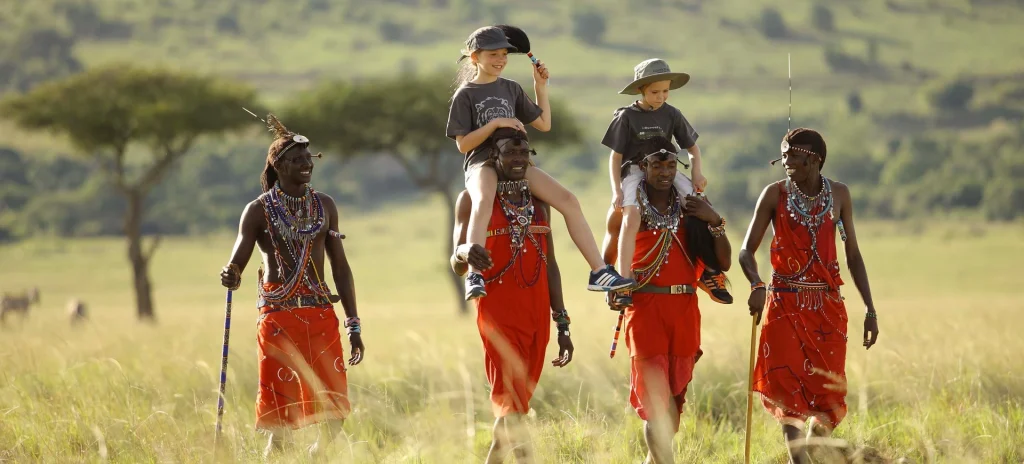
Maasai Mara National Reserve sits in southwestern Kenya, in Narok County, along the border with Tanzania. It covers roughly 1,510 square kilometers (583 square miles) of rolling savannah, riverine forest, and acacia woodland, and it’s only the Kenyan slice of a much larger, unfenced ecosystem that continues south into Tanzania as the Serengeti National Park.
That connection matters more than most articles give it credit for. Maasai Mara National Reserve and the Serengeti function as a single ecological unit. Animals move freely between the two depending on rainfall and grass growth, which is exactly why the Great Migration happens at all. The reserve is named after the Maa speaking Maasai people who have herded cattle across this land for centuries, and “mara” is a Maasai word roughly meaning “spotted,” a reference to how the landscape looks from a distance, dotted with trees, shadow, and grazing animals.
The reserve is managed in two parts. The Mara Triangle, on the western side toward the Oloololo Escarpment, is run by the Mara Conservancy, a not for profit body. The larger eastern and central section is managed by the Narok County Government. Beyond the reserve boundary itself, a ring of private and community owned conservancies, Mara North, Naboisho, Olare Motorogi, and others, buffer the core reserve and offer a different, lower density safari experience.
Why Visit Maasai Mara National Reserve?
There are dozens of safari destinations in Africa. Here’s what specifically pulls travelers toward Maasai Mara National Reserve:
- Big Five sightings. Lion, leopard, elephant, buffalo, and (with more effort) black rhino are all present, and the Mara has one of the highest lion densities of any reserve on the continent.
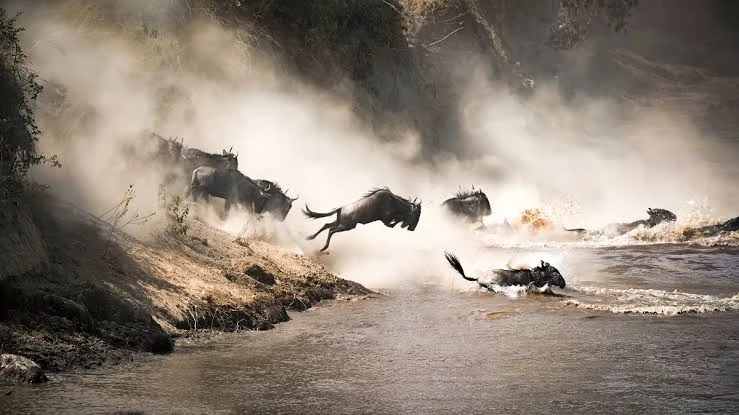
- The Great Migration. Between roughly July and October, over a million wildebeest along with hundreds of thousands of zebra pass through the Mara from the Serengeti, drawn by fresh grass.
- Predator sightings. Because prey density is so high, predator encounters, lion prides, cheetah, leopard, and spotted hyena, are frequent and often at close range.
- River crossings. The Mara and Talek Rivers produce some of the most dramatic wildlife footage in the world, as wildebeest attempt crossings past waiting crocodiles.
- Wildlife year round, not just during migration. Resident wildlife, giraffe, zebra, hippo, elephant, and the Mara’s big cats, are present every month of the year, which is worth knowing if your travel dates don’t line up with migration season.
- Maasai cultural experiences. Many conservancies and lodges support village visits, guided by Maasai community members rather than presented as a spectacle.
- Open, dramatic landscapes. Unlike more forested parks, the Mara’s open plains mean sightings are rarely obstructed, and the light at sunrise and sunset is genuinely spectacular for photography.
- Walking safaris and hot air balloon flights, permitted in specific conservancies, which most core reserve safaris don’t offer.
Where Is Maasai Mara National Reserve?
The Mara sits about 270 km (170 miles) southwest of Nairobi, Kenya’s capital. How long that takes depends entirely on how you travel:
- By road: Roughly 5 to 6 hours by road via Narok town, on a mix of tarmac and rougher reserve roads. This is the budget option and also a scenic way to see rural Kenya, but it’s a long day, especially with an early game drive planned for the same afternoon.
- By air: Scheduled light aircraft flights leave from Nairobi’s Wilson Airport several times daily and land at one of several small airstrips inside or near the reserve (Keekorok, Musiara, Olkiombo, Ol Seki, and others depending on your camp). Flight time is around 45 minutes.
Most mid range and luxury travelers fly in, both to save time and because road transfers on the last stretch into the reserve can be rough. Budget travelers and those combining the Mara with other stops often go overland.
Wildlife in Maasai Mara National Reserve
The reserve’s reputation rests on genuinely exceptional wildlife density. Here’s what to expect from the main species groups.
- Lions. Maasai Mara National Reserve has one of Africa’s densest lion populations, with well studied, named prides (including several tracked long term by researchers). Early morning and late afternoon drives give the best chance of catching them active rather than resting in shade.
- Leopards. More elusive than lions, leopards favor riverine forest along the Mara and Talek Rivers. Guides who know specific territories, often gained from years working the same stretch of reserve, dramatically improve your odds versus a first time self driving visitor.
- Cheetahs. The Mara’s open plains are close to ideal cheetah habitat, since they hunt by sight and need clear sightlines. Cheetah sightings, including hunts, are realistically common here compared to denser parks elsewhere in Africa.
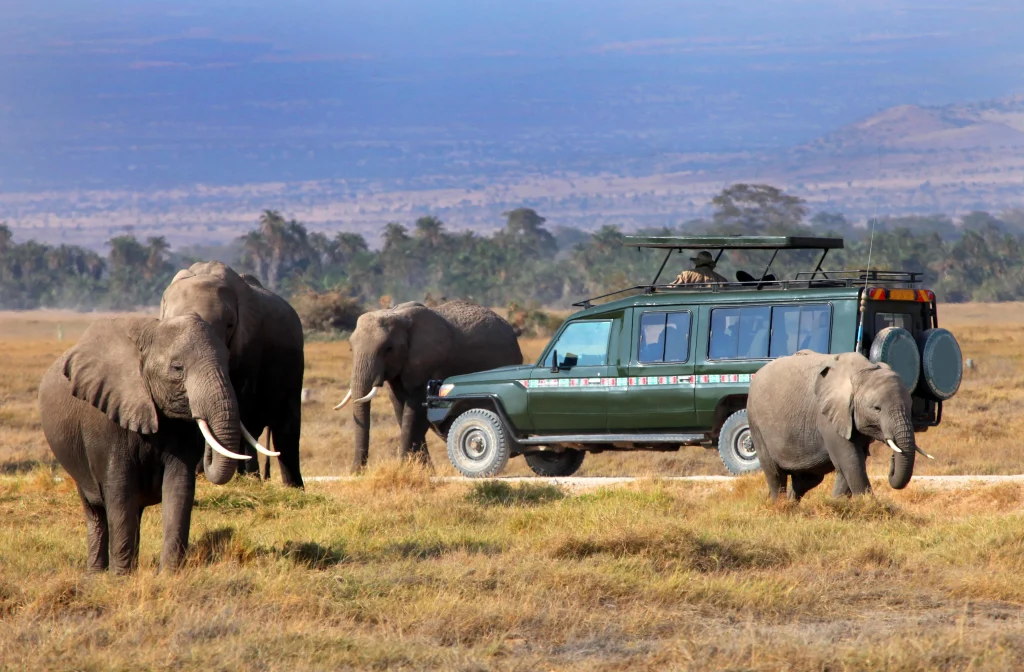
- Elephants. Present throughout the reserve, often in large family herds, and generally easier to find than the cats.
- Buffaloes. Large herds are common, particularly near water sources.
- Rhinos. Black rhino exist in the Mara but in small numbers and are genuinely difficult to find; don’t book a safari purely on the promise of a rhino sighting.
- Hippos. Concentrated in pools along the Mara River, particularly near the main crossing points, and easy to view from established hippo pool viewpoints.
- Giraffes and zebras. Both are abundant and, along with wildebeest, form the bulk of what you’ll see between the “headline” predator sightings.
- Wildebeest. Resident populations exist year round, but numbers swell enormously during the Great Migration.
- Birds. Over 470 recorded bird species, from raptors like the martial eagle and secretary bird to colorful residents such as lilac breasted rollers, a serious draw for birding focused travelers, even outside peak mammal season.
The Great Migration in Maasai Mara National Reserve
The Great Migration isn’t a single event with a fixed start date, it’s a continuous, year round movement of roughly 1.5 million wildebeest and several hundred thousand zebra, following rainfall and grass growth in a broad clockwise loop through the Serengeti Mara ecosystem.
For most of the year, the herds are in Tanzania. They typically begin arriving in the Mara from around July, largely because the Serengeti’s grass has been grazed down and the Mara’s grass, fed by different rainfall patterns, is greener. Numbers usually build through August and peak in September, with herds starting to move back south from October.
The river crossings, the most sought after moment of any migration safari, happen when the herds need to cross the Mara or Talek Rivers to reach fresh grazing, or when they’re pushed back and forth by shifting rain patterns. This is the detail most articles skip: crossings are driven by weather and grass conditions, not a calendar, so no operator, however experienced, can guarantee you’ll witness one on a specific date.
Herds can sit on a riverbank for days before crossing, or cross multiple times in a single week if conditions push them back and forth. If seeing a crossing is your top priority, plan for at least 4 to 5 days in the reserve during August or September, rather than a quick 2-day add on, and choose a camp positioned near the river. Our 3 Days Wildebeest Migration and Game safari is built around exactly this window.
Best Time to Visit Maasai Mara National Reserve
| Season | Months | What to expect |
|---|---|---|
| Great Migration | July to October | Peak wildebeest numbers, highest chance of river crossings, dramatic predator action, busiest and most expensive period |
| Dry season (shoulder) | January to March | Good general game viewing, thinner vegetation makes animals easier to spot, calving season for wildebeest often begins around late January or February |
| Long rains | April to May | Lowest visitor numbers and lowest prices, lush green scenery, but some roads become difficult and some camps close |
| Short rains | November to December | Green season returning, fewer crowds than migration months, good value, wildlife still strong since much doesn’t leave the ecosystem |
There isn’t a genuinely bad time to visit, resident wildlife is present all year, but your priorities should decide your season. Want the migration and don’t mind crowds or peak pricing? Go July to September. Want a quieter, more affordable trip with excellent photography light and fewer vehicles at every sighting? Consider the shoulder or green seasons.
Maasai Mara National Reserve Safari Cost
Safari pricing is one of the most confusing parts of planning a Kenya trip, mostly because quoted prices rarely make clear what’s actually included. Here’s a realistic breakdown per person per night, based on double occupancy, for the 2026 season:
| Safari type | Typical cost (per person/night) | Best for |
|---|---|---|
| Budget | $150 to $300 | Travelers prioritizing cost over comfort, camping or basic tented camps |
| Mid range | $350 to $650 | Couples and families wanting comfortable tented camps or lodges with solid guiding |
| Luxury | $700 to $1,500+ | Travelers wanting premium camps, private conservancies, and top tier guiding |
| Private or tailor made safari | Varies widely | Travelers wanting a custom vehicle, guide, and itinerary rather than a shared group departure |
What’s usually included: accommodation, most or all meals, game drives with a guide, and park or conservancy fees (though not always, always confirm this specifically).
What’s often excluded: international flights, Nairobi to Mara flights or road transfers, alcoholic drinks, tips for guides and camp staff, travel insurance, and optional extras like hot air balloon safaris (typically $450 to $550 per person) or specialist photography vehicles.
What actually moves the price:
- Accommodation category, this is the single biggest factor. A basic tented camp and an ultra luxury camp on the same riverbank can differ by $1,000+ per night.
- Location, camps inside private conservancies generally cost more than those just outside the main reserve, but offer exclusivity, night drives, and walking safaris that the core reserve doesn’t permit.
- Season, peak migration months command premium rates; green season rates can drop 30 to 40%.
- Group size and vehicle type, a private vehicle and guide cost more than a shared group vehicle, but give you far more flexibility on timing and where you go.
- Number of days, per night rates often drop slightly on longer stays, and flight or transfer costs get spread across more nights.
- Extra activities, balloon safaris, guided walks, and cultural visits are usually priced separately.
Maasai Mara National Reserve Entrance Fees
Entrance fees are set by the Narok County Government (for the main reserve) and the Mara Conservancy (for the Mara Triangle), and they change seasonally. As of 2026:
| Visitor category | January to June | July to December |
|---|---|---|
| Non resident adult | $100 per day | $200 per day |
| Non resident child (9 to 17) | $50 per day | $50 per day |
| Non resident child (under 9) | Free | Free |
| East African resident adult | KSh 2,500 | KSh 5,000 |
| Kenyan citizen adult | KSh 1,500 | KSh 3,000 |
How Many Days Do You Need in Maasai Mara National Reserve?
| Length | What you can realistically do |
|---|---|
| 2 days | A worthwhile taste, two to three game drives, solid odds on the Big Five outside rhino, but little buffer if weather or sightings don’t cooperate |
| 3 days | The most common package length; enough time for multiple habitats and a more relaxed pace |
| 4 days | Comfortable margin to explore a private conservancy and the main reserve, plus time for a balloon safari or cultural visit |
| 5+ days | Ideal if witnessing a river crossing is a priority, or if you want to split time between two different conservancies for varied scenery and lower vehicle density |
If your schedule only allows a short trip, don’t discount a 2-day safari, but go in with realistic expectations about rhino sightings and crossings specifically, since both benefit enormously from extra time.
Best Areas to Stay in Maasai Mara National Reserve
- Inside the main reserve (Narok side or Mara Triangle) puts you closest to classic sightings and, during migration season, closest to major crossing points, but you’ll share sightings with more vehicles, since off road driving and night drives aren’t permitted here.
- Mara North Conservancy, on the reserve’s northern boundary, is known for lower vehicle density, excellent lion and leopard sightings, and permitted night drives and walking safaris.
- Naboisho Conservancy, adjacent to the reserve, is community owned, keeps a strict cap on bed numbers, and is popular for a genuinely exclusive, low traffic safari.
- Olare Motorogi Conservancy is smaller and has a strong reputation for predator density, particularly big cats.
- Mara Triangle, managed separately from the rest of the reserve, tends to be less crowded than the eastern reserve while still offering classic Mara scenery and strong wildlife numbers.
The trade off across all of these is consistent: conservancies cost more per night but offer activities (walking, night drives, off road tracking) and lower crowding that the core reserve simply can’t match under its own rules.
Best Maasai Mara Safari Packages
Depending on time and budget, common ways to package a trip to Maasai Mara National Reserve include:
- 3-Day Maasai Mara Safari, the standard introduction, usually flying in and out of Nairobi
- 4-Day Maasai Mara Safari, adds meaningful buffer time and often a conservancy stay
- Maasai Mara + Lake Nakuru, combines Big Five game viewing with Nakuru’s flamingo lined lake and rhino sanctuary
- Maasai Mara + Amboseli, pairs the Mara’s predator density with Amboseli’s iconic elephant herds set against Kilimanjaro
- Kenya wildlife circuit, a longer multi park itinerary covering the Mara alongside Amboseli, Lake Nakuru, and/or Tsavo
- Kenya + Tanzania safari, crosses into the Serengeti Ngorongoro side of the same ecosystem, useful for travelers chasing the migration across the border depending on where the herds are that month
Iconic Africa Safaris can tailor any of these packages around your dates, budget, and priorities, whether that’s maximizing your odds of a river crossing or building in extra rest days between parks.
Extend Your Trip: Combine Maasai Mara with Gorilla Trekking
A growing number of our travelers pair Maasai Mara National Reserve with gorilla and chimpanzee trekking in Uganda and Rwanda, since both regions sit within a relatively short flight of Nairobi. A few of our most requested combination itineraries:
Uganda add ons:
- 3-Day Gorilla Trekking in Uganda
- 4-Day Bwindi Gorillas and Mgahinga Golden Monkeys Safari (Fly-In)
- 4-Day Mgahinga Gorillas and Lake Mutanda Safari
- 5-Day Bwindi and Mgahinga Gorillas with Sabinyo Hike
- 5-Day Uganda Gorilla Habituation and Chimp Trekking Safari
- 6-Day Uganda Gorillas and Lake Bunyonyi Safari
- 7-Day Uganda Gorillas, Chimps & Game Safari
- 8-Day Uganda Gorillas, Chimps & Game Safari
- 10-Day Uganda Gorillas & Game Safari
- 11-Day Uganda Gorillas, Chimps & Culture Adventure
Rwanda add ons:
- 4-Day Rwanda Gorillas & Lake Kivu Beach
- 5-Day Rwanda Gorillas & Chimps Trekking Safari
- 5-Day Rwanda Gorillas and Game Adventure
- 6-Day Rwanda Gorillas, Game & Lake Kivu Beach Safari
- 7-Day Rwanda Gorillas, Chimps & Game Safari
- 15-Day Rwanda Gorillas, Chimps and Birding Safari
Multi country East Africa circuits:
- 5-Day Akagera Game and Bwindi Gorillas Safari
- 7-Day Uganda and Rwanda Primates with Game Safari
- 12-Day Kenya, Tanzania and Rwanda Safari
- 14-Day Kenya, Uganda and Tanzania Safari
- 18-Day Kenya, Tanzania and Uganda Safari
Browse the full range of Uganda safaris, Rwanda safaris, and East Africa safaris, or read more about Iconic Africa Safaris and how we build these combined itineraries.
How to Get to Maasai Mara National Reserve
By road: From Nairobi, the drive runs via Narok town, roughly 5 to 6 hours depending on your final camp’s location and road conditions, which vary more inside the reserve than on the approach highway.
By air: Scheduled flights depart Nairobi’s Wilson Airport multiple times daily, landing at one of several airstrips serving different parts of the reserve and surrounding conservancies. Flight time is about 45 minutes, and most operators will arrange the correct airstrip based on your specific camp.
Combining the two, flying in and driving out, or vice versa, is also an option some travelers use to see more of the countryside on one leg without losing a full day to road transfers on both.
What to Pack for a Maasai Mara Safari
- Neutral colored clothing (khaki, olive, tan), avoid bright colors and, in areas with tsetse flies, blue and black, which attract them
- A warm layer for early morning game drives, even in the dry season, mornings can be genuinely cold before sunrise
- A wide brimmed hat and high SPF sunscreen, the equatorial sun is intense even on overcast days
- Binoculars, shared camp binoculars exist but are rarely enough for a group
- A camera with a zoom lens if photography matters to you; most wildlife is too far for a phone camera to do justice
- Comfortable, closed walking shoes if your itinerary includes any walking safari or village visit
- A light rain jacket, particularly during the shoulder and green seasons
- Basic personal medication and a copy of your travel insurance details
- Cash in small denominations (USD and Kenyan shillings) for tips and incidentals
Maasai Mara Safari Tips
- Book camps near the river if witnessing a crossing is a priority, proximity matters more than most people expect, since crossings can happen with little warning.
- Ask your operator directly whether park or conservancy fees are included in your quoted price; this is the most common source of “surprise” costs.
- If you’re on a tight budget, consider the green season, accommodation rates can drop significantly while wildlife viewing remains strong.
- A private vehicle costs more but lets your guide chase specific sightings (a leopard just spotted, a crossing beginning) instead of sticking to a shared group’s schedule.
- Two shorter game drives (dawn and late afternoon) generally outperform one long midday drive, since most predators are inactive in the heat of the day.
- Tip guides and camp staff in cash where possible, card and mobile payment access for tipping is inconsistent in remote camps.
- If you only have 2 to 3 days, prioritize a conservancy over the core reserve; the lower vehicle density means more time actually watching wildlife and less time waiting behind other vehicles at a sighting.
Maasai Mara vs Serengeti
| Maasai Mara National Reserve | Serengeti | |
|---|---|---|
| Country | Kenya | Tanzania |
| Size | ~1,510 km² | ~14,750 km² (with surrounding conservation areas) |
| Access from capital | ~5 to 6 hrs drive or 45 minute flight from Nairobi | Longer transfer from Arusha; often combined with Ngorongoro |
| Migration timing | Herds typically present July to October | Herds typically present November to June (varies) |
| Crowding | Can be busy in core reserve during peak season; conservancies offer relief | Generally more space given its larger size, though popular areas still get busy |
| Vibe | Concentrated, dramatic scenery, strong infrastructure of camps and conservancies | Vast, varied terrain from woodland to endless plains |
Neither reserve is objectively “better,” they’re two halves of the same ecosystem, and which one suits you depends mainly on where the migration is likely to be during your travel dates, and whether you’re also interested in pairing your trip with Ngorongoro Crater (Tanzania) or Amboseli and Lake Nakuru (Kenya).
Our Practical Advice for First Time Maasai Mara Travelers
At Iconic Africa Safaris, we tell first time travelers not to build their entire trip around a single “must see” moment, especially a river crossing. The travelers who come away happiest are the ones who booked enough days and a well positioned camp, then let the safari unfold rather than treating any one sighting as the measure of success. We also encourage first timers to spend at least one night in a conservancy rather than the core reserve only, the ability to go off road toward a sighting, or head out after dark, changes the experience noticeably.
What We Would Change About a Typical 3-Day Maasai Mara Safari
Most standard 3-day itineraries pack in a lot of driving on day one and day three around transfers, leaving really only one full day of unhurried game viewing in the middle. If your schedule allows it, a 4th day, even a short one, buys back that lost time and noticeably improves the odds of a strong sighting, without dramatically increasing the trip’s cost.
How to Choose Between Budget, Mid Range and Luxury Accommodation
The honest answer: guiding quality matters more than thread count. A mid range camp with an excellent, experienced guide will often deliver a better safari than a luxury camp with an average one. If you’re choosing between tiers on a budget, we’d suggest spending on guide quality and location (proximity to good habitat or the river) before spending on room finishes.
Mistakes Travelers Make When Planning a Maasai Mara Safari
- Booking too short a trip and expecting to “see everything,” including a river crossing, on a 2-day visit
- Not confirming whether park fees, drinks, and tips are included in a quoted price
- Choosing a camp based purely on photos without checking its actual distance from the areas you most want to visit
- Traveling during peak migration months without booking well in advance, then being pushed into busier, lower quality camps
- Underestimating how cold early morning game drives can be, even in a hot climate
Frequently Asked Questions About Maasai Mara National Reserve
Is Maasai Mara National Reserve worth visiting?
Yes, it consistently delivers some of the highest wildlife density and predator sighting rates of any reserve in Africa, and resident wildlife is present year round, not just during the migration.
How much does a Maasai Mara safari cost?
Realistically from around $150 per person per night for budget options up to $1,500+ for top tier luxury camps, with mid range comfortable options typically between $350 and $650 per person per night. Confirm exactly what’s included before comparing quotes.
What animals can you see?
The Big Five (lion, leopard, elephant, buffalo, and rhino, though rhino sightings are rare and require luck), plus cheetah, giraffe, zebra, hippo, and, seasonally, huge numbers of migrating wildebeest.
When is the Great Migration?
Herds are typically present from around July through October, with river crossings possible throughout that window but never guaranteed on any specific date.
How many days are enough?
Three days gives a solid, well rounded safari; four or more is better if you specifically want to witness a river crossing or explore more than one conservancy.
Can you visit Maasai Mara National Reserve from Nairobi?
Yes, it’s a roughly 5 to 6 hour drive or a 45 minute scheduled flight from Nairobi’s Wilson Airport, making it very feasible as a standalone trip or combined with other parks.
Is Maasai Mara National Reserve safe?
Yes, for travelers following standard safari guidance, staying in the vehicle during game drives unless a guide says otherwise, following camp safety briefings, and booking with a reputable operator like Iconic Africa Safaris.
Can you see the Big Five?
Lion, leopard, elephant, and buffalo sightings are common with a good guide and a few days in the reserve. Black rhino are present but genuinely rare to spot, so treat a rhino sighting as a bonus rather than an expectation.
Ready to Book Your Maasai Mara Safari with Iconic Africa Safaris?
Iconic Africa Safaris offers three simple, reliable ways to secure your next unforgettable Ugandan adventure today. Simply complete our quick online booking form to start planning your dream safari experience right away. Our friendly team also welcomes direct emails at info@iconicafricasafaris.com to discuss your specific travel plans and preferences. For instant assistance, tap the green WhatsApp icon in your screen’s bottom right corner anytime.
Our driver-guides are the trip managers guests trust most — trained professionals, some former park rangers, all skilled interpreters of wildlife and culture. They stay with travellers from the first airport pickup to the final wave-off, keeping each day running smoothly and safely.