
Serengeti National Park: Safari, Wildlife & Travel Guide
Serengeti National Park is Tanzania’s most famous wildlife reserve and one of the most celebrated protected ecosystems on earth. It spans roughly 14,750 square kilometers of open savannah, woodland, and riverine forest in northern Tanzania. The park is best known as the stage for the Great Migration, where over a million wildebeest and hundreds of thousands of zebra move across the plains each year in search of grazing.
The Serengeti offers far more than the migration alone. It holds one of the highest densities of large predators in Africa, reliable Big Five sightings, and UNESCO recognition for its exceptional biodiversity. If your travels already include primates further west, our team at Iconic Africa Safaris can combine a Serengeti extension with your Uganda or Rwanda itinerary for one seamless East Africa trip.
Whether you are planning a first African safari or your fifth trip to Tanzania, this guide answers everything you need before you go. It covers what the park is, when to visit, what it costs, where to stay, and how to plan a trip that suits the way you actually travel, built around genuine planning questions rather than generic facts.
Quick Facts About Serengeti National Park
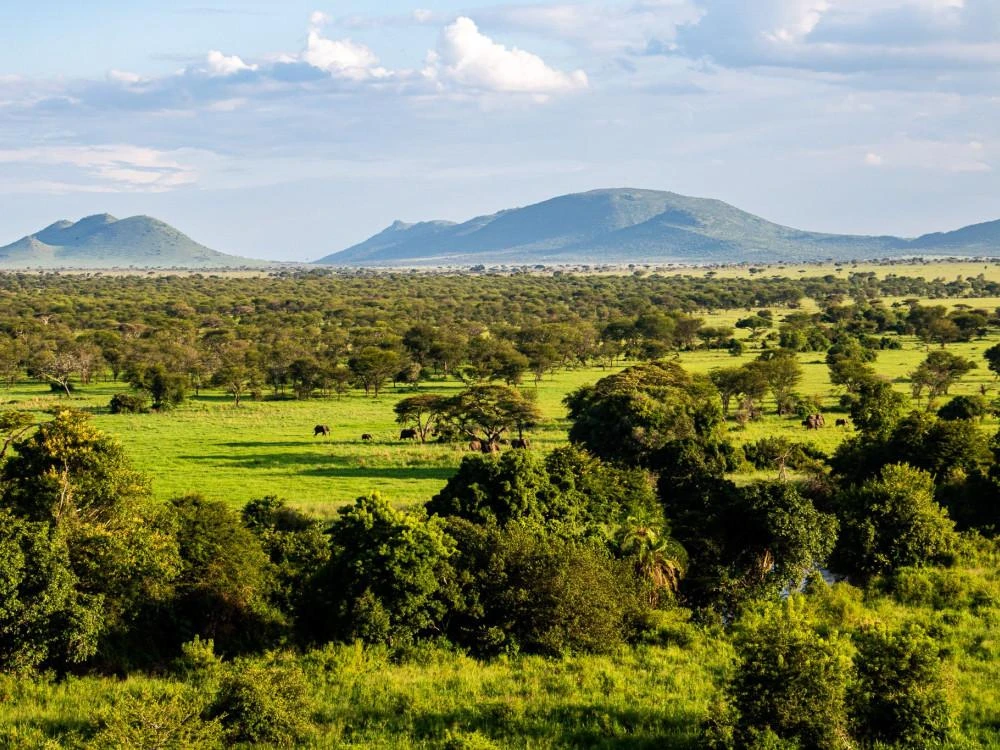
Before diving into planning details, it helps to see the Serengeti at a glance. The table below summarizes location, size, wildlife, and safari style, giving you a quick reference point you can return to later in this guide as you build out a full Tanzania or combined East Africa itinerary.
| Fact | Details |
|---|---|
| Location | Northern Tanzania, part of the Northern Safari Circuit |
| Size | Approximately 14,750 km² |
| Established | 1951 |
| Famous for | The Great Migration |
| Wildlife | Big Five, large predator populations, over 500 bird species |
| Best time to visit | Depends on your priority: migration, calving, or dry season game viewing |
| Safari activities | Game drives, hot air balloon safaris, walking safaris (select areas), birdwatching |
| UNESCO status | World Heritage Site |
| Neighboring parks | Ngorongoro Conservation Area (Tanzania), Masai Mara National Reserve (Kenya) |
| Closest major town | Arusha, the gateway city for flights and road transfers |
Where Is Serengeti National Park?
The Serengeti sits in northern Tanzania, forming the centerpiece of the country’s Northern Safari Circuit. This cluster includes the Ngorongoro Conservation Area, Lake Manyara National Park, and Tarangire National Park. The park’s northern boundary connects ecologically to Kenya’s Masai Mara National Reserve, forming one unbroken ecosystem the migrating herds move through freely, regardless of the international border.
Most travelers reach the Serengeti by flying into Kilimanjaro International Airport or Arusha Airport, then continuing by light aircraft into one of the park’s airstrips. Others travel by road via Ngorongoro Crater, a popular route that lets you combine both destinations.
Why Visit Serengeti National Park?
There are dozens of safari destinations across Africa, so it helps to be specific about what sets the Serengeti apart. The park combines the Great Migration, dependable Big Five viewing, and some of the highest predator density on the continent. Its open plains give clear sightlines for photography, while varied habitats keep game drives genuinely interesting across multiple days.
Cover:
- The Great Migration
- Big Five wildlife
- Large predator populations
- Open savannah landscapes
- Year round wildlife
- Photography opportunities
- Birdwatching
- Balloon safaris
- Diverse safari regions
For travelers who want to pair Serengeti wildlife with primate trekking, an itinerary such as our 14 Day Uganda Primates, Serengeti and Zanzibar Beach safari blends gorillas, chimpanzees, savannah game drives, and beach time into a single trip across three countries, planned as one continuous journey rather than separate bookings.
Wildlife in Serengeti National Park
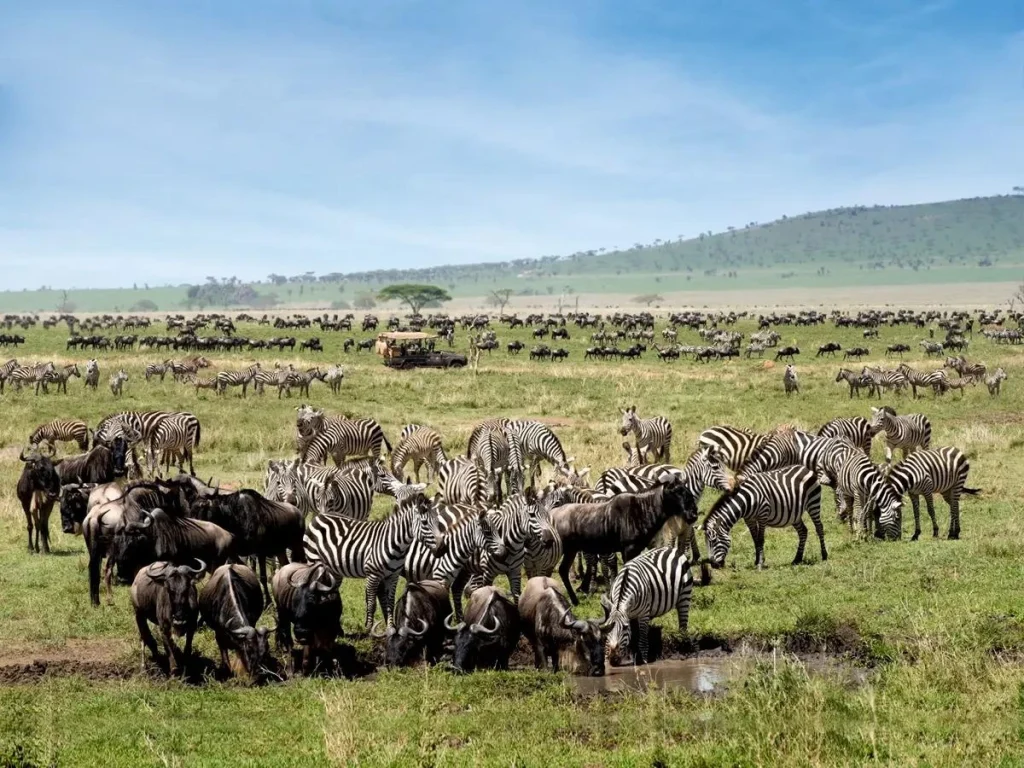
The Serengeti’s wildlife draws travelers back again and again, not just for the sheer volume of animals but for the quality of sightings. Open terrain means fewer obstructed views than in denser forest parks, so encounters tend to last longer and photograph better. Below is a closer look at what you can expect to see across the park.
Lions: The Serengeti holds one of Africa’s largest lion populations, and several prides here have been monitored continuously for decades by researchers. Sightings of lions resting on kopjes, defending territory, or hunting in coordinated groups are common, particularly around the central Seronera region, where water and prey remain reliable throughout most of the year.
Leopards: More elusive than lions, leopards are typically spotted resting in the branches of acacia and sausage trees along riverine areas. Seronera and the areas near the Grumeti River are known leopard territory, and patient guides often know specific trees where individual leopards return to rest, rather than relying purely on chance.
Cheetahs: The open plains of the southern and eastern Serengeti are ideal cheetah habitat, giving them the sightlines they need to spot prey and hunt safely. Watching a cheetah stalk and sprint across open grassland is one of the park’s signature experiences, and one reason photographers return to the same plains season after season.
Elephants: Elephants are found throughout the park and are especially visible in the central and western regions, often moving in family groups between woodland and water sources. Calves traveling closely beside their mothers are a common and memorable sight, particularly during the cooler morning hours when herds are most active.
Buffaloes: Large buffalo herds are common across the park, particularly in areas with reliable water and grazing. They are often seen in groups of several hundred, moving as a unit, and are a regular feature of game drives even outside peak migration months when other species may be more dispersed.
Black Rhinos: Rhinos exist in the Serengeti in small, closely protected numbers, mainly around the Moru Kopjes area of the central park. Sightings are never guaranteed, given how few remain, but they complete the Big Five checklist here and represent one of Tanzania’s most important ongoing conservation success stories.
Wildebeest: Wildebeest sit at the heart of the Great Migration, with over a million animals moving through the ecosystem annually. Outside migration season, resident wildebeest populations remain visible in various parts of the park, so seeing them is rarely a matter of luck even when the main herds are elsewhere.
Zebras: Zebras migrate alongside wildebeest in huge numbers, often mixing with them for shared protection against predators. Smaller resident herds remain present throughout the park year round, and their striped patterns make them some of the easiest animals to spot at a distance across open plains.
Giraffes: Giraffes are commonly seen browsing acacia trees, particularly in the woodland areas of the western and northern Serengeti. Their height allows them to feed where other herbivores cannot reach, and they are often visible well before other wildlife comes into view during a typical game drive.
Hippos: Hippos concentrate in permanent water sources such as the Retina Hippo Pool near Seronera, where dozens can often be seen together. Most of their activity happens after dark, so daytime sightings usually involve groups resting and cooling off together in shallow water, occasionally grunting or jostling for space.
Hyenas: Spotted hyenas are common and frequently seen both hunting and scavenging, particularly around predator kills. Far from purely opportunistic, hyenas are skilled hunters in their own right, and watching a clan work together is one of the more underrated predator experiences the Serengeti has to offer visitors.
Birds: With well over 500 recorded species, the Serengeti is a serious birdwatching destination. Ostriches and secretary birds patrol the plains, raptors circle overhead, and colorful bee eaters and rollers appear near water sources, joined seasonally by migratory species passing through on longer journeys across the African continent.
The Great Migration in Serengeti National Park
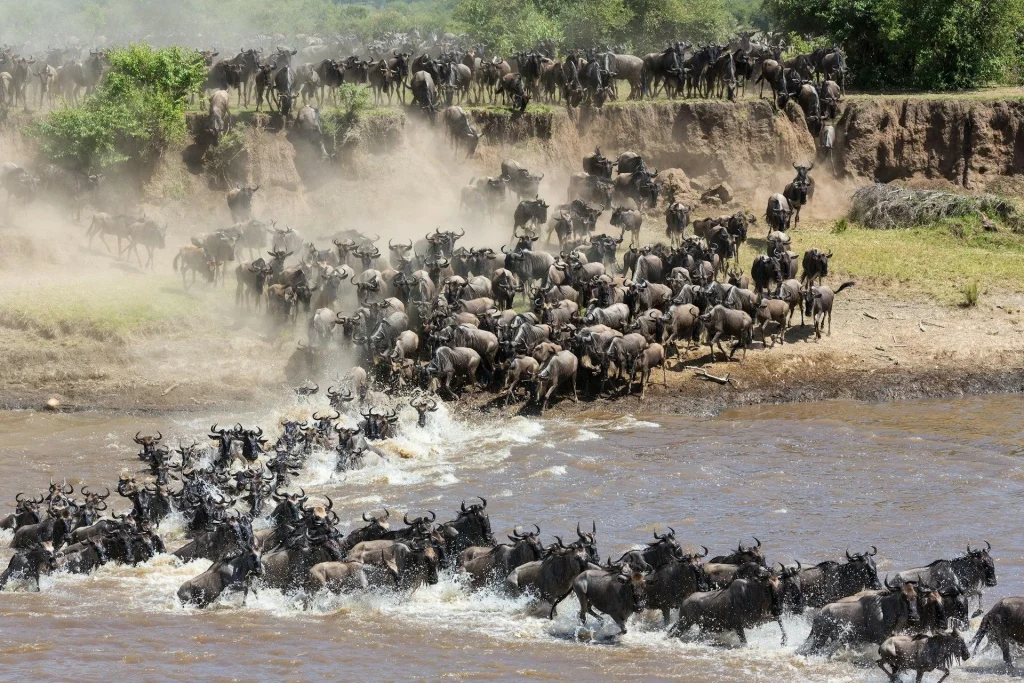
The Great Migration is the single biggest reason most people search for Serengeti National Park, so it is worth understanding properly rather than relying on a rigid calendar. Each year, over a million wildebeest, along with hundreds of thousands of zebra and gazelle, move in a broadly clockwise circuit through the Serengeti Mara ecosystem, following the rains.
It is a continuous, year round movement rather than a single event, and exact timing shifts from year to year depending on rainfall patterns. Travelers planning a trip specifically around the migration should build in flexibility, since herds can arrive earlier or later than expected in any given region depending on conditions that season. The same herds also move seasonally into Kenya, where our wildebeest migration safari covers the northern phase of the same journey.
| Period | What typically happens |
|---|---|
| January to March | Herds concentrate in the southern Serengeti and Ndutu plains; calving season, with predator activity at its highest |
| April to May | Herds begin moving north and west as the southern plains dry out |
| June to July | Migration moves through the central and western Serengeti toward the north |
| August to September | Herds concentrate in the northern Serengeti, with river crossing opportunities at the Mara and Grumeti rivers |
| October to November | Herds begin moving back south as the short rains arrive |
| December | Herds return toward the southern plains ahead of calving season |
This is a general pattern, not a fixed schedule, and rainfall varies meaningfully year to year. If a specific experience such as a river crossing is the main reason for your trip, it is worth talking to a specialist rather than booking purely from a generic chart. Travelers combining a migration safari with primates can also explore our Rwanda Safaris options for a gorilla trekking extension either before or after Tanzania.
Best Time to Visit Serengeti National Park
Best time to visit depends entirely on what you want to see, so breaking it down by priority is far more useful than a single blanket recommendation. The Serengeti rewards different travelers at different times of year, and none of these windows are objectively wrong, just suited to different goals.
- Best time for the Great Migration overall: The migration is present somewhere in the ecosystem year round, so there is no single migration month, only different phases worth chasing.
- Best time for wildebeest calving: Typically January to March, concentrated in the southern plains around Ndutu, when predator activity also peaks.
- Best time for predator sightings: Calving season tends to bring intense predator activity, since young calves are especially vulnerable during those months.
- Best time for river crossings: Roughly July through September in the northern Serengeti, though exact timing varies from year to year.
- Best time for photography: The dry season, roughly June to October, offers clearer skies and thinner vegetation for easier wildlife visibility.
- Best time for birdwatching: The wet season, November to April, brings migratory bird species and vibrant breeding plumage across the park.
- Best time for fewer crowds: The shoulder months of November and April to May see fewer visitors, sometimes at the cost of muddier roads.
- Best time for lower prices: The long rains around April and May are generally the low season for accommodation rates in most camps.
For general trip planning across East Africa, our East Africa Safaris page can help you line up Serengeti timing against gorilla permit availability in Uganda or Rwanda, since both regions have their own distinct seasonal patterns worth coordinating together.
Regions of Serengeti National Park
The Serengeti is large enough that visiting Serengeti can mean very different experiences depending on which part of the park you are in. Understanding the regions helps you choose an itinerary that actually matches what you came to see, rather than one built around a generic single stop.
Central Serengeti, Seronera
The most accessible and wildlife dense area, home to the park’s highest concentration of lions and leopards, plus reliable year round game viewing thanks to the Seronera River. Good for first time visitors and shorter trips. Browse more of our Iconic Africa Safaris itineraries for ideas on combining this region with other parks.
Northern Serengeti
Home to the Mara River and the dramatic river crossings during migration season, roughly July to September. More remote and less crowded than Seronera, with a wilder feel overall. Travelers chasing this experience sometimes pair it with our 7 Day Rwanda Uganda Double Gorilla Trekking and Game Safari for a broader multi country trip.
Western Corridor
Centered on the Grumeti River, this region sees the migration pass through roughly May to July and is known for large Nile crocodiles at crossing points. Quieter than the central and northern areas, with fewer camps overall. It also pairs naturally with our 12 Day Kenya, Tanzania and Rwanda Safari for travelers covering three countries.
Southern Serengeti
Includes the Ndutu area, the heart of calving season from January to March. Excellent for predator action and short grass plains scenery, with a very different character from the woodland areas further north. If gorillas are also on your list, our 5 Day Akagera Game and Bwindi Gorillas Safari makes a strong companion trip.
Eastern Serengeti
A less visited, more remote region with rolling plains and volcanic influenced landscapes. Good for travelers seeking solitude, though wildlife density is generally lower than in the other regions described above. For those building a longer circuit, our 18 Day Kenya, Tanzania and Uganda Safari shows how a longer multi country trip can be structured.
How Much Does a Serengeti Safari Cost?
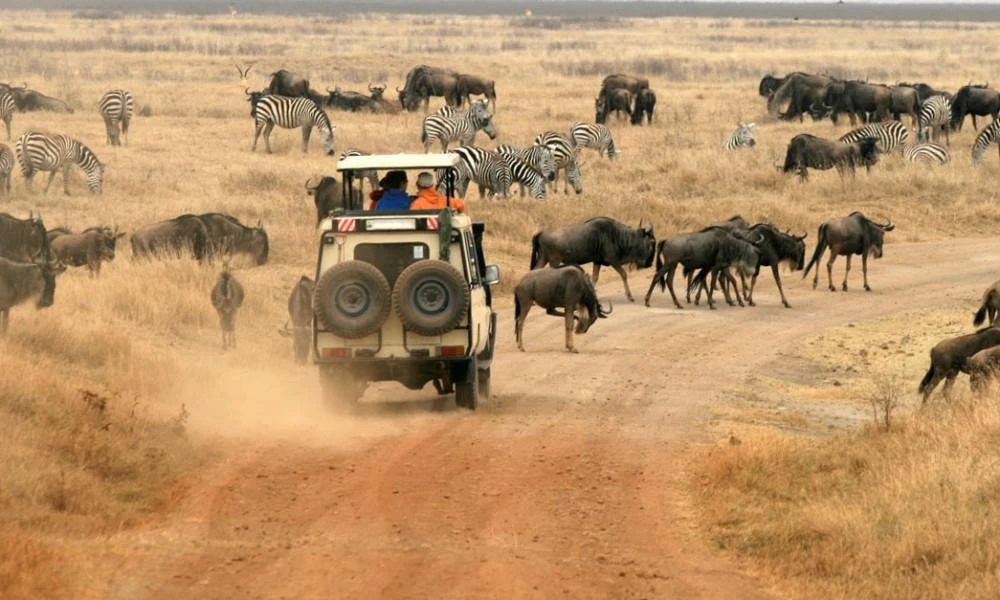
Costs vary widely depending on style of travel, season, and how many days you spend in the park. As a general guide, per person, per day, covering accommodation, meals, and game drives but excluding international flights, expect the following approximate ranges based on current market rates.
| Style | Approximate range (per person/day) |
|---|---|
| Budget safari | $150 to $300 |
| Mid range safari | $300 to $600 |
| Luxury safari | $600 to $1,200 or more |
| Private, tailor made safari | $500 to $1,500 or more, varies significantly |
| Family safari | Varies by camp; many offer family tents or interconnecting rooms |
| Honeymoon safari | Typically mid range to luxury, often including a private vehicle |
What affects the price: number of safari days, choice of accommodation, season, number of travelers, private versus shared group safari, vehicle type, park entrance and conservation fees, domestic flights versus road transfers, included meals and activities, and guide experience level. If you are also comparing costs against a shorter primate trip, our 3 Day Gorilla Trekking in Uganda package is a useful budget reference point, while our 5 Day Rwanda Gorillas and Game Adventure sits closer to mid range pricing for a combined trip.
These figures are a planning baseline, not a quote, since actual pricing depends on your dates, accommodation choices, and full itinerary. Get in touch with our team for an accurate, current quote based on your specific travel dates and priorities.
Things to Do in Serengeti National Park
- Game drives, typically run at dawn, midday, or dusk depending on what you want to see
- Great Migration viewing, timed to the herds’ location depending on season
- Big Five viewing, with strong odds for lion, leopard, elephant, and buffalo
- Hot air balloon safaris, an early morning flight followed by a bush breakfast
- Birdwatching, particularly rewarding in the wet season with migratory species present
- Photography safaris, using specialized vehicles and guides for serious photographers
- Cultural experiences, including visits to Maasai communities near the park where appropriate
- Walking experiences, permitted in select areas with an armed ranger present
- Bush meals, breakfast or sundowner drinks set up in scenic spots away from camp
- Sunrise and sunset viewing, making use of the plains’ open horizons and clear light
If you would like to add a cultural or lake stop to a broader trip, our 6 Day Uganda Gorillas and Lake Bunyonyi Safari shows how a similar balance of wildlife and relaxation works well outside Tanzania too, and can serve as a template for structuring your own combined trip.
Serengeti National Park Travel Information
How to get to Serengeti National Park:
Most visitors fly into Kilimanjaro International Airport or Arusha Airport, then either take a scheduled light aircraft flight directly into a Serengeti airstrip, or travel by road via Ngorongoro Crater, a popular option for travelers combining both parks in one itinerary.
Airports and airstrips:
The Serengeti has multiple airstrips serving different regions, including Seronera, Kogatende in the north, and Grumeti in the west, allowing flexible routing depending on which part of the park you plan to visit during your stay.
Driving from Arusha:
A road transfer from Arusha to central Serengeti typically takes around 7 to 8 hours, often broken up with a stop at Ngorongoro Crater to make the long drive more worthwhile and comfortable.
Entrance and park fees:
Tanzania National Parks sets entrance fees, typically charged per person, per day, and these vary by nationality and age. Fees change periodically, so always confirm current rates before budgeting, or let your safari operator handle this as part of a package.
Safari vehicles:
Most safaris use 4×4 vehicles with pop up roofs for game viewing. Private vehicles offer more flexibility than shared group vehicles, particularly if you want to linger at sightings longer than a group itinerary typically allows.
Accommodation:
Options range from public campsites and budget lodges to luxury tented camps, with many properties changing location seasonally to stay close to the migration and offer guests the strongest possible wildlife viewing throughout the year.
Internet and mobile coverage:
Coverage is limited and inconsistent across the park. Most camps offer WiFi in communal areas, though it can be slow, so do not count on reliable connectivity during game drives themselves.
What to pack:
Neutral colored clothing, layers for cold mornings and warm afternoons, sun protection, binoculars, and a good camera. A full packing list is available on request once your trip is booked with us.
Safety:
The Serengeti is a well established, professionally managed safari destination. Standard safety practices apply: stay in the vehicle during game drives unless your guide advises otherwise, and follow camp guidance regarding wildlife near accommodation.
Travel insurance:
Comprehensive travel insurance covering medical evacuation is strongly recommended for any Tanzania safari, given the remote nature of many camps and the distance from major hospitals in an emergency.
Visa requirements:
Most nationalities require a visa to enter Tanzania, available on arrival or in advance through an electronic visa system, depending on your passport. Confirm current requirements for your nationality before travel begins.
Currency:
The Tanzanian shilling is the local currency, though US dollars are widely accepted for safari related payments, tips, and park fees throughout most lodges, camps, and tour operators across the region.
Tipping:
Tipping guides and camp staff is customary across Tanzania. General guidelines can be provided as part of your itinerary so you know roughly what to budget for before you travel.
Children on safari:
Many camps welcome children, though some set minimum age requirements for certain activities, particularly walking safaris and balloon flights. We can help match your family with appropriate camps and vehicles.
Accessibility:
Accessibility varies significantly by camp. Let us know your specific needs and we will match you with appropriate accommodation, vehicles, and routing to make your safari as comfortable as possible throughout.
Malaria precautions:
The Serengeti is a malaria risk area. Consult a travel health professional about appropriate prophylaxis before your trip, and pack insect repellent for evenings spent around camp.
How Many Days Do You Need in Serengeti National Park?
3-Day Serengeti Safari
A focused introduction to central Serengeti, ideal for travelers with limited time or those combining the park with another destination like Zanzibar. Expect strong game viewing in the Seronera area, similar in structure to our 7-Day Uganda Gorillas, Chimps & Game Safari in terms of pacing, though focused entirely on Tanzania.
4-Day Serengeti Safari
Adds enough time to explore more than one area of the park, or to combine central Serengeti with a day trip to Ngorongoro Crater. Travelers who enjoy that pacing sometimes also consider our 10-Day Uganda Gorillas & Game Safari as a separate but complementary trip.
5-Day Serengeti Safari
Allows for a proper combination of Ngorongoro Crater and multiple Serengeti regions, giving a fuller picture of the park’s diversity. For travelers wanting beach time afterward, our 11-Day Uganda Gorillas and Zanzibar Beach Safari shows how that combination can work well.
7-Day Tanzania Safari
A well rounded circuit typically covering Tarangire, Ngorongoro Crater, and the Serengeti, with enough time to follow the migration into a specific region depending on season. Our 14-Day Kenya, Uganda and Tanzania Safari extends this concept across three countries for travelers with more time.
8-Day Tanzania Safari
Similar to the 7-day circuit but with more time in the Serengeti itself, useful for photographers or travelers who want to avoid feeling rushed. Our 16-Day East Africa Safari and Lamu Beach Holiday offers a longer template combining wildlife with beach relaxation at the end.
10-Day Tanzania Safari + Zanzibar
Combines the full Northern Circuit with several days relaxing on Zanzibar’s beaches, a popular choice for honeymooners and travelers wanting to pair wildlife with a beach finish. Our 8-Day Uganda Gorillas, Chimps & Game Safari follows a similar wildlife and relaxation structure in a different country.
Each of these can be tailored around your travel dates, budget, and priorities. Get in touch and we will help build the right itinerary for you, whether that means staying entirely within Tanzania or extending your trip across the wider East Africa region.
Serengeti National Park FAQs
Where is Serengeti National Park located?
In northern Tanzania, forming part of the Northern Safari Circuit alongside Ngorongoro Crater, Lake Manyara, and Tarangire, and connected ecologically to Kenya’s Masai Mara across the shared border landscape.
What is Serengeti National Park famous for?
The Great Migration, its Big Five wildlife, and its exceptional predator populations, which together make it one of the most photographed and widely recognized wildlife destinations anywhere in the world.
How much does a Serengeti safari cost?
Roughly $150 to $300 per person per day for budget travel, $300 to $600 for mid range, and $600 to $1,200 or more for luxury, though actual pricing depends heavily on season and itinerary.
What is the best month to visit Serengeti National Park?
It depends on your priority: January to March for calving and predator action, June to October for general dry season game viewing, and July to September for northern river crossings specifically.
Can I see the Big Five in Serengeti?
Yes, though black rhino sightings are less common than the other four species, given how few remain in the park under close conservation protection around the Moru Kopjes area today.
When is the Great Migration in Serengeti?
The migration is present in the ecosystem year round, moving through different regions on a roughly annual cycle that shifts with rainfall, so timing should always be treated as approximate.
How many days do I need in Serengeti?
Most travelers spend 3 to 5 days in the park, often as part of a longer 7 to 10 day Tanzania itinerary that also includes Ngorongoro Crater and other Northern Circuit parks.
Is Serengeti safe for tourists?
Yes, it is a well established, professionally managed safari destination with standard safety practices in place across camps, guides, and vehicles throughout the park and surrounding conservation areas.
How do I get to Serengeti National Park?
By flying into Kilimanjaro or Arusha, then connecting via light aircraft or road transfer, often via Ngorongoro Crater, depending on which region of the park you plan to visit first.
Which is better, Serengeti or Masai Mara?
Both are part of the same ecosystem and offer excellent wildlife viewing. The choice often comes down to which country you are visiting, timing relative to the migration, and personal preference for crowd levels.
Can I combine Serengeti with Ngorongoro Crater?
Yes, this is one of the most popular combinations in Tanzania, easily done by road and often included within the same itinerary as a natural extension of your Serengeti days.
Can I combine Serengeti with Zanzibar?
Yes, pairing a Serengeti safari with several days on Zanzibar’s beaches is a common and highly recommended way to end a Tanzania trip, especially for honeymooners and travelers wanting a slower final stretch.
Ready to Book Your Serengeti Safari with Iconic Africa Safaris?
Iconic Africa Safaris offers three simple, reliable ways to secure your next unforgettable Ugandan adventure today. Simply complete our quick online booking form to start planning your dream safari experience right away. Our friendly team also welcomes direct emails at info@iconicafricasafaris.com to discuss your specific travel plans and preferences. For instant assistance, tap the green WhatsApp icon in your screen’s bottom right corner anytime.
Our driver-guides are the trip managers guests trust most – trained professionals, some former park rangers, all skilled interpreters of wildlife and culture. They stay with travelers from the first airport pickup to the final wave-off, keeping each day running smoothly and safely.