
The Ultimate Queen Elizabeth National Park Safari: Big Four, Tree Climbing Lions and the Kazinga Channel
Queen Elizabeth National Park is the closest thing Uganda has to an all in one safari. In a single trip you can track lions, elephants, buffalo and leopard, Uganda’s version of the Big Four, cruise a channel with one of the densest hippo populations on the continent, and, if you time it right, watch lions doze in the branches of a fig tree. Few parks in East Africa pack this much variety into one circuit, and even fewer let you pair it so easily with mountain gorilla trekking in Bwindi Impenetrable Forest.
This guide covers everything you need to plan the trip properly: the wildlife you will actually see, the antelope and bird species that make this park so rich, when to go, where to stay at every budget level, two ready made itineraries, insider tips from people who know the park well, and answers to the questions most travelers ask before booking.
Why Queen Elizabeth National Park Stands Out
Queen Elizabeth National Park sits in western Uganda, straddling the equator on the floor of the Albertine Rift Valley. It is Uganda’s most visited savannah park, and for good reason. Open plains, crater lakes, a tropical forest, a rift valley escarpment and a long channel of water all sit inside one boundary. That range of habitat is what makes the Big Four and the tree climbing lions possible in a single itinerary. Most parks make you choose between open plains game viewing and forest wildlife. Here you get both within a couple of hours’ drive.
A quick note on terminology before we go further: you will see this trip marketed online as a “Big Five” safari, but that is not accurate for this park. Black and white rhinos were hunted out of Queen Elizabeth decades ago. They now survive in Uganda only at the dedicated Ziwa Rhino Sanctuary, several hours away near Murchison Falls. The honest pitch, and the one experienced guides use, is the Big Four: lion, elephant, buffalo and leopard.
Geographically, the park covers roughly 1,978 square kilometres between the Rwenzori Mountains, often called the Mountains of the Moon, and the Kigezi highlands further south. That position gives visitors a dramatic backdrop on almost every game drive, with snow capped peaks visible on clear days to the north and the folded green hills of the western rift escarpment rising to the east.
The park is also unusual in Uganda for how it is administered. It sits alongside two connected wildlife reserves, Kyambura and Kigezi, and a forest reserve at Kalinzu, which together form one of the largest contiguous conservation areas in the country. This patchwork of protected land is part of why the wildlife density stays so high even as tourism numbers grow year on year.
Most first time visitors underestimate how much ground the park actually covers. The Kasenyi and Mweya areas in the north, the Kazinga Channel running through the middle, and the Ishasha sector far to the south each feel like a different park entirely, with their own dominant wildlife, their own scenery and, often, their own weather. Building a realistic itinerary around that spread, rather than trying to see everything in a single rushed day, is the single biggest factor separating a good visit from a great one.
The Wildlife You Will Actually See
Queen Elizabeth is often called one of the most biodiverse protected areas in Africa, and the numbers back that up. The park holds more than 95 recorded mammal species and over 600 recorded bird species, one of the highest bird counts of any national park on the continent. A census taken decades ago even found the park held the highest density of herbivores on earth at the time.
The Big Four
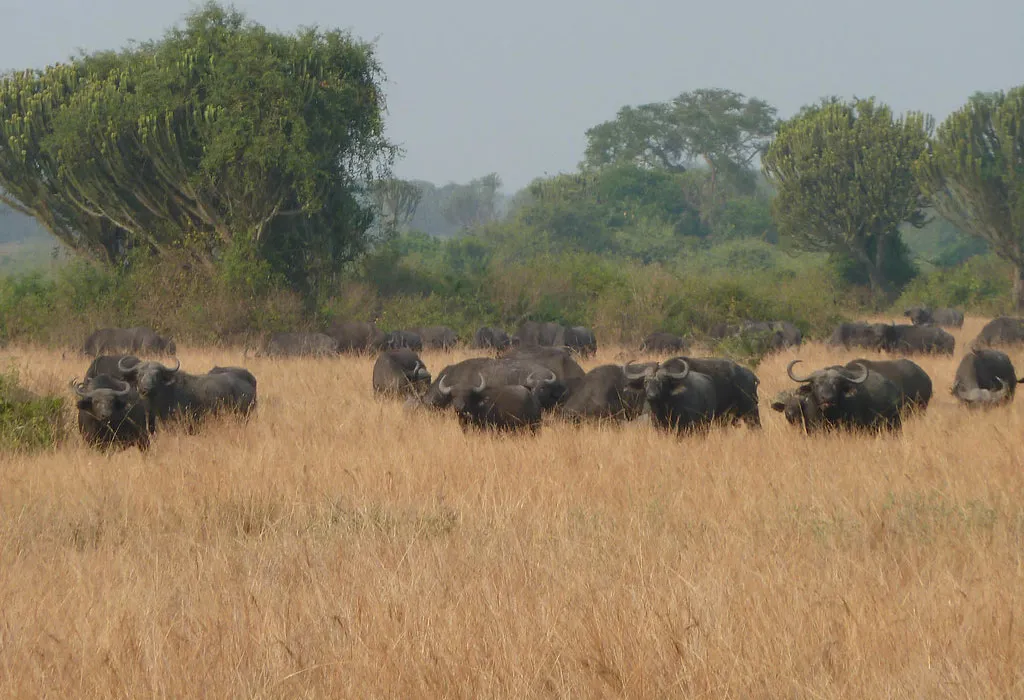
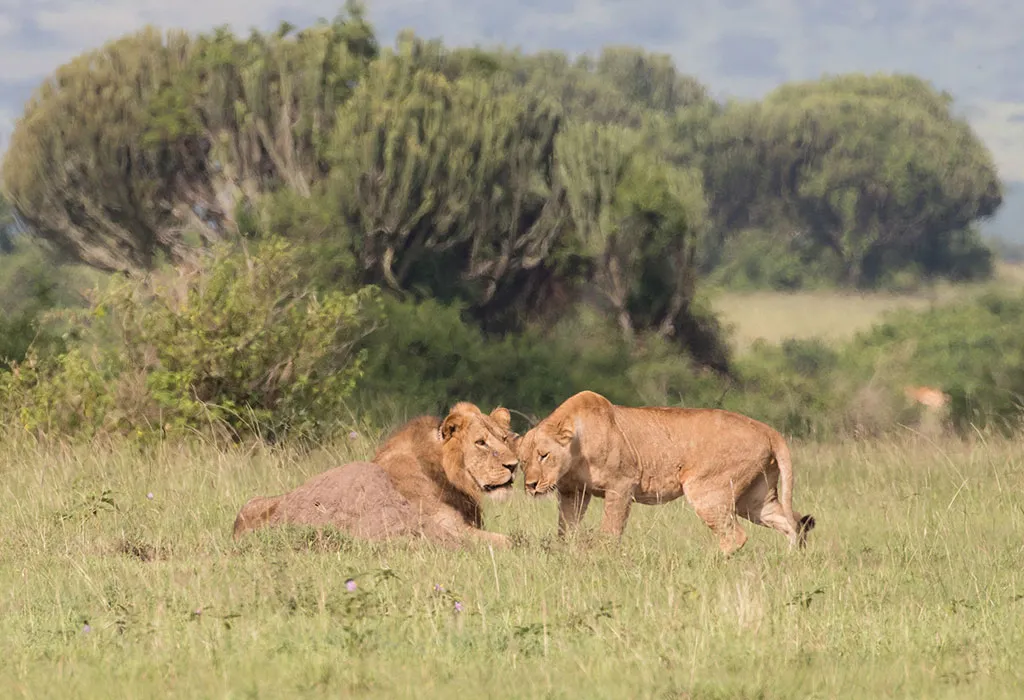
Lions are the star attraction, both the ground dwelling prides of the Kasenyi Plains and the famous tree climbers of Ishasha. Leopard sightings are less predictable since they are naturally shy and mostly nocturnal, but they are present throughout the park and turn up on night drives and along the Kazinga Channel. Elephants move in large herds across both the Kasenyi and Ishasha sectors and are a near guarantee on any multi day visit. African buffalo, sometimes called Cape buffalo, gather in big, dusty herds close to water, especially along the channel shoreline, where they share space with hippos and elephants during the cooler hours of the day.
Antelope Species Worth Knowing
Queen Elizabeth is a fantastic park for antelope variety, and knowing the names in advance makes game drives far more rewarding. Keep an eye out for:
- Uganda kob, the park’s signature antelope and a national symbol, often seen in large herds on the Kasenyi Plains where males compete for territory on communal breeding grounds called leks
- Defassa waterbuck, a shaggy, greyish antelope that always stays close to water and is easy to identify by the white ring marking on its rear
- Topi, a striking reddish brown antelope with dark patches on its legs, found almost exclusively in the Ishasha sector and around Kasenyi
- Bushbuck, a smaller, shy antelope usually spotted alone or in pairs near thickets and forest edges
- Bohor reedbuck, a slim, sandy coloured antelope often seen in tall grass near wetlands
- Oribi, a small, delicate antelope with a distinctive black scent gland below the eye, usually seen in short grass areas
- Common duiker, a small, secretive antelope more often heard than seen as it darts through undergrowth
Warthogs and Other Ground Dwelling Mammals
Warthogs are one of the most reliably entertaining sightings in the park. Look for family groups trotting across the plains with their tails held straight up like little antennas, often near Kasenyi and around lodge grounds at dawn and dusk. Beyond warthogs, keep watch for the giant forest hog, a much larger and shaggier relative that is regularly seen along the Kazinga Channel shoreline, spotted hyena, black backed and side striped jackal, and several mongoose species including the banded and marsh mongoose. Primate lovers should not miss Kyambura Gorge, a lush, sunken rainforest cutting through the savannah, home to a habituated community of chimpanzees along with black and white colobus monkeys, olive baboons, vervet monkeys and red tailed monkeys.
Birds of the Park and the Kazinga Channel
Birders consider Queen Elizabeth one of the finest destinations in Africa, and the park’s checklist of more than 600 species is the largest of any protected area in East Africa. Specialist birders have recorded close to 300 species in a single day here during peak season.
Species to watch for across the wider park include the African fish eagle, grey crowned crane (Uganda’s national bird), martial eagle, bateleur, Verreaux’s eagle owl, black bee eater, Ross’s turaco, papyrus gonolek, papyrus canary and the elusive shoebill stork, one of the most sought after birds on the continent, usually found in the papyrus swamps near Lake George and the Ishasha wetlands. Forest birders exploring Maramagambo Forest or Kyambura Gorge can add the grey woodpecker, hairy breasted barbet, speckled tinkerbird and African emerald cuckoo to their lists.
The Kazinga Channel itself is one of the best waterbird viewing spots anywhere in Uganda. On a single boat cruise you can realistically expect to see the great white pelican and pink backed pelican, African darter, long tailed and great cormorant, saddle billed stork, yellow billed stork and African openbill, malachite kingfisher and pied kingfisher, African jacana walking across floating vegetation, African skimmer skimming the water’s surface for fish, spur winged plover, squacco heron, black crake and, with luck, the shoebill along the channel’s quieter fringes. Large flocks of greater and lesser flamingo also gather seasonally on the nearby salt crater lakes at Katwe and Bunyampaka, a short detour from the main channel.
The Tree Climbing Lions of Ishasha
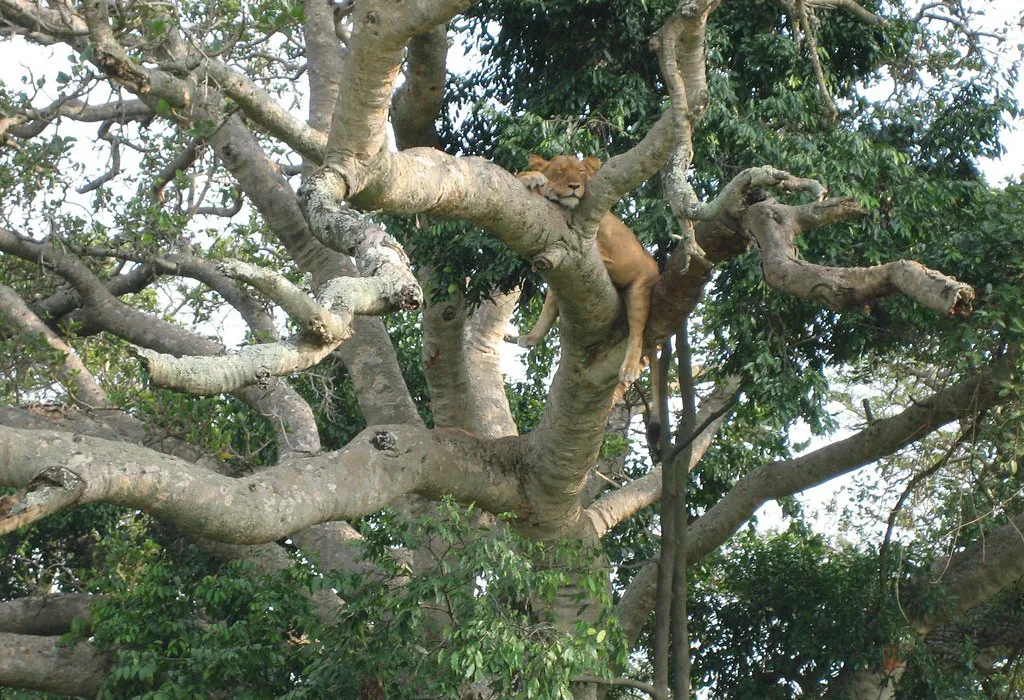
The single most famous reason people book this park is the tree climbing lions of the Ishasha sector, in the park’s far south. Around three prides, roughly 50 lions in total, regularly haul themselves up into the wide, low branches of fig and acacia trees, something lions almost never do elsewhere in Africa.
Guides and researchers point to a few likely reasons for the behaviour. It lifts the lions above biting tsetse flies and ground level heat, gives them a cooler resting spot, and offers a clear vantage point for spotting prey and rival predators such as hyenas moving through the grass below. It is one of only two places in the world where this is a reliable sighting. The other is Tanzania’s Lake Manyara National Park, where the lions are far harder to find.
Best time to see them: Ishasha’s tree climbing lions can turn up year round, but the dry months, June to September and December to February, give you better odds, since firmer ground makes tracking easier and animals cluster near remaining water sources. Early morning and late afternoon are the best windows, when the lions are moving or settling in for the heat of the day.
Ishasha is not a one trick stop, either. The sector holds strong numbers of elephant, topi and buffalo, plus excellent birding, including the African fish eagle and Ross’s turaco. It sits roughly 100 km south of the park’s main hub at Mweya. Budget half a day for the drive.
Insider tip: Ask our guide to check radio updates from other vehicles before entering Ishasha. Because the tree climbing lions move between only a handful of favoured fig trees, guides who share sightings by radio can often take you straight to an active tree rather than driving the circuit blind.
The Kazinga Channel Boat Cruise
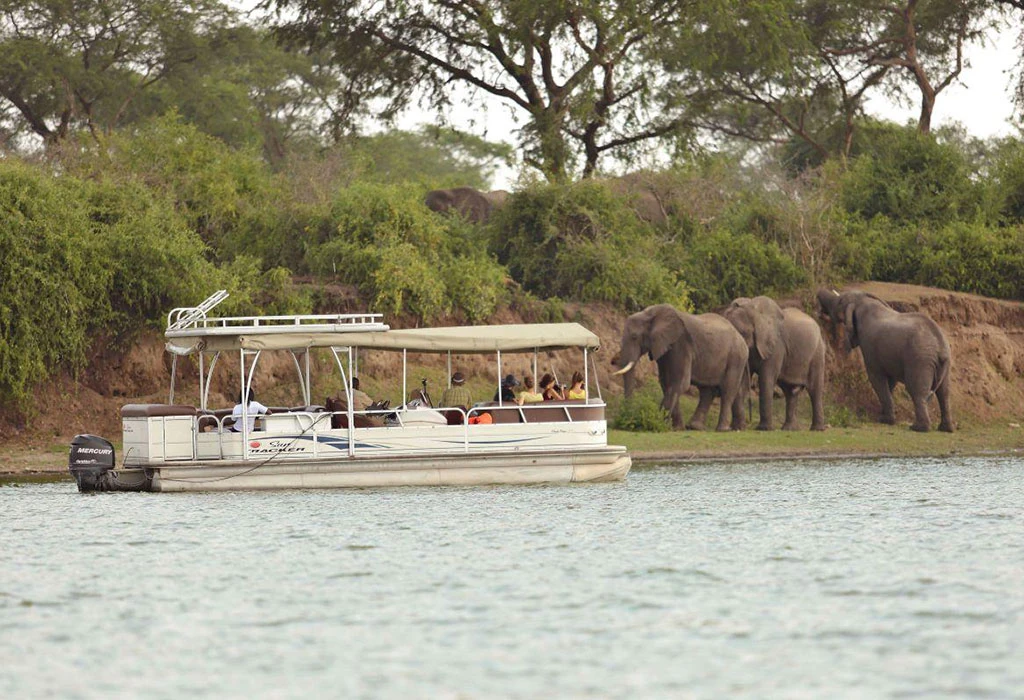
If Ishasha is the park’s headline act, the Kazinga Channel is its daily showstopper. This natural waterway connects Lake Edward and Lake George and stretches somewhere between 32 and 40 km depending on the source. Either way it is long enough to support one of the largest concentrations of hippos in Africa, with estimates ranging from roughly 1,600 to over 2,000 animals living along its banks, one of the three biggest hippo populations anywhere in the world.
A typical cruise departs from the Mweya Peninsula and runs two to three hours, sometimes stretched to three or four on quieter days, moving slowly along the shoreline so you can watch hippo pods wallowing in the shallows, sometimes dozens visible at once, Nile crocodiles basking on the banks, elephant herds coming down to drink and bathe, buffalo grazing along the water’s edge, warthogs and giant forest hogs foraging near the shore, and the long list of waterbirds covered above. Occasionally lions or leopards come to the channel to drink.
Boat prices vary a little by operator and residency status but generally run around $25 to $32 per person for foreign visitors, with departures typically late morning and mid afternoon. Bring a hat, sunscreen and a zoom lens. The boats stay close enough to shore for genuinely good photos without disturbing the animals.
Insider tip: Book the early morning cruise if your lodge offers one. Midday cruises are more crowded and the light is harsher for photography, while an early departure gives you softer light, cooler temperatures and a good chance of seeing predators still finishing a drink before retreating from the heat.
Other Top Activities in the Park
Beyond game drives and the boat cruise, Queen Elizabeth offers a genuinely varied activity list that rewards travelers who stay more than one or two nights.
Chimpanzee tracking in Kyambura Gorge.
Often nicknamed the Valley of the Apes, this sunken rainforest cutting through the open savannah is home to a habituated community of chimpanzees. Guided treks typically last two to three hours and, while success rates are somewhat lower here than in Kibale Forest further north, the setting itself, a green forest hidden below flat grassland, is worth the visit on its own. Permits are booked separately from park entrance fees, so confirm availability with your operator ahead of time.
Guided nature and forest walks.
Rangers lead walking excursions through habitats that vehicles cannot easily reach, including sections of Maramagambo Forest and the crater lake trails near Katwe. These walks run two to three hours and are a good way to focus on smaller wildlife, forest birds, butterflies and plant life that get overlooked from a vehicle.
Salt lake and cultural visits at Katwe.
The crater lakes around Katwe, including the salty Lake Katwe itself, have been mined for salt by local communities for generations. A short visit here combines striking scenery, often edged with pink flamingos, with a genuine look at a working local industry rather than a staged cultural stop.
When to Visit
Queen Elizabeth National Park is a year round destination, but the experience shifts with the season.
- Dry seasons, June to September and December to February, offer the best overall game viewing. Animals concentrate around the Kazinga Channel and remaining waterholes, roads are easier to navigate, and tree climbing lion sightings in Ishasha are more consistent. Birding is also excellent in the drier months of late May through September, when food is abundant and migratory activity is easy to track.
- Wet seasons, March to May and October to November, bring lush scenery and noticeably fewer tourists, along with excellent general birding, but roads can turn muddy, especially in Ishasha, and wildlife tends to disperse more widely across the park rather than clustering near water.
Getting There and Entrance Fees
The park sits about six to seven hours by road from Kampala, roughly 420 km, or you can fly into the Kasese or Mweya airstrips and cut that down to under an hour. Most self drive and guided safaris route in through the Kabatoro or Kasenyi gates.
Entrance is managed by the Uganda Wildlife Authority and priced by residency status, valid for 24 hours from entry:
- Foreign non residents: $40 per day for adults
- Foreign residents with a Ugandan work permit: $30 per day
- East African Community citizens: UGX 20,000 per day
Fees change periodically, so confirm current rates directly with the Uganda Wildlife Authority or your tour operator before you travel, and budget separately for the Kazinga Channel boat cruise and any guided game drives or chimpanzee tracking permits in Kyambura Gorge.
Where to Stay: Lodges for Every Budget
Accommodation around Queen Elizabeth spans everything from simple bandas to some of Uganda’s most exclusive properties. Prices below are approximate per person per night and will shift with season and booking channel, so always confirm current rates directly with the lodge or your operator.
As a general rule, lodges located inside the park boundary give you immersive wildlife right at your doorstep, night sounds included, but come at a higher price and stricter gate hours, usually closing to vehicle traffic by early evening. Properties just outside the park tend to be cheaper and more flexible, at the cost of a longer daily commute into the game viewing areas.
Deciding between the two often comes down to whether you would rather save money or save time, since both approaches can deliver an excellent safari.
Budget Friendly Lodges ($40 to $60 per night)
- Pumba Safari Cottages. Located near Kyambura, along the rim of the Western Rift Valley, this cozy option offers simple, comfortable cottages with sweeping views over the park. A great base for travelers heading to Kyambura Gorge for chimpanzee tracking.
- Tembo Safari Lodge. Set with panoramic views of the Kazinga Channel, Tembo offers self contained rooms, bandas, cottages and a do it yourself campsite. Elephants, hippos, hyenas, forest hogs and baboons regularly pass right in front of the property, and guests get reliable electricity and hot water.
- Simba Safari Camp. Perched on the shore of Lake Kikorongo on the edge of the park, Simba Safari Camp offers fantastic views over Lake Edward, the Kasenyi Plains and the Kazinga Channel, and suits travelers happy to share facilities in exchange for a lower rate.
- Enjojo Lodge. Just 2 km from the Ishasha gate, Enjojo is a green, solar powered lodge with safari tents, bamboo huts and camping options. Food is grown in an onsite vegetable garden and only local materials and labour were used in construction, making it a strong pick for eco conscious travelers focused on the tree climbing lions.
- Engiri Game Lodge. Located in Katunguru near the shores of the Kazinga Channel, Engiri offers simple tented accommodation with two beds per tent, plus camping tents for hire, making it a flexible, low cost base close to the channel.
Mid Range Lodges ($80 to $250 per night)
- Buffalo Safari Lodge. Located in the northern sector near Kasenyi, close to elephant viewing areas, Buffalo Safari Lodge offers comfortable en suite rooms with verandas, a pool, restaurant and family friendly activities, making it a solid all rounder for travelers who want comfort without luxury pricing.
- Ihamba Lakeside Safari Lodge. Set on the shores of Lake George near Kahendero Fishing Village, Ihamba offers free Wi Fi, laundry service, a swimming pool and a well stocked bar, with an evening barbecue and campfire that guests consistently rate highly for atmosphere.
- Enganzi Game Lodge. Perched on a hill bordering the park with views over unspoiled bush, Enganzi has just five cottages, giving it a more intimate, small scale feel while still offering solid mid range comfort and picture perfect views.
- Jacana Safari Lodge. Overlooking a crater lake in the western part of the park, Jacana is built almost entirely from local materials and run with a strong environmental ethic, appealing to travelers who want comfort with a lighter footprint.
- Twin Lakes Safari Lodge. A family friendly option known for spacious rooms and activities suited to travelers with children, Twin Lakes strikes a comfortable middle ground between budget camps and full luxury lodges.
Luxury Lodges ($380 and up per night)
- Mweya Safari Lodge. The park’s most iconic address, set on a peninsula overlooking Lake Edward, the Kazinga Channel and the Rwenzori Mountains beyond. Expect luxurious cottages and tents, a pool, spa, excellent dining and unmatched proximity to the boat cruise launch site, with rates that climb further during the June to September and December to February peak months.
- Kyambura Gorge Lodge. A stylish, romantic property above the Kyambura Gorge itself, combining striking architecture with sweeping views over the rolling savannah. Frequently rated the top choice for honeymooners thanks to its spa and intimate bandas.
- Katara Lodge. Perched on the Great Rift Valley escarpment with uninterrupted views of the savannah, Lake Edward and the distant Virunga and Rwenzori ranges, Katara sits about 20 minutes from the park’s main entrance and pairs dramatic scenery with attentive, personalized service.
- Elephant Plains Lodge. Offering wide savannah vistas and easy access to both the Kasenyi and Mweya circuits, Elephant Plains blends comfortable luxury with genuinely good value relative to some of the park’s pricier addresses.
- Ishasha Wilderness Camp. The premier choice for anyone whose main goal is the tree climbing lions. Located inside the Ishasha sector itself, this tented camp puts you closer to the action than any lodge further north, ideal for photographers who want first light access to the lion territory.
Sample 3-Day Queen Elizabeth National Park safari Itinerary
- Day 1: Arrival and Kasenyi Plains. Arrive via Kasese or by road, check into a central sector lodge, and head out for an afternoon game drive across the Kasenyi plains, known for lion and buffalo sightings alongside large herds of Uganda kob.
- Day 2: Kazinga Channel and Crater Lakes. Morning boat cruise on the Kazinga Channel, followed by a relaxed afternoon exploring the crater lake area, Katwe or the Explosion Crater Drive, for scenery, salt flats and flamingo viewing.
- Day 3: Ishasha Tree Climbing Lions. Early departure south to Ishasha for a morning game drive focused on the tree climbing lions, with stops to look for elephant and topi, before heading back or continuing onward to Bwindi if gorilla trekking is next on your route.
Sample 5 Day Itinerary: Queen Elizabeth Combined with Bwindi for Gorillas
Because Queen Elizabeth National Park and Bwindi Impenetrable Forest sit only a few hours apart in southwestern Uganda, combining them is the single most popular extension for travelers who want both big game and mountain gorillas in one trip.
- Day 1: Arrival and Kasenyi Plains. Fly or drive in, settle into your lodge near Mweya or Kasenyi, and take an afternoon game drive focused on lion prides, buffalo herds and the kob breeding grounds.
- Day 2: Kazinga Channel Boat Cruise. Spend the morning on the water spotting hippos, crocodiles, elephants and the channel’s rich birdlife, then use the afternoon for a second game drive or a relaxed visit to the crater lakes near Katwe.
- Day 3: Ishasha and Transfer South. Head to Ishasha for a morning game drive in search of the tree climbing lions, then continue the drive south toward Bwindi Impenetrable Forest, arriving in the late afternoon in time to settle in before trekking day.
- Day 4: Gorilla Trekking in Bwindi. An early start with a briefing at the park office, followed by a guided trek through dense forest in search of a habituated mountain gorilla family. Treks can run anywhere from two to six hours depending on where the gorillas are that day, and you are rewarded with an hour in their company once found. This is the highlight of the entire trip for most travelers.
- Day 5: Optional Activity and Departure. Use the morning for an optional Batwa cultural walk or a community forest hike around Bwindi, then begin the return journey to Kampala or Entebbe, or connect onward to your next destination.
Insider tip: Book your gorilla trekking permit well in advance, ideally three to six months ahead during peak season. Uganda issues a limited number of permits per gorilla family per day, and popular months sell out quickly, especially around June to September and December to February when travelers are already combining the trip with Queen Elizabeth’s dry season game viewing.
Photography Tips for Queen Elizabeth National Park Safari
Wildlife photography here rewards a bit of planning. On the Kazinga Channel, shoot from the side of the boat facing the sun behind you where possible, and ask your boat captain if you can move seats once wildlife is spotted, since most boats allow reasonable repositioning for photographers. A telephoto lens in the 200 to 400 mm range covers most channel and game drive situations, while a wider lens is worth keeping handy for landscape shots of the Rwenzori Mountains and the crater lakes.
In Ishasha, patience matters more than gear. Tree climbing lions often rest for hours in the same spot, so once you find an active tree, switch off the engine, wait for natural movement such as a yawn, a shift in position or a cub climbing down, and avoid the temptation to move on too quickly after the first photo. Early morning light in Ishasha’s open grassland is soft and warm and consistently produces better images than the harsher light of midday.
For birders and photographers chasing the shoebill, patience again pays off more than persistence. This is a bird that can stand motionless for long stretches, so a slow, quiet approach by boat or on foot with a guide gives far better results than rushing toward a reported sighting.
Practical Tips for Your Queen Elizabeth National Park Safari
Pack neutral coloured clothing, a wide brim hat, binoculars and a camera with reasonable zoom, since sightings are often at a distance. Carry cash in small denominations for tips and incidentals, though mobile money through MTN and Airtel is widely accepted at the gates and many lodges. Bring a valid passport, or for residents a work permit, since you will need identification to confirm your fee category at entry. Book the Kazinga Channel cruise and any Ishasha game drives in advance during peak dry season months, as departures can fill up, and if gorilla trekking is part of your plan, secure that permit early since availability is genuinely limited.
A short packing checklist worth reviewing before you fly:
- Lightweight, neutral coloured clothing for game drives, plus one warmer layer for early morning drives and the boat cruise, when the water can bring a surprisingly cool breeze
- Comfortable closed shoes for forest walks and chimpanzee tracking, and separate light footwear for evenings at the lodge
- Insect repellent and antimalarial medication, taken as prescribed, since the park sits in a malaria zone
- A basic first aid kit with rehydration salts, blister plasters and any personal medication in its original packaging
- A dry bag or waterproof case for cameras and phones during the boat cruise
- A portable battery pack, since charging points can be limited at smaller budget camps
- Cash in small denominations, both US dollars and Ugandan shillings, for tips, park incidentals and community visits
Vaccination and health requirements are worth confirming with a travel clinic well before departure, since Uganda requires proof of yellow fever vaccination for entry and recommends a range of other precautions depending on your itinerary and length of stay.
Frequently Asked Questions About Queen Elizabeth National Park
Is Queen Elizabeth National Park a Big Five destination?
No. Queen Elizabeth is accurately marketed as a Big Four destination: lion, elephant, buffalo and leopard. Black and white rhinos were hunted out of the park decades ago and now survive in Uganda only at Ziwa Rhino Sanctuary, several hours away near Murchison Falls. If an operator promises rhinos inside Queen Elizabeth itself, treat that as inaccurate marketing rather than a realistic expectation for your trip.
How likely am I to see the tree climbing lions in Ishasha?
Sightings are good but never guaranteed, since lions move between a handful of favoured fig trees across a large sector. Your odds improve significantly during the dry months, June to September and December to February, and with guides who share radio updates from other vehicles already in Ishasha that morning.
How many days do I need at Queen Elizabeth National Park?
Three days covers the essentials well: the Kasenyi Plains, the Kazinga Channel cruise and a trip south to Ishasha. If you are combining the park with gorilla trekking in Bwindi, plan on five days total to avoid feeling rushed on either leg of the trip.
Can I combine Queen Elizabeth National Park Safari with gorilla trekking in Bwindi?
Yes, and it is one of the most popular pairings in Uganda. The two parks sit only a few hours apart by road in the southwest of the country, which makes a five day itinerary combining big game viewing with a gorilla trek both efficient and genuinely rewarding without excessive driving.
What is the best time of year to visit Queen Elizabeth National Park ?
The dry seasons, June to September and December to February, offer the best game viewing and easiest road conditions, along with strong birding. The wetter months, March to May and October to November, bring lush scenery and fewer crowds but muddier roads, especially around Ishasha.
Do I need a visa to visit Uganda for this safari?
Most foreign visitors need a Uganda visa, commonly obtained online in advance through the official Uganda immigration portal. Requirements vary by nationality, so check current rules well before travel and apply early to avoid delays at your point of entry.
Is the Kazinga Channel boat cruise suitable for children and older travelers?
Yes. The cruise is a relaxed, seated activity lasting two to three hours with minimal physical exertion, making it comfortable for children, older travelers and anyone who prefers wildlife viewing without a bumpy game drive. Life jackets are provided and the boats move slowly and steadily along the shoreline.
Should I book budget, mid range or luxury accommodation?
It depends on your priorities. Budget lodges get you the same wildlife and similar locations as pricier options for a fraction of the cost, with simpler rooms and shared facilities in some cases. Mid range lodges add private en suite rooms and better dining. Luxury lodges add prime locations, spas, pools and personalized service, with rates rising further during peak season.
Is a self drive safari a good idea, or should I book a guided tour?
Self driving is possible and roads within the main sectors are generally manageable in the dry season, but a guided safari with an experienced driver guide makes a real difference for wildlife spotting, since guides communicate by radio and know current lion and leopard locations. For first time visitors, and especially for reaching Ishasha or combining the trip with gorilla trekking, a guided tour is the more reliable option.
What currency should I bring, and are cards accepted?
US dollars and Ugandan shillings are both widely used, and mobile money through MTN or Airtel covers many park and lodge payments. Card acceptance is improving at larger lodges but remains inconsistent at smaller camps and local markets, so carrying a reasonable amount of cash, in both currencies, is still the safer approach for a smooth trip.
How to Book Your Queen Elizabeth National Park Safari
Iconic Africa Safaris offers three simple, reliable ways to secure your next unforgettable Ugandan adventure today.
- Simply complete our quick online booking form to start planning your dream safari experience right away.
- Our friendly team also welcomes direct emails at info@iconicafricasafaris.com or info@gorillatrekug-rw.com to discuss your specific travel plans and preferences.
- For instant assistance, tap the green WhatsApp icon in your screen’s bottom right corner anytime.