
The Ultimate Kibale Forest Chimpanzee Safari Guide
Kibale Forest National Park, in western Uganda, is often called the “primate capital of the world”, and it earns the title. Within roughly 795 square kilometers of tropical rainforest live an estimated 1,500 chimpanzees along with twelve other primate species, from red colobus monkeys to elusive L’Hoest’s monkeys. For travelers who want to stand a few meters from wild chimpanzees in their natural habitat, a Kibale Forest chimpanzee safari is widely regarded as the single best way to do it on the planet.
This guide covers everything you need to plan a Kibale Forest chimpanzee safari from start to finish: permit prices, the best time of year to go, exactly what happens on a trek, what to pack, how to get there, and, because accommodation is usually the trickiest part to plan, a full breakdown of budget, mid range, and luxury lodges near the park, with realistic price ranges for each tier.
Quick Facts
| Location | Kabarole & Kamwenge Districts, western Uganda, ~36 km south of Fort Portal |
| Park size | ~795 km² of tropical rainforest |
| Distance from Kampala/Entebbe | 5 to 6 hours by road, or roughly 45 minutes by domestic charter flight to Kasese |
| Standard trekking permit | $300 (foreign non resident) |
| Habituation experience permit (CHEX) | $250 (foreign non resident) |
| Best time to visit | June to September and December to February (dry seasons) |
| Chimp sighting success rate | Generally cited above 90% |
| Minimum age for trekking | 12 years |
| Budget accommodation | $40 to $90 per night |
| Mid range accommodation | $100 to $250 per night |
| Luxury accommodation | $400+ per night |
Why Choose a Kibale Forest Chimpanzee Safari?
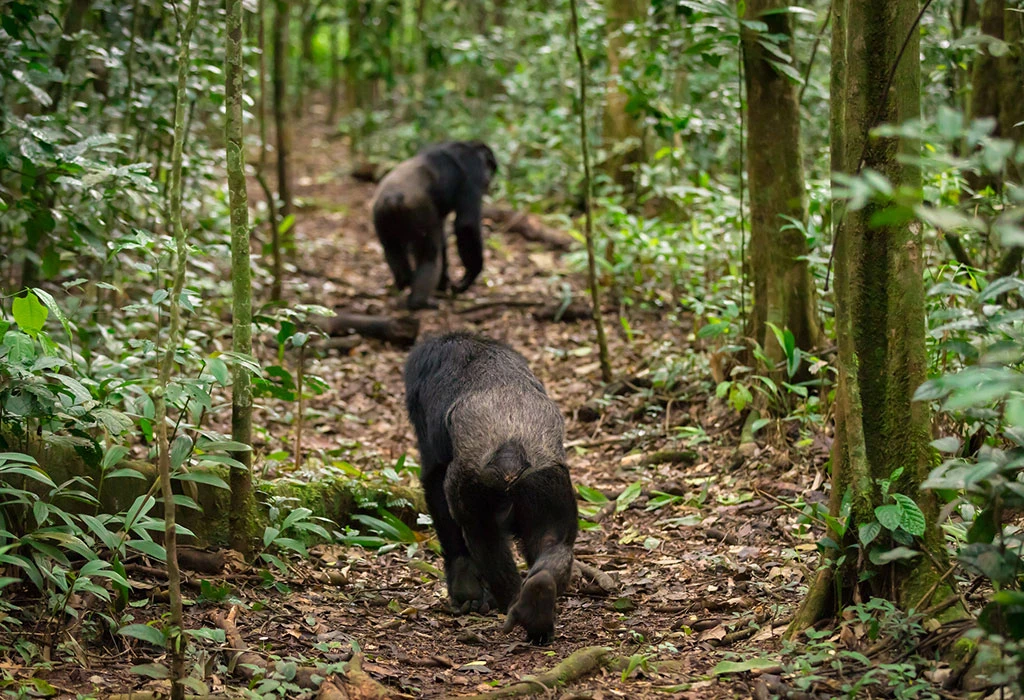
When planning a Kibale Forest chimpanzee safari, it helps to know that Uganda has four locations where visitors can track chimpanzees, Kibale Forest, Kyambura Gorge in Queen Elizabeth National Park, Budongo Forest near Murchison Falls, and Kalinzu Forest Reserve, but Kibale stands apart for a few reasons.
First, it has by far the largest habituated chimpanzee population of the four, giving it the highest and most consistent sighting rates in the country. Second, its forest is a genuine rainforest, tall, dense, and green year round, rather than the drier woodland found in some of the other tracking sites, which makes for a richer overall wildlife and birding experience alongside the chimps. Third, Kibale has invested the most in long term research and habituation, with multiple communities studied continuously for decades by primatologists, which is part of why the chimps here tolerate close observation so well.
Two chimp communities in Kibale are habituated specifically for the standard one hour trek, while a third, still in the process of becoming fully accustomed to humans, is reserved for the more immersive Chimpanzee Habituation Experience (CHEX). Beyond chimps, the park protects red colobus monkeys, grey cheeked mangabeys, L’Hoest’s monkeys, black and white colobus, olive baboons, and over 375 recorded bird species, along with forest elephants and various duiker species that are occasionally spotted along the trails.
A Brief History and Ecology Behind Your Kibale Forest Chimpanzee Safari
Kibale was gazetted as a forest reserve in 1932, primarily for timber management, before being upgraded to full national park status in 1993 in recognition of its exceptional biodiversity and its importance to primate research. The park sits at an elevation of roughly 1,100 to 1,600 meters, which gives it a cooler, wetter climate than many of Uganda’s savanna parks, and explains why it supports such dense, continuous rainforest rather than open woodland.
Kibale’s chimpanzee research program, based at the Kanyanchu and Ngogo research stations, is one of the longest running of its kind in Africa, with continuous behavioral studies dating back decades. This sustained research presence is a large part of why Kibale’s chimp communities are so reliably observable: habituation is a slow, patient process that can take years, and Kibale’s researchers and rangers have had more time than almost anywhere else to build that trust with multiple chimp communities.
The forest itself is a mosaic of old growth mahogany trees, dense understory, and swampy grassland corridors, forming a wildlife corridor that connects Kibale to Queen Elizabeth National Park to the south, which is part of why forest elephants and other large mammals occasionally move between the two protected areas. This ecological connectivity also supports one of the highest primate densities recorded anywhere in the world, with an estimated 13 primate species coexisting within the park’s boundaries.
Kibale Forest Chimpanzee Safari Permit Prices (2026)
Every Kibale Forest chimpanzee safari requires a permit, and all chimpanzee permits in Uganda are issued and regulated by the Uganda Wildlife Authority (UWA). Current 2026 pricing for Kibale is as follows.
Standard Chimpanzee Trekking Permit
- Foreign non residents: $250 per person
- Foreign residents: $200 per person
- East African Community citizens: UGX 180,000 per person
The standard trek is a guided forest walk, typically lasting two to four hours round trip, that culminates in roughly one hour observing a habituated chimpanzee family at close range.
Chimpanzee Habituation Experience (CHEX)
- $400 per person, foreign non resident
CHEX is a full dawn to dusk day in the forest with researchers and rangers, following a community that is still being acclimated to human presence. Group sizes are deliberately kept small, often around six participants per day, so the experience feels far less crowded and far more immersive than the standard trek.
A few practical notes on permits:
- Book early. Permits routinely sell out three to six months in advance for the June to August and December to February peak seasons.
- Permits are non refundable and non transferable. If your plans change, you generally lose the fee, so build some flexibility into your itinerary before locking in dates.
- Book through a licensed operator or directly with UWA. This avoids the risk of counterfeit or double sold permits, which occasionally circulate through unlicensed brokers.
- Combine with a gorilla trek if you can. Many travelers pair a Kibale chimp trek with gorilla trekking in Bwindi Impenetrable National Park (permit around $800), creating one of Uganda’s signature primate safari combinations.
Best Time for a Kibale Forest Chimpanzee Safari
Kibale can be trekked year round, and unlike some parks, there’s no single “wrong” season to visit, it comes down to trade offs between trail conditions, crowd levels, and price.
- Dry seasons: June to September and December to February This is peak season. Trails are firmer and easier to walk, mornings are typically clear, and this is when most international visitors come. The trade off is that permits sell out fastest during these months, and lodge rates tend to be at their highest.
- Wet seasons: March to May and October to November Rain is more frequent and trails can get genuinely muddy, so this is a better fit for travelers who don’t mind getting a little dirty. In exchange, you’ll find fewer other tourists on the trails, and some lodges drop their rates by 20 to 30%. Chimps also tend to stay lower in the canopy during wetter weather, which can occasionally make for easier and closer viewing than in the dry season, when they range higher and further.
Daily timing Regardless of season, treks begin early, briefings are usually around 8:00 a.m. at the Kanyanchu Visitor Centre, because chimps are most active and easiest to locate in the cooler morning hours before they move deeper into the canopy to rest through the midday heat.
What to Expect on Your Kibale Forest Chimpanzee Safari Trek
- 1. Arrival and briefing. You’ll check in at Kanyanchu Visitor Centre, the park’s main tourism hub, roughly 30 minutes before your trek starts. A UWA ranger guide gives a safety and etiquette briefing: keep at least 7 to 8 meters from the chimps, don’t eat or drink near them, keep your voice low, and stay together as a group.
- 2. The search. Trekking groups are capped at around eight visitors and are led by an armed ranger guide, sometimes assisted by trackers who went ahead at dawn to locate the chimps by their calls and nest sites. This part of the trek is essentially a rainforest hike, you might find the chimps within 30 minutes, or it might take a few hours, depending on how far the community has ranged that morning.
- 3. The encounter. Once located, you get about one hour with the chimps. This is the heart of the experience, watching them feed on figs, groom each other, play, rest, or occasionally erupt into the dramatic pant hoot calls chimps are famous for. Because Kibale’s communities are so well habituated, chimps often carry on with their normal behavior largely unbothered by the presence of visitors.
- 4. The return hike. You retrace your steps back to Kanyanchu, typically wrapping up by early to mid afternoon, and receive a certificate marking your trek.
The Chimpanzee Habituation Experience follows a similar arc but starts before dawn, often as early as 5:30 a.m., and continues until the chimps build their night nests at dusk. Because the group is smaller and the day so much longer, CHEX participants typically get to observe a much wider range of chimp behavior, and spend time directly alongside researchers who explain the ongoing habituation process.
Chimp Trekking Etiquette and Conservation Rules for a Kibale Forest Chimpanzee Safari
Because chimpanzees are so closely related to humans genetically, close contact carries real risks for their health, and UWA enforces a strict code of conduct to protect both visitors and the animals:
- Maintain distance. Stay at least 7 to 8 meters from chimpanzees at all times, even if they approach you, it’s their choice to close the distance, not yours.
- No eating or drinking near the chimps. Food smells can attract them dangerously close, and dropped food scraps can introduce disease or disrupt natural foraging behavior.
- Keep groups small and voices low. Loud noise or sudden movement can stress the animals or trigger defensive behavior.
- Stay home if you’re sick. Because chimps can catch human respiratory illnesses, anyone with a cold, flu, or other contagious symptoms is asked to sit the trek out.
- No flash photography. Flashes can startle chimps and disrupt their natural behavior; standard photography without flash is fine.
- Never trek for longer than permitted. The one hour limit on standard treks exists specifically to minimize stress on habituated communities from repeated daily visits.
- Follow your ranger guide’s instructions at all times. Rangers are trained to read chimp behavior and will reposition the group if an individual chimp seems agitated or is displaying signs of stress.
These rules aren’t just bureaucratic box ticking, Kibale’s high sighting rates and healthy chimp populations exist precisely because these protocols have been followed consistently for decades. Visitors who respect them are directly contributing to the long term survival of the very experience they came to have.
Photography Tips for Your Kibale Forest Chimpanzee Safari
Photographing chimps in a shaded rainforest canopy is genuinely challenging, and a little preparation goes a long way:
- Bring a fast lens. Rainforest light is often dim even at midday, so a lens capable of a wide aperture (f/2.8 to f/4) will help enormously compared to a typical kit zoom.
- Bump up your ISO. Don’t be afraid to shoot at ISO 1600 to 3200 in deep shade; a slightly noisy sharp photo beats a blurry clean one.
- Pack light. You’ll be hiking with your gear for hours, so a single versatile zoom (something like a 70 to 200mm or 100 to 400mm equivalent) is usually more practical than switching lenses in the field.
- Protect your gear from moisture. A rain cover or dry bag is worth carrying even in the dry season, since humidity and sudden showers are a constant in rainforest environments.
- Remember the no flash rule. Flash photography is prohibited near the chimps, so plan your camera settings around available light rather than relying on it.
- Don’t trek for photos alone. The best moments, a mother grooming an infant, a dominance display, a chorus of pant hoots rippling through the canopy, often happen fast and unexpectedly, so keep your camera ready but stay present for the experience itself.
Fitness Level and Difficulty for a Kibale Forest Chimpanzee Safari
Kibale’s terrain is generally considered easier than gorilla trekking in Bwindi, which involves steep volcanic slopes. Kibale’s trails are mostly flat to gently undulating forest paths, though they can be slippery after rain. Most reasonably fit adults manage the standard trek without difficulty. That said, treks can run long if chimps have moved far from the trailhead, so a baseline level of hiking fitness, comfortably walking for two to four hours on uneven ground, will make the day considerably more enjoyable.
What to Pack for a Kibale Forest Chimpanzee Safari
- Sturdy, closed toe hiking boots with good ankle support, trails can be muddy even in the dry season
- Long trousers and a long sleeved shirt in neutral, earth toned colors (this protects against biting ants, nettles, and thorny undergrowth, and avoids startling wildlife with bright colors)
- A lightweight rain jacket, even during the dry season, rainforest weather is unpredictable
- Gardening style gloves (optional but useful for pushing through dense undergrowth)
- Insect repellent and sunscreen
- A daypack with water and a light snack
- A face mask, many operators now recommend or require one, since chimpanzees are genetically close enough to humans to be vulnerable to our respiratory illnesses
- Binoculars for spotting primates and birds in the canopy
- A camera with a zoom lens, flash photography is prohibited near the chimps
- Cash in small denominations for tips (guides, porters, and trackers customarily receive tips at the end of the trek)
Getting to Kibale Forest for Your Chimpanzee Safari
- By road: Kibale is roughly 5 to 6 hours from Kampala or Entebbe by road via Mubende and Fort Portal, on generally good tarmac roads. Most safari operators include this drive as part of a multi day itinerary, often breaking the journey with a stop at the Equator crossing.
- By air: Scheduled and chartered domestic flights connect Entebbe International Airport to Kasese airstrip in around 45 minutes, followed by a road transfer of roughly 1 to 1.5 hours to Kibale. This option suits travelers with limited time or those combining Kibale with Queen Elizabeth National Park, which is also accessible from Kasese.
Getting around locally: Once you’re based near the park, most lodges arrange transfers to Kanyanchu Visitor Centre, and many itineraries combine the chimp trek with a stop at the nearby Bigodi Wetland Sanctuary.
Where to Stay for a Kibale Forest Chimpanzee Safari
Accommodation for a Kibale Forest chimpanzee safari spans the full range from simple $15 a night campsites to lodges charging several hundred dollars a night for private crater lake views. Broadly, places to stay cluster in three areas: right along the park boundary near Kanyanchu, in the scenic Ndali Kasenda crater lakes area a short drive away, and in Fort Portal town itself, roughly 30 to 40 minutes from the trailhead. Below is a breakdown by budget tier.
Budget Lodges ($40 to $90 per night)
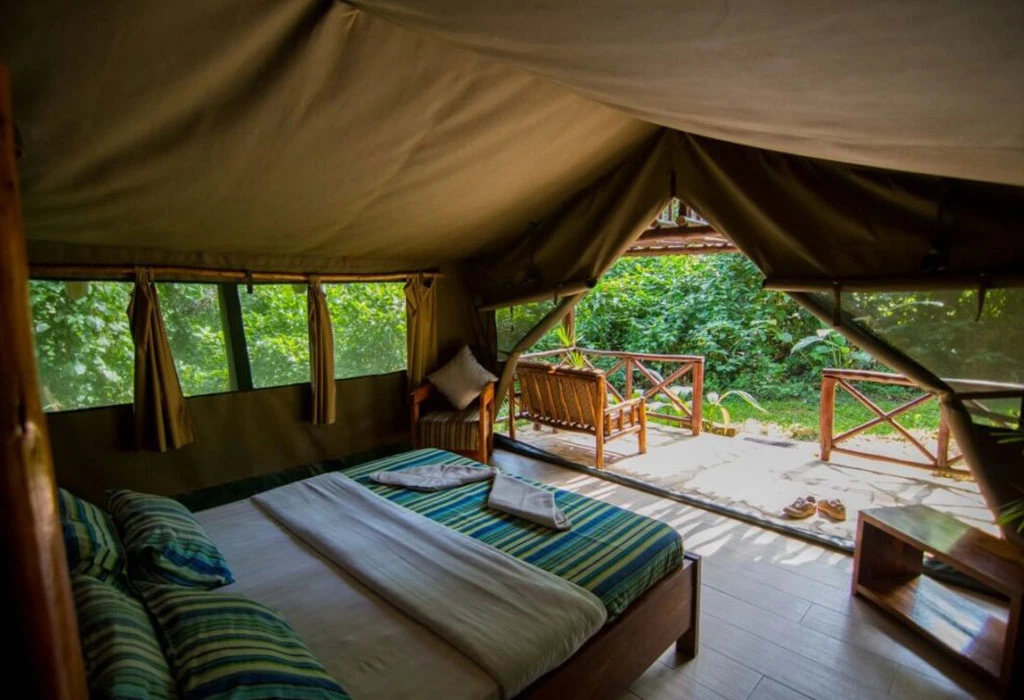
Budget accommodation near Kibale ranges from simple tented camps and guesthouses to no frills cottages, generally with shared or basic en suite facilities, solar power, and home cooked meals. This tier is ideal for backpackers, independent travelers, and anyone prioritizing value over amenities.
- Little Monkey Camp. A simple, welcoming forest edge camp near Kibale, popular with backpackers for its relaxed atmosphere and reasonable rates, generally around $40 to $60 per night.
- Kibale Forest Camp, Kibale. Not to be confused with the mid range Kibale Forest Lodge in Bigodi Village, this simpler property near the park offers straightforward rooms at budget friendly rates, typically in the $40 to $80 range.
- Rwintera Safari Camp. Situated near the entrance of Kibale National Park close to the shores of Lake Nyabikere, this budget friendly camp offers simple accommodation with lake views, a restaurant, bar, and free Wi Fi, generally falling in the $40 to $90 bracket.
- Isunga Lodge. Set on the edge of the forest with views toward the Rwenzori Mountains, offering basic safari tents and simple rooms with shared or basic facilities, typically in the $50 to $80 range.
What to expect at this tier: Simple rooms or tents, mosquito nets, solar powered lighting, hot showers (sometimes bucket showers), shared common areas, and straightforward home style meals. Wi Fi is often limited or unavailable. This tier suits travelers happy to trade polish for savings and proximity to nature.
Mid Range Lodges ($100 to $250 per night)
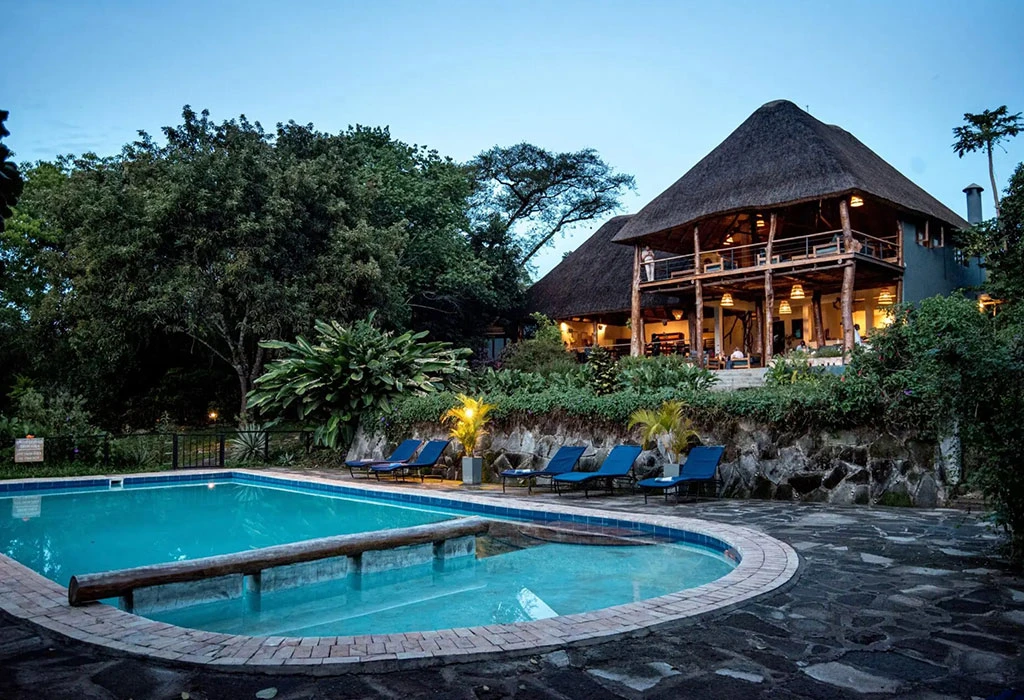
The mid range tier is Kibale’s sweet spot for most travelers: comfortable en suite cottages or rooms, reliable hot water, good food, and often striking views of the forest, crater lakes, or Rwenzori Mountains, without the price tag of the top end properties.
- Chimpanzee Forest Lodge. A characterful property set on 100 acres of gardens, tea plantations, and indigenous forest just outside the park, originally a 1950s colonial residence turned guesthouse, with panoramic views of Kibale Forest, crater lakes, and the Rwenzori Mountains. Rates typically start in the mid range bracket, though some third party booking sites list peak season rates considerably higher, so it is worth checking current pricing directly with the lodge.
- Turaco Treetops. A semi luxury lodge on 5.2 hectares of forest at the edge of Kibale, around 15 minutes from the trailhead, with luxury and standard cottages, a swimming pool, and sweeping views of the Rwenzori Mountains. Generally priced toward the upper end of the mid range bracket.
- Bweza Kibale Lodge. A comfortable property in the Kibale area offering mid range cottages and forest surroundings, well suited to travelers seeking a quiet base close to the park without luxury pricing.
- Guereza Canopy Lodge. A newer mid range property perched on the edge of Kibale Forest near Bigodi, with spacious en suite cottages, private terraces overlooking the rainforest, on site dining, and a spa. Consistently well reviewed for its views, food, and staff.
- Kibale Tourist Safari Lodge. Set on five acres along the shores of Bigodi Swamp about ten minutes from the chimpanzee trekking booking office, offering executive cottages and a family cottage. Rates vary noticeably by season and booking platform, generally landing in the $120 to $270 range, so it can sit at the upper edge of the mid range bracket during peak periods.
What to expect at this tier: En suite bathrooms with hot showers, comfortable beds with mosquito nets, restaurant and bar service, reliable (if sometimes solar dependent) electricity, and often genuinely spectacular views, since many mid range properties sit on forest edges or crater lake rims. This is the tier most general travelers, not on a shoestring but not chasing five star luxury, will find the best balance of comfort, character, and value.
Luxury and High End Lodges ($400+ per night)
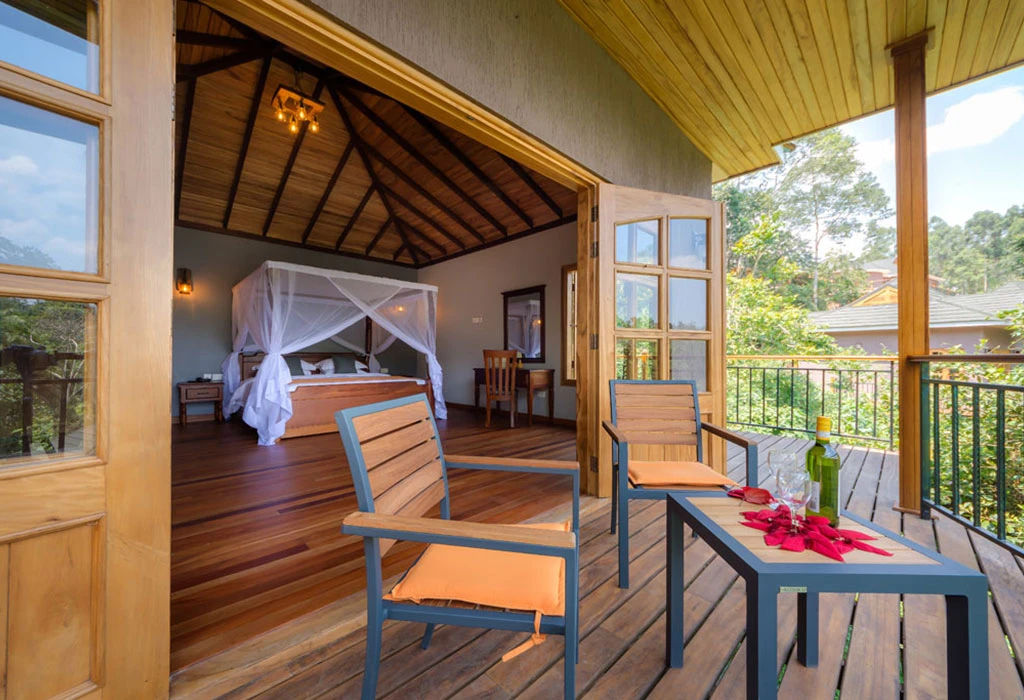
At the top end, Kibale’s luxury properties compete with the best safari lodges anywhere in East Africa, built around the dramatic crater lake scenery of the Ndali Kasenda area and the forest itself.
- Primates Lodge Kibale. Located inside the park near Kanyanchu, this is one of the few properties offering direct access to the trailhead, with elevated cottages and tree house style rooms set among the forest canopy.
- Kyaninga Lodge. Widely considered the standout luxury property in the region, built almost entirely from timber in a striking chalet like style perched above Lake Kyaninga. Nine spacious cottages offer marble topped en suite bathrooms, freestanding baths, private decks, and panoramic lake and mountain views. Rates vary considerably by source and season, generally starting from around $400 to $680 or more per night, with some listings citing per person sharing rates in the $300 to $600 range; many stays are booked on an all inclusive or full board basis covering meals and some activities.
- Ndali Lodge. A characterful, long established lodge set on the rim of a crater lake amid the Ndali Kasenda estate, known for its individually designed cottages, home grown vanilla farm, and warm, personal hospitality. Rates typically start from around $400 per night per person, often on a full board basis, and can rise well beyond that depending on season and room category.
- Crater Safari Lodge Kibale. A boutique luxury property in the crater lakes area offering high end cottages with forest and lake views, generally priced in the $400 and above bracket depending on season.
- Chimpundu Lodge. A privately owned luxury property offering upscale cottage accommodation in a lush indigenous setting, with a swimming pool, spa, restaurant, and bar. Well regarded for attentive, personalized service.
- Mirima Kibale Lodge (High End). Set on a hillside above the crater lakes near Kibale with views over lakes, farms, and distant forest, this lodge uses natural materials like wood and stone to create a grounded, tranquil high end retreat.
What to expect at this tier: Architecturally distinctive cottages or villas, private decks and swimming areas, gourmet dining often built around locally grown produce, dedicated staff, curated activities such as guided nature walks and cultural visits, and some of the best views in western Uganda. Rates at this level are frequently quoted per person sharing and are often all inclusive of meals, drinks, and sometimes airport transfers or select activities. Always confirm exactly what is included before booking, since “from” prices can understate the total cost considerably once park fees, permits, and add ons are factored in.
Choosing the Right Lodge Tier for Your Kibale Forest Chimpanzee Safari
If your priority is simply getting into the forest and keeping costs down, the budget tier delivers everything you actually need, a bed, a hot shower, and quick access to Kanyanchu. If you want genuine comfort, good food, and a memorable setting without luxury pricing, the mid range tier is where most travelers end up, and frankly offers some of the best value for view ratios in Uganda thanks to the crater lakes. If you’re treating this as a once in a lifetime trip and want architecture, service, and scenery to match the chimp trekking itself, the luxury tier, particularly Kyaninga and Ndali, delivers an experience that regularly appears on lists of Africa’s most memorable lodges.
Combine Your Kibale Forest Chimpanzee Safari With Bigodi Wetland Sanctuary
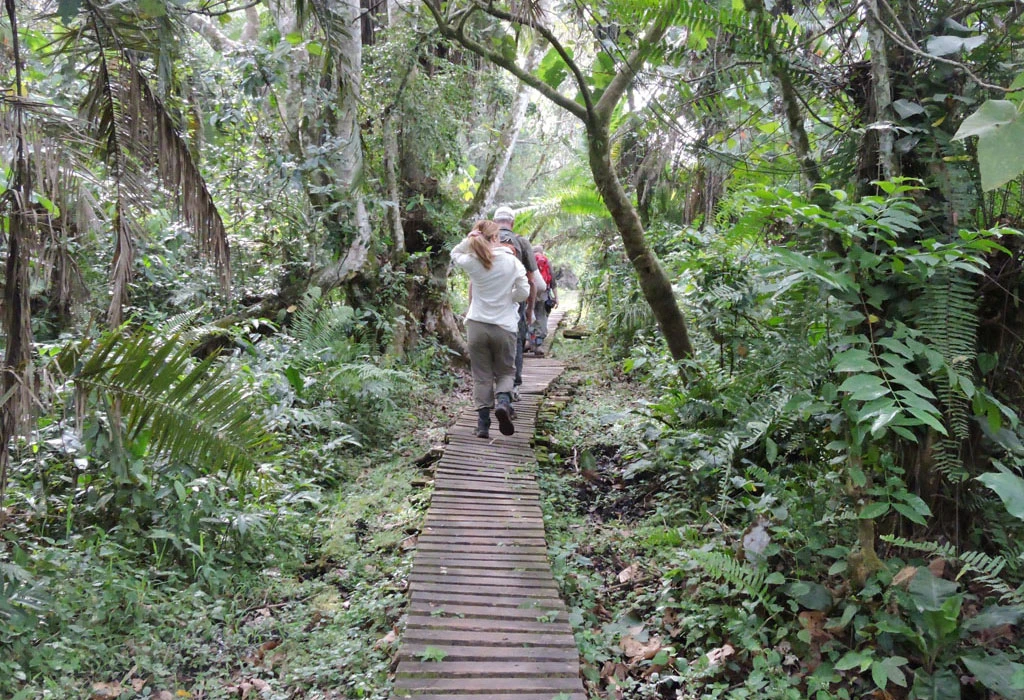
Most itineraries pair the morning chimp trek with an afternoon visit to the Bigodi Wetland Sanctuary, a community run reserve a short drive from Kanyanchu. It’s a lower cost, lower intensity walk (typically two to three hours) that’s excellent for spotting additional primates, including the striking black and white colobus, plus rich birdlife, all while directly supporting the local community that manages the reserve.
Combine Your Kibale Forest Chimpanzee Safari With Other Uganda Parks
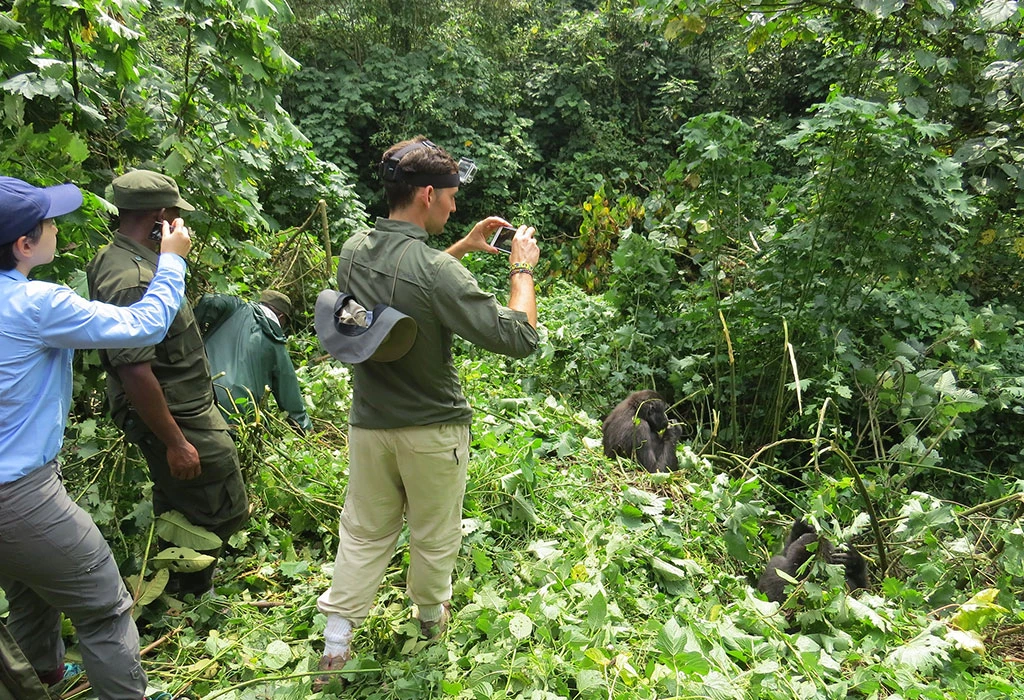
A Kibale Forest chimpanzee safari rarely stands alone on an itinerary. Popular combinations include:
- Queen Elizabeth National Park, A few hours south of Kibale, offering game drives, a boat cruise on the Kazinga Channel, and a second (lower cost) chimp tracking option at Kyambura Gorge.
- Bwindi Impenetrable National Park, Roughly 5 to 6 hours by road or a short charter flight from Kibale, home to Uganda’s mountain gorillas. Pairing a Kibale chimp trek with a Bwindi gorilla trek is one of the most sought after primate safari combinations in the world, since no other country offers both experiences within a single road journey.
- Semuliki National Park and the Rwenzori Mountains, For travelers with extra time, both are within reach of Fort Portal and add lowland rainforest wildlife or high altitude trekking to the itinerary.
Sample 3 Day Kibale Forest Chimpanzee Safari Itinerary
- Day 1: Travel to Kibale Depart Kampala or Entebbe in the morning, driving via Mubende and Fort Portal (roughly 5 to 6 hours), or fly to Kasese and transfer by road. Check in to your chosen lodge in the afternoon and relax, with time for a sundowner overlooking the crater lakes if you’re staying in that area.
- Day 2: Chimpanzee trekking and Bigodi Wetland Early breakfast, then transfer to Kanyanchu Visitor Centre for the 8:00 a.m. briefing and chimp trek. After the trek and lunch back at your lodge, head out for an afternoon guided walk through Bigodi Wetland Sanctuary to spot colobus monkeys and birdlife.
- Day 3: Departure or onward travel Depart for Kampala/Entebbe, or continue onward to Queen Elizabeth National Park or Bwindi Impenetrable National Park to extend the safari.
Travelers doing the full day Chimpanzee Habituation Experience should plan for a fourth day, since CHEX typically replaces the shorter standard trek with a dawn to dusk outing and is worth building a less rushed schedule around.
Frequently Asked Questions About a Kibale Forest Chimpanzee Safari
How much does a Kibale Forest chimpanzee safari permit cost?
A standard trekking permit costs $300 for foreign non residents, $250 for foreign residents, and UGX 180,000 for East African citizens. The full day habituation experience (CHEX) costs $400.
How fit do I need to be for chimp trekking?
Reasonable fitness helps, but treks are graded moderate, you should be comfortable walking on uneven forest terrain for two to four hours. Kibale’s trails are generally considered easier than the steep gorilla trekking terrain in Bwindi.
What’s the chance of actually seeing chimps?
Sighting rates at Kibale are consistently high, commonly cited above 90%, thanks to well habituated communities and daily ranger tracking, though as with any wild animal encounter, a sighting can never be guaranteed.
Can children trek?
The minimum age for chimpanzee trekking in Uganda is 12 years old. Children who are under the age stay at the lodge during trekking time, for alternative lodge activities like nature walk, birding.
How far in advance should I book permits?
Three to six months ahead is recommended, especially for the June to August and December to February peak seasons, when permits can sell out completely.
Is Kibale better than Kyambura Gorge or Budongo Forest for chimp tracking?
Kibale has the largest, most habituated chimp population and the highest sighting rates of Uganda’s four chimp tracking destinations, but it’s also the most expensive. Kyambura Gorge and Budongo Forest offer lower permit costs and quieter experiences, with somewhat lower, but still solid, sighting odds.
What’s the difference between standard trekking and the Habituation Experience (CHEX)?
Standard trekking gives you about one hour with the chimps after a guided search, in a group of up to eight visitors. CHEX is a full dawn to dusk day with a much smaller group, following a chimp community that’s still being habituated, offering far more time and a closer look at the research process itself.
Do I need a visa to visit Uganda for chimp trekking?
Most foreign visitors require a visa, which can typically be obtained online in advance through Uganda’s e visa system. Requirements vary by nationality, so check current rules with Uganda’s immigration authorities or your safari operator before traveling.
Is it safe to trek in Kibale Forest?
Yes. Treks are conducted under the direct supervision of trained UWA ranger guides who follow strict safety protocols, and Uganda is generally considered a safe destination for international visitors. That said, standard travel precautions, good travel insurance, routine vaccinations, and malaria prophylaxis, are strongly recommended for any rainforest safari in the region.
What should I do if I get sick before my trek?
Because chimpanzees can contract human respiratory illnesses, visitors with symptoms of a cold, flu, or other contagious illness are generally asked not to trek, both to protect the chimps and the rest of the group. Contact your operator or UWA in advance if you’re unwell, most permits in this situation can be rescheduled with appropriate notice.