
Uganda Gorilla and Chimpanzee Safari: An Epic Adventure Guide
If you have ever watched a documentary and felt your chest tighten as a silverback gorilla beat his chest in the mist, you already understand the pull of a Uganda Gorilla and Chimpanzee Safari. This is not a trip you take just to check a box on a bucket list. It is a walk into ancient forests where two of our closest living relatives, mountain gorillas and chimpanzees, still move freely through trees their ancestors have used for thousands of years.
At Iconic Africa Safaris, we craft every Uganda Gorilla and Chimpanzee Safari around real encounters, honest planning, and a deep respect for the wildlife and communities that make this experience possible.
Uganda holds a rare title in Africa. It is one of the few countries where travelers can reliably see both mountain gorillas and wild chimpanzees on the same trip, often within a single week. Rwanda has also gorillas in Volcanoes National Park and chimpanzees in Nyungwe Forest National Park. The Democratic Republic of Congo has gorillas too, when it is safe to visit. But Uganda pairs gorilla trekking with world-class chimpanzee tracking, savannah game drives, and boat cruises, all within a manageable travel radius. That combination is exactly why a Uganda Gorilla and Chimpanzee Safari has become one of the most requested trips we plan each year.
This guide walks through everything you need to know before you go. We cover permits, national parks, seasons, lodges, sample itineraries, packing lists, safety, budgeting, and the questions we hear most often from first-time travelers. Grab a cup of coffee, and let’s plan your Uganda Gorilla and Chimpanzee Safari the right way.
What Makes a Uganda Gorilla and Chimpanzee Safari So Special
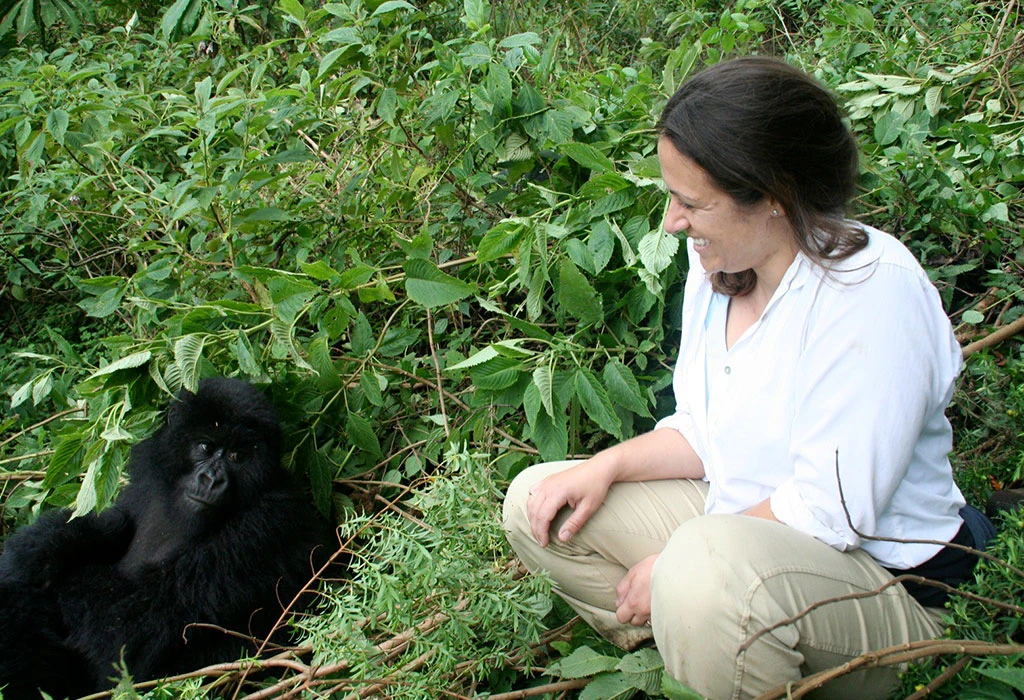
Uganda earned the nickname “the Pearl of Africa” from Winston Churchill more than a century ago, and the label still fits. The country sits at a crossroads of ecosystems, where the East African savannah meets the edge of the Congo rainforest. That overlap creates forests thick enough to hide over 400 mountain gorillas and thousands of wild chimpanzees, alongside open plains full of lions, elephants, and hippos.
A gorilla encounter and a chimpanzee encounter feel completely different, and that contrast is part of the magic. Gorillas move slowly. A family might spend an hour eating wild celery within a few feet of you, calm and unhurried. Chimpanzees are the opposite. They swing through the canopy, scream through the treetops, and sometimes charge across the trail in a blur of noise and motion. Pairing both experiences on one Uganda Gorilla and Chimpanzee Safari gives you a fuller picture of what primate life in Africa actually looks like, not just a single postcard moment.
There is also a practical reason travelers choose Uganda over its neighbors. Permit prices remain lower than Rwanda’s, flights connect easily through Entebbe, and the parks themselves are less crowded than many people expect. A well-planned Uganda Gorilla and Chimpanzee Safari can be done comfortably in five to ten days without feeling rushed.
Insider Tip: Many travelers assume gorilla trekking and chimpanzee tracking happen in the same forest. They usually do not. Gorillas live in the southwest near Bwindi and Mgahinga, while the best chimpanzee tracking happens in Kibale, roughly a four to five hour drive north. Build travel days into your itinerary so you are not rushing between parks.
Uganda vs Rwanda vs Congo: Where Should You Trek?
Travelers researching a gorilla trip almost always end up comparing three countries: Uganda, Rwanda, and the Democratic Republic of Congo. Each offers mountain gorilla trekking, but the experience and the price differ sharply. Rwanda markets itself as the luxury option, with permits priced at 1,500 dollars and a small, polished set of lodges around Volcanoes National Park. Congo offers the cheapest permits on paper, but ongoing security concerns in parts of the eastern region make it a harder sell for most travelers and many insurers will not cover trips there.
Uganda sits in the middle in terms of comfort, yet it wins on value and variety. Permits cost roughly half of Rwanda’s price, the parks feel less commercialized, and Uganda is the only country of the three that pairs gorilla trekking with genuinely world-class chimpanzee tracking in the same trip. That single fact is why so many travelers choose a Uganda Gorilla and Chimpanzee Safari over a shorter, pricier trip focused on gorillas alone.
Table: Gorilla Trekking Destinations Compared
| Country | Standard Gorilla Permit | Chimpanzee Tracking Available | Overall Value |
|---|---|---|---|
| Uganda | $800 | Yes, at four locations | Excellent |
| Rwanda | $1,500 | Limited, smaller communities | Good, premium priced |
| DR Congo | Lower cost ($400), variable | Limited access | Depends on regional safety |
Gorilla Trekking in Uganda: What to Expect
Gorilla trekking is the centerpiece of most Uganda Gorilla and Chimpanzee Safari itineraries, and for good reason. Mountain gorillas exist in only two places on Earth: the Virunga Massif shared by Uganda, Rwanda, and Congo, and the separate Bwindi ecosystem in southwestern Uganda. Fewer than 1,100 mountain gorillas remain in the wild today, which makes every trek feel like a genuine privilege rather than a routine wildlife viewing.
Your day begins early, usually around 7:00 or 7:30 a.m., at a park headquarters where rangers brief your group before assigning you to a specific gorilla family. Groups are capped at eight visitors per family to reduce stress on the animals. From there, you hike into the forest behind an armed ranger and a tracker who has often been following that particular gorilla family since sunrise. Trek times vary wildly. Some families sit within thirty minutes of the trailhead. Others require a four or five hour hike through steep, muddy terrain.
Once your group finds the gorillas, you get exactly one hour with them. It sounds short, but it rarely feels that way. Watching a two-hundred-kilogram silverback move through thick vegetation with total ease, or seeing a juvenile gorilla tumble over its mother, tends to slow down time in a way that photos never quite capture. This single hour is the heart of every Uganda Gorilla and Chimpanzee Safari.
How Gorilla Trekking Works Day to Day
Understanding the flow of a trekking day helps you prepare mentally and physically before your Uganda Gorilla and Chimpanzee Safari begins.
- Registration and briefing: Arrive at the park office by 7:00 a.m. with your passport and permit for verification.
- Family assignment: Rangers assign trekking groups based on fitness level, often placing older travelers or those with mobility concerns with closer gorilla families.
- The trek itself: Walking sticks are provided free of charge, and porters are available to carry your daypack for a small tip, usually between 15 and 20 dollars.
- The one-hour encounter: You stay at least seven to ten meters from the gorillas, speak quietly, and follow ranger instructions at all times.
- The return hike: Groups head back to the trailhead, often arriving mid-afternoon depending on how far the gorillas were found.
Gorilla Families and Habituation
Not every gorilla in Uganda’s forests is used to human presence. Rangers spend years habituating a family, meaning they slowly and patiently expose the gorillas to human observers until the animals no longer react to their presence. Bwindi alone has more than 20 habituated gorilla families spread across four trekking sectors, while Mgahinga has a smaller number tied to the Virunga volcanoes.
For travelers who want something deeper than the standard hour, Uganda also offers the Gorilla Habituation Experience in the remote Rushaga sector. This program lets you spend up to four hours with a gorilla family that is still being habituated, accompanied by researchers and trackers rather than a standard ranger group. It costs more, but photographers and serious wildlife enthusiasts on a Uganda Gorilla and Chimpanzee Safari often say it was the highlight of their entire trip.
Physical Fitness for Gorilla Trekking
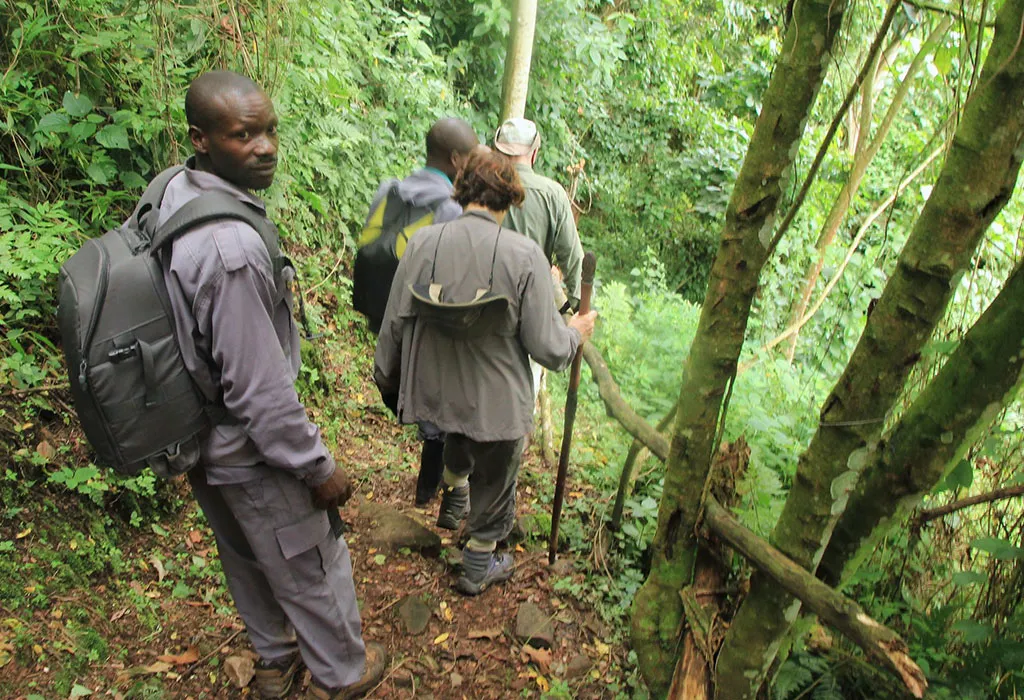
You do not need to be an athlete to complete a gorilla trek, but you do need reasonable stamina. Trails run through dense forest, volcanic slopes, and muddy hillsides that can climb steeply for long stretches. Altitude adds another layer of difficulty since Bwindi sits between 1,160 and 2,607 meters above sea level.
Our team at Iconic Africa Safaris always asks about fitness levels before booking a Uganda Gorilla and Chimpanzee Safari, because we can request an easier gorilla family for travelers with knee problems, asthma, or general mobility limits. Porters are a genuine help here, not a luxury. Hiring one supports the local economy around the park and takes real weight off your shoulders on a demanding trail.
Preparing your body a few weeks before your trip pays off on the trail. Short daily walks, stair climbing, or light hiking three to four times a week can build the leg strength and cardiovascular stamina that steep forest terrain demands. Travelers coming from sea-level cities sometimes underestimate how altitude affects breathing during a climb, so pacing yourself matters more than speed. Rangers set a comfortable group pace, and pausing to catch your breath is completely normal, even for fit hikers.
Trekking poles help enormously on wet, root-covered trails, and most lodges either rent them out or the park itself provides sturdy wooden walking sticks free of charge. Do not feel embarrassed about using one. Even guides who have hiked these trails hundreds of times often carry a stick for extra stability on the steepest descents.
Trekking Etiquette and Group Rules
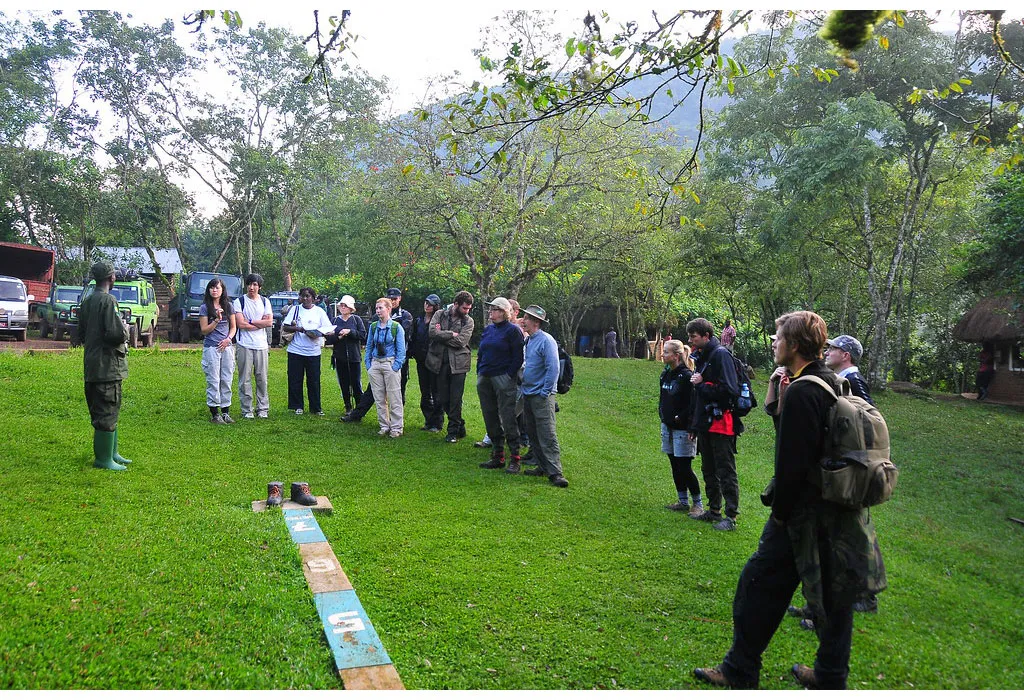
Every gorilla and chimpanzee encounter in Uganda follows strict etiquette rules designed by primatologists and park authorities to protect the animals long-term. Understanding these rules before you go helps you relax and enjoy the moment instead of worrying about breaking a guideline you did not know existed.
- Keep your voice low. Loud talking or sudden noises can startle a gorilla family or trigger unnecessary movement.
- Never point directly at the animals. Rangers often ask visitors to gesture with an open hand instead, since pointing can read as a threat display.
- Avoid direct eye contact with a silverback if he approaches closer than expected. Looking away signals submission and calms the situation quickly.
- No eating, drinking, or smoking near gorillas or chimpanzees, since scent and food waste can affect their behavior and health.
- Turn away if you need to cough or sneeze, and wear your mask correctly throughout the encounter to reduce disease transmission risk.
Groups of eight visitors per gorilla family keep the experience intimate, and rangers actively manage spacing throughout the hour so everyone gets a clear view without crowding the animals. Chimpanzee tracking groups run slightly larger, typically capped around six to eight visitors per ranger, though the fast-moving nature of chimps means the group often spreads out more than it does during a calm gorilla encounter.
Chimpanzee Trekking in Uganda: What to Expect
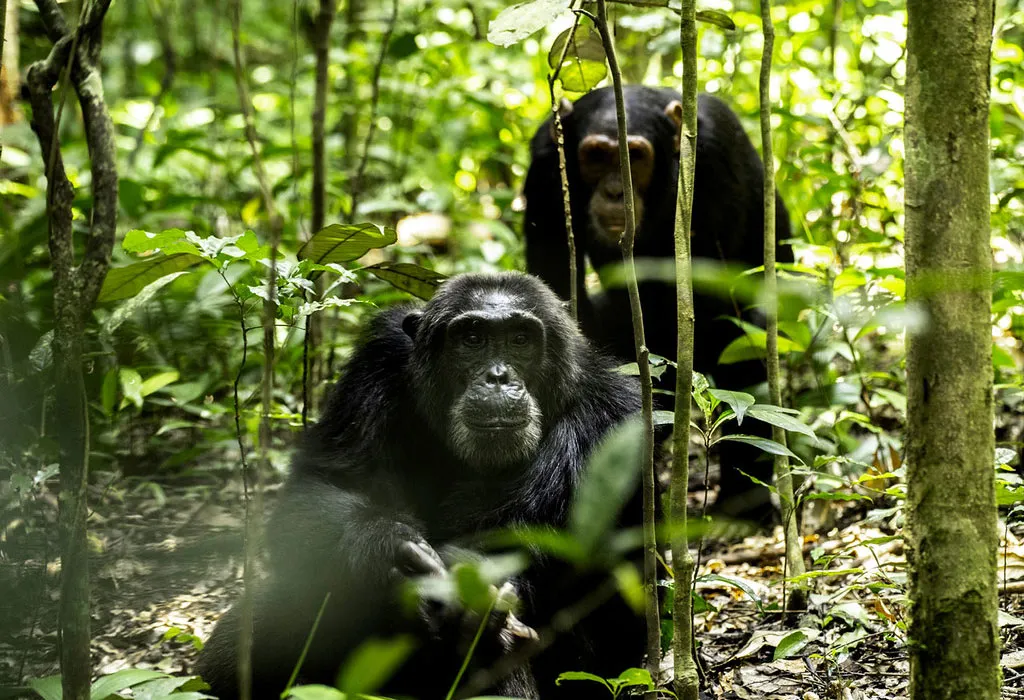
If gorilla trekking is the calm half of your journey, chimpanzee tracking is the loud, energetic half. Chimpanzees share about 98 percent of human DNA, and it shows in their behavior. They form complex social groups, use tools, hunt in coordinated packs, and communicate through a range of calls that can carry for over a kilometer through dense forest.
A typical chimpanzee tracking session on a Uganda Gorilla and Chimpanzee Safari starts around 6:00 or 8:00 a.m. depending on the park’s schedule. Rangers use radio contact with trackers who locate the chimps’ overnight nesting sites at dawn. Because chimpanzees move fast and often stay high in the canopy, the encounter feels less predictable than gorilla trekking. Some mornings you find them within twenty minutes. Other days you follow calls through thick undergrowth for two or three hours before catching sight of them.
Kibale Forest National Park holds the title of Uganda’s best chimpanzee destination, with over 1,500 chimpanzees living across roughly 13 habituated communities. Sightings success rates in Kibale regularly top 90 percent, which is part of why nearly every Uganda Gorilla and Chimpanzee Safari itinerary includes at least one night near this park.
Chimpanzee Habituation Experience
For travelers who want more time in the forest, Kibale offers almost a full-day (4-hours) habituation experience that runs from around 6:00 a.m. to 6:00 p.m. Instead of the standard one-hour visit, you follow researchers as they track a community from its morning nest to its evening resting spot. You watch feeding behavior, grooming rituals, and sometimes territorial displays that most day visitors never witness. It is physically demanding, but travelers who add it to their Uganda Gorilla and Chimpanzee Safari consistently describe it as one of the richest wildlife experiences in East Africa.
Best Chimpanzee Tracking Locations
Uganda offers four main chimpanzee tracking sites, each with its own character and price point.
- Kibale Forest National Park: The gold standard for chimp tracking, with the highest sighting rates and largest habituated population in the country.
- Kyambura Gorge: Tucked inside Queen Elizabeth National Park, this sunken forest gorge is easy to combine with a savannah game drive on the same day.
- Budongo Forest: Located inside Murchison Falls National Park, Budongo offers a quieter, less crowded experience with strong sighting rates.
- Kalinzu Forest Reserve: Sitting between Queen Elizabeth and Bwindi, Kalinzu is a budget-friendly option that works well as a stopover destination.
Insider Tip: If your main goal is a guaranteed, high-quality chimpanzee sighting, choose Kibale. If your itinerary is tight on time and you are already visiting Queen Elizabeth National Park, Kyambura Gorge saves you a detour without sacrificing much in the way of sighting quality.
Best National Parks for a Uganda Gorilla and Chimpanzee Safari
Choosing the right combination of parks shapes the entire feel of your trip. Some travelers want maximum wildlife diversity, while others prioritize shorter drive times. Here is how the main parks compare for anyone planning a Uganda Gorilla and Chimpanzee Safari.
Bwindi Impenetrable National Park
Bwindi Impenetrable Forest is Uganda’s flagship gorilla destination and home to roughly half of the world’s remaining mountain gorillas. The park is split into four trekking sectors: Buhoma, Ruhija, Rushaga, and Nkuringo. Each sector has its own gorilla families, lodges, and access roads, so choosing the right sector matters for logistics. Buhoma is the most established and closest to good roads, while Rushaga has the highest concentration of habituated families and hosts the Gorilla Habituation Experience.
The park itself earns its name honestly. Bwindi means “impenetrable” in the local Rukiga dialect, and the tangle of vines, ferns, and centuries-old hardwood trees explains why. Elevation across the park ranges from 1,160 meters near the eastern edge to 2,607 meters at its highest ridges, so temperatures can feel surprisingly cool in the early morning even though Uganda sits almost directly on the equator. Beyond gorillas, Bwindi shelters over 350 bird species and 200 species of butterfly, making it worthwhile even on a rest day between treks.
Choosing a sector often comes down to which lodge you prefer and how much driving you want to do. Nkuringo, in the far south, offers dramatic views over the Virunga volcanoes but requires a steeper hike out of a valley. Ruhija sits at the highest elevation and tends to run cooler, appealing to travelers who want fewer crowds. Whichever sector you choose, every trek in Bwindi forms the anchor of a well-planned Uganda Gorilla and Chimpanzee Safari.
Mgahinga Gorilla National Park
Mgahinga Gorilla National Park sits at the base of three volcanoes along Uganda’s border with Rwanda and Congo. It has a single habituated gorilla family, so trekking here means smaller crowds but less flexibility if that family happens to move into neighboring Rwanda for the day. Many travelers pair Mgahinga with a golden monkey trekking excursion, an underrated activity that few visitors know about.
The park’s dramatic scenery sets it apart. Mount Muhabura, Mount Gahinga, and Mount Sabyinyo rise directly from the park boundary, and experienced hikers can summit any of the three on a separate day trip. Because Mgahinga receives far fewer visitors than Bwindi, travelers who want a quieter, more remote feel to their Uganda Gorilla and Chimpanzee Safari often request this park specifically, even though it means accepting some uncertainty about gorilla availability on a given day.
Kibale Forest National Park
As already covered, Kibale is the top chimpanzee destination in Uganda and arguably in all of Africa. Beyond chimps, the park hosts 12 other primate species, including the striking L’Hoest’s monkey and red colobus. The nearby Bigodi Wetland Sanctuary adds a community-run walking tour that supports local conservation efforts.
Kibale’s forest canopy stays lush and green nearly year-round, fed by consistent rainfall that makes this one of Uganda’s most biologically dense parks. Guides here train specifically in primate behavior, and many have tracked the same chimpanzee communities for over a decade, which means they can often predict movement patterns before the animals themselves reveal their position. That expertise is a major reason sighting rates in Kibale stay so consistently high.
Queen Elizabeth National Park
Queen Elizabeth blends savannah wildlife with the Kyambura Gorge chimpanzee tracking site, making it a natural stop on many Uganda Gorilla and Chimpanzee Safari routes between Bwindi and Kibale. Tree-climbing lions in the Ishasha sector, hippo-packed channels, and flamingo-lined crater lakes round out the experience.
The park stretches across nearly 2,000 square kilometers of savannah, wetland, and crater lakes, giving it one of the most diverse landscapes in East Africa within a single boundary. A two-hour boat cruise along the Kazinga Channel routinely delivers close encounters with hundreds of hippos, buffalo herds wading at the water’s edge, and elephants crossing between grazing grounds. Combining this cruise with an afternoon at Kyambura Gorge lets travelers pack savannah and forest wildlife into a single, efficient day.
Murchison Falls National Park
Murchison Falls sits farther north than the other parks on this list, but many travelers building a longer Uganda Gorilla and Chimpanzee Safari add it for good reason. Uganda’s largest national park centers on the point where the Nile River forces its entire volume through a rocky gap barely seven meters wide before plunging 43 meters into the gorge below. The roar alone is worth the detour.
Budongo Forest, tucked inside the park’s southern boundary, ranks among Uganda’s top chimpanzee tracking sites and offers a quieter alternative to Kibale. Game drives across the park’s northern savannah regularly turn up elephants, giraffes, lions, and massive herds of Uganda kob, while a Nile boat cruise toward the base of the falls adds crocodile and hippo sightings to the day.
Kalinzu Forest Reserve
Kalinzu rarely appears on first-time itineraries, but it deserves more attention. Located just off the main road between Queen Elizabeth and Bwindi, it offers an affordable chimpanzee tracking option with strong success rates, ideal for travelers who want a primate encounter without straying far from their driving route.
Table 1: National Parks Compared for Your Uganda Gorilla and Chimpanzee Safari
| Park | Primary Wildlife | Best For |
|---|---|---|
| Bwindi Impenetrable NP | Mountain gorillas | Serious gorilla trekking with sector variety |
| Mgahinga Gorilla NP | Gorillas, golden monkeys | Smaller crowds, volcano scenery |
| Kibale Forest NP | Chimpanzees, 12 primate species | Top-tier chimpanzee tracking |
| Queen Elizabeth NP | Chimps, lions, hippos | Combining primates with savannah game drives |
| Murchison Falls NP | Chimps, elephants, the Nile | Adding dramatic scenery to a longer safari |
| Kalinzu Forest Reserve | Chimpanzees | Budget-friendly stopover tracking |
Gorilla and Chimpanzee Permit Costs
Permit prices sit at the center of every budget conversation about a Uganda Gorilla and Chimpanzee Safari, and the numbers shift often enough that it pays to check current rates before booking. As of 2026, the Uganda Wildlife Authority, known as UWA, charges the following for standard trekking permits.
Gorilla Permit Prices
Regular Season Pricing
A standard gorilla trekking permit in Bwindi or Mgahinga costs 800 US dollars per person for foreign non-residents during the regular season. Foreign residents holding a valid Ugandan work permit pay 700 dollars, while citizens of East African Community countries pay a heavily subsidized rate of around 300,000 Ugandan shillings, roughly 80 dollars.
Low-Season Discounted Pricing
UWA introduced a low-season discount for the green months of April, May, and November, dropping the foreign non-resident price to 600 dollars and foreign resident to 500 dollars. These discounted permits are non-reschedulable, so travelers need firm dates before booking. Every gorilla permit includes park entrance, ranger-guide services, and security, and it guarantees you one hour with a habituated gorilla family.
The Gorilla Habituation Experience in Rushaga costs significantly more, currently 1,800 dollars, but it buys you up to four hours in the forest instead of one.
Chimpanzee Permit Prices
Pricing by Location
Chimpanzee tracking permits cost less than gorilla permits and vary by location. Kibale Forest National Park, the premium option, charges 250 dollars for foreign non-residents and 200 dollars for foreign residents. Kyambura Gorge inside Queen Elizabeth National Park runs about 100 dollars, while Kalinzu and Budongo Forest offer tracking for roughly 65 to 130 dollars. The full-day chimpanzee habituation experience in Kibale costs around 300 dollars per person.
Insider Tip: UWA suspended the old seven-day permit reservation hold in March 2026. Full payment is now required at the time of booking to secure your spot. This makes early planning even more important for a Uganda Gorilla and Chimpanzee Safari, especially if you are traveling during June to September or December to February, when permits sell out months in advance.
Table 2: Permit Costs for a Uganda Gorilla and Chimpanzee Safari (Foreign Non-Residents)
| Activity | Location | Standard Price |
|---|---|---|
| Gorilla trekking | Bwindi / Mgahinga | $800 per person |
| Gorilla habituation experience | Rushaga sector | $1,800 per person |
| Chimpanzee tracking | Kibale Forest NP | $250 per person |
| Chimpanzee habituation | Kibale Forest NP | $400 per person |
| Chimpanzee tracking | Kyambura Gorge | $150 per person |
| Chimpanzee tracking | Kalinzu / Budongo | $65–$130 per person |
Booking through an established operator like Iconic Africa Safaris removes a lot of the guesswork here. We purchase permits directly from UWA on your behalf, confirm exact family and sector assignments, and structure your Uganda Gorilla and Chimpanzee Safari itinerary around the dates that are actually available rather than the dates you hoped for.
Best Time to Go on a Uganda Gorilla and Chimpanzee Safari
Uganda sits near the equator, so temperatures stay fairly steady year-round. What changes is rainfall, and rainfall affects trail conditions, permit pricing, and how crowded the parks feel.
Dry Season: June to September and December to February
These months bring the driest trails and the clearest chances of good weather during your trek. Trekking through Bwindi’s steep terrain is noticeably easier when the ground is not slick with mud. This is peak season for a Uganda Gorilla and Chimpanzee Safari, which means permits sell out fastest and lodges fill up early, particularly around Christmas and New Year.
Wet Season: March to May and October to November
Rain falls more often during these months, but it rarely lasts all day. Forests turn a deeper green, waterfalls swell, and bird activity increases dramatically, which photographers tend to love. Trails get muddier and treks can take longer, but the payoff is smaller crowds and, since 2026, discounted gorilla and chimpanzee permits during April, May, and November.
Table 3: Choosing a Season for Your Uganda Gorilla and Chimpanzee Safari
| Season | Months | Pros | Cons |
|---|---|---|---|
| Dry / peak | Jun–Sep, Dec–Feb | Easier trails, reliable weather | Higher demand, standard permit prices |
| Green / low | Apr, May, Nov | Discounted permits, fewer crowds | Muddier trails, occasional heavy rain |
| Shoulder | Mar, Oct | Balance of rain and crowds | Less predictable weather |
Insider Tip: Do not rule out the green season just because of rain. A trek in May can cost 200 dollars less per person than the same trek in August, and the forest looks even more alive with fresh growth. For families or budget travelers, this window is often the smartest time to book a Uganda Gorilla and Chimpanzee Safari.
Month-by-Month Weather Overview
Understanding how each month behaves helps you match your travel dates to your priorities, whether that is dry trails, fewer crowds, or lower permit prices.
- January and February: Short dry spell, warm days, and good visibility, popular for both gorilla trekking and general game viewing.
- March: Rain begins increasing, trails soften, and crowds thin out slightly.
- April and May: The heaviest rainfall of the year, muddy trails, but the lowest permit prices and fewer trekkers on the trail.
- June to September: The long dry season, Uganda’s busiest and most popular stretch for a Uganda Gorilla and Chimpanzee Safari.
- October: A short transitional month with occasional showers and moderate crowds.
- November: A second discounted permit window, with rain that tends to fall in short afternoon bursts rather than all day.
- December: Dry weather returns just as holiday travel picks up, so book lodges and permits early for this month.
Where to Stay: Accommodation Options
Lodging near Uganda’s primate parks ranges from simple guesthouses to award-winning luxury lodges perched on forest ridges. Iconic Africa Safaris works with a curated list of properties chosen for comfort, location, and genuine value, matched to how you want to experience your Uganda Gorilla and Chimpanzee Safari.
Luxury Lodges
High-end properties near Bwindi and Kibale offer private verandas, hot showers, gourmet meals, and staff who know the trekking sectors intimately. Expect rates between 400 and 900 dollars per night, often including meals and sometimes a guided nature walk. These lodges suit honeymooners, anniversary trips, or travelers who want to unwind in comfort after a demanding trek.
Mid-Range Lodges
Most travelers land in this category, and it is where we place the majority of Uganda Gorilla and Chimpanzee Safari bookings. Mid-range properties offer solid beds, reliable hot water, good food, and often stunning views of the forest canopy or nearby volcanoes, at rates typically between 150 and 350 dollars per night.
Budget Guesthouses and Camps
Backpackers and travelers on tighter budgets can find clean, simple rooms near park entrances for 40 to 100 dollars per night. These properties strip away the extras but still put you close enough to the trailhead for an early morning start.
- Bwindi region: Choose lodges based on your assigned sector to avoid long pre-dawn drives.
- Kibale region: Most properties sit along the main road near Fort Portal, within easy reach of the park headquarters.
- Queen Elizabeth region: Lodges cluster near Mweya Peninsula or Kyambura Gorge, both convenient for combining primates and game drives.
Table: Accommodation Tiers for a Uganda Gorilla and Chimpanzee Safari
| Tier | Typical Nightly Rate | What to Expect |
|---|---|---|
| Luxury | $400–$900 | Private verandas, gourmet dining, top-tier service |
| Mid-range | $150–$350 | Comfortable rooms, hot water, strong forest or volcano views |
| Budget | $40–$100 | Simple, clean rooms close to park entrances |
Matching your lodge tier to your trekking sector matters just as much as the price bracket. A stunning luxury lodge two hours from your trailhead means a painfully early wake-up call, while a modest guesthouse five minutes from park headquarters can actually deliver a better overall experience. Iconic Africa Safaris maps lodge location against sector assignment before recommending anything, because a short drive on trek morning is worth more than an extra amenity on the property.
Sample Itineraries for a Uganda Gorilla and Chimpanzee Safari
Every traveler has different time and budget constraints, so we build custom itineraries rather than forcing everyone into the same template. Here are two starting points our clients often adapt.
5-Day Uganda Gorilla and Chimpanzee Safari
- Day 1: Fly into Entebbe, transfer to Kibale Forest region.
- Day 2: Chimpanzee tracking in Kibale Forest National Park, afternoon visit to Bigodi Wetland Sanctuary.
- Day 3: Transfer to Bwindi Impenetrable National Park via the scenic Ishasha route.
- Day 4: Gorilla trekking in Bwindi, followed by an optional Batwa Cultural Experience.
- Day 5: Flight or drive back to Entebbe / Drive to Kigali International Airport
9-Day Uganda Gorilla and Chimpanzee Safari
This longer version adds Murchison Falls and extra buffer days, giving trekking a bit more breathing room.
- Days 1–2: Murchison Falls National Park, including a boat cruise to the base of the falls and a chimpanzee tracking session in Budongo Forest.
- Days 3–4: Kibale Forest National Park for chimpanzee tracking and a community walk near Bigodi.
- Days 5–6: Queen Elizabeth National Park for game drives, a Kazinga Channel cruise
- Days 7–8: Bwindi Impenetrable National Park for gorilla trekking, with a spare day built in for rest or rescheduling in case of illness or a long trek.
- Day 9: Drive or fly to Entebbe / Drive to Kigali International Airport
10-Day Grand Uganda Gorilla and Chimpanzee Safari
Travelers with more time often ask us to build the fullest possible version of a Uganda Gorilla and Chimpanzee Safari, combining every major park into one extended trip.
- Days 1–3: Murchison Falls National Park, with a Nile boat cruise, savannah game drive, and chimpanzee tracking in Budongo Forest.
- Days 4–5: Kibale Forest National Park for chimpanzee tracking, the optional full-day habituation experience, and the Bigodi Wetland community walk.
- Days 6–7: Queen Elizabeth National Park, including the Kazinga Channel cruise, an Ishasha game drive for tree-climbing lions, and Kyambura Gorge chimp tracking.
- Days 8–9: Bwindi Impenetrable National Park for gorilla trekking, with a spare day for the Gorilla Habituation Experience or a Batwa cultural walk.
- Day 10: Scenic drive or short flight back to Entebbe for departure.
This version gives every activity room to breathe, reduces daily driving distances, and works especially well for travelers celebrating a milestone trip or combining Uganda with a broader East Africa itinerary.
Insider Tip: Build at least one buffer day into any Uganda Gorilla and Chimpanzee Safari longer than five days. Roads in southwestern Uganda are scenic but slow, and a single mechanical delay or heavy rainstorm can push your whole schedule back by half a day.
Getting There: Transportation
Nearly every international traveler arrives through Entebbe International Airport, just south of Kampala on the shores of Lake Victoria. From there, two main transport options shape how the rest of your Uganda Gorilla and Chimpanzee Safari unfolds.
Road transport is the most common choice. A 4×4 safari vehicle with a professional driver-guide covers the roughly 8 to 9 hour drive from Entebbe to Bwindi, often broken into two days with a stop at Queen Elizabeth National Park. Roads have improved significantly over the past decade, though some stretches near the parks remain unpaved and bumpy.
Domestic flights cut travel time dramatically. Small aircraft connect Entebbe to airstrips near Bwindi, Kihihi, and Kasese in under two hours. This option costs more but frees up extra days for trekking rather than driving, which matters if your total trip length is limited.
Within the parks themselves, transport is handled by your safari vehicle and driver-guide, who also serves as an informal expert on local wildlife, culture, and history throughout your Uganda Gorilla and Chimpanzee Safari.
Visa and Entry Requirements
Most travelers need a visa to enter Uganda, but the process is simple. Citizens of the United States, United Kingdom, Canada, Australia, and most European countries can apply for an East Africa Tourist Visa online before departure, which covers travel across Uganda, Rwanda, and Kenya on one visa for 90 days. A standard single-entry Uganda visa is also available on arrival at Entebbe for travelers who prefer not to apply in advance, though online applications tend to move faster once you land.
Your passport needs at least six months of validity remaining and one blank page for the visa stamp. Proof of yellow fever vaccination is required for entry, and border officials do check this document, so pack your certificate alongside your passport rather than leaving it in checked luggage.
Money and Currency
The Ugandan shilling is the local currency, but US dollars are widely accepted for permits, lodges, and larger purchases. Bring newer bills, printed in 2013 or later, since many banks and exchange counters reject older or damaged notes. ATMs are available in Entebbe, Kampala, and larger towns, though they become scarce once you reach the parks themselves. Carrying a mix of cash and a backup card is the safest approach for a Uganda Gorilla and Chimpanzee Safari, since remote lodges rarely accept card payments.
Tipping is customary and appreciated, though never mandatory. Budget roughly 15 to 20 dollars per day for your driver-guide, 10 to 15 dollars for trekking rangers, and 10 to 20 dollars for porters who carry your pack on trek day.
What to Pack for Your Uganda Gorilla and Chimpanzee Safari
Packing correctly makes a real difference on trek day. Forest trails are muddy, vegetation is thick with stinging nettles, and weather can shift quickly.
- Sturdy hiking boots with ankle support, already broken in before your trip.
- Waterproof rain jacket, even during the dry season, since forest weather is unpredictable.
- Long-sleeve shirts and long pants in neutral colors to protect against nettles and biting insects.
- Gardening gloves for gripping vegetation on steep sections of the trail.
- Gaiters or thick socks tucked over pant legs to keep out safari ants.
- A daypack for water, snacks, rain gear, and camera equipment.
- Binoculars for spotting chimpanzees high in the canopy.
- A reusable water bottle and water purification tablets as backup.
- Insect repellent with DEET, applied before entering the forest.
- A basic first aid kit, including blister treatment and any personal medication.
Insider Tip: Pack a lightweight, breathable rain poncho that fits over your daypack and camera bag. Ponchos beat heavy rain jackets on long treks because they let sweat evaporate instead of trapping heat, which matters when you are climbing steep terrain at altitude during your Uganda Gorilla and Chimpanzee Safari.
Conservation and Why Your Safari Matters
Every permit fee paid for gorilla trekking or chimpanzee tracking funds far more than a single day in the forest. A significant portion goes directly toward ranger salaries, anti-poaching patrols, and community development programs around the parks. Mountain gorillas were once projected toward extinction, yet careful conservation work, funded largely by tourism, has pushed their population past 1,000 for the first time in decades.
Local communities also share in park revenue through a formal benefit-sharing scheme, which funds schools, clinics, and clean water projects near Bwindi and Kibale. When you book a Uganda Gorilla and Chimpanzee Safari, you are not just buying an experience. You are contributing directly to why these animals still exist at all.
Iconic Africa Safaris partners with community-run enterprises wherever possible, from local guides at Bigodi Wetland Sanctuary to craft cooperatives near Buhoma. We believe responsible tourism should leave the people and wildlife of Uganda better off, not just the travelers who visit.
The numbers tell a genuinely rare conservation success story. In the early 1980s, fewer than 254 mountain gorillas remained across their entire range, and extinction seemed like a real possibility within a generation. Coordinated protection, veterinary intervention, and revenue from permit-funded tourism reversed that trend so consistently that mountain gorillas became the only great ape species with a growing wild population. Every traveler who completes a Uganda Gorilla and Chimpanzee Safari becomes a small part of that turnaround, simply by paying the permit fee that keeps rangers employed and patrols funded.
Chimpanzee conservation faces different pressures, mostly habitat loss from agriculture and logging outside protected park boundaries. Tourism revenue helps Uganda’s parks maintain buffer zones and fund community outreach that reduces pressure on forest edges, protecting chimpanzee habitat corridors that connect otherwise isolated populations.
Wildlife Encounters Beyond Gorillas and Chimpanzees
While primates headline every Uganda Gorilla and Chimpanzee Safari, Uganda’s parks hold far more wildlife than gorillas and chimps alone. Queen Elizabeth National Park hosts over 95 mammal species, including the tree-climbing lions of Ishasha, massive hippo pods along the Kazinga Channel, and Nile crocodiles basking on the banks. Murchison Falls adds elephants, giraffes, and one of Africa’s most dramatic waterfalls, where the entire Nile River squeezes through a gap barely seven meters wide.
Birdwatchers find Uganda especially rewarding, with over 1,000 recorded species across the country. The shoebill stork, a prehistoric-looking bird found in Uganda’s wetlands, draws dedicated birders from around the world. Golden monkeys in Mgahinga and L’Hoest’s monkeys in Kibale round out a primate list that goes well beyond gorillas and chimpanzees.
Night game drives in Queen Elizabeth and Murchison Falls add another dimension entirely. Spotlit drives reveal leopards, genets, and civets that stay hidden during daylight hours, along with the eerie eyeshine of hippos grazing on land after dark. Travelers who add even one night drive to their Uganda Gorilla and Chimpanzee Safari often say it delivered some of their most memorable sightings, simply because so few visitors experience the parks after sunset.
Lake Mburo National Park, a smaller and less-visited reserve between Kampala and Bwindi, offers a rare chance to walk on foot among zebras, impala, and giraffes without the barrier of a vehicle. Some travelers add a half-day stop here to break up the long drive south, turning transit time into another wildlife opportunity rather than dead time on the road.
Photography Tips for Your Uganda Gorilla and Chimpanzee Safari
Forest photography is genuinely difficult, and knowing a few tricks ahead of time saves a lot of frustration once you are standing in front of a silverback with fading light.
- Push your ISO higher than usual. Forest canopy blocks a lot of light, even at midday, so do not be afraid of ISO 1600 or higher.
- Use a fast lens with a wide aperture, ideally f/2.8 or wider, to compensate for low light without slowing your shutter speed too much.
- Skip the flash entirely. UWA prohibits flash photography around gorillas and chimpanzees, and it can startle the animals.
- Bring extra batteries and memory cards. Cold mornings drain batteries faster, and you will shoot more frames than expected.
- Protect your gear from moisture with dry bags or simple plastic covers, since forest humidity and sudden rain showers are common.
- Shoot in bursts during active moments, since gorillas and chimpanzees move unpredictably and the best shot often comes a half-second after you expect it.
Insider Tip: Set your camera to shutter priority mode before entering the forest so you are not fumbling with settings once you spot a gorilla family. A shutter speed around 1/250 usually freezes movement well enough for a sharp shot during a Uganda Gorilla and Chimpanzee Safari trek.
Safety Advice for a Uganda Gorilla and Chimpanzee Safari
Uganda’s primate parks are well regulated, and serious safety incidents remain rare. Still, sensible precautions make the experience smoother and protect both you and the wildlife.
- Stay at least seven to ten meters from gorillas and chimpanzees at all times, since these animals share so much DNA with humans that our illnesses can transfer to them and prove fatal. If you develop a cough, fever, or flu symptoms before your trek, tell your guide before you enter the forest rather than pushing through it. Most parks offer a partial refund or rescheduling option for travelers who self-report illness.
- Follow your ranger’s instructions immediately during any encounter, especially if a chimpanzee charges or a gorilla approaches closer than expected. These reactions almost always pass quickly once the animal confirms you are not a threat. Malaria prevention matters too. Talk to your doctor about antimalarial medication before your trip, and use repellent consistently, particularly around dusk.
- Uganda overall carries a low crime rate for travelers who stick with reputable operators and avoid walking alone at night in unfamiliar towns. Booking your Uganda Gorilla and Chimpanzee Safari through an established company like Iconic Africa Safaris adds another layer of security, since our drivers and guides know the roads, the parks, and how to handle unexpected situations.
Health and Vaccinations
- Yellow fever vaccination is mandatory for entry into Uganda, and you must carry your certificate as proof. Beyond that requirement, we recommend consulting a travel clinic six to eight weeks before departure. Common recommendations include typhoid, hepatitis A, and routine vaccines like tetanus and measles, though your doctor can tailor advice to your specific health history.
- Malaria risk exists across most of Uganda, including the areas around Bwindi and Kibale, so antimalarial medication is worth discussing with your doctor regardless of the season. Drink bottled or purified water throughout your trip, and pack basic remedies for stomach upset, since a change in diet and water source can affect even seasoned travelers during the first few days of a Uganda Gorilla and Chimpanzee Safari.
Cultural Experiences to Add to Your Safari
Gorillas and chimpanzees draw most travelers to Uganda, but the cultural layer of a Uganda Gorilla and Chimpanzee Safari deserves attention too. Near Bwindi, the Batwa people, once forest-dwelling hunter-gatherers, now lead guided cultural walks that share traditional skills, songs, and stories from a way of life that shaped this landscape for generations before conservation policy displaced them from the forest itself.
Near Kibale, community walks through local villages introduce visitors to coffee farming, banana beer production, and traditional dance performances. These experiences add real texture to a trip that could otherwise stay focused entirely on wildlife, and the revenue supports families who live alongside, and depend on, the same parks that protect the gorillas and chimpanzees.
Markets in towns like Kabale, Kisoro, and Fort Portal offer another glimpse of daily Ugandan life, from fresh produce stalls to handmade baskets and textiles. A short stop at a local market rarely takes more than an hour, but it adds a grounded, human counterpoint to a trip otherwise centered on forests and wildlife. Many travelers on a Uganda Gorilla and Chimpanzee Safari say these small cultural detours end up among their favorite memories, precisely because they were not the main reason they booked the trip in the first place.
Family Travel: Bringing Kids on a Uganda Gorilla and Chimpanzee Safari
Age restrictions shape family planning here. UWA requires trekkers to be at least 15 years old for gorilla trekking and 12 years old for chimpanzee tracking, rules set to protect both the animals and younger children who might struggle with the physical demands of a long forest hike. Children who can’t participate in either chimpanzee or gorilla trekking stay at the lodge for alternative activities while adults trek.
Families with younger kids still have plenty of options. Boat cruises on the Kazinga Channel, game drives in Queen Elizabeth National Park, and the Bigodi Wetland walk near Kibale all welcome children of any age and offer real wildlife viewing without the strenuous hiking. For families with teenagers old enough to trek, a Uganda Gorilla and Chimpanzee Safari can become a genuinely bonding trip, the kind of shared memory that outlasts almost any other family vacation.
- Under 12: Game drives, boat cruises, and community walks work well.
- 12–14: Chimpanzee tracking is possible; gorilla trekking is not yet permitted.
- 15 and older: Both gorilla trekking and chimpanzee tracking are open, subject to fitness and ranger discretion.
Iconic Africa Safaris regularly designs family-friendly Uganda Gorilla and Chimpanzee Safari itineraries with shorter driving days, family suites, and flexible activity mixes suited to different age groups within the same group.
Budgeting for Your Uganda Gorilla and Chimpanzee Safari
Total trip cost depends heavily on lodge category, trip length, and how many permits you book. As a rough guide, a mid-range 7-day Uganda Gorilla and Chimpanzee Safari for one person, including one gorilla permit, one chimpanzee permit, mid-range lodging, meals, a private vehicle, and a driver-guide, typically runs between 3,500 and 5,500 dollars. Budget travelers using guesthouses and group treks can bring that closer to 2,500 dollars, while luxury lodges and private charter flights can push a similar trip well past 8,000 dollars.
- Permits: Usually 25 to 35 percent of total trip cost.
- Accommodation: Ranges widely, but often 30 to 45 percent of the budget.
- Transport: A private 4×4 with driver-guide typically runs 100 to 180 dollars per day.
- Meals: Most mid-range and luxury lodges include meals in the nightly rate.
- Tips: Budget roughly 10 to 20 dollars per day for guides and porters.
Insider Tip: Booking gorilla and chimpanzee permits together as a package through a single tour operator, rather than separately, often saves money on logistics and guarantees your dates line up correctly. Iconic Africa Safaris handles this coordination as a standard part of every Uganda Gorilla and Chimpanzee Safari we plan.
Common Mistakes to Avoid on Your Uganda Gorilla and Chimpanzee Safari
After years of planning trips across Uganda’s national parks, certain mistakes come up again and again. Avoiding them upfront saves stress once you are on the ground.
- Booking permits too late. Waiting until a month before travel often means your preferred park or sector is already sold out, especially during June to September.
- Underestimating drive times. Southwestern Uganda’s roads are scenic but slow, and cramming too many parks into too few days leads to exhausting, rushed travel days.
- Packing the wrong footwear. Sneakers or sandals are not enough for muddy, root-covered forest trails, and blisters can ruin an otherwise perfect trek.
- Skipping travel insurance. Medical evacuation coverage matters in remote park areas, and most operators, including Iconic Africa Safaris, will not confirm a permit without proof of insurance.
- Ignoring the porter option. Some travelers skip hiring a porter to save 15 or 20 dollars, then regret it halfway up a steep, muddy slope with a heavy daypack.
- Forgetting altitude effects. Bwindi’s elevation catches some travelers off guard, especially those arriving directly from a low-altitude city without a day to adjust.
Insider Tip: If your Uganda Gorilla and Chimpanzee Safari includes both Bwindi and Kibale, do the chimpanzee tracking first. It gives your body a lighter, shorter trek to build confidence before tackling the longer, steeper gorilla trek later in the trip.
How to Book Your Uganda Gorilla and Chimpanzee Safari
Booking a trip with this many moving parts feels overwhelming at first, but the process breaks down into a handful of clear steps once you work with a team that handles it daily.
- Share your travel dates and priorities. Tell us how many days you have, your budget range, and whether you care more about gorillas, chimpanzees, or a mix of both.
- Review a draft itinerary. We build a day-by-day plan showing parks, lodges, and activities, then adjust it based on your feedback.
- Secure your permits. Once you confirm dates, we purchase gorilla and chimpanzee permits directly through UWA, since full payment is now required at booking.
- Book lodges and transport. We reserve rooms and arrange your private vehicle and driver-guide, confirming everything in writing.
- Prepare for departure. We send a packing checklist, health guidance, and a final day-by-day schedule roughly a month before you travel.
Insider Tip: Avoid booking gorilla permits and international flights separately without checking both calendars first. Airlines occasionally shift schedules, and a mismatched arrival time can force an expensive scramble to rearrange your Uganda Gorilla and Chimpanzee Safari at the last minute.
Frequently Asked Questions About a Uganda Gorilla and Chimpanzee Safari
How many days do I need for a Uganda Gorilla and Chimpanzee Safari? Five days covers a basic trip with one gorilla trek and one chimpanzee trek, but seven to eight days gives you room for Queen Elizabeth or Murchison Falls without feeling rushed.
Is a Uganda Gorilla and Chimpanzee Safari safe for solo travelers? Yes, solo travelers join group treks with other visitors and travel with a private driver-guide throughout the trip, which keeps the experience secure and social at the same time.
Can I see both gorillas and chimpanzees in one day? Not typically. The parks sit hours apart, so most Uganda Gorilla and Chimpanzee Safari itineraries schedule gorilla trekking and chimpanzee tracking on separate days in different parks.
What happens if it rains during my trek? Treks proceed rain or shine unless park authorities close the trail for safety reasons. Rain gear and waterproof boots make a real difference on wet days.
Is gorilla trekking difficult for older travelers? Many travelers in their 60s and 70s complete gorilla treks successfully. Rangers can assign closer, easier-to-reach gorilla families to trekkers who mention mobility concerns in advance.
How far in advance should I book my Uganda Gorilla and Chimpanzee Safari? Book gorilla and chimpanzee permits 3 to 6 months ahead for peak season travel, and ideally similar timing for green-season dates to secure discounted pricing.
Can vegetarians or travelers with dietary restrictions be accommodated? Yes, nearly all lodges and camps on a Uganda Gorilla and Chimpanzee Safari route can prepare vegetarian, vegan, or allergen-specific meals with advance notice.
What happens if I do not see a gorilla or chimpanzee during my trek? Sighting rates for gorilla trekking in Uganda sit above 95 percent, and chimpanzee tracking in Kibale regularly exceeds 90 percent. UWA offers a free re-trek in the rare case that a gorilla family is not located, though this policy does not apply to chimpanzee tracking.
Is Uganda safe for female solo travelers on a gorilla safari? Yes, women travel solo on a Uganda Gorilla and Chimpanzee Safari regularly and safely, particularly when booked through an established operator that provides a private, vetted driver-guide for the entire trip.
How much luggage can I bring on domestic flights within Uganda? Domestic flight operators typically cap luggage at 15 kilograms per person in a soft-sided bag, so pack light if your itinerary includes a flight between parks rather than road transport.
Can I combine a Uganda Gorilla and Chimpanzee Safari with a Kenya or Tanzania trip? Yes, many travelers pair Uganda with a Kenya safari or a Zanzibar beach extension, using Nairobi or Entebbe as a connecting hub for a longer East Africa itinerary.
Ready to Book Your Uganda Gorilla and Chimpanzee Safari
Iconic Africa Safaris has spent years refining exactly how to build that great trip, park by park, lodge by lodge, permit by permit. Reach out to our team today, tell us your travel dates and priorities, and let us build your Uganda Gorilla and Chimpanzee Safari from the ground up. The forest, the gorillas, and the chimpanzees are waiting. Let’s go meet them together. You can either share your travel requests at info@gorillatrekug-rw.com or Info@iconicafricasafaris.com. For instant messaging you can tap on WhatsApp icon on the bottom right corner side of your screen.