
Ngorongoro Conservation Area: Complete Safari Guide
There is a moment every visitor to Ngorongoro Conservation Area remembers: the instant the vehicle crests the crater rim and the entire caldera opens up below, a green gold bowl over 600 meters deep, dotted with lions, elephants, and thousands of grazing animals, ringed by forest and mist. No photograph fully prepares you for the scale of it.
The Ngorongoro Conservation Area sits in northern Tanzania and is best known for the Ngorongoro Crater, the world’s largest intact volcanic caldera and one of the most reliable places on the planet to see the Big Five in a single day. This guide, brought to you by Iconic Africa Safaris, covers everything you need to plan your trip, from wildlife and costs to timing and accommodation choices.
What Is Ngorongoro Conservation Area?
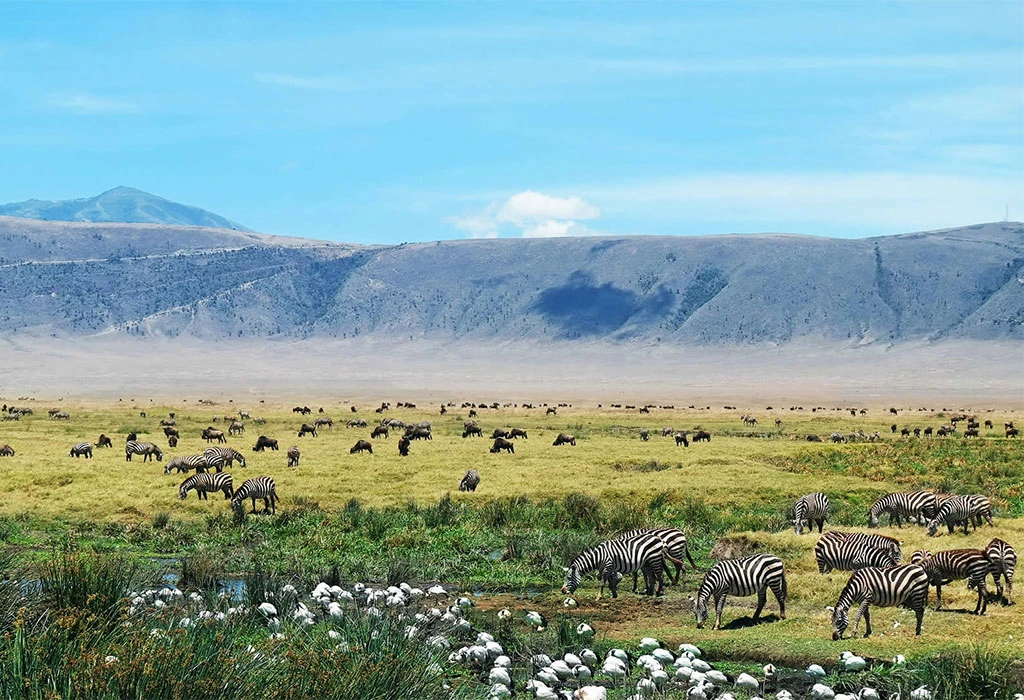
Ngorongoro Conservation Area is a protected, multiple use area covering roughly 8,300 square kilometers in northern Tanzania. Unlike a standard national park, it is managed so that wildlife, Maasai pastoralists, and their livestock coexist, a model dating back to the 1950s when the area was separated from what is now Serengeti National Park.
Within its boundaries travelers find the crater itself, Olduvai Gorge, Empakai Crater, Olmoti Crater, and the misty Ngorongoro Highlands used for community grazing. Because of this mix of wildlife density, geology, culture, and archaeology, Ngorongoro Conservation Area is recognized as a UNESCO World Heritage Site, one of the few places in the world listed for both natural and cultural significance combined.
Where Is Ngorongoro?
Ngorongoro Conservation Area sits in the Crater Highlands of northern Tanzania, part of the wider Northern Circuit that also includes Serengeti National Park, Tarangire National Park, and Lake Manyara. Most travelers reach it from Arusha, roughly 180 kilometers away, or from Kilimanjaro International Airport, followed by a road transfer through Karatu, the small town just outside the conservation area gate.
- Arusha to Ngorongoro Conservation Area takes between three and a half and four hours by road, and is the standard starting point for most northern Tanzania safaris arranged for international travelers arriving through Kilimanjaro International Airport before continuing on toward Karatu and the crater gate.
- Travelers curious how East Africa’s parks connect across borders can also see how Kenya’s own reserves fit together, described in detail at Masai Mara National Reserve, a useful comparison for anyone weighing a wider regional trip that spans several countries.
Why Visit Ngorongoro?
Most travelers come for one reason: wildlife density inside the crater is almost unmatched anywhere in Africa. Because the crater floor holds water and grazing year round, animals rarely leave it the way they migrate elsewhere, so sightings stay strong in every season. Beyond wildlife, the Ngorongoro Conservation Area rewards visitors with scenery, culture, and archaeology in equal measure.
- Scenery lovers will appreciate the crater floor framed by walls reaching four hundred to six hundred meters high, considered one of the most photographed landscapes anywhere in East Africa and a genuine highlight of any northern Tanzania itinerary, especially in soft morning light.
- Culture seekers can visit Maasai communities living within Ngorongoro Conservation Area itself, one of the few places in Africa where traditional pastoralist life continues inside a protected wildlife area, offering a genuine glimpse into a way of living that predates the park by generations.
- History enthusiasts can stand at Olduvai Gorge, one of the most important paleoanthropological sites on Earth, where fossil discoveries reshaped scientific understanding of early human origins and continue to attract researchers and curious travelers alike each year from around the world.
Ngorongoro Crater
The crater itself deserves special attention, since it is the reason most people book this leg of a safari. Formed when a large volcano collapsed on itself roughly two to three million years ago, the crater floor covers about 260 square kilometers and sits over 600 meters below the surrounding rim, trapping water and keeping grass short.
For many visitors, the crater is the defining experience of Ngorongoro Conservation Area, but the wider destination offers considerably more beyond this famous caldera.
- Most visitors enter early, around six in the morning, then descend a dedicated road into the crater floor before exiting by late afternoon, since overnight accommodation is not permitted inside the crater and every stay happens on the rim instead.
- Lake Magadi, a shallow soda lake on the crater floor, regularly attracts large numbers of flamingos, while the nearby Lerai fever tree forest is one of the best spots to find resting elephants and, occasionally, a leopard in the branches.
Wildlife in Ngorongoro
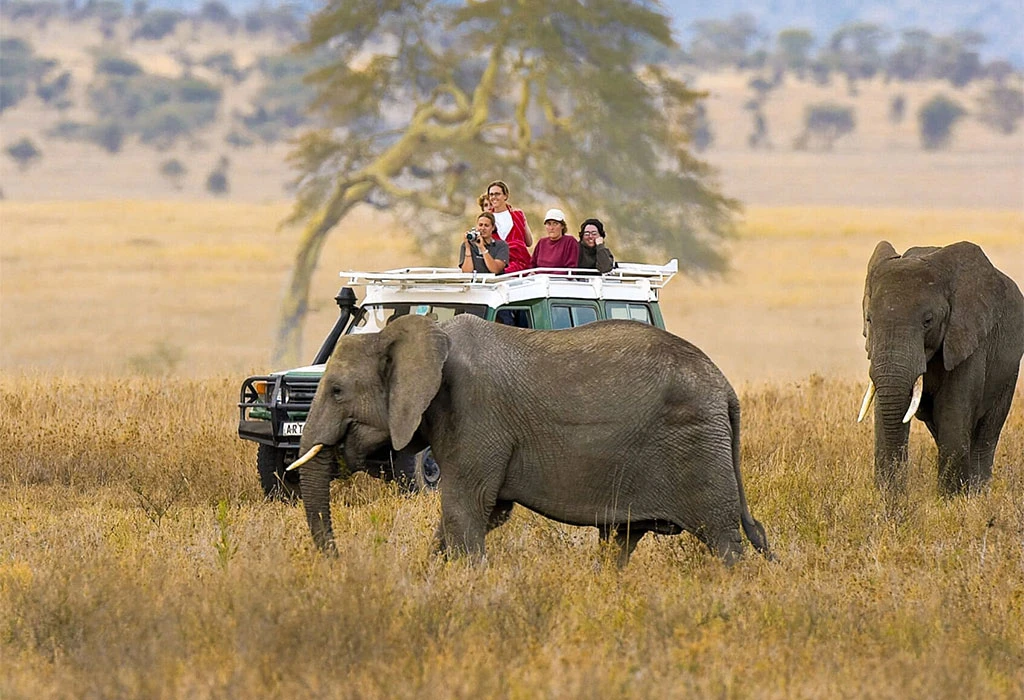
The crater is famous for the Big Five, and it is genuinely one of the best places in Africa to see all five species in a single day. Lions maintain one of the densest populations on the continent here, while black rhino sightings, though never guaranteed, are more likely inside this crater than almost anywhere else in Tanzania.
The wildlife experience is one of the strongest reasons travelers place Ngorongoro Conservation Area high on their Tanzania safari itinerary.
- Elephants are commonly seen around the Lerai forest and the crater’s wooded margins, usually solitary bulls rather than full breeding herds, while buffalo graze the open grassland in large numbers throughout every season regardless of rainfall, temperature, or time of day.
- Leopards are the shyest of the Big Five here, most often spotted resting in trees along the forest edges or the Lerai woodland, while cheetah sightings are rare on the crater floor but do occur, usually out on the more open grassland areas.
- Zebra, wildebeest, hippo, and buffalo share the grassland and marshy areas as resident populations year round, distinct from the Serengeti’s migratory herds, alongside Grant’s and Thomson’s gazelle, eland, and the occasional topi or coke’s hartebeest grazing near the forest margins.
- Spotted hyena are abundant and often active during the daylight hours, alongside golden and black backed jackal, bat eared fox, warthog, and serval cat, while Lake Magadi regularly draws flamingos and other water birds to its shallow, mineral rich waters.
- Over five hundred bird species have been recorded across the wider conservation area, from raptors circling the crater rim to the ostrich, crowned crane, and countless smaller species found in the grassland, forest, and highland habitats beyond the caldera floor.
- Travelers planning a broader wildlife circuit across country borders sometimes compare crater sightings with Kenya’s plains, and the wildebeest migration and game safari page explains how that seasonal spectacle differs from Ngorongoro’s resident, non migrating herds throughout the calendar year.
Best Time to Visit Ngorongoro
Because the crater floor holds water throughout the year, Ngorongoro Conservation Area is a genuine year round wildlife destination, unlike parks that depend heavily on seasonal migration patterns. June through October is widely considered the best window, with shorter grass making animals easier to spot and roads staying in good condition for game drives.
- November through March brings short afternoon rains, lush green scenery, strong birding with migratory species present, and plenty of newborn animals, making it a rewarding alternative for travelers who prefer softer light and fewer crowds without sacrificing overall wildlife viewing quality.
- April and May bring the heaviest rain and the quietest, cheapest travel window of the year, ideal for budget travelers comfortable with overcast skies, muddy roads, and shorter, more flexible daily game drive schedules inside the crater during these quiet shoulder season weeks.
How Much Does a Ngorongoro Safari Cost?
Costs vary depending on accommodation standard, group size, and season, so rather than quoting one misleading figure it helps to see rough ranges alongside what drives them. Conservation entry fees currently run around US$70 to US$80 per person per day, plus a separate crater service fee of roughly US$295 per vehicle for each descent onto the caldera floor.
- Budget travelers using camping or basic guesthouse accommodation with a shared group vehicle typically spend somewhere between US$200 and US$350 per person per day overall, including park fees, meals, and ground transportation on a fixed group departure schedule each week.
- Mid range travelers in comfortable ensuite lodges near Karatu or closer to the crater rim, usually with a private vehicle and guide, typically spend between US$450 and US$800 per person per day, a common choice for first time visitors and families.
- Luxury and private safari travelers pay a premium for crater rim lodges with direct caldera views and a dedicated vehicle and guide, with rates commonly starting around US$850 per person per day and climbing well past US$1,500 at the most exclusive properties.
- Season affects pricing significantly, since peak dry season months from June through October, along with the December holidays, carry higher lodge rates than the quieter April and May window, when rates and crowd levels both drop considerably across most rim properties.
Ngorongoro Safari Packages
Most travelers experience Ngorongoro Conservation Area as part of a broader northern Tanzania itinerary rather than as a standalone destination, typically combining it with Serengeti, Tarangire, or Lake Manyara over several days. Package length depends on how much of the wider Northern Circuit you want to cover during your visit.
- Shorter three and four day packages focus tightly on the crater alongside one neighboring park, ideal for travelers with limited time who still want a complete introduction to northern Tanzania’s most famous wildlife destinations without extending the trip too long.
- Longer six and seven day packages add extra Serengeti time or a second night near the rim for a slower pace, and travelers wanting to stretch this further can view the 18-day Kenya, Tanzania and Uganda safari itinerary, which layers several countries into one journey.
- Travelers wanting an even broader regional combination that adds a coastal finish can look at the 17-day Uganda, Kenya and Tanzania safari, which blends primates, Big Five game drives, and multiple countries into a single continuous journey across the whole region.
Combining Ngorongoro With Gorilla Trekking in Uganda and Rwanda
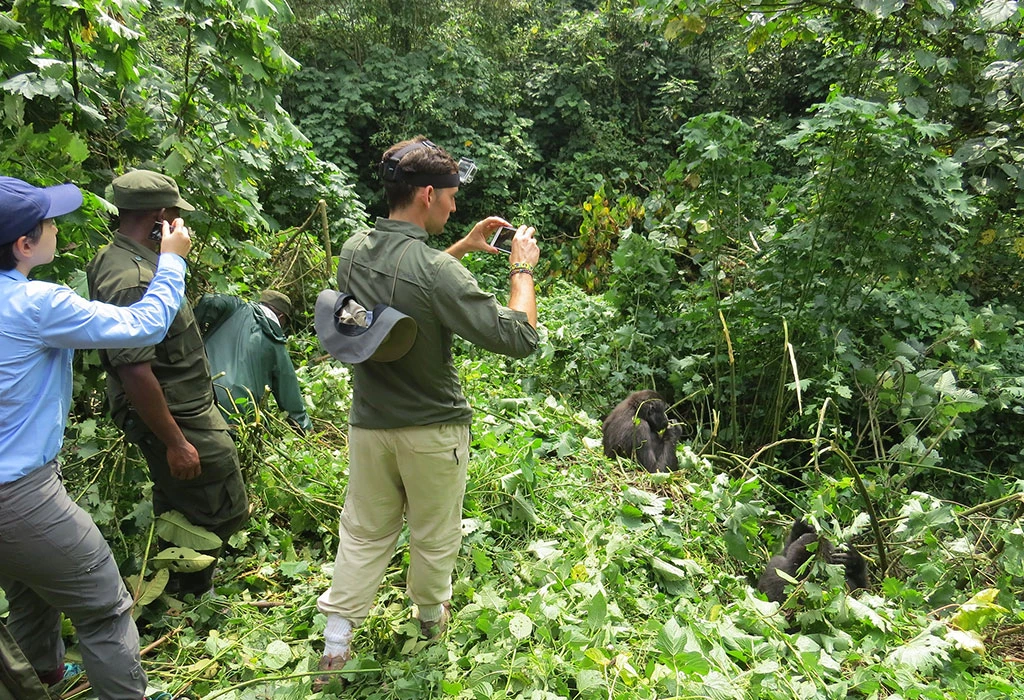
Because Ngorongoro Conservation Area sits at the start of many multi country East Africa itineraries, a large share of travelers extend their Tanzania safari north into Uganda or Rwanda to add mountain gorilla trekking before flying home. The routes below group these combination options by length so you can see roughly how many extra days each style of extension requires.
- For a shorter extension, many travelers add the Uganda Safaris collection to their trip, or follow the specific 7-day Uganda gorillas, chimps and game safari itinerary, which pairs gorilla trekking with classic game drives across two of Uganda’s national parks in just over a week.
- Travelers who prefer Rwanda can look at the 5-day Rwanda gorillas and game adventure itinerary, while those staying in Uganda often choose the 6-day Uganda gorillas and Lake Bunyonyi safari route, which adds a relaxing lakeside stop for a couple of quiet days after trekking.
- Two week style itineraries include the 11-day Uganda gorillas and Zanzibar beach safari, which ends on the coast, and the 12-day Kenya, Tanzania and Rwanda safari, which threads three countries into one continuous route through some of the region’s best known parks.
- Longer three week itineraries include the 14-day primates, Serengeti and Zanzibar beach safari, combining gorillas with Tanzania’s parks, and the 14-day Kenya, Uganda and Tanzania safari, which spreads the same length across three countries instead of just two, giving more time in each destination.
- Travelers wanting the fullest regional trip can look at the 16-day East Africa safari and Lamu beach holiday, which adds a Kenyan island finish, or browse the broader Rwanda Safaris collection for shorter Rwanda focused alternatives that skip Uganda entirely if preferred.
- Travelers who want the full country by country breakdown can start with the East Africa Safaris overview, and those wanting background on the operator itself can read more on the about us page before booking a multi country combination trip like this one.
Things to Do in Ngorongoro
While the crater game drive is the headline activity, the wider Ngorongoro Conservation Area offers more than most first time visitors expect, including archaeology, culture, and gentle highland walking routes that sit well outside the crater floor itself, giving travelers reasons to linger longer.
- The crater game drive is the centerpiece activity, a full morning to full day exploring the caldera floor by 4×4, moving between the grassland, Lake Magadi, and the Lerai forest in search of lions, elephants, black rhino, and the rest of the resident wildlife.
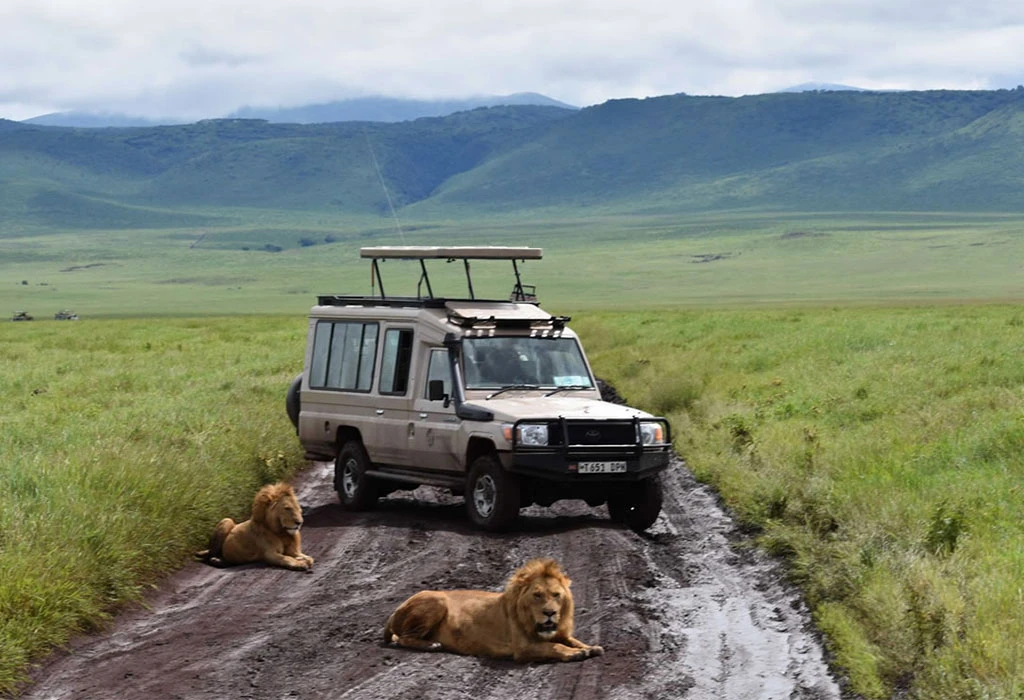
- Guided walking safaris are possible in parts of the highlands, though not inside the crater itself, often combined with a visit to Olmoti Crater’s waterfall or a longer hike down to Empakai Crater’s soda lake, where flamingo sightings are common on clear days.
- A stop at Olduvai Gorge’s museum and excavation sites lets visitors trace early human history firsthand, while a Maasai village visit offers insight into traditional life still practiced within the conservation area, rounding out a day that already covers wildlife, geology, and archaeology together.
- Birdwatchers can spend hours around Lake Magadi and the crater’s marshy edges, where flamingos gather in changing numbers depending on water levels, alongside herons, storks, and raptors, contributing to a conservation area checklist that runs past five hundred recorded species overall.
- Picnicking at Ngoitokitok Springs is a popular midday stop on the crater floor, where a natural spring feeds a small pool that regularly draws hippos into view, giving travelers a relaxed lunch break with wildlife watching built directly into the setting.
- Photographers often linger on the crater rim at sunrise or sunset, when low light and drifting mist over the caldera create some of the most dramatic images anywhere on the Northern Circuit, well before or after the main midday game drive crowds arrive.
- Visiting the Ngorongoro Crater viewpoints along the rim road offers sweeping panoramas back down into the caldera and, on clear days, distant views toward the volcanic peak of Oldonyo Lengai, a worthwhile stop even for travelers not planning a full highland hike.
Where to Stay in Ngorongoro
Accommodation options fall into a few distinct zones, each with a different feel and price point, and choosing between them usually comes down to budget and how much you value waking up directly on the crater rim each morning to sweeping caldera views. Staying within or close to Ngorongoro Conservation Area also reduces the time needed to reach major attractions.
- Crater rim lodges sit perched directly above the caldera with sweeping views down into it, ranging from mid range properties to ultra luxury tented camps, and typically command the highest prices thanks to their unmatched location and dramatic early morning outlook.
- Luxury crater rim properties include &Beyond Ngorongoro Crater Lodge, known for its dramatic suites and butler service, along with Ngorongoro Serena Safari Lodge and The Manor at Ngorongoro, both offering direct caldera views and full board rates well above the mid range tier.
- Mid range and value oriented rim properties include Ngorongoro Sopa Lodge, Ngorongoro Wildlife Lodge, and Rhino Lodge, which sits just a short distance from the rim itself and remains one of the more affordable ways to stay inside the conservation area’s boundaries.
- Karatu, the town just outside the entrance gate, offers a wider range of lodges and guesthouses at lower prices than the rim, with a short morning drive to the crater gate each day, making it the practical choice for budget and mid range travelers.
- Popular Karatu area properties include Gibb’s Farm, a working coffee estate with lovely garden views, along with Ngorongoro Farm House, Kudu Lodge and Camp, and the Octagon Safari Lodge, which together cover a wide range of budgets and group sizes.
How Many Days Do You Need in Ngorongoro?
One full day is enough to cover a complete crater game drive if that is your only priority, entering early and staying until late afternoon to make the most of the wildlife density before the light fades and vehicles begin heading back toward the exit road.
- Two days allow one full day inside the crater plus additional time for Olduvai Gorge, a Maasai village visit, or a highland walk, giving a fuller picture of the conservation area beyond the crater floor without significantly extending your overall trip length.
- Three or more days suit travelers wanting to explore Empakai and Olmoti Craters properly, spend unhurried time with Maasai communities, or simply use Ngorongoro Conservation Area as a relaxed base for a slower, less rushed introduction to northern Tanzania’s highlights and surrounding landscapes.
Ngorongoro vs Serengeti
These two parks are often paired on the same itinerary, but they offer distinctly different experiences worth understanding before you decide how to split your time between them across a combined northern Tanzania trip built around your own interests and pace.
- Ngorongoro Conservation Area is compact and concentrated, a single enclosed ecosystem where you can realistically see the Big Five in one day thanks to its high wildlife density, while Serengeti spans over 14,000 square kilometers of open plains, woodland, and river systems, offering far greater scale and variety.
- Neither destination truly replaces the other, and many travelers choose to visit both back to back, spending one or two days in the crater before continuing into the Serengeti’s vast plains for a longer, more varied game viewing experience overall.
Is Ngorongoro Worth Visiting?
For nearly every traveler, yes. Few places in Africa let you see this much wildlife, this reliably, in this short a time, and the crater’s combination of scenery, wildlife density, and easy access from Arusha makes Ngorongoro Conservation Area one of the most efficient wildlife experiences on the entire continent.
- The main trade offs are cost, since conservation fees run notably higher than in many other parks, and crowding during peak dry season mornings, though neither tends to outweigh the experience itself, especially for travelers who plan their gate entry time carefully in advance.
- Travelers weighing Ngorongoro Conservation Area against other bucket list destinations often want to know who they are booking with first, so the about page covers company operating history and team, useful reading for anyone comparing tour operators before committing to a trip.
Ngorongoro Safari Itineraries
Ready to see how Ngorongoro Conservation Area fits into a full northern Tanzania trip? Our team tailors itineraries around your travel dates, budget, and priorities, whether that means chasing the Big Five, timing a visit around the wildebeest migration, or building a slower, culture focused route through the Crater Highlands region.
- Travelers wanting to start with something shorter and closer to home can review the 3-day gorilla trekking in Uganda itinerary, then reach the team directly through the contact and quote request page to start building a Ngorongoro itinerary suited to your exact dates.
- For travelers ready to lock in dates, the contact us page outlines every way to reach a consultant directly, whether by web form, phone, or WhatsApp, so trip planning can begin the very same day you finally decide to travel.
Frequently Asked Questions
Is Ngorongoro worth visiting?
Yes, Ngorongoro Conservation Area offers some of the most reliable, concentrated wildlife viewing anywhere in Africa, including strong odds of seeing the Big Five in a single day. Few crater ecosystems anywhere on the continent pack this much wildlife density into such a small, easily accessible area near Arusha.
How much does a Ngorongoro safari cost?
Costs depend on accommodation style, group size, and season, with conservation and crater fees applying on top of lodge and vehicle costs. A tour operator can provide an accurate, current quote based on your specific travel dates, group size, and preferred accommodation category throughout the region.
What animals are in Ngorongoro Crater?
Lions, elephants, black rhino, buffalo, leopard, zebra, wildebeest, hippo, hyena, and flamingos all live within the crater, alongside over five hundred recorded bird species across the wider conservation area, making it one of the most complete single day wildlife experiences available anywhere in Tanzania.
What is the best month to visit Ngorongoro?
June through October offers the driest conditions and easiest wildlife viewing, though Ngorongoro Conservation Area remains a strong destination throughout the year since resident wildlife does not migrate out of it the way herds do elsewhere across the wider Serengeti ecosystem.
How many days do you need in Ngorongoro?
One full day covers the crater game drive comfortably, while two or more days allow time for Olduvai Gorge, Maasai cultural visits, or hikes to Empakai and Olmoti Craters, giving travelers a fuller sense of Ngorongoro Conservation Area beyond the crater floor itself.
Can you see the Big Five in Ngorongoro?
Yes, Ngorongoro Crater is one of the few places in Africa where sighting all five species in a single day is realistic, thanks to its high wildlife density and compact size, making it especially appealing for travelers with limited time on their overall itinerary.
Is Ngorongoro better than Serengeti?
They offer different experiences rather than direct competition, since Ngorongoro Conservation Area provides concentrated, reliable viewing in one dramatic setting, while Serengeti offers far greater scale and, depending on timing, the migration itself. Most well planned Northern Circuit itineraries include time in both parks.
Where should I stay in Ngorongoro?
Crater rim lodges offer the most scenic option with direct views into the caldera, while Karatu, just outside the entrance gate, offers a wider range of lodges and guesthouses at noticeably lower price points for travelers watching their overall safari budget closely.
How far is Ngorongoro from Arusha?
About 180 kilometers, roughly three and a half to four hours by road, making Ngorongoro Conservation Area an easy and logical addition to any Arusha based Northern Circuit itinerary that also includes Tarangire, Lake Manyara, or the Serengeti’s southern plains.
Ready to Book Your Ngorongoro Safari with Iconic Africa Safaris?
Iconic Africa Safaris offers three simple, reliable ways to secure your next unforgettable Ugandan adventure today. Simply complete our quick online booking form to start planning your dream safari experience right away. Our friendly team also welcomes direct emails at info@iconicafricasafaris.com to discuss your specific travel plans and preferences. For instant assistance, tap the green WhatsApp icon in your screen’s bottom right corner anytime.
Our driver-guides are the trip managers guests trust most — trained professionals, some former park rangers, all skilled interpreters of wildlife and culture. They stay with travellers from the first airport pickup to the final wave-off, keeping each day running smoothly and safely.