
Akagera National Park: The Complete Rwanda Game Safari Guide
Akagera National Park is Rwanda’s only savannah safari destination and the sole place in the country where you can see the Big Five. Tucked against the Tanzanian border in the east of the country, it is a two and a half to three hour drive from Kigali, close enough to combine with gorilla trekking in Rwanda or chimpanzee tracking in Nyungwe Forest, yet wild enough to feel like a different Africa entirely.
Akagera National Park at a Glance
| What it is | Rwanda’s only savannah national park and Big Five safari destination |
| Location | Eastern Province, Rwanda, bordering Tanzania along the Kagera River |
| Size | Roughly 1,122 km² (112,000 hectares) |
| Distance from Kigali | 100 to 120 km; 2.5 to 3 hours by road |
| Best for | Big Five game drives, boat safaris, birding, self drive safaris, combining with gorilla trekking |
| Big Five | Lion, leopard, elephant, buffalo, black rhino, all present |
| Entry fee (international adult) | US $100 per day (2026 rate; discounts apply for overnight stays, see below) |
| Best time to visit | June to September (dry season) for game viewing; March to May for birding and lush scenery |
| Minimum time needed | 1 full day is possible; 2 to 3 days is ideal |
| How to visit | Self drive 4×4, guided day trip from Kigali, or multi day lodge based safari |
What Is Akagera National Park?
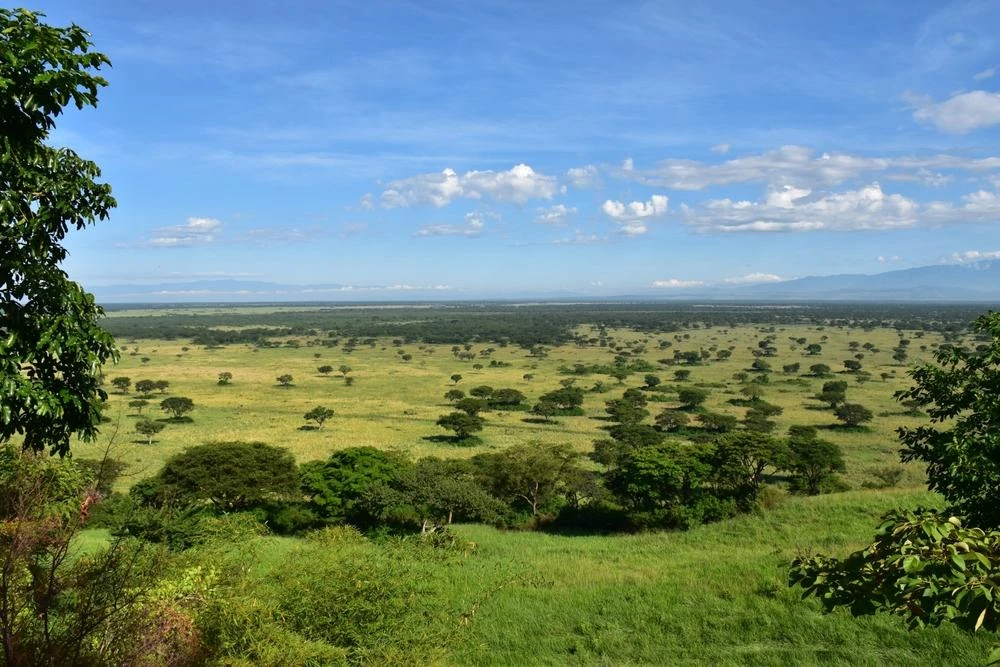
Akagera National Park is Rwanda’s largest protected area and its only savannah ecosystem, a patchwork of open grassland, acacia woodland, papyrus swamp, and a chain of lakes fed by the Kagera River. It’s named for that river, which also forms Rwanda’s eastern border with Tanzania and feeds Lake Victoria.
The park’s story is one of the most dramatic conservation turnarounds in Africa. After the 1994 genocide, returning refugees settled inside the park boundaries and much of it was degazetted for farming and cattle grazing; lion and rhino were wiped out entirely. Since 2010, a partnership between the Rwanda Development Board and the nonprofit African Parks has rebuilt Akagera from the ground up: a 120km predator proof fence went up, seven lions were reintroduced from South Africa in 2015, and Eastern black rhino followed in 2017 and 2019. Today Akagera is once again a genuine Big Five park, and one of very few places in East Africa where you can watch that recovery still unfolding.
Where Is Akagera National Park Located?
Akagera sits in Rwanda’s Eastern Province, roughly 100 to 120 km from Kigali, stretching north to south along the Tanzanian border. The park is split into a northern and southern sector:
- Southern sector: closer to the main entrance gate, home to Lake Ihema (the park’s largest lake and the site of the boat safari), Ruzizi Tented Lodge, Akagera Game Lodge, and most day trip activity.
- Northern sector: wilder and less visited, holding the open plains where lions and larger herds concentrate, plus Magashi Camp and Karenge Bush Camp.
The park’s varied terrain, savannah plains, low mountains, papyrus swamp, and a necklace of lakes, is unusual for Rwanda, a country better known for its volcanoes and rainforest. That contrast is exactly why Akagera earns a place on almost every Rwanda itinerary, whether it follows a Volcanoes National Park gorilla trek or a stay in Nyungwe Forest.
Why Visit Akagera National Park?
- It’s Rwanda’s only Big Five destination. Volcanoes National Park and Nyungwe give you primates; Akagera gives you lion, leopard, elephant, buffalo, and rhino.
- It’s uncrowded. Compared to the Serengeti or Maasai Mara, vehicle numbers are low and sightings feel personal rather than staged.
- It pairs naturally with gorilla trekking. Most visitors are already in Rwanda for Volcanoes National Park; Akagera adds a completely different landscape and wildlife experience within a few hours’ drive.
- It’s a genuine conservation success story. Guides here talk about lion and rhino reintroduction the way guides elsewhere talk about historic sightings; it’s recent, and it’s ongoing.
- The birding is exceptional. Over 500 species, including the prehistoric looking shoebill stork, make Akagera one of East Africa’s underrated birding destinations.
- It works for every budget and pace. From a single day trip out of Kigali to a four night, fly in luxury safari, Akagera scales to the traveler.
Wildlife and the Big Five in Akagera
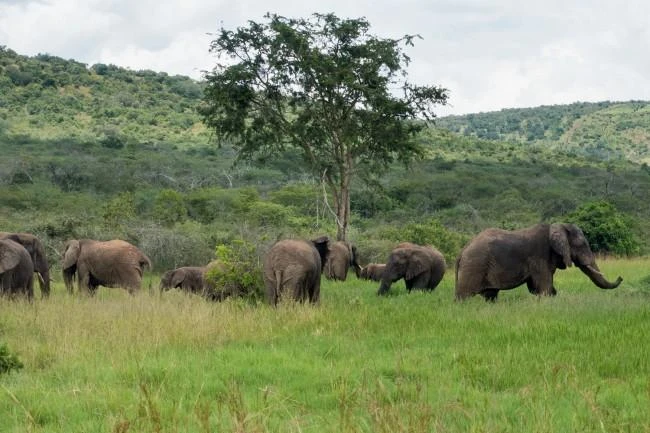
Akagera is the only national park in Rwanda where the Big Five, lion, leopard, elephant, buffalo, and rhino, all occur.
| Animal | Status in Akagera | Best viewing notes |
|---|---|---|
| Lion | Reintroduced 2015 (7 individuals); population has grown steadily since | Northern plains around Kilala and Mutumba; early morning and late afternoon |
| Black rhino | Reintroduced 2017 and 2019, plus southern white rhino introduced in 2021 | Sightings are not guaranteed; rhino tracking can sometimes be arranged separately |
| Leopard | Present but elusive; mostly nocturnal | Night game drives significantly improve your odds |
| Elephant | Healthy, growing population | Around Lake Shakani and the northern woodlands |
| Buffalo | Abundant, large herds | Widespread across both sectors |
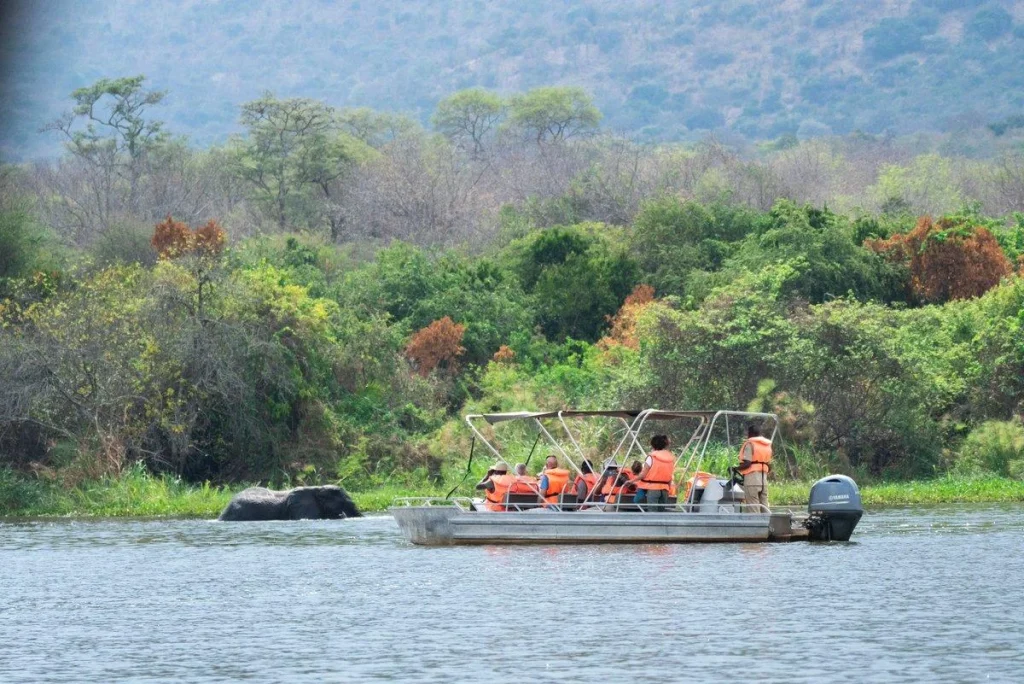
Beyond the Big Five, expect giraffe, zebra, topi, eland, roan antelope, impala, waterbuck, defassa waterbuck, oribi, warthog, hyena, and side striped jackal. Lake Ihema and Lake Shakani hold some of Africa’s densest hippo and Nile crocodile concentrations; the boat safari puts you closer to both than almost any game drive could.
Birds and Birding in Akagera
Akagera is one of Rwanda’s premier birding destinations, with more than 500 recorded species across savannah, swamp, and lake habitats.
- The shoebill stork: Akagera’s signature bird, a huge, prehistoric looking swamp dweller found in the papyrus around Lake Shakani. Sightings require an early start, patience, and often a specialist guide.
- Papyrus specialists: papyrus gonolek, papyrus yellow warbler, and other swamp restricted species that are difficult to find elsewhere in East Africa.
- Water birds: African fish eagle, pink backed pelican, saddle billed stork, open billed stork, and a wide range of herons and kingfishers along the lakeshores.
- Savannah and woodland species: lilac breasted roller, grey crowned crane (Rwanda’s national bird), bee eaters, and raptors including martial eagle and bateleur.
Birding is best combined with a guided boat safari (for the shoebill and water birds) and an early morning game drive (for savannah species). Serious birders should budget an extra half day and request a specialist bird guide when booking.
Activities in Akagera National Park
- Game drives: self drive or guided, morning or afternoon, across both sectors of the park.
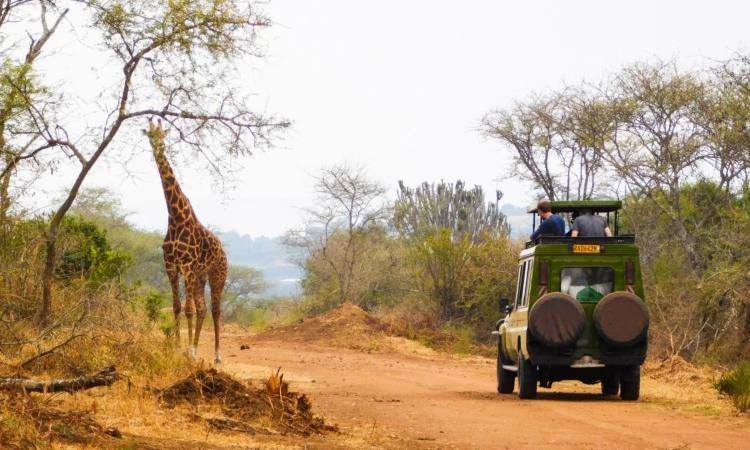
- Night game drives: the only way to reliably spot leopard, hyena, and other nocturnal wildlife; available at Karenge and through park guides.
- Boat safari on Lake Ihema: a relaxed cruise past hippo pods, crocodiles, and dense birdlife; one of Akagera’s must do activities.
- Behind the scenes conservation tour: visits to the anti poaching K9 unit or rhino monitoring teams, where available, offering insight into the park’s recovery.
- Sport fishing: permitted on designated lakes with your own equipment.
- Guided walking and birding excursions: limited, guide led walks focused on birdlife in select areas.
- Community visits: cultural experiences at villages bordering the park, supporting local livelihoods.
Akagera Entrance Fees and Activity Costs
Akagera’s fees are tiered by residency and paid at the park gate or through your operator. Prices below reflect 2026 rates; always confirm current pricing before booking, as park fees are reviewed periodically.
Entry fees (per person, per day)
| Visitor category | Adult | Child (6 to 12) |
|---|---|---|
| International (nonresident) | US $100 | US $50 |
| Foreign resident / non EAC African | US $50 | US $25 |
| EAC citizen/resident | US $50 | US $30 |
| Rwandan / EAC citizen | RWF 15,000 (about US $16) | Reduced rate |
Children under 6 enter free. A useful rule most visitors miss: entrance fees drop by 50% for a second and third night spent inside the park, and become free from the fourth night onward (for stays of up to a week), a strong incentive to sleep inside the park rather than commute in and out from an outside hotel.
Activity and guide fees
| Activity | Approximate cost |
|---|---|
| Self drive guide, half day | US $25 |
| Self drive guide, full day | US $40 |
| Night game drive (2 to 3 hrs) | US $40 |
| Boat safari, Lake Ihema (per person) | US $35 adult / US $20 child |
| Sport fishing (own equipment) | US $25 adult / US $15 child |
| Vehicle entry (foreign registered) | Varies by vehicle type, confirm with park or operator |
| Camping fee (designated sites) | US $25 per person per night |
Note: Individual activity prices are reviewed by park management and can change without notice. We confirm exact, current pricing for every guest at the time of booking.
Akagera Safari Cost by Budget
What an Akagera safari actually costs depends almost entirely on where you sleep. Here’s a realistic per person, per night guide (accommodation only, sharing, excluding park fees and activities):
| Budget tier | Where you’d stay | Approx. cost per person/night |
|---|---|---|
| Budget | Designated campsites (own or hired tent) | US $25 to $50 |
| Mid range | Akagera Game Lodge, SALT of Akagera | US $150 to $300 |
| Upper mid / Comfort | Ruzizi Tented Lodge, Karenge Bush Camp | US $230 to $360 |
| Luxury | Magashi Camp (Wilderness) | US $600 to $2,500+ |
Add park entry fees (US $100/day for international visitors, reducing on consecutive nights), any activities, and transport. A realistic two night, mid range Akagera safari for two people, including entry fees, lodging, a guided game drive, and a boat safari, typically lands in the US $700 to $1,400 per person range; a luxury two night stay at Magashi can exceed US $3,000 per person once flights and exclusivity are factored in.
Best Time to Visit Akagera National Park
| Season | Months | What to expect |
|---|---|---|
| Long dry season | June to September | Best game viewing; sparse vegetation, animals cluster at water sources; peak season, book lodges early |
| Short dry season | December to February | Good game viewing, fewer crowds than June to September |
| Long rains | March to May | Lush, green scenery; excellent birding; lower rates; northern tracks can soften |
| Short rains | October to November | Mixed; good birding, occasional afternoon showers |
Our take: June to September is the classic choice for first time Big Five safaris, with the best visibility and driest roads. If birding or photography of a green landscape is your priority, don’t dismiss March to May; rates are lower and the park is far quieter.
How to Get to Akagera National Park from Kigali
Akagera is one of the most accessible parks in East Africa from a capital city.
- By road (self drive or transfer): 100 to 120 km, roughly 2.5 to 3 hours, mostly on tarmac via Kayonza before the final stretch to the park gate. A 4×4 is recommended, especially in the rainy season and for northern sector routes.
- By private transfer/safari vehicle: The most common option for visitors, arranged with your safari operator; comfortable, guided, and removes any navigation stress.
- Self driving: Possible and popular; the park’s internal roads are well signposted, though a 4×4 with good clearance is essential, particularly in the north.
- By air: Charter flights and a small airstrip near Magashi serve fly in guests, mainly those staying at Magashi Camp.
Most itineraries route through Kayonza, roughly 40 minutes from the main park gate, where fuel and basic supplies are available, the last reliable stop before entering the park.
How Many Days Should You Spend in Akagera?
| Duration | Who it suits |
|---|---|
| 1 day (day trip from Kigali) | Time pressed travelers; you’ll cover the southern sector and get a genuine taste of the park, but miss the northern plains |
| 2 days / 1 night | The realistic minimum for a proper safari, one full game drive day plus a boat safari |
| 3 days / 2 nights | Our recommended minimum; time to explore both sectors, include a night drive, and actually relax |
| 4+ days / 3+ nights | Serious wildlife watchers, birders, and photographers wanting to properly cover north and south, with rest days built in |
A single day trip is achievable and worthwhile if it’s genuinely all your schedule allows, but it limits you to the southern sector and cuts into actual game viewing time with the long drive from Kigali. Two to three days is the sweet spot for most travelers.
Where to Stay in Akagera National Park: Accommodation Options
| Lodge/Camp | Sector | Style | Approx. price (pp/night, sharing) |
|---|---|---|---|
| Magashi Camp (Wilderness) | North, Magashi Peninsula | Ultra luxury tented camp | US $600 to $2,500+ |
| Karenge Bush Camp | North, Kilala Plain | Rustic luxury tented, seasonal | US $230 to $260 |
| Ruzizi Tented Lodge | South, Lake Ihema | Eco luxury lakeside tented lodge | US $230 to $360 |
| SALT of Akagera | South | Mid range boutique lodge | US $270 to $360 (room rate) |
| Akagera Game Lodge | South | Mid range hotel style lodge with pool | US $150 to $250 |
| Designated campsites (Muyumbu, Mutumba, Shakani, Mihindi) | Both sectors | Camping | US $25 to $50 |
Choosing where to sleep: Stay in the south near Lake Ihema if your priority is the boat safari and a shorter visit. Stay in the north at Karenge or Magashi if lion sightings, night drives, and open plains scenery are your priority, but budget extra driving time to and from these camps.
Akagera Safari Itineraries: 1 to 4 Days
1-Day Akagera Safari (Day Trip from Kigali)
- Early departure from Kigali (05:30 to 06:00)
- Morning game drive through the southern sector
- Boat safari on Lake Ihema
- Packed lunch, afternoon game viewing on the return route
- Evening arrival back in Kigali
2-Day / 1-Night Akagera Safari
- Day 1: Depart Kigali, afternoon game drive, overnight at a southern lodge (e.g., Ruzizi or Akagera Game Lodge)
- Day 2: Sunrise game drive, boat safari on Lake Ihema, return to Kigali by evening
3-Day / 2-Night Akagera Safari (our most recommended itinerary)
- Day 1: Depart Kigali, afternoon game drive en route to a southern lodge, boat safari at sunset
- Day 2: Early transfer north, full day game drive across the plains, night game drive from Karenge
- Day 3: Sunrise game drive, gradual return south, depart for Kigali
4-Day / 3-Night Akagera Safari
- Day 1: Depart Kigali, afternoon activity, overnight south
- Day 2: Boat safari, transfer north, afternoon game drive, overnight Karenge or Magashi
- Day 3: Full day in the northern sector: game drives, night drive, optional rhino monitoring or K9 unit visit
- Day 4: Sunrise game drive, relaxed return to Kigali
Combining Akagera with Gorilla Trekking
Akagera pairs naturally with a Rwanda gorilla trekking safari in Volcanoes National Park, giving you both rainforest primates and savannah Big Five in a single trip. Rwanda’s compact size and good road network make this genuinely easy; most operators route it as follows:
- Days 1 to 2: Arrive Kigali, transfer to Volcanoes National Park, gorilla trekking
- Day 3: Transfer across the country to Akagera (roughly 4 to 5 hours, or via Kigali)
- Days 4 to 5: Akagera game drives and boat safari
- Day 6: Depart from Kigali
A 7-day itinerary comfortably adds Nyungwe Forest National Park for chimpanzee tracking and canopy walks, giving you Rwanda’s full “three park” experience: primates, rainforest, and savannah. Two ready made itineraries worth a look are our 5-Day Rwanda Gorillas and Chimps Trekking Safari and, for those short on time, the 5-Day Akagera Game and Bwindi Gorillas Safari, which pairs Akagera with gorilla trekking across the border in Uganda.
Akagera vs Other Rwanda Safari Destinations
| Akagera | Volcanoes NP | Nyungwe Forest | |
|---|---|---|---|
| Main draw | Big Five, savannah game drives | Mountain gorilla trekking | Chimpanzee tracking, canopy walk |
| Landscape | Savannah, lakes, swamp | Volcanic rainforest | Montane rainforest |
| Distance from Kigali | 2.5 to 3 hrs | 2 to 2.5 hrs | 5 to 6 hrs |
| Typical stay | 2 to 3 nights | 1 to 2 nights | 2 to 3 nights |
| Entry cost (int’l) | US $100/day | US $1,500 gorilla permit | US $100 chimp permit |
| Best for | Wildlife photography, self drivers, families | Bucket list primate encounter | Birders, primatologists, hikers |
Most complete Rwanda itineraries visit at least two of the three; Akagera is the natural complement to Volcanoes National Park because of its short driving distance from Kigali and its role as a contrasting landscape after days of forest trekking. For travelers adding a third park, Nyungwe Forest National Park rounds out Rwanda’s primates, rainforest, and savannah in a single trip.
Family Safaris in Akagera
Akagera is one of the most family friendly parks in East Africa:
- No age restriction for game drives or boat safaris, unlike gorilla trekking (minimum age 15).
- Wide, open vehicles and short drive distances between sightings keep young children engaged.
- Boat safaris are calm, low effort, and popular with kids, hippos and crocodiles at close range without the walking demands of a forest trek.
- Family friendly lodges: Akagera Game Lodge (with its pool) and SALT of Akagera are well suited to families; ultra luxury camps like Magashi are better suited to older children given the proximity to wildlife around camp.
- Practical tip: Combine Akagera with Nyungwe’s canopy walk (fun and safe for children) rather than Volcanoes gorilla trekking if traveling with children under 15, since gorilla permits have a strict minimum age.
What to Pack for an Akagera Safari
- Neutral toned clothing (khaki, olive, brown); avoid bright colors and pure white
- A warm layer for early morning and night game drives
- Wide brimmed hat and high SPF sunscreen
- Binoculars, essential for birding and distant sightings
- A camera with zoom capability, plus spare batteries and memory cards
- Insect repellent, particularly for evenings near the lakes
- Comfortable, closed shoes for boat safaris and camp walking
- Reusable water bottle
- Malaria prophylaxis (consult your doctor before travel; Akagera’s lakes and swamps are a mosquito habitat)
- Cash (small USD notes) for tips and incidental activity fees
Practical Safari Tips for Akagera
- Book lodges early for June to September: Akagera’s limited accommodation sells out well ahead of peak season.
- Sleep inside the park if staying more than one night: the discounted entrance fee structure (50% off nights 2 to 3, free from night 4) usually makes it cheaper than commuting from an outside hotel, once you account for repeated daily entry fees.
- Start early. Wildlife activity peaks at dawn; gates open early specifically for this reason.
- A 4×4 is essential, especially for the northern sector and during the rains.
- Hire a park guide even if self driving: local knowledge of where lions denned last week or which stretch of Lake Ihema is holding hippo pods is worth the modest fee.
- Carry enough fuel: the last reliable fuel stop is Kayonza, before the park gate.
- Respect wildlife distances: leopard and elephant sightings can be close; follow your guide’s instructions.
Common Mistakes to Avoid in Akagera
- Trying to do Akagera as a rushed half day add on. The driving time from Kigali eats into game viewing; a day trip is workable but a night inside the park is far better.
- Skipping the boat safari. It’s often the single best wildlife experience in the park; don’t treat it as optional.
- Booking outside the park hotels for a multi night stay without checking the math on repeated daily entrance fees versus the discounted in park overnight rate.
- Underestimating the north south driving distance and trying to cram both sectors into one rushed day.
- Arriving without a 4×4 in the wet season and getting stuck on softened northern tracks.
- Forgetting binoculars, a genuinely limiting mistake for both game viewing and birding.
- Not confirming current entrance and activity fees before travel: rates are reviewed periodically; always check with your operator ahead of the trip.
Frequently Asked Questions About Akagera National Park
Is Akagera worth visiting?
Yes. It’s Rwanda’s only Big Five park, genuinely uncrowded, and easy to combine with gorilla trekking. For travelers who want more than forest primates from their Rwanda trip, it’s close to essential.
How much does it cost to visit Akagera National Park?
International visitor entry is US $100 per adult per day (2026 rate), with discounts for consecutive nights inside the park. Total safari cost depends heavily on accommodation choice, from around US $150/night at budget camping to several thousand dollars per night at Magashi Camp.
Can you self drive in Akagera?
Yes, with a capable 4×4. Hiring a park guide (around US $25 to $40) is optional for self drivers but strongly recommended for locating wildlife.
Do I need a 4×4 to visit Akagera?
Yes, particularly for the northern sector and during the rainy season, when some tracks soften significantly.
How many days do I need in Akagera?
A day trip is possible; 2 to 3 days is the realistic minimum for a proper safari covering both sectors.
Is Akagera safe?
Yes. Rwanda is consistently rated one of Africa’s safest countries, and Akagera is a well managed, fenced park with an active ranger and anti poaching presence.
Can children visit Akagera?
Yes, with no minimum age for game drives or boat safaris, unlike gorilla trekking, which requires visitors to be at least 15.
What’s the best time to see lions in Akagera?
Early morning and late afternoon game drives in the northern plains around Kilala and Mutumba give the best odds, year round, though the dry season (June to September) generally offers the clearest visibility.
Can I combine Akagera with gorilla trekking?
Yes, this is one of the most popular Rwanda safari combinations. See our section above on combining Akagera with gorilla trekking.
Will I definitely see the Big Five in Akagera?
No sighting is ever guaranteed on safari, but Akagera has healthy, growing populations of all five, and multi day visits with both day and night game drives significantly improve your odds, particularly for lion, elephant, and buffalo.
Why Book Your Akagera Safari with Iconic Africa Safaris
Planning an Akagera safari means navigating shifting park fees, a two sector layout that rewards local knowledge, and a lodge market ranging from US $25 campsites to US $2,500 a night luxury camps. We handle that complexity so you don’t have to.
- Local, current pricing: we confirm exact entrance fees, activity costs, and lodge rates at the time of booking, not from outdated blog posts.
- Route planning that actually works: we build itineraries around Akagera’s north south split so you’re not wasting safari hours on transfers.
- Seamless combinations: we design multi park Rwanda itineraries linking Akagera with gorilla trekking safaris and chimpanzee tracking in Nyungwe Forest, handling permits, transfers, and timing end to end. Browse our full range of East Africa safari itineraries for more combinations.
- Every budget covered: from a well planned camping trip to a fly in Magashi Camp experience, we match the safari to your budget and travel style, not the other way around.
- On the ground support throughout your trip: from airport pickup to your final game drive.
Ready to plan your Akagera safari? Contact Iconic Africa Safaris on our booking form, or by email at info@iconicafricasafaris.com, or on WhatsApp by clicking on the icon at the bottom right corner of your screen.