
Nyungwe Forest National Park: Complete Rwanda Safari Guide
Nyungwe Forest National Park is one of Rwanda’s most important rainforest destinations and a leading place for chimpanzee trekking in East Africa. Located in southwestern Rwanda, the park protects about 1,019 square kilometres of montane forest, bamboo covered slopes, wetlands and grasslands.
The forest is best known for its chimpanzees, diverse primates, birds, hiking trails and the famous Nyungwe canopy walkway. It is also an excellent destination for travellers who want to experience Rwanda beyond mountain gorillas and savannah wildlife.
At Iconic Africa Safaris, we can combine Nyungwe with Volcanoes National Park, Lake Kivu, Akagera National Park, Kigali and Uganda’s gorilla and chimpanzee destinations to create a longer East African safari. Browse our full range of Rwanda safaris to see how Nyungwe fits into a wider itinerary.
Quick Facts About Nyungwe Forest
| Feature | Information |
|---|---|
| Country | Rwanda |
| Location | Southwestern Rwanda |
| Main attraction | Chimpanzee trekking |
| Other highlights | Canopy walk, hiking, birding and primate tracking |
| Forest size | About 1,019 km² |
| Main primates | Chimpanzees and 12 other primate species |
| Best known experience | Chimpanzee trekking |
| Famous viewpoint | Nyungwe Canopy Walkway |
| Nearby destination | Lake Kivu |
| Popular combination | Nyungwe + Volcanoes National Park |
Where Is Nyungwe Forest National Park?
Nyungwe Forest National Park lies in southwestern Rwanda, close to the country’s borders with Burundi and the Democratic Republic of Congo. It forms part of the Albertine Rift landscape and contains a large area of ancient Afromontane forest.
The park’s mountainous landscape makes the journey itself part of the experience. Travellers pass through rolling hills, rural communities, tea plantations and changing landscapes before reaching the dense rainforest.
Nyungwe is also important beyond tourism. The forest lies within the watershed of the Congo and Nile river systems and plays an important role in Rwanda’s water resources.
Why Visit Nyungwe Forest National Park?
Nyungwe offers a very different experience from Rwanda’s other major safari destinations. Volcanoes National Park is famous for mountain gorillas, while Akagera is Rwanda’s main savannah wildlife destination. Nyungwe provides a rainforest experience centred on chimpanzees, primates, birds, hiking and forest scenery.
The main reasons to visit Nyungwe include:
- Chimpanzee trekking: Nyungwe is widely regarded as Rwanda’s leading destination for observing chimpanzees in a genuine forest setting, offering a far more immersive encounter than viewing primates in captivity or in smaller reserves.
- Canopy walking: The suspended walkway lifts visitors above the forest floor and into the treetops, providing sweeping views of the rainforest canopy and surrounding valleys that are simply not possible from ground level.
- Primate viewing: Beyond chimpanzees, Nyungwe is home to numerous other primate species, making it an excellent choice for travellers who want a broader primate experience in a single park.
- Bird watching: With its varied habitats, from bamboo zones to montane forest, Nyungwe attracts serious birders hoping to spot species found nowhere else outside the Albertine Rift, such as the great blue turaco, the Rwenzori turaco and the elusive Grauer’s rush warbler.
- Hiking: A network of well established trails lets visitors explore the rainforest at their own pace, taking in waterfalls such as Isumo and Kamiranzovu, scenic viewpoints and dense forest scenery along the way.
- Scenic drives: The approach roads to and from the park wind through mountains, forest edges and tea plantations, turning the transfer itself into a memorable part of the trip.
- Rwanda safari combinations: Nyungwe sits conveniently close to Lake Kivu, Volcanoes National Park and Kigali, making it easy to build into a wider Rwanda itinerary rather than visiting it in isolation.
Top Things to Do in Nyungwe Forest National Park
There is much more to Nyungwe than chimpanzee trekking. You can spend several days exploring the forest through different activities.
1. Chimpanzee Trekking in Nyungwe Forest
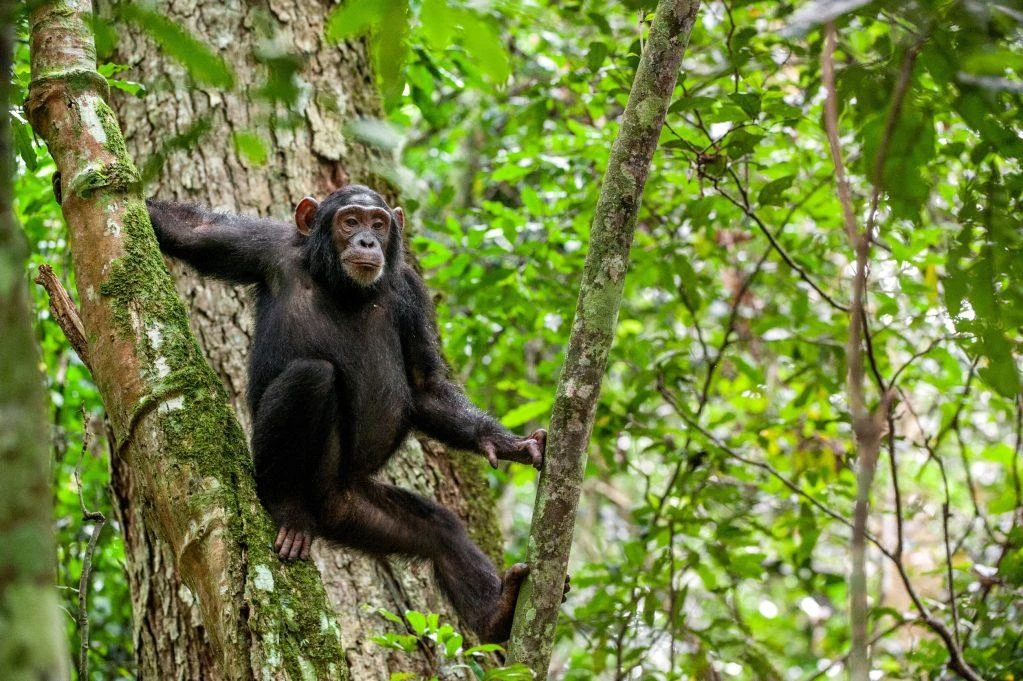
Chimpanzee trekking is the main wildlife activity in Nyungwe Forest National Park. The experience begins early because chimpanzees are active in the morning and can move considerable distances while searching for food.
After briefing, you enter the forest with an experienced guide and search for the chimpanzee community. The trek can involve walking over uneven and sometimes steep forest terrain. Once the chimpanzees are located, you have an opportunity to observe their behaviour as they feed, communicate, climb trees and move through the forest.
Along the way, guides often point out other real forest residents sharing the same canopy. It is common to hear the loud, repetitive call of the Rwenzori turaco echoing through the trees, or to catch a troop of grey-cheeked mangabeys crashing through the branches overhead, long before the chimpanzees themselves are found.
How difficult is chimpanzee trekking?
Chimpanzee trekking is not necessarily difficult for everyone, but the experience is unpredictable for a few reasons:
- Chimpanzees set the pace: Unlike a fixed nature walk, chimpanzees do not remain in one place for visitors, so the length and difficulty of the trek depend entirely on where the group happens to be that morning.
- Terrain can vary widely: Trails may pass through flat, easy sections as well as steep, uneven ground, so a reasonable level of fitness makes the experience far more enjoyable.
- Weather adds an extra factor: Because Nyungwe is a rainforest, trails can become wet or muddy with little warning, which is why sturdy footwear matters as much as fitness.
Good hiking shoes, lightweight clothing and a rain jacket are especially useful for this activity.
2. Nyungwe Canopy Walkway
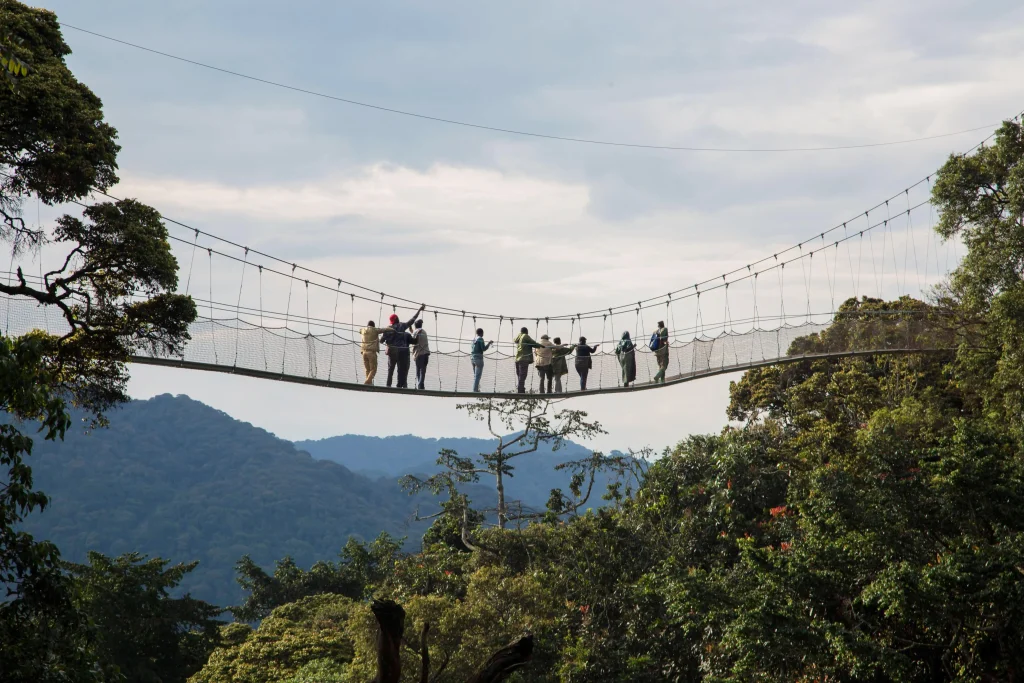
The Nyungwe Canopy Walkway is one of the park’s most distinctive experiences. Instead of exploring the forest only from ground level, visitors walk along a suspended bridge above the rainforest canopy.
The official Rwanda tourism site currently lists the canopy walkway at US$40 for international visitors, US$20 for foreign residents in Rwanda/EAC and US$5 for Rwandan/EAC citizens, including guiding.
The experience is open throughout the year, although rainfall is more common in the afternoon. Visitors are advised to wear suitable footwear and carry a lightweight raincoat.
What can you see from the canopy walkway?
Depending on weather and visibility, the walkway typically rewards visitors with:
- Layered rainforest vegetation: A rare bird’s eye view of how the forest canopy is structured, from the dense treetops down through the mid layers of vegetation.
- Mountain scenery: Sweeping views over Nyungwe’s surrounding hills and ridgelines, which are hard to appreciate fully from ground level trails.
- Birdlife in the treetops: Because many forest birds spend most of their time high in the canopy, the walkway often provides better sightings than trails below, including the black and white casqued hornbill, easily recognised by its heavy bill and honking call, and colourful sunbirds such as the regal sunbird and the endemic blue-headed sunbird.
- Primates moving through the trees: Monkeys and other primates are sometimes visible feeding or travelling through the canopy, including blue monkeys and L’Hoest’s monkeys, a species largely confined to the Albertine Rift and rarely seen outside a handful of parks in this region.
- Forest covered valleys: Long, uninterrupted views across valleys blanketed in unbroken rainforest, ideal for photography on a clear day.
The walkway is particularly attractive to photographers and travellers who want a different perspective of Nyungwe.
3. Primate Tracking
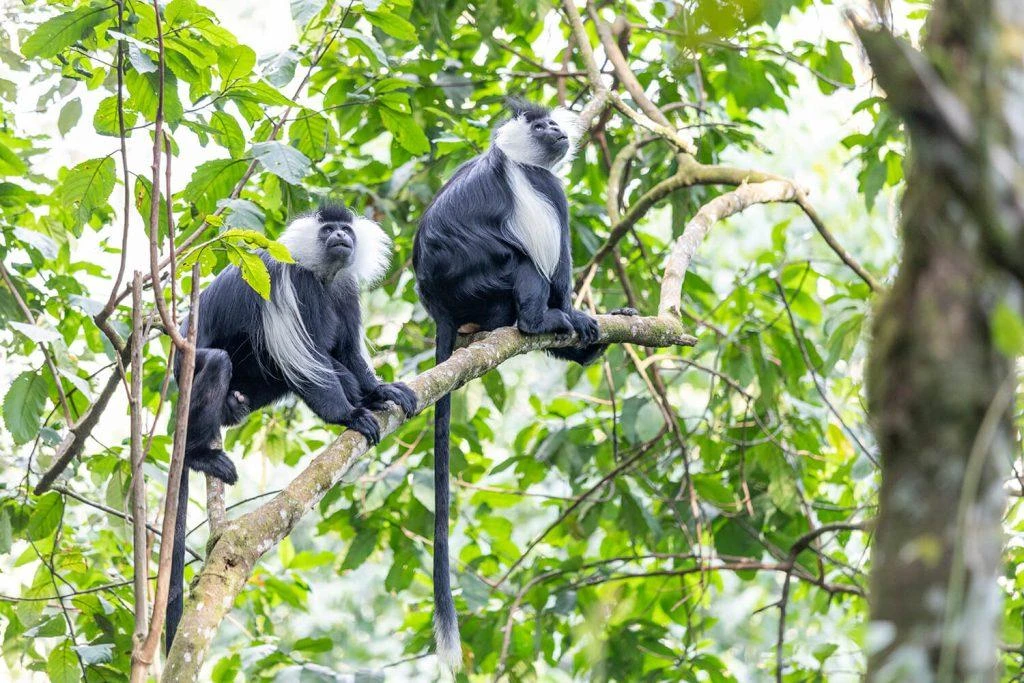
Nyungwe is one of Rwanda’s best destinations for primate lovers. The forest supports chimpanzees and several other primate species, and Rwanda’s official tourism information highlights chimpanzees together with twelve other primate species found within the park.
Real encounters on the trails often include:
- Rwenzori colobus: Nyungwe protects the largest recorded troop of any primate species on the African continent, with groups of Rwenzori colobus sometimes numbering several hundred individuals moving together through the canopy, an unforgettable sight and sound as they leap between trees.
- L’Hoest’s monkey: Recognisable by its dark coat, white throat patch and downturned tail, this species is near endemic to the Albertine Rift and is one of the primates most associated with Nyungwe’s forest floor and undergrowth.
- Grey-cheeked mangabey: Often heard before it is seen, this large, vocal monkey moves in noisy groups through the mid canopy and is a common companion sighting on the Isumo and Kamiranzovu trails.
- Blue monkey and red-tailed monkey: Two of the more frequently sighted species along the Isumo waterfall trail, often spotted feeding together in mixed groups within the same trees.
- Golden monkey: A rare and strikingly coloured species occasionally reported in Nyungwe, though it is more reliably seen in Volcanoes National Park.
A few points are worth knowing before choosing this activity:
- Sightings vary by trail: Different trails pass through different habitats, so the primates you are likely to encounter can depend on which route your guide selects that day.
- Good for varied itineraries: Primate tracking suits travellers who want a genuine rainforest experience without dedicating their whole visit to chimpanzee trekking alone.
- Best with an experienced guide: Local guides know the feeding areas and movement patterns of different primate groups, which greatly improves the chances of good sightings.
4. Bird Watching in Nyungwe
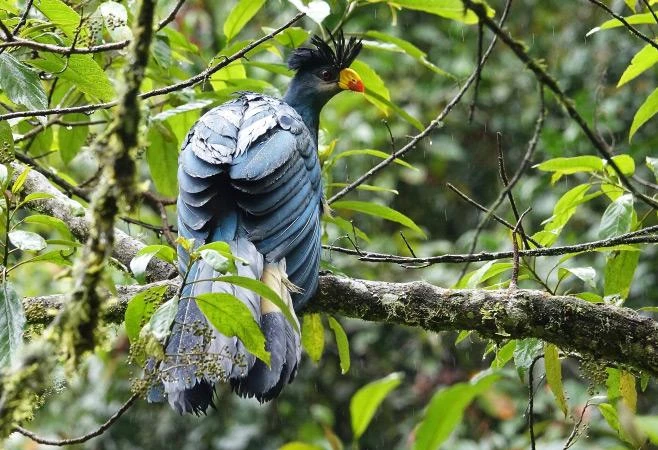
Bird watching is another major reason to visit Nyungwe. With close to 300 recorded species, of which more than two dozen are Albertine Rift endemics found nowhere else on earth, the park is widely considered Rwanda’s most important birding site.
Species that make a Nyungwe birding day feel genuinely rewarding include:
- Great blue turaco: One of Africa’s largest turacos, often spotted crashing between branches in small noisy groups, its long tail and blue and yellow plumage making it hard to mistake for anything else.
- Rwenzori turaco: Common in Nyungwe despite being rare elsewhere, its loud repetitive call is one of the most recognisable sounds in the forest, even when the bird itself stays hidden in the canopy.
- Grauer’s rush warbler: An Albertine Rift endemic that favours isolated mountain swamps, with the Kamiranzovu wetland one of the most reliable places in the world to look for it.
- Regal sunbird and purple-breasted sunbird: Small, iridescent sunbirds frequently seen feeding on flowering trees along forest edges, rewarding patient birders with a flash of colour in the right light.
- Handsome francolin: A shy, ground dwelling Albertine Rift endemic more often heard than seen, favouring dense undergrowth along the higher forest trails.
- Black and white casqued hornbill: One of two hornbill species recorded in the park, unmistakable for its heavy casqued bill and far carrying honking call.
Consider the following when planning a birding focused visit:
- Allow extra time: Serious birders should avoid squeezing the experience into just a few hours, since patience is often rewarded with rarer sightings later in the day.
- Combine with other activities: Birding pairs naturally with hiking or chimpanzee trekking, letting you enjoy varied wildlife without needing a separate dedicated day.
- Hire a specialist guide: Many forest birds are identified by call before they are ever seen, so a guide with strong birding experience can make a significant difference to your species count.
5. Hiking in Nyungwe Forest
Hiking provides a slower way to experience the rainforest. Several trails lead through different sections of the forest and offer opportunities to see trees, plants, birds, butterflies, monkeys and other wildlife.
- Kamiranzovu Trail: A moderate 5.9 kilometre route leading to the Kamiranzovu Marsh, Nyungwe’s largest wetland, where the yellow flowered begonia lines the boardwalks and Grauer’s rush warblers call from the reeds.
- Mount Bigugu Trail: A 6.6 kilometre climb to the park’s highest peak, rewarding hikers with panoramic views over Lake Kivu and the hills of the Democratic Republic of Congo, along with sightings of orchids and flame flowers in season.
- Igishigishigi Trail: A shorter, popular walk close to the canopy walkway, often combined with the walkway itself for visitors short on time.
- Trail variety: Some hikes focus on waterfalls and mountain streams, while others are designed to showcase the forest’s broader mountain landscape and biodiversity.
- Flexible pacing: Because hiking does not depend on tracking a moving animal group, visitors can set their own pace and stop frequently for photography or birding.
- Good add on activity: For travellers staying two or three nights, adding a guided forest walk after chimpanzee trekking rounds out the Nyungwe experience nicely.
6. Waterfall Hikes
Waterfall hikes offer another way to explore the forest, combining rainforest scenery with mountain streams and cascading water.
- Isumo Waterfall: Nyungwe’s largest waterfall, reached via a roughly 10.6 kilometre trail from Gisakura that takes visitors through open air tea plantations before descending into dense forest. The falls drop about 17 to 25 metres into a rocky gorge, throwing up a fine mist that often catches a rainbow on sunny days. Along the way, hikers regularly spot L’Hoest’s monkeys, red-tailed monkeys and blue monkeys, as well as the Rwenzori turaco overhead.
- Kamiranzovu Waterfall: A shorter, less crowded alternative reached from the Kamiranzovu Trail, passing through the marsh that gives the trail its name, which translates roughly as “to swallow an elephant,” a nod to local legend about the last elephants of Nyungwe.
- Imbaraga Trail: A tougher route for experienced hikers, leading past four separate waterfalls and offering sweeping views over the Bururi valley, with the sounds of tree frogs, crickets and cicadas accompanying the walk.
- Photography friendly: The combination of dense greenery, moving water and forest light makes these trails especially popular with photographers.
- Range of difficulty: Some waterfall trails are gentle and family friendly, while others involve steeper or longer walking sections.
- Plan ahead with your consultant: Because difficulty varies by trail, it helps to share your fitness level with your safari consultant so the right route can be chosen for you.
Nyungwe Forest National Park Costs
Activity prices can change, so travellers should confirm the current rates when booking. For 2026, the published activity information currently lists the following rates for international visitors:
| Activity | International Visitor |
|---|---|
| Chimpanzee tracking | US$150 |
| General special activities, including canopy walkway | US$40 |
| Chimpanzee habituation experience | Check current booking rate |
| Park entry | Depends on length of stay |
| Guided activities | Depends on activity |
The current published 2026 to 2027 fee information lists chimpanzee tracking at US$150 per person, including a guide, while general special activities such as the canopy walkway are listed at US$40 per person for international visitors. The official Visit Rwanda canopy walk page also confirms the US$40 international visitor rate.
Important: Safari package prices are different from activity fees. Your total Nyungwe safari cost may also include accommodation, meals, transportation, guide services, park fees and other activities.
How Much Does a Nyungwe Safari Cost?
There is no single price for a Nyungwe safari because the final cost depends on several factors. The biggest factors are:
- Number of days: Longer stays naturally increase total accommodation and meal costs, but they also allow activity costs to be spread across more experiences.
- Type of accommodation: Choices range from simple campsites and guesthouses to comfortable mid range and higher end forest lodges, each with a different nightly rate.
- Number of travellers: Group size affects per person costs for shared transportation and, in some cases, shared guiding fees.
- Chimpanzee trekking: As one of the higher priced activities in the park, this fee makes up a significant share of most Nyungwe itineraries.
- Canopy walk: A comparatively affordable addition that still meaningfully adds to the overall activity budget.
- Private or shared transportation: Private 4×4 transfers cost more than shared options but offer far greater flexibility and comfort.
- Meal plan: Full board, half board or self catering options at your chosen lodge will all affect the final price differently.
- Additional activities: Extra hikes, birding walks or primate tracking sessions add incremental costs on top of the core itinerary.
- Combination with other parks: Pairing Nyungwe with gorilla trekking in Volcanoes National Park or a visit to Lake Kivu increases the overall trip cost but also its overall value.
A two person private safari staying in comfortable mid range accommodation will cost considerably more per person than a larger group using budget accommodation. For this reason, it is better to request a quotation based on your preferred travel dates and accommodation level rather than relying on a generic online price.
Best Time to Visit Nyungwe Forest National Park
Nyungwe can be visited throughout the year. Because it is a rainforest, rainfall is possible even during traditionally drier periods, which is important when planning activities such as hiking and chimpanzee trekking. The best time therefore depends on what matters most to you:
- For easier hiking conditions: The relatively drier periods tend to produce firmer, less slippery trails, which can be more comfortable for travellers concerned about steep or muddy sections.
- For lush forest scenery: The wetter periods often produce especially green landscapes, dramatic mist and lively waterfalls, appealing to photographers and nature lovers.
- For budget conscious travellers: Some accommodation providers offer lower season rates, so it is worth asking about seasonal promotions when planning your safari.
Rather than choosing dates based only on weather, we recommend considering your entire Rwanda itinerary, accommodation availability and preferred activities.
How to Get to Nyungwe Forest National Park
Most international visitors begin their Rwanda safari in Kigali. From Kigali, you travel west and then southwest toward Nyungwe. The journey passes through Rwanda’s famous hilly countryside and can include stops along the way.
- Private 4×4 vehicles: A private safari vehicle gives you the flexibility to stop for photographs, visit local communities and adjust the pace of the journey to suit your group.
- Combined routing: Nyungwe can also be reached as part of a longer route connecting Kigali, Lake Kivu and Nyungwe, turning the transfer into a scenic multi stop journey rather than a single long drive.
How Many Days Do You Need in Nyungwe?
We recommend 2 to 3 nights for travellers who want to experience the main attractions without rushing.
- 2 Days: Best for travellers mainly interested in chimpanzee trekking and one additional activity, such as a shorter forest walk or the canopy walkway.
- 3 Days: Better for travellers who want chimpanzee trekking, the canopy walkway and another forest activity, giving enough time to enjoy each experience without feeling rushed.
- 4 Days or More: Ideal for travellers who want a slower rainforest experience, additional birding or hiking time, or who wish to combine Nyungwe with Lake Kivu.
If you are travelling from Kigali and returning to Kigali, adding extra time also makes the road journey more comfortable.
Where to Stay in Nyungwe Forest
Accommodation choices range from campsites and guesthouses to higher end forest lodges. We generally group Nyungwe accommodation into three categories, so you can match your stay to your budget and comfort expectations.
Budget accommodation
- Chimpanzee Lodge: A practical, comfortable option located just a few kilometres from the park, popular with travellers who want easy access to the trailheads without paying for extensive lodge facilities. Rooms are simple but well kept, and the lodge makes a sensible base for a straightforward 2 to 3 day chimpanzee trekking trip.
Mid range accommodation
- Nyungwe Top View Hotel: As the name suggests, this hotel makes the most of its elevated position with sweeping views over the surrounding forest and hills. It offers a comfortable step up from budget lodges, with reliable service and rooms suited to travellers who want a bit more comfort without moving into luxury pricing.
Luxury and higher end accommodation
- One&Only Nyungwe House: Rwanda’s first five star property in the area, set within a working tea plantation right on the edge of the forest. Rooms come with private decks, open fireplaces and large soaking tubs, and it is common to spot monkeys from your own terrace. The lodge also arranges its own guided chimpanzee treks, canopy walks, tea tasting experiences and spa treatments, making it an excellent choice for couples or travellers wanting a fully immersive, all inclusive stay.
Your choice should depend on your budget, preferred comfort level and the activities you plan to undertake. For a private safari, we can recommend accommodation based on your travel dates and preferred budget.
Is Nyungwe Forest National Park Suitable for Couples?
Yes, Nyungwe is an excellent choice for couples, particularly those looking for a rainforest escape that feels intimate rather than crowded.
- Romantic setting: The forest’s misty mountains, tea plantations and quiet lodge grounds create a naturally romantic backdrop, especially in the early morning and at sunset.
- Shared adventure: Chimpanzee trekking, the canopy walkway and waterfall hikes give couples a genuine shared activity to look forward to each day, rather than simply relaxing side by side.
- Private moments at the lodge: Higher end properties such as One&Only Nyungwe House offer private decks, in room fireplaces and secluded dining spots among the tea leaves, ideal for honeymooners or anniversary trips.
- Good pacing for two: A 3 to 4 day itinerary gives couples enough time for one or two forest activities each day, with plenty of downtime at the lodge in between.
For couples wanting an extra special touch, Nyungwe combines well with a few relaxed nights at Lake Kivu afterward, balancing the active forest days with a slower, more scenic finish to the trip.
Is Nyungwe Forest National Park Suitable for Families?
Yes, but families should plan around one important restriction: chimpanzee trekking in Nyungwe has a minimum age limit of 12 years old. Children younger than this are not permitted to join the trek, mainly due to the physical demands of the terrain and park safety rules.
This does not mean a family visit is off the table. It simply means the itinerary needs a little more planning:
- Chimpanzee trekking for over 12s: Older children and teenagers who meet the age requirement can join the full trekking experience alongside parents, guided by the same experienced trackers.
- Canopy walkway for the whole family: The canopy walkway generally has a more relaxed age policy than chimpanzee trekking, making it a good shared activity for families with children of different ages, though it is worth confirming the current age policy when booking.
- Alternative activities at the lodge: Most family friendly lodges around Nyungwe can arrange supervised activities for younger children while older family members are out trekking, such as guided nature walks close to the lodge grounds, birdwatching from lodge viewpoints, tea plantation walks, cultural craft sessions like Imigongo art making, or simply relaxed time at the lodge pool or garden where available.
- Staggered activity days: One parent can join the chimpanzee trek while the other spends the morning with younger children on lodge based activities, then swap roles on a different day if both parents want the full trekking experience.
- Family rooms and interconnecting suites: Several mid range and luxury properties near the park offer family rooms or interconnecting suites, which are worth requesting specifically when booking.
Because trekking days involve early starts and several hours in the forest, we recommend discussing your children’s ages, energy levels and interests with your safari consultant so the itinerary can be built around what each family member can actually enjoy.
Is Nyungwe Forest National Park Suitable for Solo Travellers?
Yes, Nyungwe works well for solo travellers, and the structure of most activities actually makes it easier to visit alone than some other safari destinations.
- Group based activities: Chimpanzee trekking and canopy walkway visits are typically done in small groups with other visitors and a guide, so solo travellers are naturally placed among other people rather than left to explore alone.
- Safety on trails: Because every trek and hike is accompanied by a trained guide or ranger, solo travellers do not need to navigate the forest independently, which adds a useful layer of safety and reassurance.
- Sociable lodge settings: Many lodges and guesthouses around Nyungwe have communal dining areas or shared lounges, giving solo travellers a natural chance to meet other guests over meals or in the evening.
- Flexible pacing: Without needing to coordinate a group’s preferences, solo travellers can more easily adjust their itinerary, swap activities around, or extend a stay if a particular trail or experience is especially rewarding.
- Single supplement considerations: Some accommodation charges a single supplement for solo occupancy, so it is worth asking about this when requesting a quotation, particularly for higher end lodges.
Solo travellers combining Nyungwe with gorilla trekking in Volcanoes National Park or a stop at Lake Kivu will find the same small group structure applies throughout, making a longer solo Rwanda itinerary very manageable.
Best Nyungwe Forest Safari Itineraries
3-Day Nyungwe Chimpanzee Safari
- Day 1: Kigali to Nyungwe Forest National Park
- Day 2: Chimpanzee trekking and forest experience
- Day 3: Nyungwe to Kigali
This is suitable for travellers who have limited time but want to experience Rwanda’s rainforest.
4-Day Nyungwe and Lake Kivu Safari
- Day 1: Kigali to Nyungwe
- Day 2: Chimpanzee trekking
- Day 3: Canopy walk and transfer toward Lake Kivu
- Day 4: Lake Kivu experience and return or departure
5-Day Rwanda Primates Safari
- Day 1: Kigali arrival
- Day 2: Kigali to Nyungwe
- Day 3: Chimpanzee trekking
- Day 4: Nyungwe to Volcanoes National Park
- Day 5: Primate experience and departure
A ready made version of this route is available as our 5-Day Rwanda Gorillas & Chimps Trekking Safari, which can be adjusted to your preferred pace and accommodation level.
7-Day Rwanda Gorilla, Chimpanzee and Wildlife Safari
A longer itinerary can combine several of Rwanda’s headline destinations into one trip:
- Kigali: The natural starting and ending point for most Rwanda itineraries, with time for a city tour or genocide memorial visit.
- Nyungwe Forest: Chimpanzee trekking, canopy walking and rainforest hiking form the core of this leg of the trip.
- Lake Kivu: A relaxing stop for travellers who want a break from activity heavy days, with boat trips and lakeside scenery.
- Volcanoes National Park: The setting for Rwanda’s world famous mountain gorilla trekking experience.
- Akagera National Park: Rwanda’s main savannah destination, offering classic game drives and Big Five wildlife viewing.
This creates a much broader Rwanda safari covering rainforest, primates, mountain landscapes and savannah wildlife. A similar route is available as our 7-Day Rwanda Gorillas, Chimps & Game Safari, or as the 6-Day Rwanda Gorillas, Game & Lake Kivu Beach Safari for travellers who want to end their trip on the lakeshore rather than in the savannah.
Nyungwe vs Kibale Forest: Which Is Better for Chimpanzee Trekking?
Travellers planning an East African primate safari often compare Nyungwe in Rwanda with Kibale Forest National Park in Uganda. Both are excellent choices, but they suit different itineraries.
| Feature | Nyungwe Forest | Kibale Forest |
|---|---|---|
| Country | Rwanda | Uganda |
| Main attraction | Chimpanzees and rainforest | Chimpanzees and primates |
| Canopy experience | Yes | Different forest activities |
| Gorilla combination | Volcanoes NP | Bwindi/Mgahinga |
| Best for | Rwanda safari | Uganda primate safari |
| Possible combination | Lake Kivu and Volcanoes | Queen Elizabeth and Bwindi |
- Choose Nyungwe if: You are already visiting Rwanda for gorilla trekking, since Nyungwe fits naturally into the same route without major detours.
- Choose Kibale if: Your main interest is a longer Uganda primate safari, where Kibale connects easily with Queen Elizabeth National Park and Bwindi.
Can You Combine Nyungwe With Gorilla Trekking?
Yes. One of the best ways to experience Rwanda is to combine Nyungwe’s chimpanzees with gorilla trekking in Volcanoes National Park.
- Two distinct primate experiences: In Nyungwe, you explore a large rainforest while searching for chimpanzees and other primates, while in Volcanoes National Park you hike through mountain forest in search of endangered mountain gorillas.
- Efficient routing: Because both parks are within Rwanda, they can be combined without long international transfers, making this pairing especially convenient.
- Ideal for primate focused travellers: This combination suits travellers who want a genuine Rwanda primate safari rather than a single wildlife activity.
Can You Combine Nyungwe With Uganda?
Yes, Nyungwe can form part of a longer Rwanda to Uganda safari. A well planned itinerary can include:
Kigali to Nyungwe to Lake Kivu to Uganda to Bwindi to Queen Elizabeth to Kibale to Entebbe
The exact route depends on your interests and available time. For travellers interested in both chimpanzees and gorillas, combining Nyungwe, Kibale and Bwindi can create an especially strong primate focused East African safari, similar to our 7-Day Uganda and Rwanda Primates with Game Safari, which links both countries’ forest and primate destinations into a single journey. For the Uganda leg specifically, our full range of Uganda safaris can be tailored to connect smoothly with your Nyungwe itinerary.
Who Is Nyungwe Forest National Park Best For?
Nyungwe suits a wide range of travellers, but the right activities and pacing look different depending on who is travelling. Below is a closer look at how couples, families and sole travellers can each get the most out of a visit.
Is Nyungwe Forest National Park Suitable for Couples?
Yes, Nyungwe is an excellent choice for couples, particularly those who enjoy nature, quiet scenery and a slower pace than a typical wildlife heavy safari.
- Romantic forest lodges: Several properties near Gisakura and Uwinka offer private rooms with forest or valley views, making them well suited to a honeymoon or anniversary trip away from busier tourist circuits.
- Shared, memorable activities: Chimpanzee trekking, the canopy walkway and a guided waterfall hike all work well as shared experiences, giving couples a mix of adrenaline, scenery and quiet moments together in the forest.
- Natural pairing with Lake Kivu: Many couples combine two or three nights in Nyungwe with a relaxed stay on Lake Kivu, balancing the physical activity of trekking with time to unwind by the water.
- Flexible pacing: Because a private safari vehicle and guide are used for most Nyungwe visits, couples can set their own rhythm rather than following a large group itinerary, spending extra time at a waterfall or viewpoint if they choose.
Is Nyungwe Forest National Park Suitable for Families?
Nyungwe can work well for families, though the fit depends heavily on the age of your children and which activities you plan to include.
- Chimpanzee trekking age limit: The current minimum age for chimpanzee trekking in Nyungwe is 15 years, reflecting both the physical demands of the trek and conservation guidelines designed to protect the chimpanzees from illness and disturbance. This is stricter than the age limits used at some other East African primate parks, so families should confirm the current rule when booking.
- Canopy walkway is more accessible: The canopy walkway generally allows younger participants, typically from around 6 years old when accompanied by an adult, making it a good shared activity for families with a wider age range.
- Alternative activities for younger children: While parents or older siblings are out chimpanzee trekking, lodges in the Nyungwe area can usually arrange supervised alternatives for children below the trekking age, such as a guided nature walk close to the lodge grounds, birdwatching from the gardens, a visit to a nearby tea plantation, or cultural activities with a local community group. A kid friendly driver guide can stay with younger children throughout, so the whole family still has a full day of activity.
- Plan mixed age groups carefully: For families with children both above and below the trekking age, it often works best to split the group for a morning, with older family members trekking chimpanzees while younger children enjoy lodge based activities, then reuniting for lunch or an afternoon walk everyone can share.
- Confirm ages when booking: Tour operators will usually ask for passport details in advance to confirm each traveller’s age, so it is worth resolving this early rather than at the park gate.
Is Nyungwe Forest National Park Suitable for Sole Travellers?
Yes, Nyungwe is a genuinely good destination for sole travellers, and the structure of most activities makes it easier to visit alone than some other safari destinations.
- Group based activities: Chimpanzee trekking, primate tracking and the canopy walkway are all typically done in small groups of up to eight visitors alongside a guide, so sole travellers are naturally placed with other guests rather than needing to arrange a private group.
- Safety in numbers on trails: Because every trek and hike is accompanied by an experienced park guide or ranger, sole travellers are never walking alone in the forest, which adds a helpful layer of reassurance on longer or more remote trails.
- Sociable lodge settings: Guesthouses and lodges around Gisakura and Uwinka tend to attract a steady mix of independent travellers, researchers and small tour groups, making shared meals and evenings a natural way to meet other people.
- Cost considerations: Solo travellers should budget for single occupancy accommodation rates and, if using a private vehicle rather than joining a shared transfer, higher per person transport costs, since these expenses are not split across a group.
- Flexible itinerary length: A sole traveller can easily adjust the length of their stay, adding an extra day for hiking or birding without needing to coordinate with travel companions.
What to Pack for Nyungwe Forest
Because Nyungwe is a mountainous rainforest, pack for changing weather and wet trails:
- Waterproof hiking shoes: Essential for muddy or slippery sections of trail, especially during and after rainfall.
- Lightweight long trousers: Protect your legs from vegetation and insects while remaining comfortable in humid conditions.
- Long sleeved shirt: Useful for sun and insect protection during longer treks.
- Waterproof jacket: Rainforest weather can change quickly, so a reliable rain layer is essential rather than optional.
- Small backpack: Keep it light enough for a full day of walking while still fitting water, snacks and camera gear.
- Water bottle: Treks can last several hours, so staying hydrated is important, particularly on chimpanzee trekking days.
- Insect repellent: Helps protect against mosquitoes and other forest insects during hikes and early morning activities.
- Binoculars: Valuable for both birding and spotting primates high in the canopy.
- Camera and extra batteries or a power bank: Charging points can be limited at forest lodges, so extra power capacity is worth carrying.
- Hat and sunscreen: Useful for exposed sections of trail and during breaks in open areas.
- Personal medication: Always carry any regular medication with you, since pharmacies may not be easily accessible near the park.
- Lightweight rain gear: A packable poncho or cover can be a useful backup to a full rain jacket.
A pair of hiking poles can also be useful for visitors who find steep or slippery trails difficult.
Why Book Your Nyungwe Safari With Iconic Africa Safaris?
At Iconic Africa Safaris, we design private and tailor made Rwanda and East Africa safaris around your interests, budget and available time.
Our advantages include:
- Experienced safari consultants: Our team has more than six years of experience crafting itineraries across Africa, with a strong focus on Uganda and East Africa.
- Experienced local guides: Our guides understand the destinations, wildlife and practical conditions you will encounter during your safari, helping you get the most out of every activity.
- Comfortable 4×4 safari vehicles: We arrange suitable safari vehicles for long distance travel and forest destinations, prioritising both comfort and reliability.
- Carefully selected accommodation: We help you choose accommodation that matches your preferred comfort level and budget, from simple guesthouses to higher end lodges.
- Complete safari planning: We can arrange transportation, accommodation, activities and other services required for your trip, removing the stress of coordinating everything yourself.
- Support from inquiry to departure: Our team remains available throughout the planning process and safari, so you always have someone to turn to if plans need to change.
Whether you want a 3 day Nyungwe chimpanzee safari or a longer Rwanda and Uganda gorilla and chimpanzee safari, we can tailor the itinerary to your needs. For a ready made starting point that pairs chimpanzee trekking with the canopy walkway, see this 5 Day Chimps & Canopy Walk in Nyungwe Forest itinerary, which we can adapt to your dates and accommodation preference.
Frequently Asked Questions About Nyungwe Forest National Park
Is Nyungwe Forest National Park worth visiting?
Yes. Nyungwe is particularly worthwhile for travellers interested in chimpanzees, primates, rainforest hiking, bird watching and canopy experiences. Its landscape also provides a completely different experience from Rwanda’s savannah based Akagera National Park and mountain gorilla destination in Volcanoes National Park.
What is Nyungwe Forest famous for?
Nyungwe is best known for its ancient rainforest, chimpanzee trekking, diverse primates, birdlife, hiking opportunities and canopy walkway. The forest is one of Rwanda’s major biodiversity destinations.
How much is chimpanzee trekking in Nyungwe?
For 2026, the published rate for an international visitor is US$150 per person, with guiding included. Rates differ according to residency category, so travellers should confirm the applicable rate when booking.
How much is the Nyungwe canopy walk?
The current official Visit Rwanda information lists the canopy walkway at US$40 per international visitor, US$20 for foreign residents in Rwanda/EAC and US$5 for Rwandan/EAC citizens.
How long should I stay in Nyungwe?
For the main activities, 2 to 3 nights is a good starting point. Travellers who enjoy hiking, birding or a slower rainforest experience may prefer longer.
Can I see gorillas in Nyungwe?
No. Nyungwe is primarily known for chimpanzees and other forest primates. Mountain gorilla trekking takes place in Volcanoes National Park in Rwanda or in Uganda’s Bwindi Impenetrable and Mgahinga national parks.
Can I combine chimpanzee and gorilla trekking?
Yes. A Rwanda itinerary can combine chimpanzee trekking in Nyungwe with gorilla trekking in Volcanoes National Park. This is one of the best ways to experience two different primate habitats in Rwanda.
Is Nyungwe suitable for families?
Yes, but activity suitability depends on the children’s ages and the selected experience. Chimpanzee trekking has a minimum age limit of 12 years old, so families with younger children should plan alternative lodge based activities, such as tea plantation walks, guided nature walks or cultural craft sessions, for the day older members of the group are out trekking. Hiking and chimpanzee trekking can also involve uneven and sometimes challenging terrain, so families should discuss their children’s ages and fitness levels with their safari planner before booking.
Is Nyungwe Forest National Park suitable for couples?
Yes. Nyungwe’s quiet forest setting, shared activities like chimpanzee trekking and the canopy walkway, and intimate lodge options such as One&Only Nyungwe House make it a popular choice for couples and honeymooners looking for a rainforest experience away from the crowds.
Is Nyungwe Forest National Park suitable for solo travellers?
Yes. Because chimpanzee trekking, canopy walkway visits and forest hikes are guided and typically done in small groups, solo travellers are naturally placed alongside other visitors and do not need to explore the forest alone. Some accommodation may charge a single supplement, so it is worth checking this when booking.
Plan Your Nyungwe Forest National Park Safari
Nyungwe Forest National Park deserves more than a short stop on a Rwanda itinerary. Its chimpanzees, rainforest, primates, birds, hiking trails and canopy walkway make it one of the country’s most diverse nature destinations.
Whether you are interested in chimpanzee trekking, a canopy walk, bird watching, forest hiking or a combined Rwanda and Uganda primate safari, the right itinerary can turn Nyungwe into one of the highlights of your trip.
Ready to explore Nyungwe Forest National Park? Contact Iconic Africa Safaris to create a private Rwanda safari based on your travel dates, interests and budget.