
Ultimate Mgahinga Safari: Gorilla Trekking and Golden Monkey Experience
At the far southwestern tip of Uganda, where three countries meet along a chain of volcanoes, sits a park most safari goers have never heard of. Mgahinga Gorilla National Park covers just 33.7 square kilometers, smaller than many city districts, yet it packs in mountain gorillas, golden monkeys, three climbable volcanic peaks, an Albertine Rift birding hotspot, and a cave once inhabited by indigenous forest dwellers. It is, without much competition, Uganda’s most complete single park primate and adventure destination.
This guide is built for travelers who want more than a permit price list. It covers the park’s geography and history, exactly what a trekking day looks like, how the gorilla experience differs from Bwindi, every activity available inside the park, where to sleep, how to get in and out, what to pack, health and visa requirements, and multiple itineraries depending on how many days you have. Read straight through, or jump to the section you need.
Where Mgahinga Is and Why It Exists
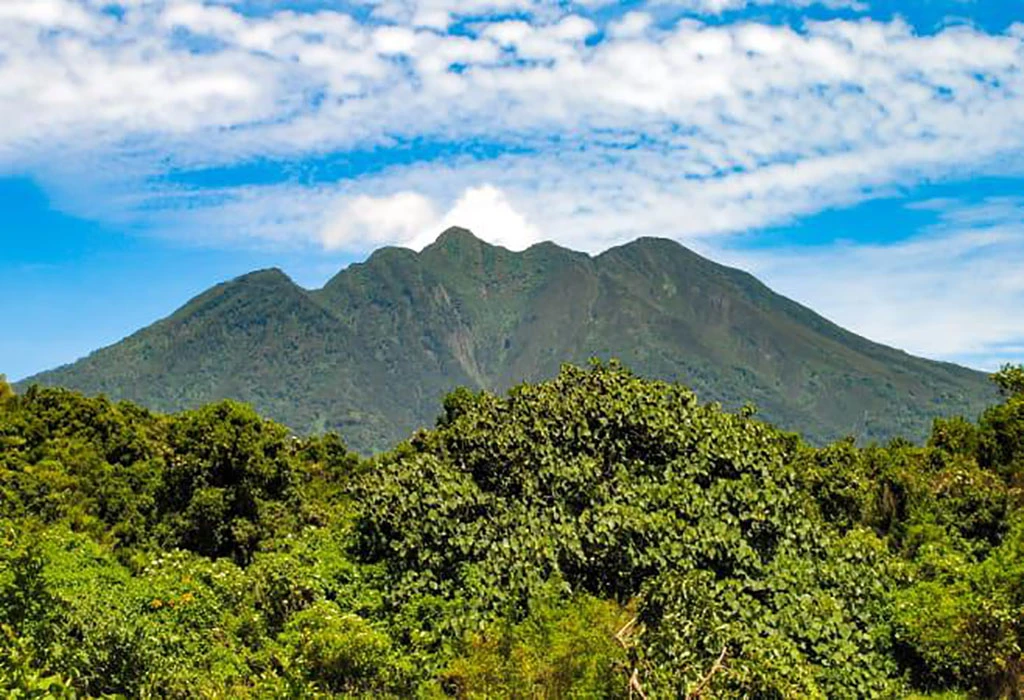
Mgahinga sits roughly 10 kilometers south of Kisoro town, in Uganda’s Kisoro District, hugging the borders of both Rwanda and the Democratic Republic of Congo. The park forms the Ugandan segment of the Virunga Conservation Area, a transboundary ecosystem of roughly 434 square kilometers shared with Rwanda’s Volcanoes National Park and DRC’s Virunga National Park. Together, these three parks protect the entire wild population of mountain gorillas found in the Virunga volcanic range, a separate population from the larger group living in Bwindi.
The land was first set aside as a game sanctuary in 1930 under colonial administration, primarily to regulate hunting in the volcano foothills. It wasn’t until 1991 that the Ugandan government formally gazetted it as a national park, driven largely by the urgency of protecting a critically endangered mountain gorilla population that had been reduced to a few hundred individuals across the entire Virunga range. That conservation mandate still defines the park today. Gorilla protection is Mgahinga’s founding purpose, and tourism revenue from trekking permits directly funds ranger patrols, poaching prevention operations, and community development projects around the park boundary.
Three extinct and dormant volcanoes dominate the landscape and give the park its shape and its name.
- Mount Sabinyo, roughly 3,645 to 3,669 meters (sources vary slightly), is the oldest and most jagged of the three, with three distinct peaks. The third and highest peak sits exactly on the tripoint where Uganda, Rwanda, and the DRC converge, meaning a hiker can stand in three countries within the same few square meters.
- Mount Gahinga, at 3,474 meters, is the smallest and gentlest of the trio. Its name comes from the local Rufumbira word for “a small pile of stones,” a reference to how farmers historically cleared fields of volcanic rock. Its summit holds a swampy crater lake fringed with bamboo.
- Mount Muhabura, at 4,127 meters, is the tallest, and its name translates roughly to “the guide,” because its cone shaped peak is visible from great distances across the region and historically served as a navigational landmark. From the top, on a clear day, the view extends across the entire Virunga chain and into the Albertine Rift Valley.
Because of this volcanic terrain, Mgahinga’s habitats shift dramatically with altitude, from montane forest and dense bamboo stands at lower elevations to heather, giant lobelia, and afro alpine moorland higher up the slopes. That range of habitat is part of why the park supports such a disproportionate variety of wildlife for its small size.
Getting to Mgahinga: Routes, Distances, and Border Crossings
There is no single correct way into Mgahinga. The right route depends on whether you’re arriving via Uganda or via Rwanda, and how much time you have.
From Entebbe or Kampala (Uganda route)
The classic overland route runs from Entebbe International Airport or Kampala southwest through Mbarara and Kabale to Kisoro, a drive of roughly eight to ten hours covering around 500 to 540 kilometers on mostly paved road. Most travelers break this into two days, overnighting around Lake Mburo, Kabale, or Lake Bunyonyi, both to rest and to enjoy the scenery. This route passes through Uganda’s rolling terraced tea country before descending toward the volcanoes.
A faster alternative is a domestic flight from Entebbe to Kisoro Airstrip, cutting the journey to roughly one hour in the air, followed by a short road transfer of about 30 to 45 minutes to the park. This is the preferred option for travelers on tighter schedules or combining Mgahinga with other parts of Uganda in a single trip.
From Kigali, Rwanda
Many international travelers now find it faster and cheaper to fly into Kigali International Airport rather than Entebbe, since Kigali sits only two to three hours by road from Mgahinga via the Cyanika border crossing. This route has become increasingly popular for a simple reason: Kigali has excellent long haul flight connections, the drive is short and scenic through Rwanda’s terraced hillsides, and the East African Tourist Visa (more on that below) allows seamless movement across the border without needing a second visa application.
The Cyanika border post and the Katuna border post, further north and connecting to Kabale, are both reliable, well used crossings for tourists, generally efficient outside of extreme peak periods.
Combining Mgahinga with Bwindi or Rwanda in one loop
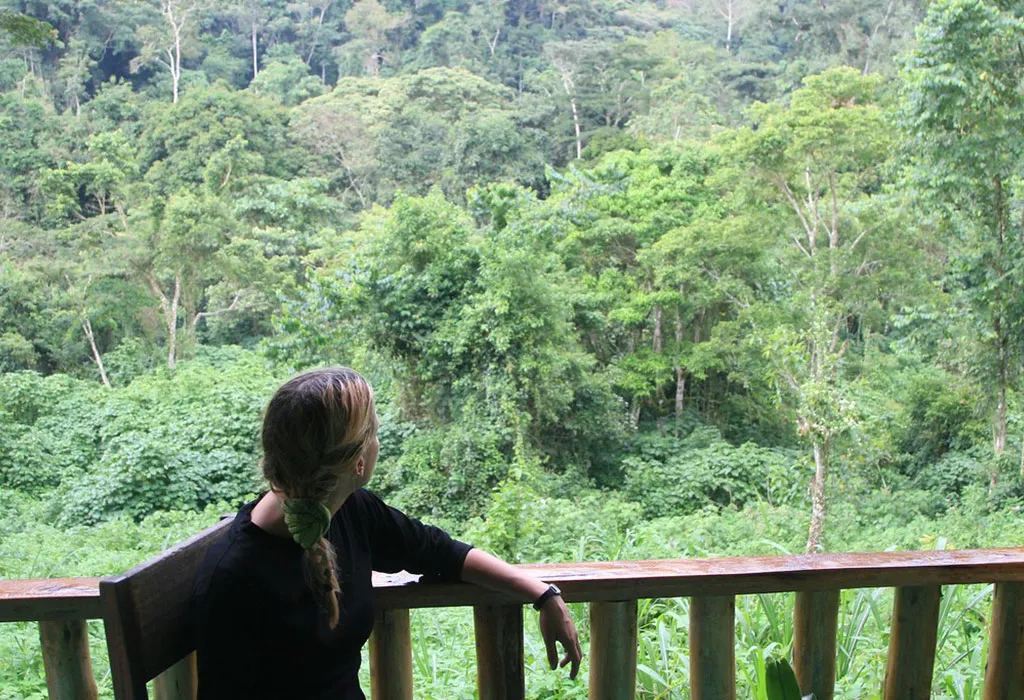
Because Mgahinga sits so close to both the Rwandan border and the Bwindi road corridor, it’s rarely visited in total isolation. A common pattern is a loop itinerary: fly into Kigali, trek gorillas or golden monkeys at Mgahinga, continue overland into Uganda to Bwindi for a second gorilla trek with a different family, then either return to Kigali or exit via Entebbe. This lets travelers see two distinct gorilla populations and two very different park experiences on a single trip without significant extra driving.
Iconic Africa Safaris runs this exact route as the 4 Day Bwindi Gorillas and Mgahinga Golden Monkeys Safari (Fly In), and for travelers wanting a gorilla encounter in both parks rather than one gorilla trek and one golden monkey trek, the 4 Day Bwindi and Mgahinga Double Gorilla Trekking Safari covers that variation.
Visas, Entry Requirements, and Health Preparations
Visa options
Travelers heading to Mgahinga typically choose between a single country Uganda visa, roughly $50 and available as an online eVisa applied for in advance, or the East Africa Tourist Visa (EATV), a joint visa covering Uganda, Rwanda, and Kenya for around $100. The EATV is significantly better value and far more convenient for anyone crossing between Uganda and Rwanda as part of a Mgahinga, Bwindi, and Volcanoes loop, since it allows multiple entries across all three countries on one document rather than requiring separate applications.
A few practical notes on the EATV: it must be applied for online in advance through the eVisa portal of whichever country you’ll enter first (it is not available on arrival), and it’s only worthwhile if you’re visiting at least two of the three member countries. For a single country trip, the standalone visa is cheaper. If you enter using an EATV issued by Rwanda but plan to fly out of Entebbe, confirm your entry point matches your visa issuing country, since mismatches have occasionally caused entry complications.
Yellow fever vaccination
This is non negotiable and strictly enforced. Uganda requires a valid yellow fever vaccination certificate from every traveler aged one year and older, regardless of departure country, and Rwanda applies the same requirement. The vaccination needs to be administered at least 10 days before arrival, and the certificate, the international “yellow card,” is checked at immigration and sometimes again at land border crossings. Arriving without one risks being vaccinated on the spot at your own expense, or in some cases being denied entry, so don’t leave this until the airport.
Malaria and general health
Uganda sits within a malaria transmission zone, and while Mgahinga’s higher elevation makes mosquito density noticeably lower than in Uganda’s lowland parks, most travel health authorities still recommend antimalarial prophylaxis for the trip as a whole, since you’ll likely pass through lower altitude areas en route. Discuss options with a travel health clinic several weeks before departure. Standard travel insurance with medical evacuation coverage is strongly advised for anyone trekking at altitude in a remote park.
When to Visit: Climate, Seasons, and Crowd Patterns
Mgahinga’s proximity to the equator means temperatures stay relatively stable year round. Expect cool mornings in the high single digits to low teens Celsius, with daytime highs typically in the high teens to low twenties at altitude. What changes dramatically is rainfall, and rainfall is what actually determines trekking conditions.
- Dry seasons run from June to September and December to February. These are the two windows when trails are firmest, visibility is best, and the majority of trekkers book their trips. This is also when permit demand peaks, particularly across the July and August and December and January holiday stretches, so booking three to four months ahead is genuinely necessary rather than just advisable.
- Wet seasons run from March to May and October to November. Rain is more frequent and trails through the bamboo and montane forest become considerably muddier and slower going, but trekking continues year round regardless. Gorillas and golden monkeys don’t observe a closed season. The upside of wet season travel is fewer trekkers on the trail, sometimes softer permit availability, and occasionally reduced lodge rates. Photographers in particular sometimes prefer the wetter months for the deeper greens and dramatic cloud cover across the volcanoes.
Because Mgahinga’s gorilla capacity is so much smaller than Bwindi’s (a single family versus multiple families across four sectors), seasonal demand swings hit permit availability harder here than almost anywhere else in Uganda. If your travel dates are fixed and fall within peak season, treat permit booking as the very first item on your planning checklist.
Low Season Gorilla Trekking Discounts (April, May, November)
One detail many travelers overlook: the Uganda Wildlife Authority offers reduced gorilla permit pricing during the quietest stretch of the wet season, specifically April, May, and November. Under the current UWA discount structure, gorilla trekking permits in Mgahinga drop to $600 per person for foreign non residents during these months, down from the standard $800 rate, with foreign residents paying an even lower discounted rate of around $500 per person.
This makes April, May, and November genuinely attractive for budget conscious travelers or anyone with flexible dates, since the gorilla encounter itself, the one hour with the Nyakagezi family, is identical regardless of season. The tradeoff is wetter trails and a higher chance of rain interrupting or lengthening the hike, but for travelers willing to pack proper waterproof gear, the savings are substantial, especially for couples or families booking multiple permits at once. Golden monkey trekking and volcano hiking fees typically remain unchanged year round, so the discount applies specifically to the gorilla permit line item in your budget.
Because these discounted months fall outside peak demand, permit availability is also considerably easier to secure on short notice compared to the June to September and December to February windows, making this a good option for travelers planning a trip within just a few weeks rather than months in advance. Iconic Africa Safaris packages this window into the 5 Day Discounted Uganda Gorilla and Chimp Trekking Safari, built specifically around the April, May, and November permit pricing described above.
Mgahinga’s Wildlife Beyond the Headline Primates
Gorillas and golden monkeys draw the visitors, but Mgahinga’s mixed volcanic and forest habitat supports a genuinely diverse ecosystem for such a compact park.
- Mammals: Beyond the primates, the park holds small, elusive populations of forest elephant, leopard, buffalo, and black and white colobus monkey, along with bushbuck, giant forest hog, and bush pig. Sightings of the larger mammals are opportunistic rather than guaranteed. These are shy, low density populations in dense terrain, not a savanna game drive, but rangers occasionally report elephant and buffalo signs along the lower trails.
- Birds: With well over 100 recorded species, Mgahinga is a serious destination for Albertine Rift endemic birding, an area recognized globally for species found nowhere else on the planet. At least a dozen Albertine Rift endemics are recorded here, including the critically endangered Shelley’s crimsonwing, the regal sunbird, the strange weaver, and the handsome francolin, alongside the striking Rwenzori batis. The gorge trail running between Mount Gahinga and Mount Sabinyo is consistently rated by guides as the single best birding stretch in the park, thanks to its mix of forest edge and bamboo habitat.
- Vegetation zones: As you climb the volcano slopes, the forest transitions through distinct bands. Montane forest gives way to dense bamboo, then to Hagenia woodland, then to heather zones, and finally to afro alpine moorland with giant lobelia and groundsel near the higher summits. This vertical habitat stacking, compressed into a small park, is part of what makes Mgahinga botanically and ecologically rich relative to its size.
Gorilla Trekking in Mgahinga: The Full Experience
The Nyakagezi family
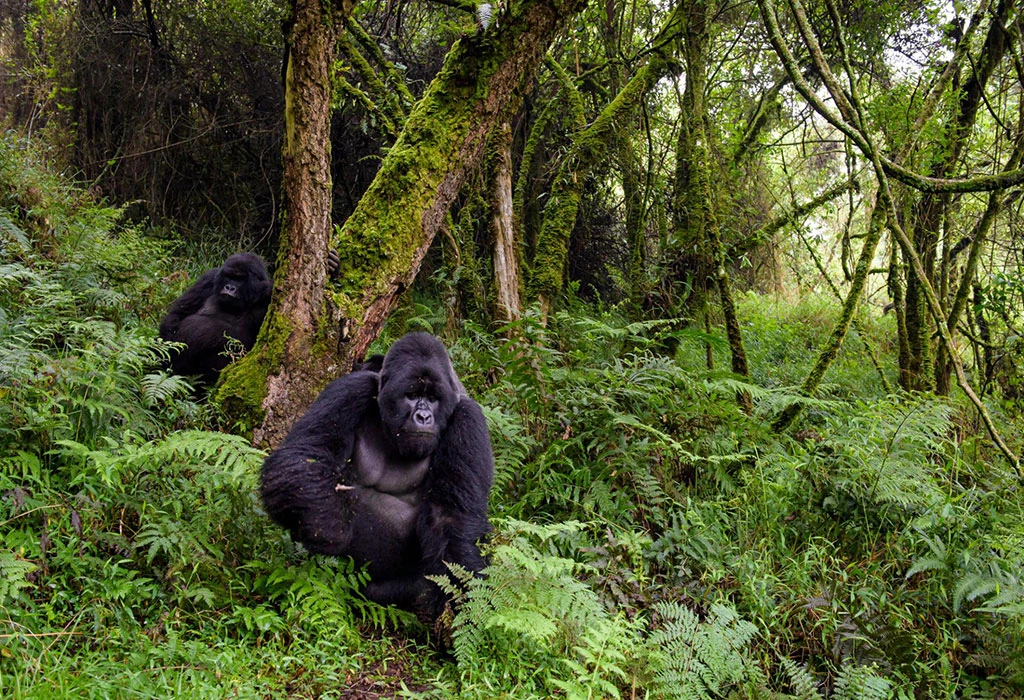
Mgahinga’s single habituated gorilla group is the Nyakagezi family, one of the longest habituated mountain gorilla groups in the entire Virunga region. Some of its members have been observed by rangers and researchers for decades, making this an unusually settled, well documented family. The group’s size fluctuates over time as members mature, disperse, or are born, but it’s typically composed of a handful of individuals led by a dominant silverback, sometimes alongside additional silverbacks within the same troop, a less common family structure that researchers and guides find particularly interesting to observe.
Because the Virunga Massif’s volcanic slopes straddle three national borders with no fencing, the Nyakagezi family’s home range technically extends into Rwandan and Congolese territory as well as Uganda. Rangers track the family’s location daily, and on occasion, not routinely, but real enough to plan around, the group crosses into Rwanda or the DRC and becomes temporarily inaccessible for a Ugandan permit holder.
When this happens, the Uganda Wildlife Authority has a rescheduling policy allowing affected trekkers to shift their permit date rather than lose the payment outright. Booking through Iconic Africa Safaris, a team with current, on the ground knowledge of the family’s recent movements, meaningfully reduces this risk, since they can advise you on timing before you commit to nonrefundable travel dates.
What a trekking day actually looks like
Trekking days begin early, typically with registration and a briefing at park headquarters around 7:00 to 8:00 am. Rangers divide the maximum eight permit holders into a single trekking party, since there’s only one family to visit, and walk trekkers through park rules, safety guidance, and what to expect. From there, armed rangers and trackers, who often have a rough idea of the family’s overnight location from the previous evening’s monitoring, lead the group into the forest.
The hike itself is unpredictable in length by design. It can be as short as an hour if the gorillas are feeding close to the trailhead, or stretch to five or six hours of hiking through bamboo thickets and volcanic slopes if the family has moved further afield overnight. Altitude and terrain make this more physically demanding than a flat forest walk. Expect steep sections, uneven footing, and occasional need to duck or push through dense vegetation. Porters, hired locally at the trailhead for a modest fee, are widely used even by fit trekkers, both to carry packs and to offer a steadying hand on the steeper stretches. Hiring one also puts direct income into the local community.
Once trackers locate the family, non trekking gear is typically left with porters, and the group approaches quietly and in small numbers under ranger guidance. From that point, visitors get exactly one hour in the gorillas’ presence, a rule strictly enforced across all Virunga parks to minimize stress on the animals and reduce disease transmission risk between humans and a species susceptible to many of our illnesses. That hour is spent observing feeding, grooming, and, depending on the day, anything from quiet rest to juveniles play wrestling nearby. Photography is permitted without flash, but many guides encourage visitors to spend at least part of the hour simply watching rather than shooting through a viewfinder.
The return hike retraces roughly the same route, and most groups are back at headquarters by early to mid afternoon, leaving the rest of the day free.
Trekking rules and etiquette
A handful of rules apply consistently across Mgahinga, and indeed all Virunga gorilla trekking.
- Minimum age of 15 for gorilla permits.
- A maintained distance of roughly 7 meters, about 21 feet, from the gorillas wherever possible, for disease transmission safety.
- No visiting while visibly sick. Colds and respiratory infections are a genuine risk to gorilla health, and rangers may turn away symptomatic trekkers.
- No eating, drinking, or smoking near the gorillas, and no flash photography.
- Keep voices low and movements slow and predictable.
- Maximum group size of eight visitors per trek, matching the family’s single permit cap.
Gorilla permit pricing
- Foreign non resident, standard peak season rate: $800 per person.
- Foreign non resident, discounted low season rate (April, May, November): $600 per person.
- Foreign resident, standard rate: $700 per person.
- Foreign resident, discounted low season rate (April, May, November): around $500 per person.
- East African Community citizen: UGX 300,000 per person.
The standard permit covers the one hour gorilla encounter itself, park entry for the day, and the accompanying ranger guide and security escort. Individual foreign travelers can no longer purchase permits directly through UWA counters. Bookings must go through a licensed Ugandan tour operator such as Iconic Africa Safaris, and cash is not accepted at park gates, meaning payment needs to be fully cleared in advance. Given Mgahinga’s tiny eight person daily cap, treat this as the single most time sensitive booking decision in your entire trip.
For travelers wanting more than the standard hour, UWA also offers a Gorilla Habituation Experience in Bwindi’s rushaga sector, which extends observation time to 4 hours and places visitors alongside researchers working to habituate a group to human presence rather than a fully habituated family. This option runs at a substantially higher price point than standard trekking and is worth asking the Iconic Africa Safaris team about if a deeper, research style encounter appeals to you more than the standard hour.
Golden Monkey Trekking: Mgahinga’s Signature Add On
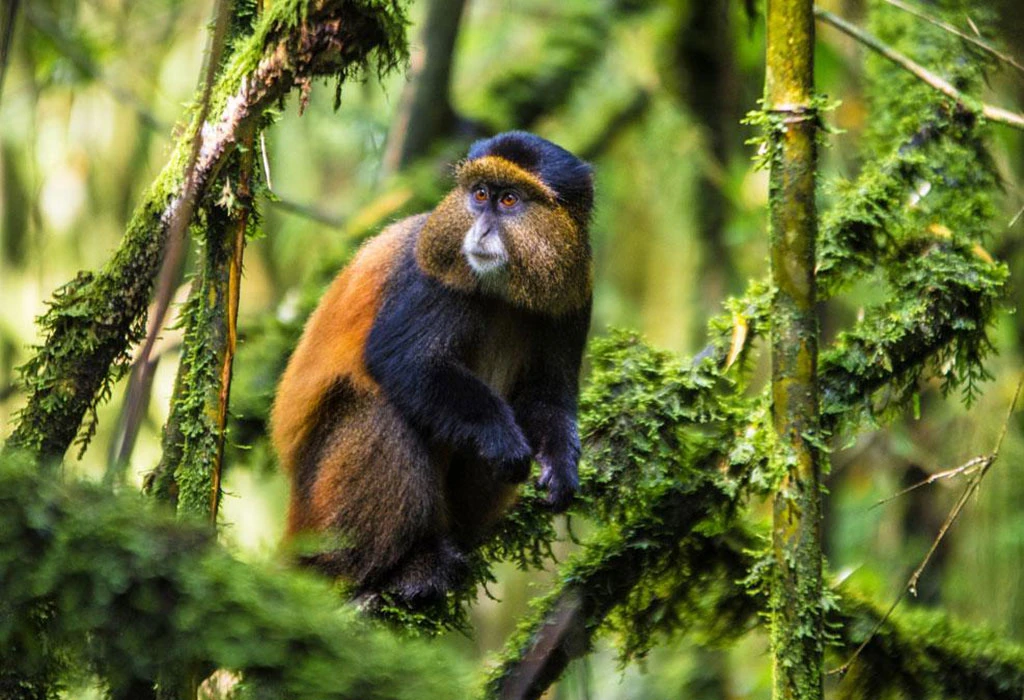
If gorilla trekking is the reason most people first hear of Mgahinga, golden monkey trekking is the reason many end up loving the park most. Golden monkeys are found almost nowhere else on Earth outside the Virunga volcanic chain, and Mgahinga, alongside Rwanda’s Volcanoes National Park, is one of only two realistic places in the world to see them.
Why the golden monkey experience feels different
Where a gorilla encounter is calm, deliberate, and often quiet, golden monkeys deliver the opposite energy. These small, strikingly colored primates, with bright orange gold fur across the back contrasting with black limbs, move in large, boisterous troops that can number well over a hundred individuals in Mgahinga’s habituated groups. Watching them requires less patience and more neck craning. They leap through bamboo canopy at speed and chase one another, rarely sitting still for long, which makes for a far more kinetic wildlife watching experience than the comparatively sedate gorilla hour.
There are two habituated golden monkey troops available for standard trekking in the park, along with a separate troop designated specifically for the longer habituation program described below.
Standard trekking versus the habituation experience
Standard golden monkey trekking involves tracking through bamboo forest, typically two to five hours depending on where the troop is feeding that day, followed by one hour observing the group. Unlike gorilla trekking, there is no daily visitor cap on golden monkey permits, meaning availability is rarely the bottleneck it can be for gorillas.
Golden monkey habituation is a longer, four hour program that places visitors alongside the park’s trackers and researchers working directly with a semi habituated troop. It offers considerably more observation time and a closer look at ongoing conservation and habituation work, at a higher price point than the standard trek, with the same essential rules around distance and hygiene as gorilla trekking.
Golden monkey permit pricing
- Standard trekking, one hour, foreign non resident: $60 per person.
- Standard trekking, one hour, foreign resident: $50 to $60 per person.
- Habituation experience, four hours, foreign non resident: $100 per person.
- Habituation experience, four hours, foreign resident: $80 per person.
Park entrance fees are typically charged separately from the trekking permit, around $40 for non residents and $30 for residents, so confirm exactly what’s bundled when Iconic Africa Safaris quotes your package price. Because golden monkey trekking pairs so naturally with gorilla trekking in terms of both logistics and location, most Mgahinga itineraries schedule them on consecutive mornings rather than the same day, since combining both treks in a single day is physically demanding.
Volcano Hiking: Sabinyo, Gahinga, and Muhabura
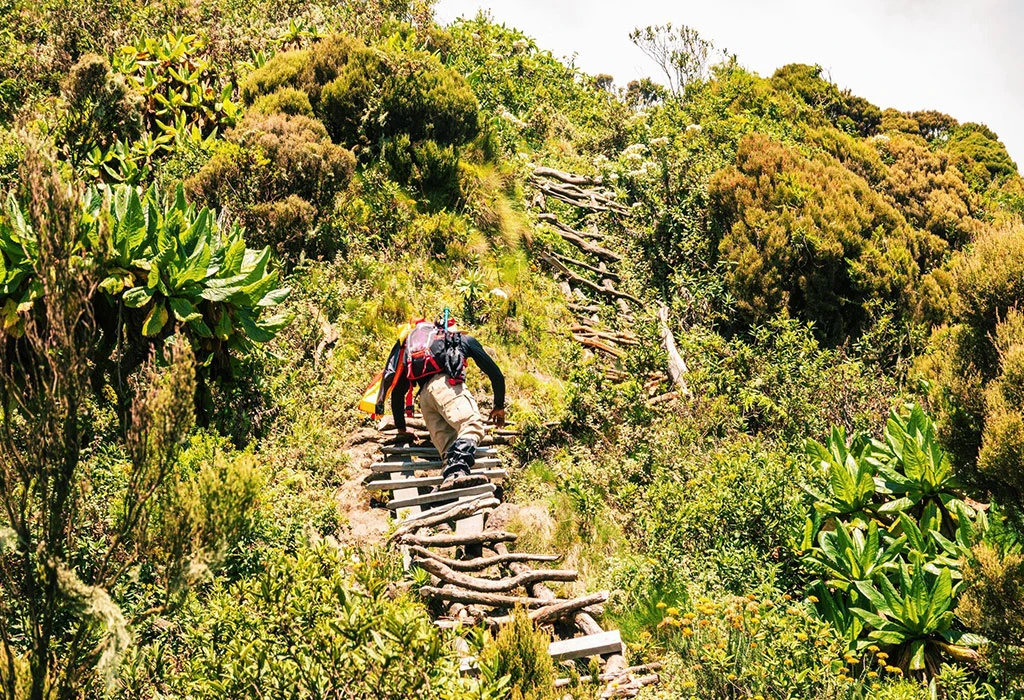
For travelers who want an adventure component beyond primate trekking, Mgahinga’s three volcanoes offer genuinely rewarding day hikes, each with a distinct character and difficulty level. All three require a park guide and typically a full day, starting early from the Ntebeko trailhead near park headquarters.
- Mount Gahinga, at 3,474 meters, is the easiest and shortest of the three, generally taking around five to six hours round trip through bamboo and heather zones to reach the summit’s swampy crater lake fringed with bamboo. It’s a reasonable choice for hikers wanting volcano scenery without an extreme physical test.
- Mount Sabinyo, at roughly 3,645 to 3,669 meters, is widely considered the most demanding of the three, not so much for elevation gain as for its knife edge ridgeline and series of near vertical ladder sections connecting its three jagged peaks. The reward for reaching the third and highest peak is a genuine geographic novelty: standing at the exact tripoint of Uganda, Rwanda, and the DRC, with the ability to be photographed in three countries simultaneously. Travelers who want this climb built directly into their gorilla itinerary can look at the 5 Day Bwindi and Mgahinga Gorillas with Sabinyo Hike package.
- Mount Muhabura, at 4,127 meters, is the tallest and, in pure elevation terms, the toughest, a round trip of roughly ten to twelve hours through changing vegetation zones up to afro alpine moorland near the summit. Clear day views from the top stretch across the full Virunga volcanic chain and into the wider Albertine Rift Valley, making it the most rewarding hike for panoramic photography, weather permitting.
These hikes are booked separately from primate permits and are far less capacity constrained, making them a flexible way to fill an extra day in your itinerary or to add serious physical adventure to an otherwise wildlife focused trip.
The Batwa Trail and Garama Cave
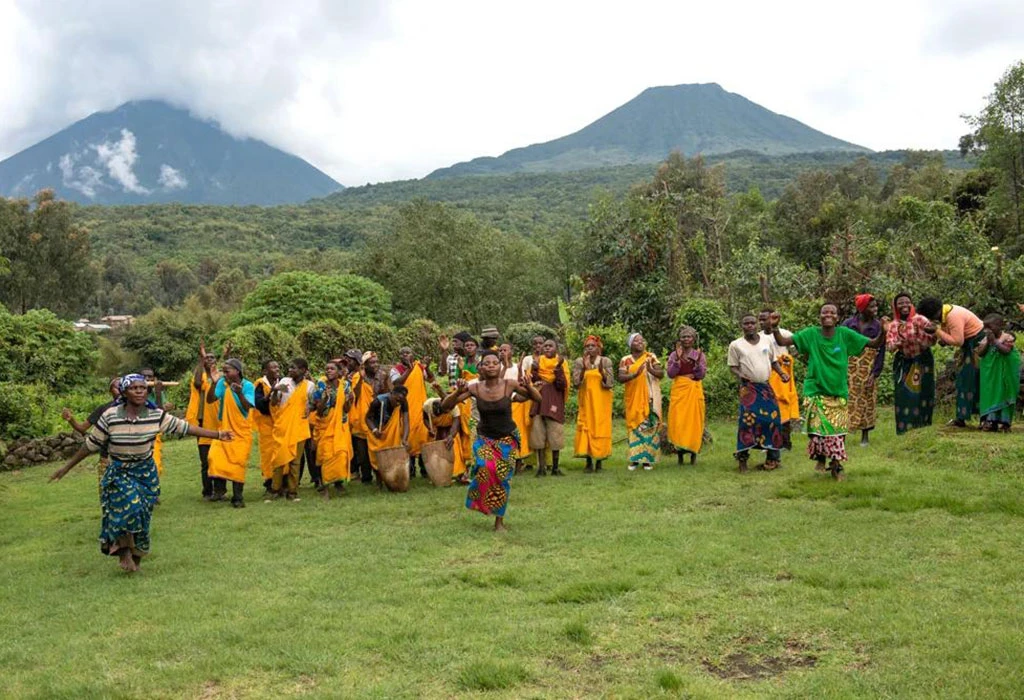
Long before Mgahinga was gazetted as a protected area, its forests were home to the Batwa, an indigenous pygmy community whose hunter gatherer way of life depended entirely on the mountain ecosystem for shelter, food, and traditional medicine. When the park was created in 1991, the Batwa were resettled outside its boundaries, and today many live in communities along the park’s edge.
The Batwa Trail is a guided cultural walk led by Batwa community members themselves, typically covering around three kilometers from the park headquarters area and taking roughly three to four hours. Guides demonstrate traditional skills, fire making, hunting techniques, plant based medicine, and forest survival methods, while explaining how their community lived within, and was ultimately displaced from, this landscape.
The trail’s centerpiece is a descent into Garama Cave, a lava tube roughly 342 meters long that once served as both shelter and defensive stronghold for Batwa communities, historically used during conflicts with neighboring Bantu groups. Visitors descend into the cave for a performance of traditional Batwa music, storytelling, and dance, a genuinely moving, lightly commercialized cultural experience compared to many staged tribal visit offerings elsewhere on the safari circuit. Proceeds from the trail support the resettled Batwa community directly, making it one of the more responsible cultural tourism experiences available in the region.
The Batwa Trail pairs well with a rest day between gorilla and golden monkey treks, since it’s considerably less physically demanding than either primate trek or the volcano hikes.
Where to Stay: Accommodation Near Mgahinga
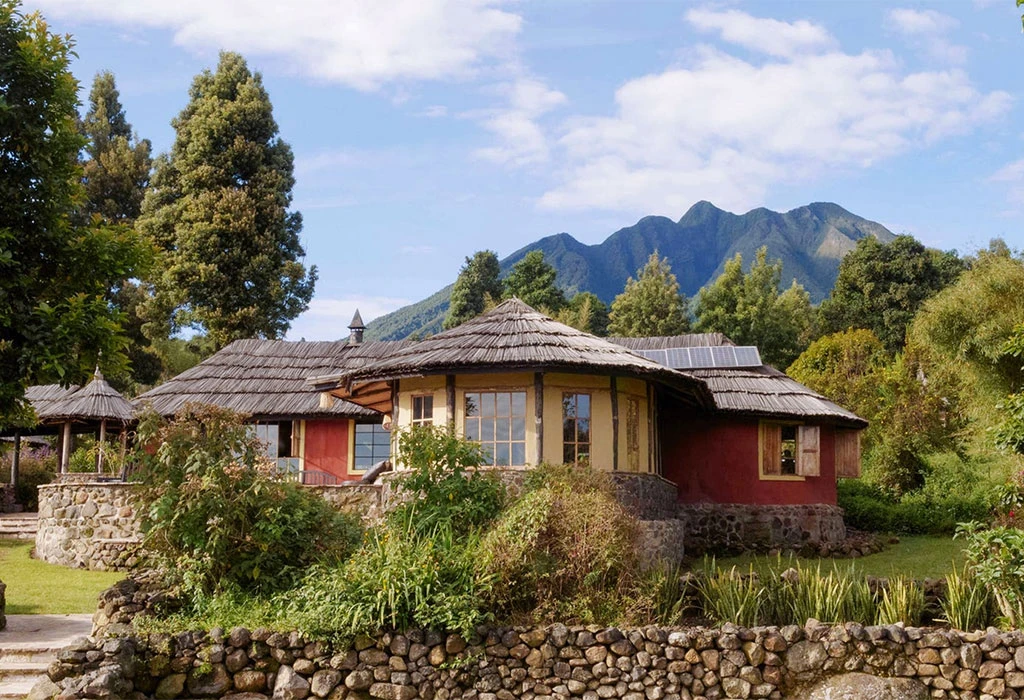
Unlike Bwindi, which has developed a wide spread of lodges across multiple sectors, Mgahinga’s accommodation options are more limited simply because it’s a smaller, less visited park, but there’s enough range to suit different budgets.
- Luxury: Mount Gahinga Lodge is the standout high end option directly bordering the park, offering volcano views, garden bandas, and proximity to the trailhead that eliminates early morning transfer stress on trekking days.
- Mid range: Options directly around Kisoro town include Ichumbi Hotel offering comfortable rooms within reasonable driving distance of park headquarters.
- Budget: Kisoro itself has several straightforward, no frills options, including Ikaze Cottages, Kisoro Travelers Inn, Virunga Hotel, Muhabura Motel, Kisoro Tourists Hotel, and 3 Way Gorilla Resort, along with Mucha Hotel, all workable bases if your priority is minimizing cost rather than maximizing views.
- Camping: For travelers who prefer to camp, sites are available near the park, offering the lowest cost option and a genuinely close to nature stay, weather and gear permitting.
Because Mgahinga’s lodge inventory is smaller than Bwindi’s, it’s worth locking in accommodation at the same time as your permits during peak season. Popular lodges near the trailhead can sell out even when permits are still technically available. Travelers who’d rather base themselves lakeside than in Kisoro town itself can look at the 4 Day Mgahinga Gorillas and Lake Mutanda Safari, which pairs gorilla trekking with a stay on Lake Mutanda, a short drive from the park.
What to Pack for a Mgahinga Safari
Trekking at volcanic altitude in a variable, often wet climate calls for different gear than a standard savanna safari. A practical packing list:
- Sturdy, broken in hiking boots with ankle support and good tread. Volcanic slopes get slick, especially in the wetter months.
- Waterproof layers, a rain jacket at minimum, and ideally waterproof trousers, since weather can shift quickly at altitude regardless of season.
- Warm layers for early mornings. Predawn briefings at park headquarters can be genuinely cold given the elevation, even though daytime temperatures moderate quickly.
- Long trousers and long sleeved shirts tucked into boots and gloves, both for stinging nettles common in the undergrowth and for added protection from insects.
- Gardening style gloves, genuinely useful for pushing through vegetation and gripping vines or branches on steep sections.
- A daypack for water, snacks, and camera gear, kept light since porters can carry the bulk of your load.
- Insect repellent and any prescribed antimalarial medication.
- A hat and sun protection, since equatorial sun at altitude can be intense whenever skies clear.
- A telephoto or zoom lens if you’re serious about photography. Gorilla and golden monkey encounters happen at a mandated distance, and flash photography isn’t permitted.
- Cash in small denominations for tipping guides, trackers, porters, and armed escorts, since tipping is customary and expected across the trekking industry here.
- Your yellow fever certificate and passport, kept accessible rather than buried in checked luggage, since they’re checked at multiple points.
Responsible and Sustainable Trekking at Mgahinga
Because Mgahinga’s entire tourism model exists to fund gorilla conservation, a few responsible travel habits genuinely matter here beyond just being polite.
- Never trek while sick. Mountain gorillas share enough genetic similarity with humans that many human respiratory illnesses can transfer to them, sometimes with serious consequences for a population already critically endangered. Reschedule rather than risk it, and be honest with rangers if you’re symptomatic.
- Hire local porters, even if you’re fit enough not to strictly need one. Porter fees flow directly into surrounding communities and represent one of the more direct, transparent ways tourism revenue reaches local households.
- Respect the one hour rule and distance guidelines without pushing for exceptions. These exist for the animals’ wellbeing, not visitor convenience.
- Book through a licensed operator such as Iconic Africa Safaris, working directly with the Uganda Wildlife Authority, both to ensure permit legitimacy and because reputable operators like Iconic Africa Safaris are more likely to employ fair wage local guides and porters.
- Support the Batwa Trail and community craft initiatives around Kisoro, since displaced Batwa communities have limited alternative income sources compared to communities bordering more heavily visited parks.
Where the Permit Money Actually Goes
The $800 gorilla permit fee often draws sticker shock from first time visitors, so it’s worth understanding what that figure funds, since it isn’t simply an entry ticket. Mountain gorillas were once projected toward extinction. Virunga wide population counts sat at only a few hundred individuals through much of the twentieth century, a decline driven by habitat loss, snaring intended for other animals, disease, and poaching. The species’ recovery into the low thousands across its combined Virunga and Bwindi ranges is widely credited to exactly the kind of high value, strictly limited tourism model Mgahinga uses today, rather than any single conservation program acting alone.
Permit revenue supports various essential functions, including daily ranger patrols for poaching prevention, monitoring of habituated gorilla families to combat illness threats, and revenue-sharing programs with neighboring communities to alleviate the economic impact of wildlife on local farmers while fostering a financial interest in the park’s conservation.
Why Book Through Iconic Africa Safaris
Because individual foreign travelers can no longer purchase Mgahinga permits directly and cash isn’t accepted at the gate, the tour operator you choose isn’t just a convenience. It’s the entity actually securing your permit, and a poor choice can mean a lost trekking day entirely. Iconic Africa Safaris was built around exactly this gap, handling every moving part of a Mgahinga trip so travelers don’t have to navigate UWA booking rules, seasonal permit demand, or cross border logistics on their own. A few things that matter when Iconic Africa Safaris plans your trip:
- Direct UWA relationship. Iconic Africa Safaris purchases permits directly from the Uganda Wildlife Authority rather than reselling through an intermediary, which means faster confirmation and more reliable rebooking if plans change.
- Local knowledge of the Nyakagezi family’s recent movements. Given the cross border ranging behavior described earlier, Iconic Africa Safaris keeps current, on the ground contacts at the park who can flag likely disruption before you commit to nonrefundable flights.
- Realistic scheduling. Iconic Africa Safaris does not schedule gorilla trekking and golden monkey trekking on the same day as standard practice. As covered earlier, this is physically demanding, so itineraries are paced sensibly across consecutive mornings instead.
- Fair treatment of guides and porters. Iconic Africa Safaris sources porters directly from communities bordering the park, rather than bringing in outside staff, so more of your tourism spend reaches the local economy.
- Clear cancellation and rescheduling policy, specifically covering the scenario where the gorilla family is inaccessible on your scheduled date. Iconic Africa Safaris spells this out before you pay a deposit, not after the fact.
Photography and Filming at Mgahinga
Both gorilla and golden monkey encounters reward preparation more than expensive gear. A few practical points beyond the packing list above:
- Lens choice matters more than camera body. The mandated distance from gorillas and the fast, erratic movement of golden monkeys both favor a telephoto zoom, roughly 100 to 400mm equivalent, over a wide angle lens, unless you’re specifically shooting habitat and landscape shots.
- Expect low light in the forest canopy. Even at midday, bamboo and montane forest can be quite dim, so a camera capable of reasonable performance at higher ISO settings, or a fast lens, makes a real difference. Flash isn’t an option here.
- Rain covers are worth carrying even in the dry season, since misty, damp conditions are common at this altitude regardless of month.
- Commercial filming, as opposed to personal photography, requires separate permits arranged in advance through UWA, so anyone planning to shoot for a wider audience, YouTube content, documentary work, or commercial stock footage, should clarify this with Iconic Africa Safaris well before arrival rather than assuming a standard trekking permit covers it.
- Battery life drops faster in cold, damp conditions, so carrying a spare battery or two on volcano hikes and early morning treks is a small precaution that avoids a real disappointment.
Combining Mgahinga With the Rest of the Region
Given its border location, Mgahinga rarely functions as a standalone destination. It’s typically one stop within a broader southwestern Uganda or cross border Virunga itinerary. A few common pairings:
Mgahinga and Bwindi: The most popular combination among serious primate enthusiasts, since it allows trekking two genetically distinct gorilla populations, the Virunga population at Mgahinga and the larger, separate Bwindi population, on a single trip, along with two very different park landscapes, volcanic terrain versus dense, ancient rainforest.
Mgahinga and Rwanda’s Volcanoes National Park: For travelers who’ve already trekked gorillas in Uganda on a previous trip, or who simply want to compare experiences, Volcanoes National Park sits just across the border and offers its own golden monkey and gorilla trekking, with a notably higher gorilla permit price but a shorter, more developed access road from Kigali. Iconic Africa Safaris runs a dedicated Rwanda Safaris collection covering this side of the border, including the 7 Day Rwanda Uganda Double Gorilla Trekking and Game Safari for travelers wanting both countries on one trip.
Mgahinga and Lake Bunyonyi: A natural decompression stop after the physical demands of trekking, Lake Bunyonyi lies roughly on the route between Kisoro and Kabale and offers calm water, canoeing, and island accommodation, a low key way to spend a rest day. This pairing is exactly what the 6 Day Uganda Gorillas and Lake Bunyonyi Safari is built around.
Mgahinga and DRC’s Virunga National Park: For the more adventurous and well prepared traveler, Virunga National Park across the Congolese border adds an additional gorilla trekking option and, seasonally, access to an active lava lake, though this requires careful attention to current regional security conditions and a separate visa process, and isn’t a decision to make without up to date guidance from Iconic Africa Safaris.
Sample Itineraries
3 Day Mgahinga Safari (Gorillas and Golden Monkeys Only)
- Day 1, Arrival and Settle In. Travel to Kisoro via your chosen route (road from Entebbe and Kampala, flight to Kisoro airstrip, or road transfer from Kigali via Cyanika). Check into your lodge, rest, and attend a pre trek briefing with your guide if offered.
- Day 2, Gorilla Trekking Day. Early registration at park headquarters, full trek to the Nyakagezi family, and your one hour encounter. Afternoon free to rest, given the physical demands of the morning.
- Day 3, Golden Monkey Trekking and Departure. A shorter morning trek into the bamboo zone for your golden monkey hour, followed by transfer onward, back toward Kigali, on to Bwindi, or out via Kisoro airstrip.
5 Day Mgahinga and Volcano Adventure
- Day 1, Arrival in Kisoro. Travel in via your preferred route and settle into your lodge.
- Day 2, Gorilla Trekking. Full trekking day with the Nyakagezi family, followed by a restful afternoon.
- Day 3, Golden Monkey Trekking. Morning trek and encounter, with the afternoon free for the Batwa Trail if energy allows, or simply resting ahead of the volcano hike.
- Day 4, Volcano Hike. A full day ascent of either Mount Gahinga (moderate) or Mount Sabinyo (challenging, with its tripoint summit), depending on fitness and appetite for a harder climb.
- Day 5, Batwa Trail and Departure. A gentler morning walking the Batwa Trail and descending into Garama Cave, followed by transfer out toward Kigali, Bwindi, or Kisoro airstrip.
7 Day Virunga Region Loop (Mgahinga and Bwindi)
- Day 1, Arrival in Kigali, transfer to Kisoro via the Cyanika border.
- Day 2, Gorilla trekking at Mgahinga with the Nyakagezi family.
- Day 3, Golden monkey trekking, with an optional afternoon Batwa Trail visit.
- Day 4, Volcano hike or rest day, plus transfer toward Bwindi Impenetrable National Park, roughly a half day drive.
- Day 5, Gorilla trekking at Bwindi, visiting a different habituated family in one of Bwindi’s four sectors, a genuinely different forest environment from Mgahinga’s volcanic slopes.
- Day 6, Optional second Bwindi activity, such as the Bwindi community walk, a forest bird walk, or simply a rest day, followed by an overnight near Lake Bunyonyi en route back toward Kigali or Entebbe.
- Day 7, Departure, either flying out of Kigali or continuing overland to Entebbe depending on your original entry point.
Budget Snapshot: What a Mgahinga Trip Actually Costs
While exact totals depend heavily on lodge choice, group size, and season, a rough per person budget breakdown for the core activities looks like this for a foreign non resident traveler:
- Gorilla trekking permit: $800 in peak season, or $600 during the April, May, and November discount months.
- Golden monkey trekking permit: $60.
- Park entrance fees, where charged separately: $40.
- Porter tip per trek: $15 to $20.
- Volcano hike guide fee: included in your Iconic Africa Safaris quote, varies by hike.
- Batwa Trail fee: included in your Iconic Africa Safaris quote.
- Accommodation per night, budget to luxury: roughly $30 to $400 or more.
On top of these figures, factor in ground transport, any domestic flights, the Iconic Africa Safaris service margin if using a packaged itinerary, and general tipping for guides and drivers throughout the trip. Golden monkey trekking and volcano hikes are comparatively affordable additions once you’ve already committed to the larger gorilla permit cost, which is why most itineraries bundle them together rather than treating gorilla trekking as a standalone activity.
Frequently Asked Questions
Is Mgahinga worth visiting if I’ve already trekked gorillas in Bwindi?
Yes, for two distinct reasons. Mgahinga’s Nyakagezi family belongs to the separate Virunga gorilla population rather than Bwindi’s, so it’s a genuinely different set of individuals and social dynamics, and the volcanic terrain, golden monkeys, and volcano hiking options give the park an entirely different character from Bwindi’s dense rainforest.
What happens if the gorilla family has crossed into Rwanda or the DRC on my trekking day?
Rangers monitor the Nyakagezi family’s location daily specifically to manage this risk. If the group is inaccessible from the Ugandan side on your scheduled date, UWA’s rescheduling policy allows you to shift to another available date rather than losing your permit outright, though this depends on availability, so flexibility in your broader itinerary helps.
Can children trek gorillas or golden monkeys at Mgahinga?
Gorilla trekking has a strict minimum age of 15. Golden monkey trekking policies can vary by season (but usually 12 years age limit) , so confirm current age rules directly with Iconic Africa Safaris when booking if traveling with younger children.
How physically demanding is Mgahinga gorilla trekking compared to Bwindi?
Both are demanding, but for different reasons. Bwindi’s difficulty comes mainly from dense, tangled forest and sometimes very steep sector specific terrain, while Mgahinga’s difficulty comes from volcanic slope gradients and altitude. Neither park’s trek length is predictable in advance, since both depend entirely on where the gorillas happen to be that day.
Do I need separate permits for gorilla trekking and golden monkey trekking?
Yes. These are two entirely separate permits with separate pricing, and they’re typically scheduled on different days given the physical demands of each.
Is it possible to see both gorillas and golden monkeys on the same day?
Physically possible in theory, but rarely advisable or offered as standard, since both activities involve unpredictable trek lengths and significant exertion. Most itineraries schedule them on consecutive days.
Are the April, May, and November discounts available for golden monkey permits too?
No. The discounted pricing structure currently applies specifically to gorilla trekking permits. Golden monkey trekking and habituation fees generally stay consistent year round, regardless of season.
What currency should I bring for tips and incidental costs?
US dollars are widely accepted for permits, tips, and many lodge payments, though carrying some Ugandan shillings is useful for small local purchases. Cash is explicitly not accepted at park entry gates for permit payments, which must be cleared in advance through Iconic Africa Safaris.
Is altitude sickness a concern at Mgahinga?
The park headquarters and trekking trails sit at high elevation, and the volcano summits climb well above 3,400 meters, so mild symptoms like shortness of breath or headache are possible, particularly on the Muhabura hike. Acclimatizing over a day or two before strenuous activity, staying hydrated, and pacing yourself on the volcano hikes all help. Anyone with a history of altitude sensitivity should discuss precautions with a doctor before traveling.
Can I photograph the gorillas and golden monkeys freely?
Standard photography is welcome and encouraged, but flash photography is prohibited across all Virunga trekking activities to avoid startling the animals, and the mandated viewing distance means a longer lens is genuinely useful rather than optional for frame filling shots.
Permit prices, seasonal patterns, and entry requirements reflect current information and are subject to change by the Uganda Wildlife Authority and immigration authorities. Confirm current rates, availability, and entry rules with Iconic Africa Safaris before booking.
Ready to Book Your Mgahinga Safari with Iconic Africa Safaris?
Iconic Africa Safaris offers three simple, reliable ways to secure your next unforgettable Ugandan adventure today. Simply complete our quick online booking form to start planning your dream safari experience right away. Browse the full range of Uganda Safaris or learn more about our team before you decide. Our friendly team also welcomes direct emails at info@iconicafricasafaris.com to discuss your specific travel plans and preferences. For instant assistance, tap the green WhatsApp icon in your screen’s bottom right corner anytime.