
Ultimate Murchison Falls Safari: Big Five, Nile Cruise and Game Drives
A Murchison Falls safari is, for many travelers, the single trip that defines a Uganda holiday. It is the country’s largest protected area and its most complete safari experience, the only park where you can chase Big Five sightings on a game drive in the morning and cruise the Victoria Nile toward Africa’s most powerful waterfall by afternoon. Add chimpanzee trekking in Budongo Forest and a nearby rhino tracking stop, and it becomes clear why so many Uganda itineraries are built around this park rather than simply including it.
This guide is written to be the only page you need before booking a trip here. It covers what wildlife to expect, how the Big Five actually works in this park, the two very different Nile cruise options, the best game drive routes and timing, when to travel, where to stay across every budget, what everything costs, and a full sample itinerary you can adapt or book directly with our team. Along the way you will find three scattered insider tips drawn from guides and repeat travelers, the kind of detail that rarely makes it into a standard brochure.
Whether this is your first Murchison Falls safari or you are returning for a longer, more specialized visit, the goal here is the same: give you enough real, specific information to plan with confidence rather than guesswork.
Why Murchison Falls Is Uganda’s Signature Safari
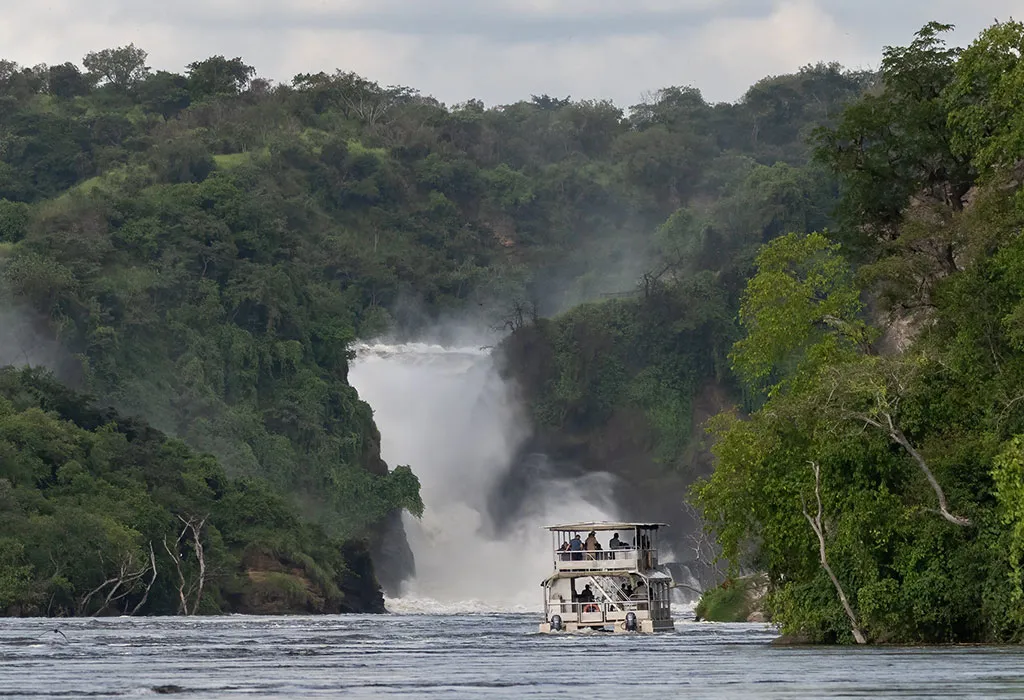
Covering roughly 3,840 square kilometers of savannah, woodland, and wetland in northwestern Uganda, Murchison Falls National Park is split into two halves by the Victoria Nile. The river builds through 80 kilometers of rapids before being squeezed through a gap in the rift valley escarpment barely a few meters wide, the Murchison Falls themselves, then drops into the calmer Albert Nile channel that feeds Lake Albert.
That geography is what makes a Murchison Falls safari feel different from a standard East African game drive package. The northern bank holds the classic savannah game viewing circuit, with open plains that give long sightlines for spotting predators and herds. The southern bank has denser woodland, Budongo Forest’s chimpanzee population, and quieter river edge scenery. And the Nile itself acts as a wildlife corridor in its own right, drawing hippos, crocodiles, elephants, and buffalo to its banks throughout the year.
Because the park was gazetted as a game reserve as early as 1926 and formally established as a national park in 1952, it also carries a long safari history. Ernest Hemingway’s small plane famously crashed near the base of the Falls in 1954, and the launch cruise up the Nile has been running as an organized tourist activity since the 1950s. That heritage matters less for wildlife spotting than for atmosphere, but it is part of why a visit to this park still feels like a genuine expedition rather than a packaged excursion.
Most travelers structure their time here around three pillars: game drives on the northern plains, a boat cruise on the Nile, and either chimpanzee trekking or a second cruise depending on how many days they have. We will walk through each of these in detail, along with the practical planning information that turns a wish list into a bookable Murchison Falls safari.
The Big Five at Murchison Falls: What to Actually Expect
Murchison Falls is one of the few parks in Uganda where all Big Five species are technically present within a single trip, but it is worth being upfront about how each one shows up so your expectations for a Murchison Falls safari are realistic rather than shaped by marketing copy.
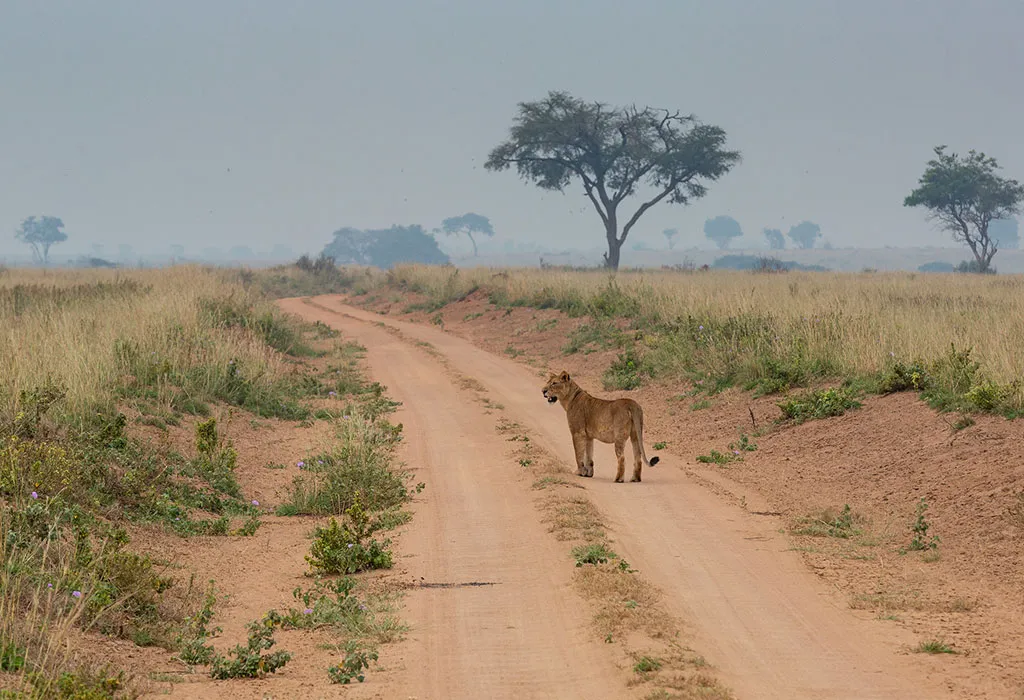
- Lion. Present on the northern game drive circuit, particularly around the Buligi area and the delta plains, though sightings take a bit more patience here than in Queen Elizabeth National Park or the Serengeti. Early morning drives noticeably improve your odds, since lions are most active before the heat sets in.
- African elephant. Reliable, especially along the river and across the northern plains, often in herds of twenty or more during the dry months when animals concentrate near permanent water sources.
- Cape buffalo. Abundant across the northern sector, frequently seen in large herds grazing close to the main tracks, sometimes mixed in with kob and hartebeest.
- Leopard. The shyest of the five and the one species that separates a good game drive from a great one. Night drives and early starts significantly improve your chances, since leopards are largely nocturnal and tend to rest in thick cover during daylight.
- Rhino. Here is the detail many first time visitors miss. Rhinos, both black and white, were wiped out inside Murchison Falls itself during the conflict years of the 1970s and 1980s and have not yet been reintroduced to the park. To genuinely complete the Big Five on a Murchison Falls safari, operators pair the park with Ziwa Rhino Sanctuary, roughly two to three hours south on the road up from Kampala, where you can track southern white rhino on foot with an armed ranger.
Because of that rhino gap, every itinerary we build for a Big Five focused Murchison Falls safari includes a Ziwa stop on the way in or out of the park. It is a small addition in terms of driving time but a significant one in terms of what your trip can honestly claim to deliver.
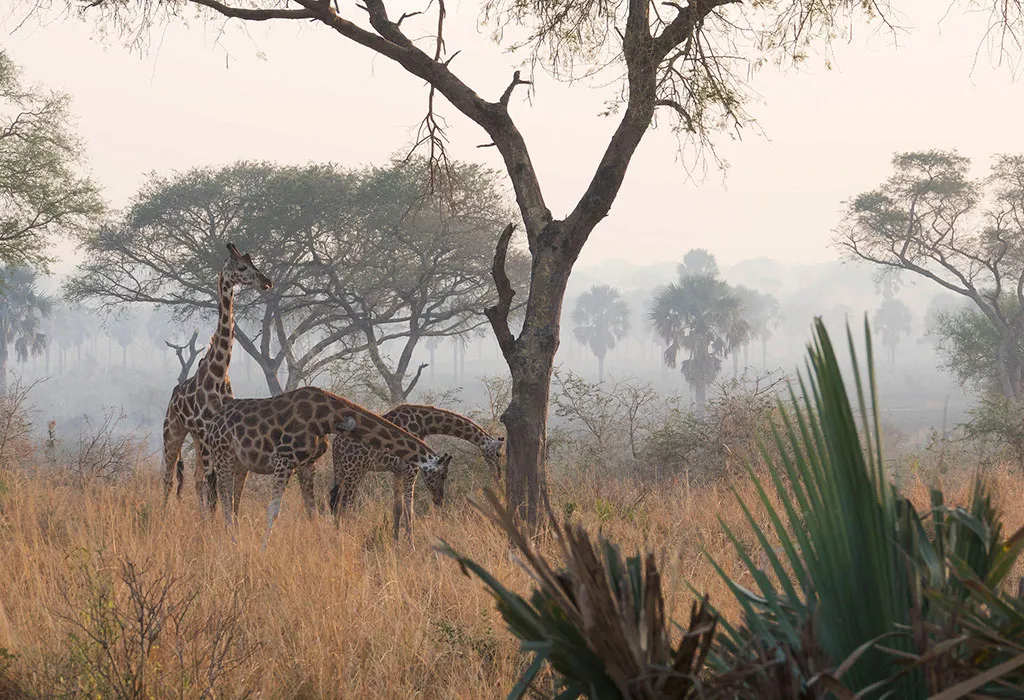
Beyond the Big Five, a visit here regularly turns up Rothschild’s giraffe, Uganda kob, Jackson’s hartebeest, waterbuck, and oribi across the open plains, along with over 450 recorded bird species. The shoebill stork, a strange and prehistoric looking bird found in the delta wetlands, is one of the park’s signature sightings for serious birders and a genuine highlight even for travelers who do not usually pay attention to birdlife.
Insider Tip: Ask your guide to prioritize the tracks closest to the river at first light rather than heading straight into the open plains. Predators and elephants often move toward water in the early morning before dispersing across the savannah later in the day, so a river adjacent route in the first hour of your drive tends to outperform the more obvious central circuit.
Game Drives: Routes, Timing, and What You’ll See
Game drives are the backbone of any Murchison Falls safari, and they run primarily on the northern bank, where the open savannah gives the highest animal density and the clearest visibility.
Buligi Peninsula Circuit
This is the park’s premier game drive area, sitting between the Victoria Nile and Lake Albert. It is consistently the strongest route for lion, elephant, buffalo, and giraffe sightings, especially at dawn when animals are still moving between feeding areas. Most first time itineraries spend at least one full morning here.
Delta Track
Running along the river toward the confluence with Lake Albert, the Delta Track is strong for both game viewing and birding. It is often combined with a Nile Delta boat cruise, since the road and water routes cover overlapping territory from different vantage points.
Albert Track and Queen’s Track
These quieter routes sit further from the main circuit and are a good option if you want fewer vehicles around you and are willing to trade a bit of animal density for solitude and a more remote feel. They also tend to reward patient, slower driving over the faster loop style approach used on Buligi.
A few practical notes on timing that apply to almost every Murchison Falls safari itinerary:
Morning drives, typically departing around 6:30 to 7:00 am, catch predators before the heat pushes them into cover and give the best light for photography. Afternoon and evening drives work well paired with a later boat cruise or as a second drive during a multi day stay. Night game drives are permitted inside Murchison Falls with a park ranger and a spotlight, and they are genuinely one of the better leopard and hyena opportunities anywhere in Uganda, worth adding if your schedule allows for an extra evening activity.
It is also worth budgeting for game drive fees as a separate line item. Under the current Uganda Wildlife Authority tariff structure, game drive activity fees are charged on top of park entry for both self drive and ranger guided vehicles, so this should be factored into your overall budget rather than assumed to be included in the entry ticket.
How Many Game Drives Do You Need
A single morning drive can deliver a satisfying overview, but most guides and repeat travelers recommend at least two separate drives, ideally one morning and one late afternoon or evening, to meaningfully improve your odds on predators and to see how the light and animal behavior shift across the day. If leopard sightings matter to you specifically, building a dedicated night drive into your Murchison Falls safari is worth the extra cost.
Guided Versus Self Drive
Travelers arriving with their own four wheel drive vehicle can navigate the main circuits independently, since the tracks are well maintained and clearly signed during the dry season. That said, most visitors get considerably more out of a guided drive, simply because trained guides know where animals have been moving in the days before your visit and can read tracks and alarm calls that an untrained eye will miss entirely. For a first Murchison Falls safari, we generally recommend a guided vehicle, and reserve self drive for travelers who already know the park or who specifically want the freedom to linger at sightings without a schedule.
Chimpanzee Trekking in Budongo Forest
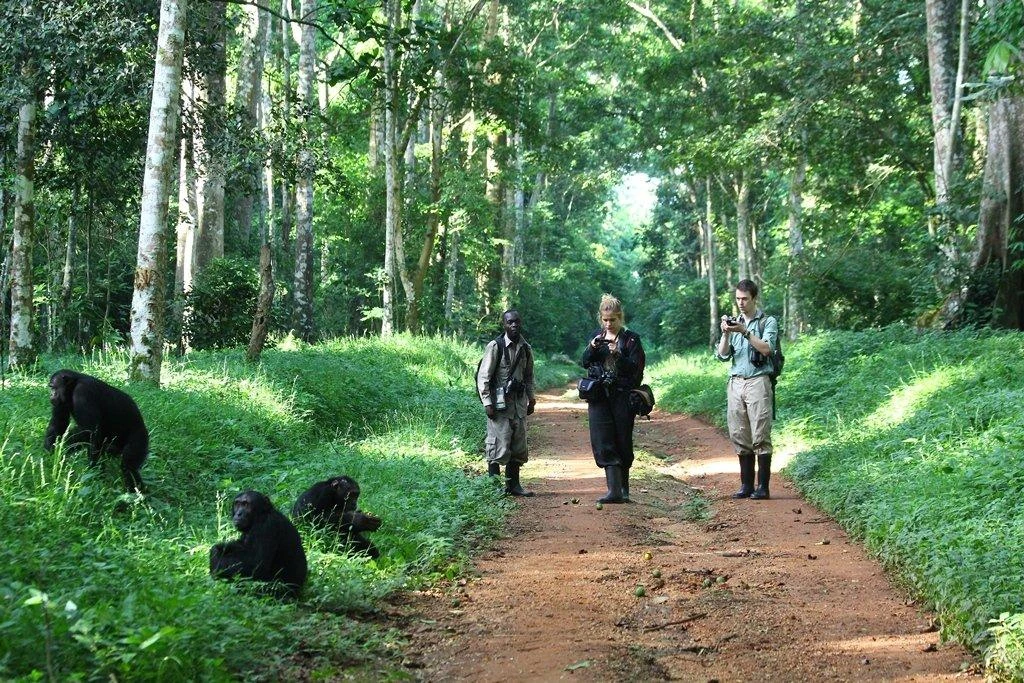
While the savannah circuit gets most of the attention, chimpanzee trekking in Budongo Forest on the southern side of the park is one of the most rewarding additions to a Murchison Falls safari, particularly for travelers who already know they want to see gorillas or chimps elsewhere in Uganda and would rather add a shorter, less expensive primate experience here instead.
Budongo is one of the largest natural forests in East Africa and home to a habituated chimpanzee community that researchers have followed for decades. Treks typically begin early in the morning with a briefing at the forest headquarters, followed by a walk that can last anywhere from one to three hours depending on where the chimps are feeding that day. Sightings are not guaranteed, but success rates are generally high during the dry season when the forest floor is easier to move through quietly.
Beyond chimps, Budongo is excellent for forest birding and butterflies, and the walk itself, through tall mahogany and ironwood trees, is a striking contrast to the open plains most visitors associate with a Murchison Falls safari. Because the forest sits on the southern approach to the park, it pairs naturally with a night at one of the south bank lodges and a Falls area cruise the following day.
The Nile Cruise: Your Two Main Options
The boat cruise is, for most visitors, the single highlight of a Murchison Falls safari, and there are two genuinely different experiences to choose between. Understanding the difference before you book will save you from picking the wrong one for your priorities.
1. The Bottom of the Falls Launch Trip
This is the classic Murchison cruise. Departing from Paraa jetty, with morning and afternoon sessions typically running around 9:00 am and 2:00 pm, the boat heads upstream against increasingly turbulent water toward the base of the Falls. Along the way you will pass dense pods of hippo, basking crocodiles, elephants drinking at the water’s edge, and dramatic views of the gorge as the Nile is compressed into its narrow rock channel.
Many travelers combine this cruise with the hike to the top of the Falls afterward, reachable either by trail from the boat drop off point or by vehicle to the top viewpoint. Standing at the edge of that channel with the entire Nile roaring past a few meters away is genuinely one of the best vantage points in East African safari travel, and it is the image most people picture when they think of a Murchison Falls safari.
Cruise length runs roughly two to three hours. Cost typically falls in the range of 30 to 35 US dollars per person, excluding park entry, though this varies slightly by operator.
2. The Nile Delta and Lake Albert Cruise
This trip heads downstream instead, toward where the Victoria Nile widens into the delta and empties into Lake Albert. It is the better choice for birders, since this stretch is one of the most reliable places in Uganda to spot the shoebill stork, and it moves through quieter, more remote feeling channels lined with papyrus. A sundowner version of this cruise, timed for late afternoon light, is worth requesting if your schedule allows, since the golden hour light on the delta water is a photographer’s favorite moment on any trip through this park.
Cruise length runs roughly four to five hours round trip. Cost typically falls in the range of 40 to 56 US dollars per person depending on operator, since Uganda Wildlife Authority boats, Paraa Safari Lodge, and Wild Frontiers all run slightly different pricing and departure points from different sides of the river. Private charter options also exist for groups wanting more flexibility or a fully customized route.
Insider Tip: If you can only fit one cruise into your schedule, take the bottom of the Falls trip and pair it with the hike to the top viewpoint rather than doing them on separate days. Doing both back to back means you experience the Falls from water level and from above within the same few hours, which is a far more dramatic contrast than spacing the two visits apart.
Choosing Between the Two Cruises
If you only have time for one boat trip, take the bottom of the Falls cruise and pair it with the hike to the top viewpoint. It delivers the single most iconic image associated with a Murchison Falls safari. If you have two full days available, do both cruises, since they show you almost entirely different sides of the river and the wildlife along each stretch differs noticeably. Birders in particular should not skip the delta cruise, since the shoebill stork sightings there are difficult to replicate anywhere else on a standard itinerary.
Best Time to Visit for a Murchison Falls Safari
Murchison Falls is a year round destination, but two dry windows give the strongest overall experience.
December through February is the short dry season, offering good game viewing, drier trails, and comfortable boat cruise conditions without the heaviest crowds of the year. June through September is the longer and generally more reliable dry season, the peak visitor period, with the best road conditions and the strongest game drive visibility as vegetation thins out across the plains.
March through May and October through November are the wetter shoulder seasons. Fewer crowds and lush, green scenery make this an appealing time for photographers, but game drive tracks can get muddy and some of the more remote routes become harder going after heavy rain. Birding is excellent during this period, particularly for migrant species present from November through April, which makes the shoulder season genuinely attractive for a birding focused visit even if it is not the classic choice for Big Five game drives.
If your priority is dry, dusty plains and maximum predator visibility, aim for the dry months. If birding, lower rates, and quieter lodges matter more to you than perfect road conditions, the shoulder seasons are absolutely worth considering rather than avoiding by default.
For travelers planning around temperature and daily rhythm rather than rainfall alone, expect warm days year round in the low to mid thirties Celsius, cooler mornings ideal for game drives, and afternoon showers that arrive quickly and pass just as fast during the wetter months. A Murchison Falls safari rarely gets rained out entirely, since most storms are short and localized rather than lasting all day.
Where to Stay: Murchison Falls Safari Lodges by Budget
Accommodation sits on both the north and south banks of the river, roughly split across three areas: the Albert Nile and northern plains near Paraa and the Victoria Nile, and the Budongo Forest and Masindi road corridor to the south. The north bank generally sits closer to the main game drive circuit, while the south bank is closer to chimpanzee trekking in Budongo Forest.
Below are fifteen well regarded options across three budget tiers, five in each category, to help you match a lodge to your trip style and spending plan.
Budget Lodges ($40 to $80 per night)
- Red Chilli Rest Camp. Set on the southern bank of the Nile close to the Paraa jetty, this is one of the most popular budget bases for travelers, offering bandas, safari tents, and camping with shared facilities.
- Heritage Safari Lodge. A budget friendly option roughly three kilometers from Tangi Gate in the northern part of the park, popular with self drive travelers looking for simple, comfortable rooms without lodge level pricing.
- Geo Lodges Shoebill Camp. Located close to the park entrance in the southern section, overlooking the Nile, this camp offers affordable accommodation and a self catering option for travelers arranging their own meals.
- Kaniyo Pabidi Camp. Positioned inside the Budongo Forest area, this simple camp is a favorite for travelers combining chimpanzee trekking with a broader visit on a tighter budget.
- Parkside Safari Lodge. A modest, no frills lodge on the southern approach to the park, well suited to travelers who want a bed close to the action without paying for extras they will not use.
Mid Range Lodges ($90 to $250 per night)
- Murchison River Lodge. Set directly on the southern bank of the Nile overlooking the park, this lodge features thatched cottages and safari tents, a swimming pool, and private verandas with river views, offering excellent value for a Murchison Falls safari that still wants a touch of comfort.
- Pakuba Safari Lodge. Widely regarded as the best mid range option in the park, this three star lodge sits on the eastern bank of the Albert Nile near Tangi Gate. It occupies the site of a former state lodge and blends modern comfort with an interesting bit of history.
- Fort Murchison Lodge. Perched on a hill with panoramic Nile views, this lodge offers comfortable rooms and tented suites, along with a swimming pool, restaurant, and bar for travelers who want a relaxed base between activities.
- Sambiya River Lodge. Located about twenty minutes from the top of the Falls in the southern section of the park, this mid range property is a convenient choice for travelers prioritizing easy access to the Falls viewpoint.
- Bwana Tembo Safari Lodge. A comfortable mid range camp offering tented accommodation with a good balance of price and proximity to the northern game drive circuit, popular with travelers building a multi day Murchison Falls safari itinerary.
Luxury Lodges ($400 and above per night)
- Baker’s Lodge. Positioned along the banks of the Nile, this lodge offers thatched roof cottages, stunning river views, and direct access to boat cruises and sunset safaris, making it one of the most requested luxury bases in the park.
- Chobe Safari Lodge. Set at the confluence of the Victoria Nile and Albert Nile, surrounded by the woodland of Karuma Wildlife Reserve, this top tier property is a popular choice for honeymoons and special occasion trips.
- Nile Safari Lodge. Situated on the southern banks of the Nile surrounded by papyrus, this lodge combines wooden chalets and luxury tents with an intimate, secluded atmosphere ideal for travelers wanting privacy alongside their game viewing.
- Paraa Safari Lodge. One of the oldest and most iconic properties in the park, rebuilt in 1997 from the shell of the original 1959 lodge, offering up to fifty four en suite rooms with private balconies overlooking the Victoria Nile.
We can match you to a specific property based on budget, bank preference, group size, and whether chimpanzee trekking is part of your itinerary. Just mention your priorities when you enquire and we will shortlist accordingly.
How to Get to Murchison Falls
- By road. Approximately five to six hours from Kampala, covering around three hundred to three hundred and thirty kilometers, typically routed via Masindi or via Ziwa Rhino Sanctuary if you are combining a Big Five rhino stop en route. This is the most common way travelers begin the trip and it allows for scenic and cultural stops along the way.
- By air. Scheduled light aircraft flights connect Entebbe and Kajjansi airstrips to Pakuba or Bugungu airstrips inside the park area, cutting travel time to under an hour. This is a strong option if you are short on days or connecting this park with other destinations such as Kidepo Valley or Queen Elizabeth National Park in the same trip.
Most travelers on a first Murchison Falls safari choose the road option for the scenery and the Ziwa stop, while those combining multiple parks or working with limited vacation days often prefer to fly in and drive out, or vice versa.
What It Costs: Budgeting Your Murchison Falls Safari
Costs vary by residency status, season, and operator, but the table below gives a realistic planning baseline for a foreign, non resident traveler.
| Item | Approximate Cost |
|---|---|
| Park entry, per person, per 24 hours | 40 to 45 US dollars |
| Game drive fee | Charged separately, per vehicle or per person |
| Bottom of the Falls boat cruise | 30 to 35 US dollars per person |
| Nile Delta cruise | 40 to 56 US dollars per person |
| Chimpanzee trekking in Budongo Forest | Priced separately from park entry |
| Wilderness camping | Around 40 US dollars per person, per night |
| Public campsite | Around 40,000 Ugandan shillings per person, per night |
Rates are set by the Uganda Wildlife Authority and reviewed periodically, so treat these as planning estimates rather than fixed quotes. We confirm exact current rates at the time of booking, since a trip quoted six months in advance may differ slightly from the rates in effect on your travel dates.
As a rough all in figure, most travelers spend somewhere between 100 and 200 US dollars per day on park fees and activities alone, before accounting for accommodation, transport, and meals. A full Murchison Falls safari package that bundles lodging, a vehicle, a guide, park fees, and both a game drive and a cruise typically represents better value than booking each piece separately, particularly for travelers unfamiliar with the local logistics.
Conservation and Community Impact
Every park entry fee and activity payment on a Murchison Falls safari feeds directly into conservation work carried out by the Uganda Wildlife Authority, including ranger salaries, anti poaching patrols, and habitat management across the wider conservation area. The park has faced real pressure over the decades, from wildlife losses during periods of conflict to more recent concerns around oil exploration within the park boundaries, and continued tourism revenue is one of the clearest incentives for maintaining the park as a protected wilderness rather than opening it to other uses.
Many lodges also run community programs in partnership with villages bordering the park, ranging from employment and guide training to school and health initiatives funded partly through guest contributions. Choosing operators and lodges that are transparent about where their fees go is a small but meaningful way to make sure your visit supports both the wildlife and the people living alongside it.
Photography Tips for a Murchison Falls Safari
Bring a zoom lens if you have one, ideally something in the 100 to 400 millimeter range, since much of the best wildlife photography happens at a respectful distance from vehicles and boats. Early morning and late afternoon light is dramatically better than the flat, harsh light of midday, which is another reason guides push for dawn departures rather than a leisurely late start.
On the boat cruise, keep your camera accessible rather than packed away, since hippo and crocodile sightings often happen suddenly and close to the boat. A polarizing filter helps cut glare off the water on the Nile cruise and makes for noticeably better images of the Falls themselves. Finally, pack extra memory and a spare battery, since charging opportunities can be limited at more remote budget camps, and a full day of game drives and cruising tends to use more storage than travelers expect.
What to Pack
Neutral colored clothing works best for game drives, since bright colors and stark white can spook wildlife at close range. Bring a hat and strong sun protection, insect repellent for both dawn and dusk activities, a pair of binoculars if you have them, and a light rain jacket if you are traveling during the shoulder seasons. Comfortable closed shoes are essential for the hike to the top of the Falls, since the rock surface near the viewpoint can be uneven and occasionally slippery from spray.
A basic first aid kit, any personal medication, and a printed or downloaded copy of your park permits and lodge confirmations round out a sensible packing list for a multi day Murchison Falls safari, particularly if parts of your trip involve limited connectivity.
Health and Travel Preparations
A yellow fever vaccination certificate is required for entry into Uganda, and travelers should also speak with a doctor about malaria prevention well before departure, since the park sits in a malaria zone and mosquito bites are more likely around dawn and dusk, exactly when the best game drives and boat cruises happen. Bottled or treated water is recommended throughout the trip, and most lodges provide this as standard.
Mobile network coverage exists in parts of the park but can be patchy, particularly around the more remote budget camps and along the quieter game drive tracks. It is worth downloading offline maps, confirming lodge and cruise bookings in writing before you travel, and letting someone at home know your rough schedule, simply as good practice for any wilderness trip rather than a specific concern unique to this park. Travel insurance covering medical evacuation is strongly recommended, as it is for most safari destinations in East Africa, given the distances between the park and major hospitals.
Sample Itineraries for a Murchison Falls Safari
Below are two versions of an itinerary, a compact three day option and a fuller four day version that adds chimpanzee trekking and a second cruise.
Three Day Murchison Falls Safari
- Day 1. Depart Kampala early, stop at Ziwa Rhino Sanctuary for a guided rhino tracking walk of roughly one to two hours on foot, then continue to the park and check into your lodge by evening.
- Day 2. Early morning game drive on the Buligi circuit for lion, elephant, buffalo, and giraffe, followed by an afternoon boat cruise to the base of the Falls, with an optional hike to the top viewpoint for sunset light over the gorge.
- Day 3. One final early game drive for any missed sightings, then the return road journey, or flight, back to Kampala.
- This compact version still covers all five Big Five species when combined with Ziwa, along with the signature Falls cruise, making it a solid entry level Murchison Falls safari for travelers with limited time.
Four Day Murchison Falls Safari
- Day 1. Kampala to Murchison Falls, with a Ziwa Rhino Sanctuary stop en route, arriving in the park by evening.
- Day 2. Morning game drive on the Buligi circuit followed by the bottom of the Falls boat cruise and top viewpoint hike in the afternoon.
- Day 3. Choose between a morning chimpanzee trek in Budongo Forest on the south bank or a Nile Delta cruise for birding and shoebill stork sightings, with the afternoon left free or used for a second, quieter game drive.
- Day 4. A final early game drive before the road or flight back to Kampala.
Insider Tip: If you have a choice between adding a fourth day for chimp trekking or adding it for a second game drive, choose the chimp trek. Budongo Forest is a genuinely different ecosystem from the savannah circuit, and most travelers rate the forest walk as a highlight of their trip precisely because it offers such a contrast to the open plains game viewing earlier in the itinerary.
Extending Your Trip
This four day structure can be compressed to three days by dropping one activity, or extended to combine with Kidepo Valley or Queen Elizabeth National Park for a longer northern Uganda circuit. Travelers with a week or more available often pair a Murchison Falls safari with a short flight south to Bwindi Impenetrable Forest for gorilla trekking, turning a single park visit into a full national parks tour of Uganda.
Frequently Asked Questions About a Murchison Falls Safari
Is Murchison Falls a true Big Five destination? Yes, with one caveat. Rhinos are not present inside the park itself. Pairing your trip with a stop at Ziwa Rhino Sanctuary completes the Big Five on the way in or out.
How many days do you need for a Murchison Falls safari? Three days is a solid minimum to cover a game drive, a boat cruise, and travel time. Four days lets you add chimpanzee trekking or a second cruise without rushing, and is the version most repeat travelers recommend.
Is Murchison Falls safe to visit? Yes. It is one of Uganda’s most visited and well managed parks, with Uganda Wildlife Authority rangers, clearly marked circuits, and established lodge infrastructure across every budget tier.
Can you combine Murchison Falls with gorilla trekking? Yes, though it requires additional days since Bwindi and Mgahinga sit in southwestern Uganda, roughly eight to ten hours from Murchison by road, or a much shorter internal flight. Many travelers combine the two by flying between parks rather than driving the full distance.
What should I pack for a Murchison Falls safari? Neutral colored clothing for game drives, a hat and sun protection, insect repellent, binoculars, a light rain jacket for shoulder season travel, and comfortable closed shoes for the hike to the top of the Falls.
Do I need a visa to visit Uganda for a Murchison Falls safari? Most non resident travelers need a visa, available online in advance or on arrival at major entry points. An East African visa also allows movement between Uganda, Kenya, and Rwanda if your trip spans multiple countries.
Ready to Plan Your Murchison Falls Safari
Every itinerary above can be tailored to your dates, budget, and travel style, from the exact lodge and bank to whether you prioritize the Big Five, birding, or the Nile cruise experience. A well planned Murchison Falls safari brings together game drives, a boat cruise, the right lodge for your budget, and enough time to actually enjoy each activity rather than rushing between them.
Get in touch with our team to build your custom Murchison Falls safari and lock in your dates.
Iconic Africa Safaris offers three simple, reliable ways to secure your next unforgettable Ugandan adventure today. Simply complete our quick online booking form to start planning your dream safari experience right away. Our friendly team also welcomes direct emails at info@iconicafricasafaris.com to discuss your specific travel plans and preferences. For instant assistance, tap the green WhatsApp icon in your screen’s bottom right corner anytime.