
Gorilla Trekking Permits in Uganda: 2026-2027 Price Guide
Few wildlife experiences compare to standing a few metres from a wild mountain gorilla family. But before you can do that, you need to understand how gorilla trekking permits in Uganda actually work. This guide, put together by the team at Iconic Africa Safaris, breaks down the current 2026 prices, the booking process, the rules Uganda Wildlife Authority enforces, and the best season to trek, so you can plan with confidence instead of guesswork.
Uganda remains the most affordable of the three gorilla trekking countries, and it also offers the largest number of habituated gorilla families. However, gorilla trekking permits in Uganda are limited, non-transferable, and tied to a specific date and sector, which means planning ahead really does matter. Availability shifts throughout the year, pricing changed meaningfully in 2026, and the rules around cancellations and rescheduling are stricter than many first-time trekkers expect. Below, we walk through everything you need before booking, from cost breakdowns and sector comparisons to health preparation and the trek itself, so nothing catches you by surprise once you’re standing at the trailhead.
What Is a Gorilla Trekking Permit?
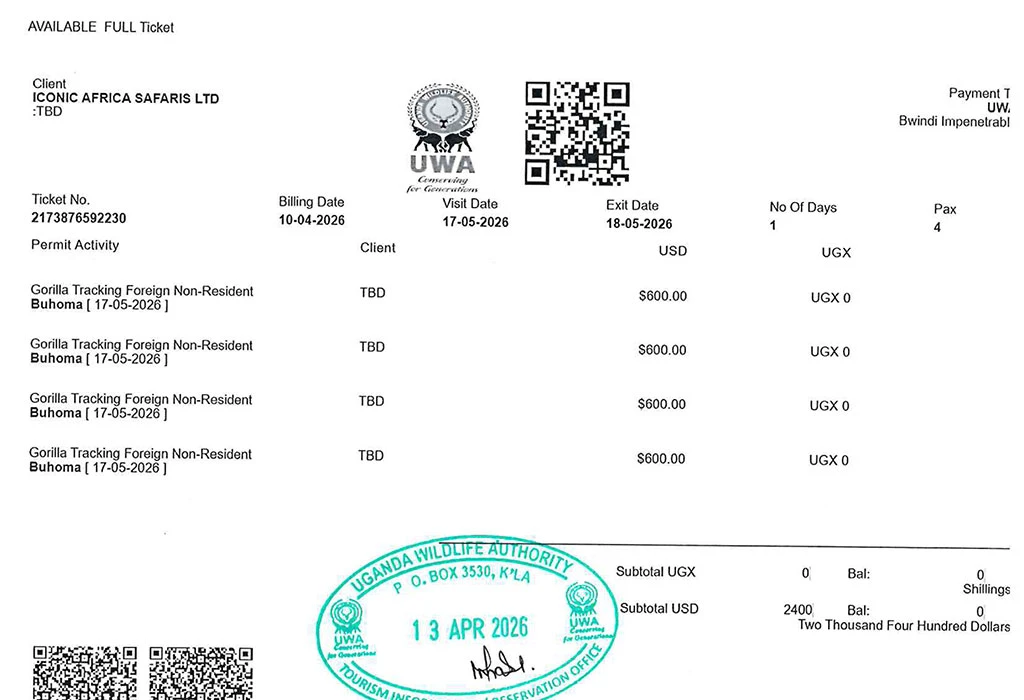
A gorilla trekking permit is a legal document issued by the Uganda Wildlife Authority. It grants one visitor access to trek into the forest with park rangers and spend one hour observing a habituated gorilla family. Without this permit, you cannot enter Bwindi Impenetrable National Park or Mgahinga Gorilla National Park to see the gorillas, no matter how you arrive or which operator you travel with.
Each permit is dated, sector-specific, and tied to your passport details. Only travelers aged 15 and above qualify, since the trek can be physically demanding and the parks want to protect younger children as well as the gorillas themselves. A maximum of eight permits is released per gorilla family per day, which is why the total number of gorilla trekking permits in Uganda issued daily is limited. Consequently, this scarcity is exactly why early booking matters so much for anyone serious about a Uganda gorilla safari.
Gorilla Trekking Permit Cost in Uganda (2026-2027)
Pricing for gorilla trekking permits in Uganda depends on your residency status and, since February 2026, on the season you travel in. Uganda Wildlife Authority introduced a low-season discount that did not exist in previous years, so it is worth checking these figures carefully before you budget your trip.
| Traveler Category | Peak & Shoulder Season | Low Season (April, May, November) |
|---|---|---|
| Foreign Non-Resident | $800 | $600 |
| Foreign Resident (living in Uganda) | $700 | $500 |
| African Citizen (non-East African) | $500 | Not applicable |
| East African Citizen | Approx. UGX 300,000 to 350,000 | Not applicable |
A few things to note here. First, the low-season discount only applies to specific dates within April, May, and November, and once you pay for one of these permits, it cannot be rescheduled. Second, gorilla permit fees are generally non-refundable if you cancel your trip, so travel insurance is worth considering. Third, permits must now be paid in full at the time of booking, since UWA removed its previous short-term reservation hold earlier in 2026.
Why the Uganda Permit Price Still Beats the Competition
For comparison, a Rwanda gorilla permit costs $1,500, nearly double the Uganda rate, while permits in the Democratic Republic of Congo are priced around $400 but come with more limited infrastructure and, at times, security considerations. As a result, many travelers land on Uganda specifically because the gorilla trekking permit price here strikes the best balance between affordability, safety, and habituated gorilla family numbers, which currently sit above nineteen groups.
Bwindi Gorilla Permit Cost vs. Mgahinga
Both Bwindi Impenetrable National Park and Mgahinga Gorilla National Park charge the same standard rates listed above, so the Bwindi gorilla permit cost is identical to the Mgahinga price on paper. The real difference lies in availability and experience rather than price.
Bwindi hosts the vast majority of Uganda’s habituated gorilla families across four separate sectors, so it offers far more gorilla trekking permits in Uganda on any given day. Mgahinga, meanwhile, typically has only one habituated family, the Nyakagezi group, which means permits there sell out quickly despite lower overall demand. Because of this, most first-time visitors choose Bwindi simply because it gives them more flexibility on dates.
What’s Included in Your Permit
Understanding what your fee actually covers helps you budget the rest of your trip accurately, and it also helps explain why gorilla trekking permits in Uganda cost what they do rather than feeling like an arbitrary government fee. A standard gorilla trekking permit includes:
- One hour of viewing time with a habituated gorilla family once located
- Entry into the national park for the full trekking day
- A ranger-guide trained in gorilla behavior and trekking safety
- Armed security personnel accompanying your group, where required
- A wooden trekking pole, provided at the trailhead to help with balance on steep or muddy sections
- A contribution toward mountain gorilla conservation and local community programs
It does not include park porters, transport to the trailhead, accommodation, or meals. Most travelers hire a local porter for around $15 to $20, which also supports the surrounding community and is genuinely worth the small cost on steep, muddy terrain.
How to Book Gorilla Trekking Permits in Uganda
There are two realistic paths to securing gorilla trekking permits in Uganda, and it helps to understand the trade-offs of each before you commit.
- Book directly through UWA. You can, in theory, contact the Uganda Wildlife Authority directly and pay for a permit yourself. However, this route requires you to coordinate your own transport, lodging, and trekking sector, and it offers no flexibility if something changes on their end.
- Book through a licensed tour operator. Most travelers, including nearly all first-timers, book gorilla trekking permits in Uganda through an operator like Iconic Africa Safaris. We hold permits under our allocation, match you to the right sector and season, and bundle the cost into a full safari package alongside your accommodation and transport.
At Iconic Africa Safaris, our process for securing gorilla trekking permits in Uganda is straightforward. Once you share your preferred travel dates, we check live permit availability for Bwindi and Mgahinga, confirm your sector choice based on fitness level and lodge preference, and secure the permit with full payment on your behalf. From there, we build the rest of your itinerary around it, whether that means pairing your trek with a wider Uganda safari or keeping the trip focused purely on gorillas.
If you’re also exploring other parks during your visit, take a look at our Uganda safari packages for itineraries that combine gorilla trekking with game drives in Queen Elizabeth or Murchison Falls National Park.
Uganda Wildlife Authority Permit Rules
The Uganda Wildlife Authority enforces a strict set of rules for gorilla trekking permits in Uganda, designed to protect both visitors and the gorillas. Because mountain gorillas share roughly 98% of human DNA, they are vulnerable to many of the same illnesses we carry, so several rules exist purely for their protection.
- Trekkers must be at least 15 years old.
- You must not trek if you are showing symptoms of a cold, flu, or any contagious illness.
- Keep a distance of at least seven metres from the gorillas at all times.
- No flash photography is allowed near the gorilla family.
- Eating, drinking, and smoking are prohibited while in the presence of the gorillas.
- Speak quietly and avoid sudden movements or loud noises.
- Groups are limited to a maximum of eight visitors per gorilla family per day.
- Viewing time is capped at one hour, regardless of how the trek itself unfolds.
Rangers take these rules seriously, and understandably so, since even a mild human illness can spread quickly through a habituated gorilla group. Following them closely also tends to make for a calmer, more rewarding encounter overall.
Best Time to Go Gorilla Trekking in Uganda
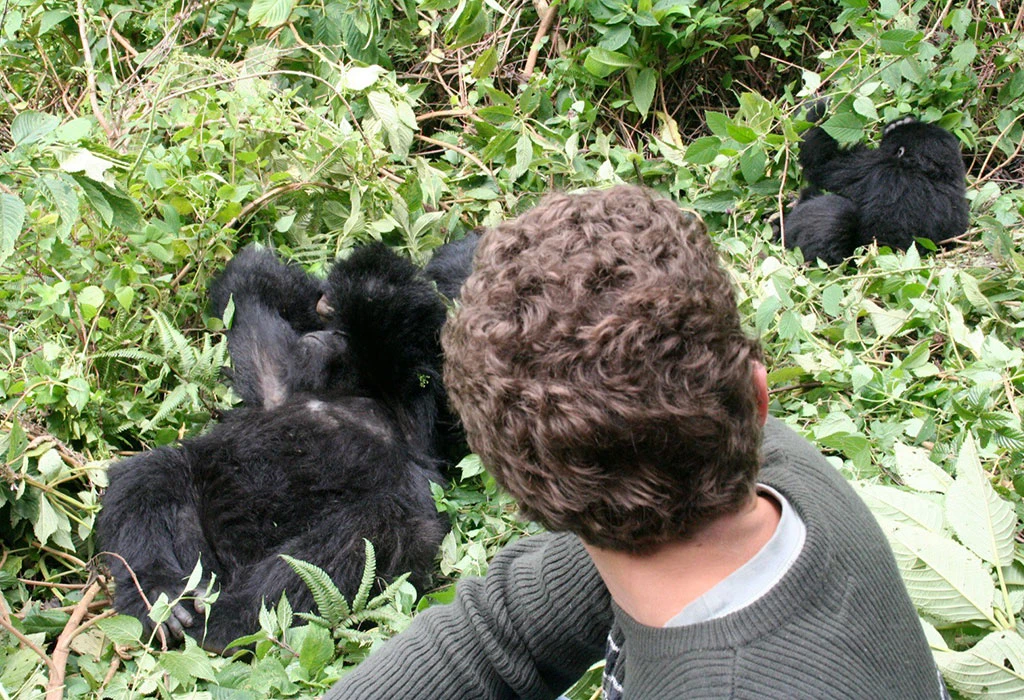
Uganda can technically be trekked year-round, since the parks stay open in every month. That said, conditions do shift with the seasons, and this affects both comfort and the price of gorilla trekking permits in Uganda.
- June to September and December to February (dry, peak season): Trails are firmer and less slippery, making the hike noticeably easier. This is also when demand is highest, so booking six to ten months ahead is strongly advised.
- April, May, and November (wet, low season): Rain is more frequent and trails get muddier, but this is also when the new low-season permit discount applies. If you don’t mind rain gear and a bit more mud, this window offers real savings.
- March, October (shoulder season): A reasonable middle ground with moderate rainfall and slightly better permit availability than peak months.
Ultimately, the “best” time depends on your priorities. If saving money matters more than dry trails, the wet months are worth considering. If you’d rather avoid mud altogether, aim for the dry season and book early.
Month by Month Planning Snapshot
Beyond the broad wet and dry season split, it helps to see how demand for gorilla trekking permits in Uganda shifts month to month. Here’s a general breakdown to guide your planning.
| Month | Conditions | Permit Demand |
|---|---|---|
| January | Dry, favorable trekking | High |
| February | Dry, favorable trekking | High |
| March | Transitional, light rain | Moderate |
| April | Wet, low season pricing | Lower |
| May | Wet, low season pricing | Lower |
| June | Dry season begins | High |
| July | Dry, peak demand | Very High |
| August | Dry, peak demand | Very High |
| September | Dry, favorable trekking | High |
| October | Transitional, light rain | Moderate |
| November | Wet, low season pricing | Lower |
| December | Dry, holiday demand | Very High |
This snapshot is a general guide rather than a guarantee, since Uganda’s weather can vary from year to year and rainfall patterns don’t always follow the calendar exactly. Still, it’s a useful starting point when weighing cost, crowd levels, and trail conditions against each other.
Bwindi’s Four Trekking Sectors, Compared
Bwindi Impenetrable National Park is divided into four trekking sectors, and each one offers a genuinely different experience in terms of terrain, altitude, and the gorilla families you’re likely to meet. Choosing the right sector matters just as much as choosing the right season, so it’s worth understanding what sets each sector apart before your gorilla trekking permits in Uganda are confirmed.
Buhoma Sector
Buhoma is the oldest and most established sector in Bwindi, located in the northern part of the park. It offers the widest range of nearby lodges, from budget guesthouses to high end properties, and its trails are generally considered the most moderate of the four sectors. Families here include Mubare, Habinyanja, and Rushegura, and treks typically range from two to four hours round trip, though this varies depending on where the gorillas happen to be that day. Buhoma suits first time trekkers and travelers who prioritize easier access to accommodation.
Ruhija Sector
Sitting at a higher altitude than Buhoma, Ruhija offers cooler temperatures and terrain that tends to be steeper in places. It’s also a favorite among birdwatchers, since the surrounding forest holds a wide variety of Albertine Rift endemic species. Ruhija is home to families such as Oruzogo, Bitukura, and Kyaguriro, and treks here can run longer than in Buhoma, sometimes stretching past four hours. Travelers who enjoy a more physically engaging hike, alongside strong birding opportunities, tend to appreciate this sector.
Rushaga Sector
Rushaga, in the southern part of the park, holds more habituated families than any other sector and is also the only location offering the four hour gorilla habituation experience. Families here include Nshongi, Mishaya, Kahungye, Busingye, and several others, giving this sector the strongest permit availability during busy months. Terrain varies considerably by family location, so some treks are moderate while others involve steep climbs.
Nkuringo Sector
Nkuringo is known for dramatic, sweeping views over the Virunga volcanoes, but it also has a reputation as the most physically demanding sector in Bwindi. The trailhead itself starts at a high elevation, and the descent into the valley (followed by a steep climb back out) makes for one of the tougher treks in the park. Nkuringo and Christmas are the primary families here. This sector suits fitter travelers who don’t mind a challenging hike in exchange for spectacular scenery.
Iconic Africa Safaris will always recommend a sector based on your fitness level, lodge budget, and how far in advance you’re booking, since some sectors fill up faster than others during peak months. At Iconic Africa Safaris, we factor in your trekking experience and physical condition before confirming which sector to book on your behalf.
Notable Gorilla Families You May Encounter
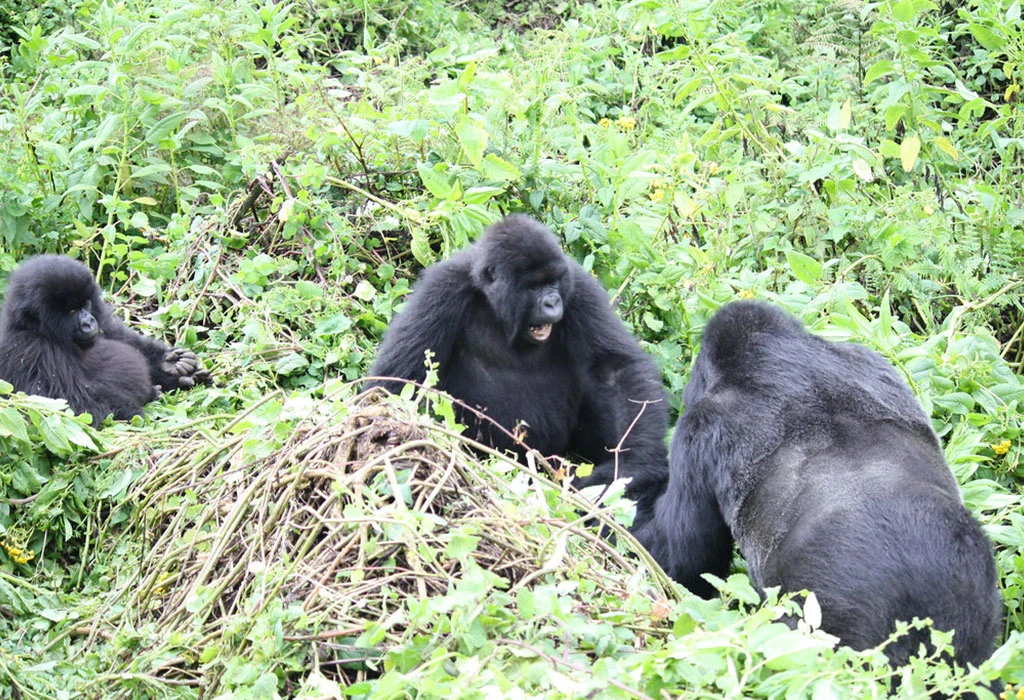
Uganda is home to more than nineteen habituated gorilla families, each with its own size, temperament, and history. While you can’t request a specific family when booking gorilla trekking permits in Uganda (UWA assigns families the morning of your trek based on fitness level and group size) it helps to know a little about who you might meet.
- Mubare: Bwindi’s first habituated family, based in Buhoma, and a relatively small, calm group that’s often recommended for less experienced trekkers.
- Rushegura: Also in Buhoma, known for occasionally wandering close to lodge grounds, which sometimes gives guests unexpected sightings even outside official trek hours.
- Nshongi: Once one of the largest habituated families ever recorded in Bwindi, located in the Rushaga sector.
- Oruzogo: A lively, playful family in Ruhija with several young gorillas, often popular for photography due to frequent activity.
- Nyakagezi: The sole habituated family in Mgahinga Gorilla National Park, known for occasionally crossing into neighboring Rwanda and back.
Each family is monitored daily by trackers, so rangers generally know their approximate location before your trek even begins, which helps them plan a realistic route for your group.
Health Requirements and Travel Preparation
Because mountain gorillas are so closely related to humans, health screening plays a real role in how gorilla trekking permits in Uganda are enforced, not just a formality. Before your trek, rangers will ask general health questions and may turn away anyone showing signs of a cold, flu, or other transmissible illness, since even mild human infections can be dangerous for the gorillas. If you’re turned away on health grounds, most operators will attempt to rebook you for a later date within your trip, though this isn’t always possible depending on remaining availability.
A few practical steps worth taking before you travel:
- Check with a travel clinic about recommended vaccinations for Uganda, including yellow fever, which is a mandatory entry requirement for most travelers.
- Pack any personal medication in carry on luggage, along with a basic first aid kit for the trek itself.
- Consider malaria prophylaxis, since Bwindi and Mgahinga both sit in malaria risk zones.
- Purchase travel insurance that covers trip cancellation and medical evacuation, given how remote these parks are relative to major hospitals.
- If you’re managing a chronic condition or mobility limitation, mention it when booking so your operator can recommend an appropriate sector or arrange additional support.
- Bring hand sanitizer and a small supply of any regular medication in your daypack, since access to pharmacies near the trailhead is limited.
Photography and Etiquette Tips
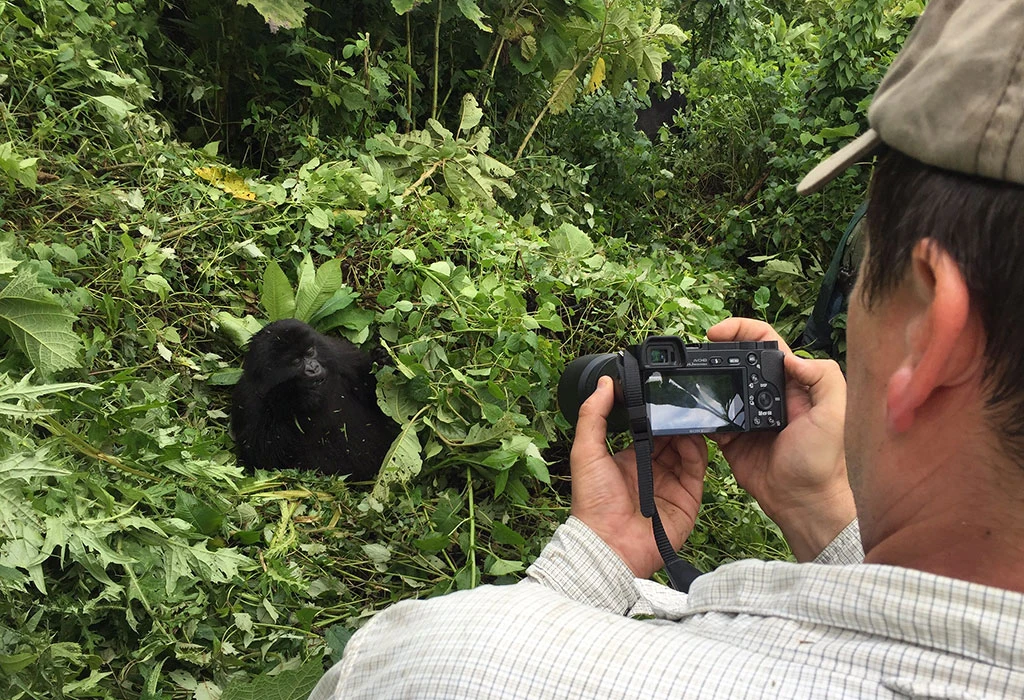
Capturing a good photo during your hour with the gorillas takes a bit of preparation, since low forest light and close quarters aren’t always camera friendly. A few tips that make a noticeable difference:
- Switch off flash entirely before you approach the family; it’s prohibited and can startle the gorillas.
- Bring a lens with a reasonably wide aperture, since forest canopy often blocks direct light even at midday.
- Keep your camera accessible rather than buried in your bag, since your hour with the gorillas moves quickly.
- Avoid loud shutter sounds or continuous burst shooting close to the family, and follow your ranger’s cues on when it’s appropriate to shoot.
- Remember that eye contact and quiet, slow movements tend to keep gorillas relaxed, which usually results in better, more natural photos anyway.
Gorilla Habituation Permits: A Different Experience
For travelers who want more than the standard one-hour visit, Uganda also offers a gorilla habituation experience, a different category from standard gorilla trekking permits in Uganda, which allows up to four hours with a gorilla family that is still going through the habituation process. This permit currently costs $1,800, UWA confirmed a price increase effective July 1, 2027. Habituation permits are only available in the Rushaga sector and are limited to just four visitors per group per day, so they sell out well in advance.
This option suits travelers who have already done a standard trek before, or those who simply want more time observing gorilla behavior up close, including feeding, grooming, and social interaction that a shorter visit rarely captures in full.
Total Cost of a Gorilla Trekking Trip, Beyond the Permit
The permit is usually the single largest line item on a gorilla safari, but gorilla trekking permits in Uganda are far from the only cost. Once you add transport, lodging, and meals, the full picture looks quite different, so it helps to budget realistically before you commit to dates.
- Transport to Bwindi or Mgahinga: Most travelers fly into Entebbe and then either drive (roughly 8 to 9 hours to Bwindi) or take a scheduled domestic flight to a nearby airstrip. Road transfers typically run $150 to $400 per day depending on vehicle type, while a one way domestic flight often costs $200 to $450 per person.
- Accommodation: Lodges near the trekking sectors range from budget guesthouses at $50 to $100 per night to mid range lodges around $150 to $300, and luxury properties that exceed $500 per night. Your choice here has more impact on total trip cost than almost anything else.
- Meals: Most lodges include breakfast, and many offer full board packages, which simplifies budgeting considerably.
- Porter fees and tips: Budget around $15 to $20 for a porter and a similar amount for your ranger guide, plus a smaller tip for the trekking team as a group.
Altogether, a 3-day gorilla trekking trip that includes a permit, a mid-range lodge, and transport typically lands somewhere between $1,800 and $3,000 per person. Naturally, this figure moves up or down depending on the season, lodge tier, and whether you combine the trek with a wider Uganda safari itinerary.
What to Pack and How to Prepare Physically
Trekking through Bwindi’s dense, hilly forest is genuinely demanding, so a bit of preparation goes a long way. Trails are rarely flat, and depending on where the gorilla family is located that day, your hike could last anywhere from thirty minutes to eight hours round trip.
Recommended packing list:
- Waterproof hiking boots with solid ankle support
- Gardening gloves, which help when grabbing vines and branches on steep sections
- A rain jacket, even during the dry season, since forest weather changes quickly
- Long trousers and long sleeves tucked into boots and gloves to guard against nettles and safari ants
- A daypack with water, snacks, and a dry bag for your camera
- Insect repellent and sun protection
In terms of physical readiness, you don’t need to be an athlete, but a reasonable baseline of fitness makes the experience far more enjoyable. Regular walking or light cardio in the weeks before your trip is usually enough preparation for most sectors, though travelers with knee or mobility concerns should mention this when booking so their operator can recommend an easier sector or arrange a porter to assist along the trail. A wooden trekking pole is provided as part of your permit at the trailhead, so you don’t need to pack one, though some travelers still prefer bringing a personal collapsible pole for extra support.
What Happens on Trek Day
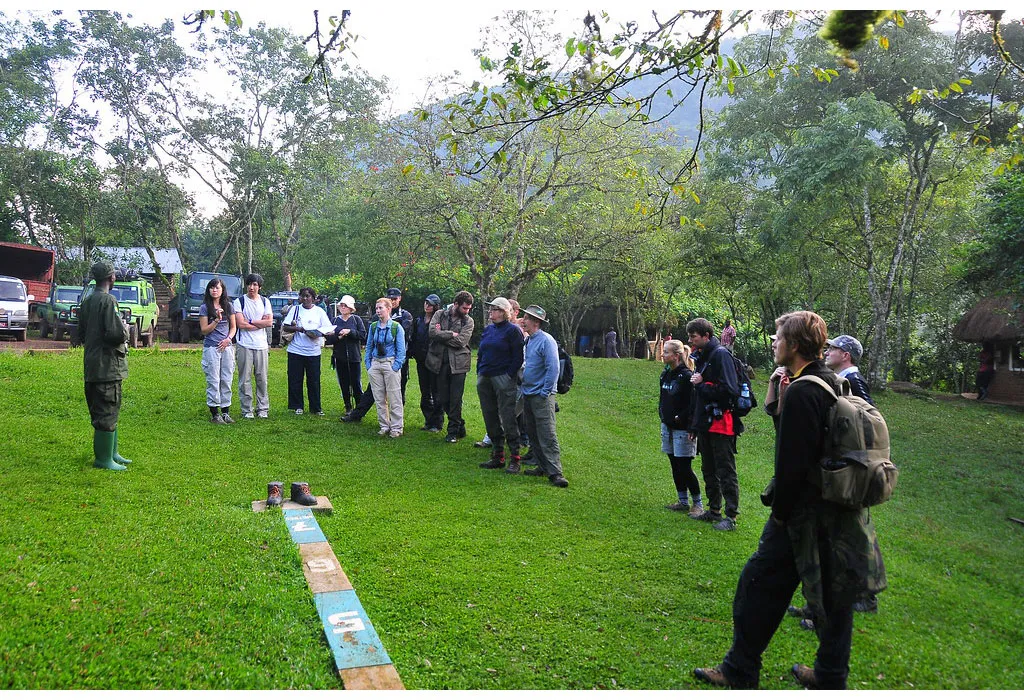
Trek day begins early, typically with a briefing at the park headquarters around 7:00 or 7:30 AM. Rangers assign you to a specific gorilla family based on your fitness level and the family’s most recent known location, then divide visitors into small groups of no more than eight people.
From there, you’ll set off into the forest accompanied by an armed ranger and a guide who tracks the family using updates from trackers who head out ahead of the main group. Once the gorillas are located, you leave your bags and trekking pole with the porters and approach quietly for your one hour of viewing time. Afterward, the walk back to the trailhead retraces your route, and you’ll receive a certificate at park headquarters to mark the completion of your trek.
Uganda vs. Rwanda: Which Should You Choose?
Travelers weighing gorilla trekking permits in Uganda against a Rwanda gorilla safari usually come down to three factors: price, accessibility, and trekking difficulty.
Uganda’s permit price of $800 is significantly lower than Rwanda’s $1,500, and Uganda also offers more habituated families spread across four Bwindi sectors plus Mgahinga, which generally means better availability. Rwanda, on the other hand, benefits from a shorter drive from Kigali International Airport, smoother roads, and typically flatter, less demanding terrain, which appeals to travelers prioritizing convenience and comfort over cost.
Neither option is objectively better; it really depends on your budget, your fitness level, and how much time you’re willing to spend on the road. Many travelers also combine both countries into a single East Africa itinerary, trekking gorillas in one country and adding chimpanzee tracking or savanna game drives in the other.
Where Your Permit Fee Actually Goes
It’s worth understanding that revenue from gorilla trekking permits in Uganda does more than fund a single day’s trek. A meaningful share of every gorilla permit fee is reinvested into park management, ranger salaries, anti-poaching patrols, and community revenue-sharing programs for villages bordering Bwindi and Mgahinga. This funding model is widely credited as one of the reasons mountain gorilla numbers have grown steadily over recent decades, making them one of the only great ape populations classified as increasing rather than declining.
In practical terms, this means every gorilla trekking permit you purchase in Uganda contributes directly to the long-term survival of the species, alongside supporting the livelihoods of communities who live alongside the parks.
Combining Your Gorilla Trek with a Wider Uganda Safari
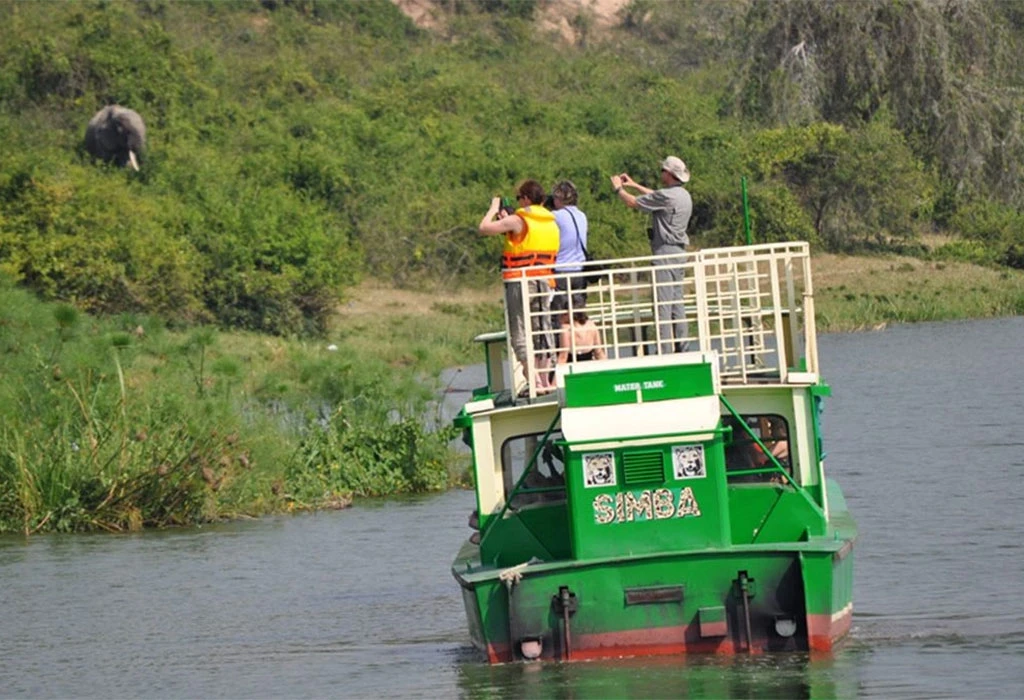
Because gorilla trekking only takes up a single day of your itinerary, most travelers choose to pair it with other parks rather than flying home immediately afterward. Uganda’s compact size makes this easier than you might expect, since several major parks sit within a reasonable drive of Bwindi.
Queen Elizabeth National Park, roughly two to three hours from Bwindi by road, adds tree climbing lions, boat cruises along the Kazinga Channel, and classic savanna game drives to your trip. Kibale Forest National Park, known as the primate capital of Africa, offers chimpanzee tracking that pairs naturally with a gorilla trek, giving you two great ape experiences on a single itinerary. For travelers with more time, Murchison Falls National Park in the north brings the Nile, powerful waterfalls, and strong game viewing into the mix, though it requires additional driving days or a domestic flight to reach comfortably.
A common and popular route looks something like this: arrive in Entebbe, transfer to Queen Elizabeth for game drives and a channel cruise, continue on to Bwindi for your gorilla trek, then fly back to Entebbe from a nearby airstrip rather than retracing the full road journey. This kind of loop lets you experience forest, savanna, and primate encounters without excessive backtracking, and it typically fits comfortably into a seven to ten day itinerary depending on how much time you want at each stop.
If this sounds appealing, our team can build a route around your gorilla trekking dates that includes any combination of these parks, tailored to how much time and budget you have available.
Common Mistakes Travelers Make
Even well-organized travelers occasionally trip up on a few avoidable details when booking gorilla trekking permits in Uganda. Watch out for these:
- Booking too close to travel dates. Peak season permits can sell out six months or more in advance, particularly around Bwindi’s Rushaga and Buhoma sectors.
- Assuming permits are refundable. They generally they are but the process is so stressful, so confirm your dates before paying.
- Ignoring fitness requirements. Some sectors involve steep, muddy terrain that can take three to eight hours round trip, so a baseline fitness level matters.
- Skipping travel insurance. Given the non-refundable nature of permits, insurance that covers trip cancellation is a smart addition.
- Not budgeting for extras. Porters, tips, and gear rental add up, so factor these into your total cost alongside the permit itself.
- Underestimating the altitude and terrain. Bwindi sits at elevations between roughly 1,160 and 2,600 metres, and the combination of altitude, humidity, and uneven ground catches some travelers off guard. Pacing yourself early in the trek helps considerably.
- Forgetting to confirm visa requirements early. Applying for Uganda’s e-visa at the last minute can create unnecessary stress, so it’s worth handling this well before departure alongside your permit booking.
Frequently Asked Questions
How much does a gorilla trekking permit cost in Uganda? As of 2026, standard permits cost $800 per person for foreign non-residents during peak season, dropping to $600 during the April, May, and November low season.
How do I book a gorilla trekking permit in Uganda? You can book directly with Uganda Wildlife Authority or through a licensed operator such as Iconic Africa Safaris, which handles permit reservation, payment, and itinerary planning together.
What is the best season for gorilla trekking in Uganda? The dry months of June to September and December to February offer the easiest trekking conditions, while April, May, and November offer lower permit prices in exchange for wetter trails.
What are the main rules for gorilla trekking permits? Trekkers must be 15 or older, healthy, and willing to keep at least seven metres from the gorillas, avoid flash photography, and follow ranger instructions throughout the visit.
Can I get a refund if I cancel my permit? Generally, no. Gorilla trekking permits in Uganda are non-refundable once paid, which is why many travelers purchase trip cancellation insurance beforehand.
How far in advance should I book? For peak season dates, six to ten months ahead is recommended. Low season and shoulder months sometimes have availability closer to travel, but this isn’t guaranteed.
How difficult is gorilla trekking physically? Difficulty varies by sector and by where the gorilla family happens to be that day. Treks can range from a gentle thirty minute walk to a demanding six or eight hour hike over steep, muddy terrain, so a reasonable baseline fitness level helps regardless of which sector you choose.
Can children go gorilla trekking? No. Uganda Wildlife Authority sets a minimum age of 15 for gorilla trekking permits, a rule designed to protect both younger travelers from the physical demands of the trek and the gorillas from added health risk.
What happens if I don’t see the gorillas? This is extremely rare given how closely trackers monitor each family’s location, but UWA generally allows a return trek at no additional cost in the unlikely event that a group fails to locate the gorillas.
Do I need a visa to visit Uganda for gorilla trekking? Most nationalities require a visa, which can usually be arranged online in advance through Uganda’s e-visa system. It’s worth applying at least a few weeks before travel to avoid delays.
Final Thoughts and Next Steps
Securing gorilla trekking permits in Uganda doesn’t need to be complicated once you understand the pricing tiers, the booking process, and the rules that come with them. The permit itself is only one part of the trip, but it’s the part that determines your dates, your sector, and ultimately how the rest of your safari comes together. Everything else, from your lodge choice to the parks you add on either side of the trek, tends to fall into place once that single date is locked in.
Whether you’re drawn by the lower cost compared to Rwanda, the sheer number of habituated families spread across Bwindi and Mgahinga, or simply the chance to spend an hour with one of the world’s most endangered great apes, Uganda offers a genuinely rewarding way to experience gorilla trekking without unnecessary complication.
If you’d rather skip the back-and-forth with Uganda Wildlife Authority and have someone handle availability, payment, and logistics on your behalf, Iconic Africa Safaris can secure your permit and build a full itinerary around it. Get in touch with our team to check permit availability for your travel dates and start planning your Uganda gorilla trekking adventure today.