
Safari overview
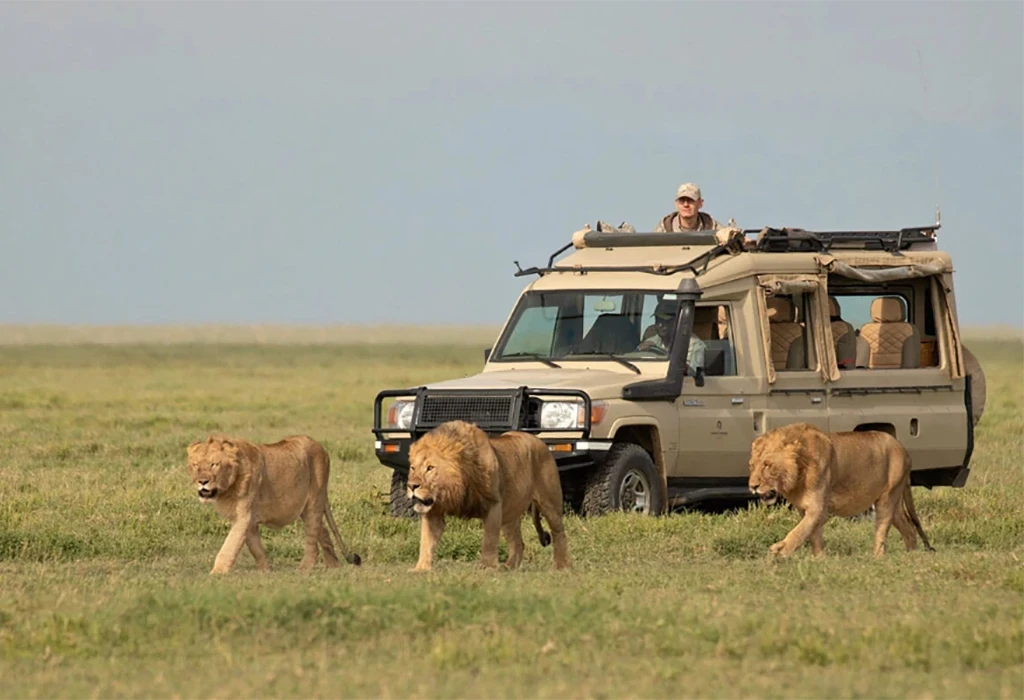
Discover the endless plains of the Serengeti on a compact three-day private safari, with superb opportunities to see lions, elephants, giraffes, cheetahs and the Great Migration.
This private three-day Tanzania safari begins and ends in Arusha. Your driver-guide meets you at your hotel or Kilimanjaro International Airport and takes you through the scenic Maasai Steppe toward Serengeti National Park.
Spend two full days exploring the Serengeti’s vast savannah, river valleys and kopjes. Depending on the season, you may witness the Great Migration, river crossings, big cat hunts, large elephant herds and abundant birdlife. Your guide will use expert local knowledge to position you for the best wildlife sightings throughout the day.
Choose mid-range or luxury accommodation to suit your style. Lodge and tented-camp options include Serengeti Sopa Lodge or Kubu Kubu Tented Lodge for your nights inside or near the park, with comfortable rooms, excellent dining and easy access to the main game-viewing areas.
Tour highlights
Experience Tanzania’s most celebrated wildlife destination on one private three-day Serengeti safari.
- Two full days of game drives in Serengeti National Park
- Opportunities to see lions, cheetahs, leopards and hyenas
- Large herds of elephants, giraffes, zebras and wildebeest
- Seasonal Great Migration and river-crossing sightings
- Scenic drive through the Maasai Steppe and Ngorongoro highlands
- Sunset views across the endless Serengeti plains
- Mid-range or luxury lodges and tented camps
Detailed itinerary
Day 1
Arusha to Serengeti National Park
Your driver-guide meets you at your Arusha hotel or Kilimanjaro International Airport and settles you into a comfortable 4×4 Land Cruiser. Depart early and travel through the Maasai Steppe and the cool Ngorongoro highlands, with sweeping views of rural Tanzania along the way.
Enter Serengeti National Park through Naabi Hill Gate and begin your first game drive as you head toward the central Serengeti. Look for lions resting on kopjes, elephants moving across the plains, giraffes browsing acacia trees and large herds of zebras and wildebeest. Arrive at your lodge or tented camp for dinner and overnight.
- Approximately 6 to 8 hours’ drive from Arusha, including game viewing en route
- Mid-Range: Serengeti Sopa Lodge | Luxury: Kubu Kubu Tented Lodge
- Full board
Day 2
Full-Day Serengeti Game Drives
Set out after an early breakfast for a full day of game viewing across the Serengeti’s varied habitats. Your guide will track wildlife through open grasslands, wooded areas, riverine forests and rocky outcrops, adjusting the route according to recent animal movements.
This is an excellent day to search for the Big Five and other iconic species. Depending on the time of year, you may encounter the Great Migration, with thousands of wildebeest and zebras moving across the plains. Enjoy a picnic lunch in the park before continuing your afternoon game drive, returning to camp for dinner and a second night.
- Full-day game drive with picnic lunch inside Serengeti National Park
- Mid-Range: Serengeti Sopa Lodge | Luxury: Kubu Kubu Tented Lodge
- Full board
Day 3
Morning Game Drive and Return to Arusha
Enjoy a final early-morning game drive, when predators are often most active and the plains are bathed in soft golden light. This is a great opportunity for photography and one last search for any animals you have not yet seen.
After brunch or lunch, begin the journey back to Arusha, arriving in the late afternoon or early evening. Your driver-guide will drop you at your hotel or Kilimanjaro International Airport for your onward departure. Please allow a comfortable margin between your arrival in Arusha and your international flight.
- Morning game drive, then transfer to Arusha
- No accommodation unless an extra night is requested
- Breakfast and lunch included
Request a quote
Tell us your preferred travel dates, number of travellers and accommodation choice. A safari specialist will prepare a tailored quotation for your three-day Serengeti National Park safari.
- Free, no-obligation quote
- Serengeti park fee arrangements
- Mid-range or luxury lodge selection
You May Like other Related Safaris
Every journey here is ready to book exactly as planned, or tailored further to match your dates, budget, and travel style. Choose a package that speaks to you, then make it entirely your own. Your perfect escape starts with one click.
FAQs for 3-Day Serengeti National Park Safari
Planning a short safari in the Serengeti? These are the questions travellers ask most often, answered honestly so you can plan your trip and book with confidence.
How much does a 3-day Serengeti safari cost?
The 3-Day Serengeti National Park Safari starts from $1,250 per person sharing. The net cost is the final amount you pay once your accommodation level, travel dates, and group size are confirmed. The price covers private 4×4 safari transport with an experienced driver-guide, game drives, park entrance fees, meals and accommodation as listed in the itinerary, bottled water, and government taxes. International flights, visas, travel insurance, tips, drinks, and optional extras such as the balloon safari are not included. Solo travellers pay a single supplement, and peak-season dates cost more, so your quotation confirms exactly what applies.
Can the safari be customized?
Yes. The 3-day itinerary is a starting point, and we can shape it around your plans. You can upgrade your lodge or camp, add extra nights in the Serengeti, include Ngorongoro Crater, Tarangire, or Lake Manyara, or fly between Arusha and the park instead of driving. We can also arrange private departures, family-friendly schedules, and special occasions such as honeymoons. Tell us your dates, interests, and budget, and we will prepare a tailored quotation that matches what you want from the trip.
Is 3 days enough for Serengeti?
Three days gives you a rewarding introduction, but the Serengeti is vast, so you will explore only part of it. With a fly-in itinerary you spend more time on game drives and less on the road, which makes a short stay far more productive. A road transfer from Arusha takes much of a day, leaving fewer hours in the park. Many guests find three days enough for lions, elephants, giraffes, and plains game, while those chasing the migration or leopards often add a fourth or fifth night.
When is the best time to visit?
The dry season from late June to October offers the best general game viewing, as animals gather near rivers and the grass is shorter. The calving season from January to March is wonderful in the southern plains, with newborn wildebeest and hunting predators. The long rains from March to May bring lush scenery and fewer visitors, but some roads become difficult. November brings short rains. Because the Serengeti is good year-round, the best time depends on what you want to see and your budget, so tell us your priorities.
Will we see the Great Migration?
It depends on when you travel. The herds of wildebeest and zebra move in a circular route through the Serengeti and Kenya’s Maasai Mara following the rains, so their location changes every month. Calving takes place in the southern plains from January to March, and Mara River crossings in the north are usually seen between July and October. Exact timing varies each year, so no date can be promised. We position your camp near the herds where possible and advise you honestly before you book.
Can children join the safari?
Yes, children can join, and many families enjoy the Serengeti together. Tanzania’s national parks allow children on game drives, but individual lodges and camps set their own minimum ages, and some unfenced camps do not accept very young children for safety reasons. Balloon operators usually require children to be at least seven years old. We recommend child-friendly lodges, a private vehicle so you can take breaks when needed, and a flexible schedule. Tell us the ages of everyone travelling so we can plan the safest and most comfortable trip.
What should we pack?
Pack lightweight clothing in neutral colours such as beige, khaki, or olive, plus a warm layer for cool early mornings and evenings. Bring a hat, sunglasses, sunscreen, insect repellent, comfortable walking shoes, binoculars, and a camera with spare batteries. Use a soft bag rather than a hard suitcase, since vehicle and light-aircraft space is limited. Avoid dark blue and black clothing, which can attract tsetse flies. Tanzania has banned plastic carrier bags, so do not pack them, as officials may confiscate them at the airport.
Can we add a balloon safari?
Yes, a sunrise balloon safari is an optional extra and is not included in the starting price. You float quietly over the plains at dawn, watching wildlife from above, and the flight usually ends with a champagne breakfast in the bush. Flights depart early from the central Serengeti, so we plan your lodge location around them. Spaces are limited and weather-dependent, so book in advance. Operators set a minimum age, usually seven. Let us know you would like it and we will add it to your quotation.
What is the minimum and maximum group size?
You can travel as a solo traveller, a couple, a family, or a group, as the safari runs as a private tour in your own vehicle. Each 4×4 safari vehicle seats up to five guests with a guaranteed window seat and a pop-up roof for game viewing and photography. Larger groups travel in several vehicles, each with its own driver-guide, so everyone enjoys the same experience. Please share your group size when you enquire so we can confirm the right vehicles and rooms.
Am I guaranteed to see all the Big Five on this safari?
No operator can guarantee this, because the animals are wild and free to roam. The Serengeti offers excellent chances of lions, elephants, buffalo, and leopards, especially around the Seronera area. Rhinos are the hardest to find, as only a small number live in the park, protected in remote areas. Our driver-guides share sightings with other guides to track animals, and time in the park gives you the best practical chance of a rewarding experience. Adding Ngorongoro Crater improves your chances of seeing a rhino.
Do I need a visa to travel to Tanzania?
Entry requirements depend on your nationality, so check the current rules before you travel. Most visitors need a Tanzanian visa, which many travellers can apply for online before departure, while some nationalities are exempt. Make sure your passport is valid for at least six months, and ask your doctor about recommended vaccinations, malaria prevention, and any yellow fever certificate requirements for your route. Travellers arriving from certain countries must show proof of yellow fever vaccination. We can guide you through the process and share the official application links.
What should I do about travel insurance and money?
We strongly recommend comprehensive travel insurance that covers medical care, emergency evacuation, trip cancellation, and interruption. Check that your policy covers light-aircraft transfers if you fly. Carry some US dollars in recent, undamaged notes, as older bills are often refused, and bring a card for lodge extras where accepted. Tanzanian shillings are useful for small purchases such as souvenirs, and mobile money is widely used locally. Remote areas of the park have no ATMs, so withdraw any cash you need in Arusha before you leave.