
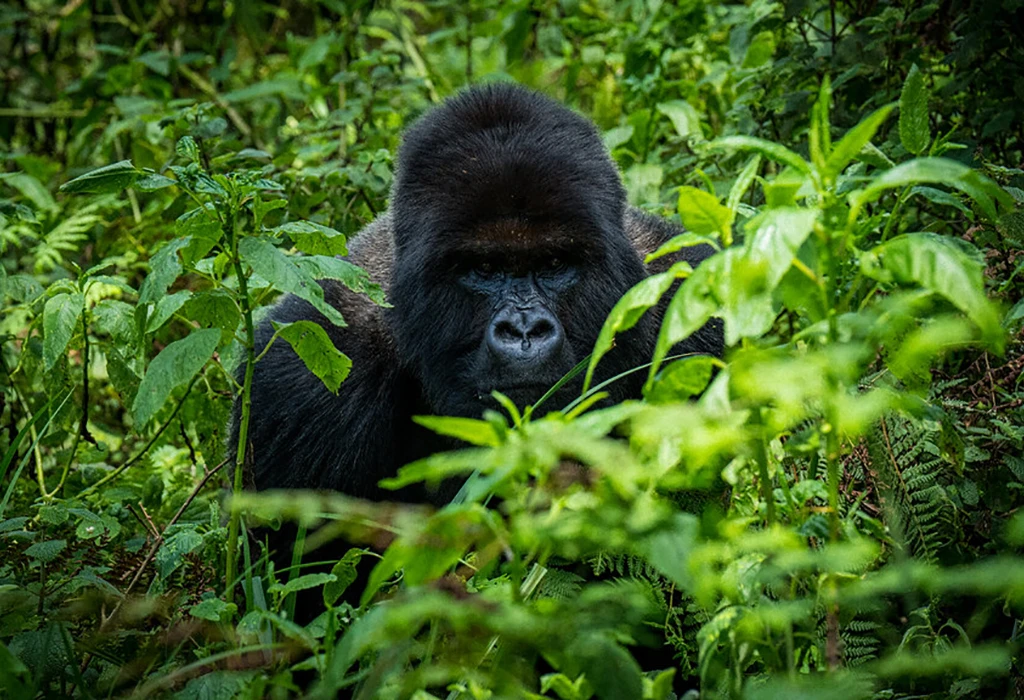

Gorilla Trekking Experience in Uganda, Rwanda and DR Congo
Hike through misty rainforest and spend an unforgettable hour face to face with mountain gorillas in the Virunga and Bwindi highlands.
A Journey into Gorilla Countries: Uganda, Rwanda and DR Congo
There is a moment on most gorilla trekking experiences, usually somewhere between the third and fifth hour of climbing, when the guide ahead of you stops, raises a hand and goes quiet. You have been pushing through wet leaves, ducking under vines and slipping on mud. Then you hear a branch snap that is too heavy to be a bird, and a low rumble that sounds a little like a stomach. A few steps later, a silverback the size of a small wardrobe looks at you, decides you are not interesting, and goes back to eating.
That is the heart of the gorilla trekking experience. It is physical, unpredictable and humbling, and for most people it is far more emotional than they expect. But it is also an expensive trip with real logistics: limited permits, long road transfers, shifting weather and, in one of the three countries, a security situation that needs honest treatment.
This guide covers both sides. It explains what a trek feels like from the moment you arrive at the briefing to the walk back out, then compares Uganda, Rwanda and DR Congo so you can choose sensibly. It also covers permits, seasons, fitness, rules, packing, accommodation, sample itineraries and the questions travellers ask us most often at Iconic Africa Safaris.
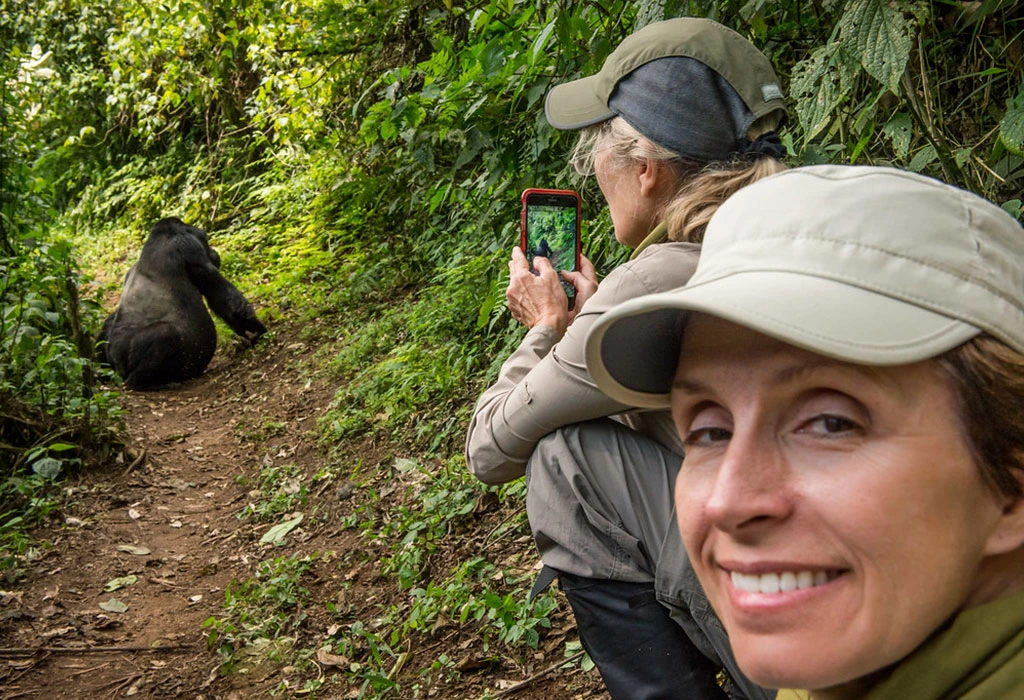
Gorilla trekking at a glance
If you want the short version before the long one, here it is.
- Where it happens: Uganda, Rwanda and DR Congo. The forests sit along the borders of the three countries, in the Albertine Rift.
- Which gorillas: Mountain gorillas in Uganda and Rwanda (and in DR Congo’s Virunga National Park). Eastern lowland gorillas, a different subspecies, live in DR Congo’s Kahuzi-Biega National Park.
- Time with the gorillas: Usually 1 hour for a standard trek.
- Time on the trail: Anywhere from about 2 hours to 7 hours or more, including the walk back out. It depends entirely on where the gorillas spent the night.
- Minimum age: 15 years.
- Group size: Up to 8 visitors per gorilla family per day.
- Permit: Required for every visitor, and limited in number.
- Main parks: Bwindi Impenetrable and Mgahinga in Uganda, Volcanoes in Rwanda, and Virunga and Kahuzi-Biega in DR Congo.
One thing worth saying early: no one can guarantee the details of your day. The gorillas are wild. They move, they sleep in different places, and trackers find them rather than the other way round. Anyone promising a precise time, distance or family is selling you something the forest does not offer.
What a gorilla trekking is actually like
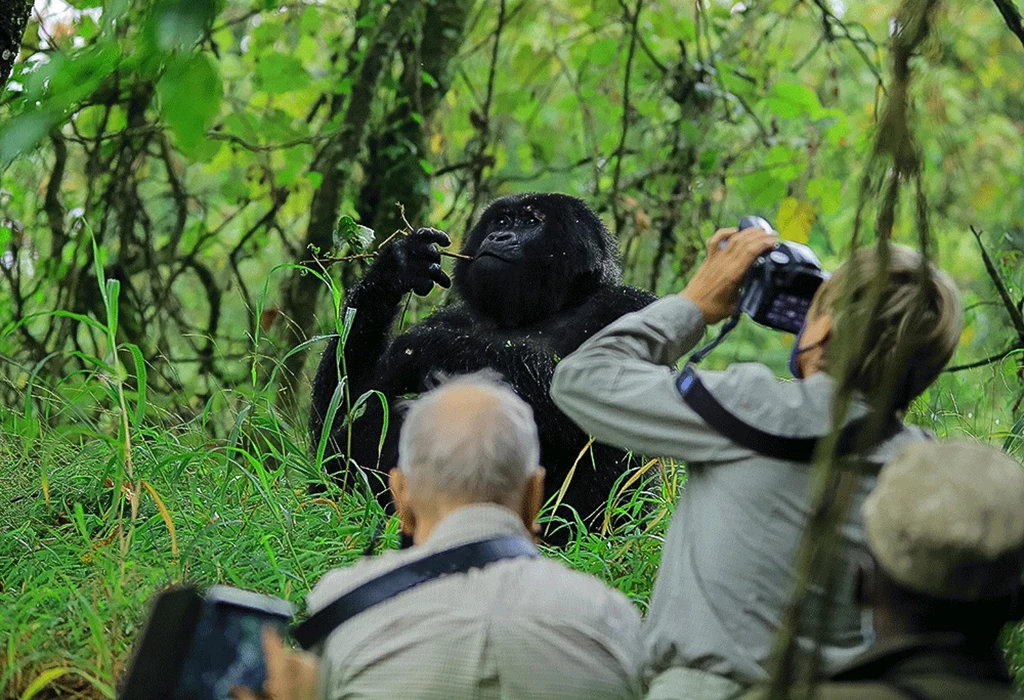
The day follows a pattern that is roughly the same everywhere, though the scenery changes.
The early start
Briefings usually begin around 7:00 to 8:00 am at the park headquarters or a trailhead office. Most people are up by 5:30 or 6:00 am, eating breakfast in the half-light and packing lunch. If you are staying in a lodge, you will usually be driven to the meeting point, sometimes along roads that are rougher than the brochure suggested.
At the briefing, rangers register your permit and passport details, explain the rules, and divide visitors into groups. Which gorilla family you are assigned depends on the park’s allocation, your fitness and any preferences or limitations you have mentioned in advance. Groups with older travellers or anyone worried about stamina are often matched with a family that tends to stay closer to the trailhead, though even that is a tendency rather than a promise.
The walk in
You set off with a head ranger, an armed ranger or two for protection against forest elephants and buffalo, and trackers who have already gone ahead at first light to locate the family. They stay in radio contact and direct the group.
The first part can be misleading. Many treks begin through farmland, tea fields or potato plots, and you might think this is going to be easy. Then you cross a boundary into the forest and the ground changes. The path narrows or vanishes. The slopes are steep. Vegetation is thick enough that rangers sometimes cut a way through with machetes. Altitude is typically between 2,200 and 3,000 metres or so, which means even fit walkers feel their lungs.
A typical trek that goes well takes 2 to 4 hours of walking before you reach the gorillas. A longer one can take 6 or 7 hours in total. The guides set a pace that suits the slowest person, and they stop often. If you need a hand on a muddy slope, they will give you one. If you want a porter, you can hire one at the start, and honestly, many people who think they do not need one regret the decision by the second hill.
The last stretch
When the trackers radio that they have found the gorillas, the group usually stops. You leave your walking sticks and any bags that are not essential with a porter, keep only your camera, and take a deep breath. The rangers remind everyone to keep their voices low and follow their lead.
Then you walk in, often through the last few metres of undergrowth, and there they are.
The hour
You get 1 hour with the gorillas, timed from the moment you first see them. It sounds short. It is not, mostly because the family does not perform. A mother nurses an infant. Juveniles chase each other up a sapling, which bends alarmingly. A blackback sits a few metres from you chewing bamboo with an expression of deep concentration. The silverback rests, or watches, or strolls through the group while everyone adjusts around him.
The rules say you stay a minimum distance away, usually 7 metres, but gorillas have never read those rules. Sometimes a young one wanders close. Rangers will tell you to step back quietly, and you do. You do not touch, and you do not react with sudden movement.
People tend to put the camera down for part of the hour. That is a good instinct. Some of the best moments are the ones you only watch.
The way back
When the hour ends, the rangers signal and the group backs away. The mood on the return walk is usually a mix of exhaustion, elation and silence. Back at the headquarters, many parks hold a short certificate ceremony. You can change out of muddy gear, have a drink, and for the next day or two probably tell everyone you meet about it.
What you might see
The gorillas are the point, but the forest surrounding them is not scenery to be skipped.
Gorilla behaviour. A family of gorillas typically has one dominant silverback, several females, and their young. You may see mothers carrying infants on their backs, juveniles wrestling or climbing, and adult females grooming one another. Silverbacks sometimes beat their chests, though that is rare and usually reserved for young males showing off. More often you will see gentle behaviour: feeding on stems, leaves and bamboo shoots, then resting in the vegetation.
Other wildlife. Depending on the park, you might spot forest birds, colourful butterflies, chameleons, duikers or monkeys. In Rwanda and Mgahinga, golden monkeys are a bonus on separate days. Forest elephants leave signs more often than they show themselves.
The landscape. Bwindi is a thick, ancient rainforest wrapped over folded hills, with mist rising off the valleys in the morning. Volcanoes National Park in Rwanda sits below a chain of volcanic peaks, with bamboo forests and sometimes open meadows. Both are beautiful in different ways, and photography is part of the experience, though with a caveat: the light under the canopy is low, so a camera that handles dim conditions makes a real difference. Flash is not allowed.
Some people come hoping to photograph a particular pose or a particular family. Do not plan around that. Plan to be there and see what the day gives you.
Where to go: the three destinations
Uganda
Uganda holds roughly half of the world’s mountain gorillas, which is why it is the most popular destination and has the widest choice of trekking locations.
Bwindi Impenetrable National Park is the main one, with four trekking sectors:
Buhoma
Buhoma lies on the north-western edge of Bwindi, close to the village of Butogota, about 8 to 10 hours by road from Entebbe. It was the first sector opened to trekking, so it has the most developed lodges, experienced guides and community walks nearby. The terrain mixes river valleys with forested ridges, steep in places but rarely extreme. Buhoma suits first-time trekkers, birders and anyone who wants a wide choice of places to stay. It also fits travellers coming from Queen Elizabeth National Park, because the road from the savannah leads naturally here, making it an easy, well-rounded choice.
Ruhija
Ruhija sits on the eastern side of Bwindi, at roughly 2,300 metres, about 1 to 2 hours’ drive from the town of Kabale. The altitude makes mornings cool and the forest misty, and the scenery is some of the most atmospheric in the park. It is also a strong birding area, with several Albertine Rift endemics. Treks can be demanding but are often manageable, and groups vary. Ruhija suits birders, photographers who like misty light and travellers approaching from Kabale or Lake Bunyonyi, since the drive from there is short. It rewards people who prefer a quieter, more remote feel.
Rushaga
Rushaga is in the south-east of Bwindi, about 2 to 3 hours’ drive from Kabale and roughly the same from Kisoro. It has the largest number of habituated gorilla families in Uganda, which often makes permits easier to find, even in busy months. It is also the only sector offering the gorilla habituation experience. Terrain ranges from gentle to steep, depending on the family. Rushaga suits travellers booking late, larger groups wanting to trek together, and anyone drawn to the 4-hour habituation. It is also a good compromise between ease of access and a wilder forest feel.
Nkuringo
Nkuringo occupies the south-western corner of Bwindi, about 1.5 to 2 hours’ drive from Kisoro, perched on a high ridge above the Kashasha river valley. Its views stretch across to the Virunga volcanoes. The trek begins with a steep descent into the forest and often ends with a hard climb out, so it is the toughest sector for many people. Nkuringo suits fit, adventurous travellers, photographers chasing dramatic landscapes and anyone combining Bwindi with Mgahinga or Lake Mutanda, which sit nearby. Porters are strongly recommended, and the effort tends to be well repaid.
The sector you choose affects your trip more than most people expect. It determines your drive time, the lodges available, the terrain you will hike and how easily you can combine the trek with other attractions. We talk through this properly with every client, because the wrong sector can add a full day of driving.
Mgahinga Gorilla National Park, in the far south-west, is smaller. It has one habituated gorilla family that sometimes crosses into Rwanda or the Democratic Republic of Congo, which means permits there can be less predictable. The upside is the setting, on the slopes of the Virunga volcanoes, plus the chance to see golden monkeys and climb a volcano.
Uganda’s strongest selling point is what lies around the gorillas. You can add chimpanzee tracking in Kibale, tree-climbing lions in Queen Elizabeth National Park, boat cruises on the Kazinga Channel, and Murchison Falls in the north. The drawback is distance. Roads are long, and getting from Entebbe or Kampala to Bwindi by road takes 8 to 10 hours depending on sector, though domestic flights to nearby airstrips cut this to about 1.5 hours.
Rwanda
Rwanda has one gorilla destination, Volcanoes National Park, and does it very efficiently. The park is about 2 to 2.5 hours from Kigali by road, so you can land in the capital, sleep near the park and trek the next morning. For people with limited time, that is a real advantage.
The terrain is volcanic, with steep slopes, bamboo forest and sometimes open meadows. Treks can be demanding, but many are shorter than in Bwindi, and Rwanda’s park management is known for well-organised briefings and tightly controlled group sizes.
Rwanda has also built a polished tourism setting around the trek. Accommodation ranges from high-end eco-lodges to mid-range hotels in Musanze. Beyond gorillas, you can trek to see golden monkeys, visit the site associated with Dian Fossey’s research, hike crater lakes, or add chimpanzee tracking in Nyungwe Forest and wildlife viewing in Akagera National Park.
The main trade-off is price. The standard gorilla permit in Rwanda is considerably more expensive than Uganda’s, and that difference matters more for families and groups.
DR Congo
DR Congo offers two very different gorilla experiences. Virunga National Park is home to mountain gorillas, which can be seen in the same volcano range as Rwanda and Mgahinga. Kahuzi-Biega National Park protects eastern lowland gorillas, also called Grauer’s gorillas, which are bigger than mountain gorillas and live in lower, warmer forest.
This is where you need to read carefully. At the time of writing, travel to eastern DR Congo is affected by serious security concerns, and Virunga’s gorilla and volcano treks have been suspended. Several governments advise against travel to North Kivu, which includes Virunga. Conditions can change, and park access can open or close at short notice.
That is why Iconic Africa Safaris does not sell DR Congo as a standard alternative to Uganda or Rwanda. If the situation changes and official guidance supports travel, we will say so clearly. Until then, the mountain gorilla experience is safely and reliably available in Uganda and Rwanda, and we recommend planning around those.
Uganda vs Rwanda vs DR Congo: which one fits you?
Here is how the three compare on the questions people ask most.
| Uganda | Rwanda | DR Congo | |
|---|---|---|---|
| Gorilla type | Mountain gorillas | Mountain gorillas | Mountain gorillas (Virunga) and eastern lowland gorillas (Kahuzi-Biega) |
| Main parks | Bwindi, Mgahinga | Volcanoes | Virunga, Kahuzi-Biega |
| Access from main airport | 8 to 10 hours by road from Entebbe, or about 1.5 hours by domestic flight | About 2 to 2.5 hours from Kigali | Not recommended currently |
| Permit cost (foreign non-resident) | $800 standard; $600 in April, May and November | $1,500 | Not currently bookable |
| Options beyond gorillas | Chimps, big game, birding, lakes | Golden monkeys, chimps, Akagera | Not applicable at present |
| Best for | Longer trips, budget flexibility, combining wildlife | Short trips, convenience, polished infrastructure | Revisit when official advice changes |
A few practical ways to decide:
- If you have 3 or 4 days, Rwanda is the more efficient choice. You land, drive 2.5 hours and trek the next morning.
- If you have 7 days or more, Uganda lets you combine gorillas with chimps, safari and scenery in a way that makes the longer transfers worthwhile.
- If budget is a concern, Uganda’s lower standard permit price matters, especially for families.
- If you want something more than the standard hour, Uganda’s habituation experience in Rushaga is the only option of its kind in the region (more on that below).
- If you are nervous about difficult hiking, talk to your operator about sector choice. Buhoma and Rwanda’s groups vary a lot, and some families are consistently easier to reach than others.
None of these choices is wrong. The gorillas are the same animals, and the encounter itself feels equally powerful in all of them.
Permits, costs and the habituation experience
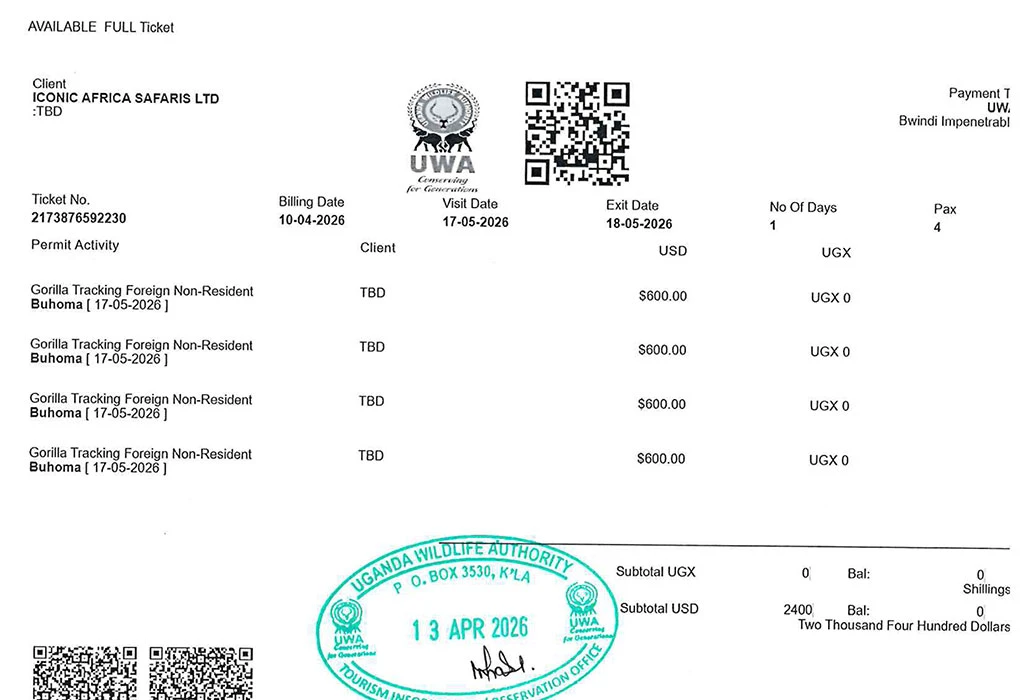
Every visitor needs a permit, and permits are limited. In Uganda and Rwanda, a fixed number are issued per gorilla family per day, which is why booking early matters so much.
Permit prices vary by country, by visitor category and, in Uganda, by season. The tables below show the standard rates for each category of traveller. Tariffs are revised periodically, so Iconic Africa Safaris confirms the exact price for your dates at the time of booking.
Uganda: standard and low-season permits
Uganda’s standard permit covers 1 hour with a habituated gorilla family in Bwindi or Mgahinga. A discounted low-season permit is available for treks in April, May and November, but only for foreign non-residents and foreign residents. Other categories pay the same price all year. Low-season permits must be paid in full when booked and cannot be rescheduled, so they suit travellers whose dates are firm.
| Visitor category | Standard permit | Low-season permit (April, May, November) |
|---|---|---|
| Foreign non-resident | $800 | $600 |
| Foreign resident | $700 | $500 |
| Rest of Africa | $500 | Not applicable (standard price) |
| East African | UGX 300,000 | Not applicable (standard price) |
Rwanda: Volcanoes National Park permits
Rwanda has a single permit for 1 hour with a habituated family in Volcanoes National Park. The price is the same all year, so any seasonal savings come from lodges and tour packages rather than the permit itself.
| Visitor category | Permit price |
|---|---|
| Foreign non-resident | $1,500 |
| Foreign resident | $500 |
| Rest of Africa | $500 |
| East African | $200 |
DR Congo: permits and current status
DR Congo is not currently bookable, so there is no live price to plan around. Virunga permits were historically in the region of $400 for foreign visitors, but that figure is only a reference point, and it does not mean the experience is available. Please treat any DR Congo itinerary as unavailable until park access is officially confirmed and travel advice supports it.
| Park | Gorilla type | Permit status |
|---|---|---|
| Virunga National Park | Mountain gorillas | Gorilla treks suspended; no current price. Historical foreign-visitor rate about $400. |
| Kahuzi-Biega National Park | Eastern lowland gorillas | Access affected by security concerns; price to be confirmed if access reopens. |
The gorilla habituation experience in Rushaga
There is one permit category that works quite differently from the standard trek. In Bwindi’s Rushaga sector, Uganda offers a gorilla habituation experience, in which visitors join the researchers and trackers who are gradually accustoming a wild gorilla family to human presence. It is a different kind of day:
- Time with the gorillas: 4 hours, instead of the standard 1 hour.
- Group size: Only 4 people per group, compared with 8 on a standard trek.
- What you do: You follow the habituation team, watch how researchers and trackers work, and have time to see the gorillas feed, rest and interact at a slower pace.
The longer time changes the experience. With 1 hour, you tend to spend a lot of it taking everything in. With 4 hours, the gorillas stop being a spectacle and start being a family you can actually observe.
The permit rates for the habituation experience in Rushaga, valid by 1 January 2027, are:
| Visitor category | Permit price |
|---|---|
| Foreign non-resident | $1,800 |
| Foreign resident | $1,600 |
| Rest of Africa | $1,000 |
| East African | UGX 750,000 |
This is a premium experience, so it suits people who want depth over convenience and are comfortable with a long day in the forest. Bear in mind that these groups are small and permits are scarce, so dates book out quickly.
What a permit includes and does not include
A permit covers your entry to the park and your time with the rangers and the gorilla family. It does not cover accommodation, transport to the park, meals, porter fees or tips for guides and porters. When comparing quotes between operators, check what is bundled and what is not, because the permit price is only part of the total trip cost.
The best time to go
Gorillas live in rainforest, so rain is always possible. That said, the year has a clear rhythm: two drier periods and two wetter ones, with the Virunga and Bwindi highlands staying cool throughout.
- Long dry season, June to September: The most reliable weather of the year. Trails are firmer, views are clearer and the walking is easier. It is also the busiest period, so permits and lodges go first.
- Short dry season, December to February: Also good for trekking, with January and February often the better months of the three. Late December is busy because of the holidays.
- Long rains, March to May: The wettest stretch. The forest is vivid green, there are fewer visitors and permits are easier to find, but paths turn muddy and treks can feel harder.
- Short rains, October to November: Showers return, usually in the afternoons, with a mix of sunny and wet days. Visitor numbers stay low.
Month-by-month guidance
| Month | Conditions | What it means for your trek |
|---|---|---|
| January | Dry, with clear mornings | One of the best months. Good trails and fewer crowds than December. |
| February | Dry, getting warmer | Very good for trekking and photography. Rains begin to build by the end of the month. |
| March | Rains begin | A mixed month. Some dry days, but mud is likely. Permits are easier to find. |
| April | Wettest month | Heavy rain, slippery trails and the quietest forest. Uganda low-season permit applies. |
| May | Wet, easing late in the month | Lush scenery and few visitors. Uganda low-season permit applies. |
| June | Dry season starts | Conditions improve quickly. A strong choice before the peak crowds arrive. |
| July | Dry and cool | Peak season. Firm trails, but book 8 to 12 months ahead. |
| August | Driest period | Peak season again, with the best chance of dry walking. |
| September | Dry, with rain returning late | Still very good. Permits are slightly easier than in July and August. |
| October | Short rains begin | Showers are common, but there are plenty of dry spells. Quiet and good value. |
| November | Wet, with afternoon rain | Fewer visitors and greener forest. Uganda low-season permit applies. |
| December | Dry season returns | Good trails but busy over the holidays. Book early. |
How to choose
- For the most comfortable walking: aim for June to September, or January and February, and book early.
- For better value: consider March, October, or Uganda’s low-season months of April, May and November, when permits cost less for foreign non-residents and residents.
- For fewer people: the wetter months are quieter, and the trade-off is mud and a greater chance of rain.
- For photography: the dry months give clearer light, though the forest canopy stays dim in any season.
The truth is that no month is universally best. A good rain jacket makes the difference between a miserable trek and a pleasant one, and weather does not decide where the gorillas are. A family can be close in the dry season and far in the wet, or the reverse. Treat the season as a way to influence comfort, not an assurance of trek length.
How difficult is gorilla trekking?
The honest answer: it depends, and the range is wide. Some treks are over in about 2 hours of fairly gentle walking. Others involve 5 to 7 hours of steep climbing, descending through thick vegetation and crossing streams.
What makes it tough is a combination of factors rather than one:
- Steep slopes and uneven, muddy ground
- Dense vegetation that slows the pace
- Altitude, which makes breathing harder than you expect
- Unpredictable trek length
You do not need to be an athlete. Plenty of people in their 60s and 70s complete treks every year, often with a porter and plenty of rests. But basic fitness helps. In the weeks before the trip, regular walking, particularly on hills and in the boots you plan to wear, will help a lot.
Four things make the day easier:
- Hire a porter. They carry your bag, but more importantly, they steady you on difficult slopes. The fee also supports local families.
- Tell your operator about any limitations before booking, not on the day. This allows them to request a suitable gorilla family.
- Walk at your own pace. The guides will wait.
- Wear broken-in boots. New ones cause blisters on long descents.
If you or someone in your group has mobility concerns, mention it early. Options vary, including assisted carry arrangements in some parks, and the right solution depends on the sector.
Rules and etiquette around the gorillas
The rules are there to protect the gorillas as much as you. Gorillas share about 98 percent of their DNA with humans, which also means they can catch our illnesses. A common cold can be serious for them.
- Follow your ranger’s instructions throughout.
- Keep the required distance, generally about 7 metres.
- Do not touch, feed or surround the gorillas.
- Avoid flash photography.
- Do not eat, drink or smoke near the animals.
- Keep your voice low and movements slow.
- Do not trek if you are unwell, even with a mild cold.
- Carry out all rubbish.
If a gorilla approaches you, the guidance is to stay calm, avoid direct eye contact and move back slowly if the ranger tells you to. If you need to cough or sneeze, turn away and cover your mouth. Rules can change at park level, and park authorities may require face masks, so your operator checks the current requirements before your trek.
What to pack
The forest is wet, cool and muddy. Dress for that, not for a safari.
- Broken-in hiking boots with good grip
- Long trousers and a long-sleeved shirt, in neutral colours
- A waterproof jacket and, ideally, waterproof trousers
- Gardening gloves, which help when grabbing thorny or wet vegetation
- A small daypack
- Drinking water and snacks or a packed lunch
- A hat, sunscreen and insect repellent
- A camera with flash turned off, and spare batteries
- A walking stick, which many lodges and parks provide
- A face mask, if required
- Small notes in local currency for porter fees and tips
Gaiters, which cover the gap between boots and trousers, keep ants and mud out. A thin base layer helps for early mornings, which can be cold at altitude.
How to book a gorilla trekking safari
Booking is simpler than people fear, but order matters.
- Choose your dates and country first. Permits are issued per date, so you need to know when you can travel before anything else.
- Secure the permit before anything non-refundable. Do not buy flights or pay for lodges until your permit is confirmed. High-season dates, particularly July to September and December to February, can sell out many months ahead.
- Pay the deposit. Permits are paid for in advance, and the terms for changes and refunds are strict. Ask about the cancellation conditions before you pay, not after.
- Arrange accommodation and transport around the permit. Once the permit is secure, lodges, transfers and any flights can be built around it.
How far ahead should you book? For peak months, 6 to 12 months is sensible, and earlier for the habituation experience because of its small group size. For the wetter months, 3 to 4 months is often enough, though earlier is always safer. Iconic Africa Safaris handles the permit application, matches it to your preferred sector and builds the rest of the trip around it, so you are not juggling separate bookings.
Bring your passport on the day. Rangers check it against the permit, and no passport means no trek, regardless of how far you have travelled.
Where to stay
The best lodge for a gorilla trip is usually the one that puts you close to your trailhead, because early starts and winding roads are tiring.
In Bwindi, lodges cluster around each sector. Buhoma has the widest range, from simple budget lodges to luxury camps, with forest walks and community visits nearby. Ruhija is quieter, with cooler nights and some of the best birding. Rushaga and Nkuringo offer a mix of mid-range and high-end options, many with dramatic valley views. Staying in the same sector as your trek often saves 1 to 2 hours of driving on the day.
In Mgahinga, accommodation is more limited, with a handful of lodges and camps in and near Kisoro.
In Rwanda, most visitors stay around Musanze or in the lodges bordering the park, ranging from boutique eco-lodges to comfortable mid-range hotels. Because Volcanoes is about 2 to 2.5 hours from Kigali, some people base themselves in the capital and drive up, though sleeping near the park gives you a more relaxed morning.
When choosing, think about three things: your budget, how much driving you are willing to do on trek morning, and what else you want to do nearby. A lodge with a hot shower and a good fire after a muddy day in the forest is worth paying for, and it matters more than most extras.
Sample gorilla trekking itineraries
These are starting points rather than fixed products. Each can be adjusted for sector, budget and pace.
3 Days: Rwanda express
- Day 1: Arrive in Kigali, transfer to Musanze (about 2.5 hours) and settle into your lodge.
- Day 2: Gorilla trek in Volcanoes National Park, 1 hour with the gorillas, then rest.
- Day 3: Transfer back to Kigali for your onward flight.
This suits travellers with limited time who want the encounter without extended road travel.
4 Days: Uganda by air
- Day 1: Fly from Entebbe to a Bwindi airstrip (about 1.5 hours) and transfer to your lodge.
- Day 2: Gorilla trek.
- Day 3: Optional community or forest walk, or a second trek if you have booked a second permit.
- Day 4: Fly back to Entebbe.
A good choice if you want Uganda’s gorillas without a 2-day road journey.
5 Days: Gorillas and golden monkeys in Rwanda
- Days 1 to 2: Arrive in Kigali and transfer to Musanze.
- Day 3: Gorilla trek.
- Day 4: Golden monkey trek or a visit to the Dian Fossey research site.
- Day 5: Return to Kigali.
This adds a second primate experience without adding much walking.
7 Days: Uganda gorillas, chimps and savannah
- Day 1: Arrive in Entebbe, overnight near the airport.
- Day 2: Drive to Kibale Forest.
- Day 3: Chimpanzee tracking, then continue towards Queen Elizabeth National Park.
- Day 4: Game drive and Kazinga Channel boat cruise.
- Day 5: Drive to Bwindi (about 3 to 4 hours through the Ishasha sector, where tree-climbing lions are sometimes seen).
- Day 6: Gorilla trek.
- Day 7: Fly or drive back to Entebbe.
This is the classic Uganda route and gives a good balance of primates and savannah wildlife.
10 Days and longer: Uganda and Rwanda combined
A longer itinerary can link Kigali, Volcanoes National Park and Bwindi, adding Nyungwe or Akagera in Rwanda and Kibale or Queen Elizabeth in Uganda. Border crossings and separate permits in each country need careful planning, so these trips are best built around confirmed permit dates. Many people find it worth the effort to experience both countries’ gorilla forests, which feel quite different from each other.
Responsible tourism and conservation
Gorilla tourism is one of the clearer examples of tourism helping to protect a species. Mountain gorillas were once critically endangered, with only a few hundred left. Numbers have since risen to just over 1,000, helped by protection, anti-poaching work, veterinary care and income from visitors.
Permit revenue pays for rangers, trackers and park management, and a share goes to communities living around the parks, supporting schools, clinics and local projects. That is why permits are priced the way they are: the limit on visitors protects the gorillas, and the income gives local people a reason to protect the forest.
You can add to this in simple ways. Hire a local porter, buy crafts from community groups, stay in locally owned lodges, follow the rules strictly, and avoid trekking if you are unwell. A sick visitor is a real risk to a gorilla family.
Frequently asked questions About Gorilla Trekking Experience
What does Iconic Africa Safaris need from me to start planning?
To start an outline, Iconic Africa Safaris needs your preferred dates or travel months, the number of travellers, their ages and nationalities, and any fitness or health concerns. Passport details are needed later for the permit. It also helps to know your budget range, your interest in chimpanzees or safari, and whether you are open to Uganda, Rwanda or both.
Does Iconic Africa Safaris handle the gorilla permit booking for me?
Yes. Iconic Africa Safaris applies for the permit on your behalf using your passport details, matches it to your preferred sector and dates, and confirms it before you commit to flights or other non-refundable costs. It then builds the lodges, transport and any extensions around that permit, so you deal with one planner instead of several separate bookings.
How does Iconic Africa Safaris choose the right Bwindi sector for me?
We start with your dates, fitness, budget and what else you want to see. Someone adding Queen Elizabeth National Park may suit Buhoma, a birder might prefer Ruhija, and a fit traveller wanting views could enjoy Nkuringo. Late bookers or those interested in the 4-hour habituation experience often point towards Rushaga. We then check permit availability before confirming.
Can I trek in both Uganda and Rwanda on the same trip?
Yes, and many travellers do. The two parks sit close together near the border, so a trip can end in one country and start in the other, usually through the Cyanika or Katuna crossings. You need separate permits for each country, and your visa should cover both. Plan at least 1 buffer day for the border and road transfers.
Is it worth trekking on two consecutive days?
For many people, yes. Each trek usually meets a different family, with different personalities and terrain, so the second day feels distinct rather than repeated. It needs a second permit and a body that has recovered from the first climb. Book both at the same time, because consecutive dates in one sector can be hard to secure in peak months.
Can I change my permit date after I have booked?
Sometimes, but do not count on it. Rescheduling depends on the park authority’s tariff conditions, availability on the new date and how close you are to the trek. Uganda’s low-season permits cannot be moved at all. Because changes are limited, confirm your flights, visas and health plans before paying, and ask about refund and transfer terms in writing.
Is gorilla trekking suitable for solo travellers or large groups?
It works well for both. Solo travellers join a group of up to 8 visitors on the trek itself, so you will not be alone in the forest, and sharing a vehicle can reduce costs. Larger parties may be split across several gorilla families, because each family takes only 8 visitors a day. Mention group size early so permits can be reserved together.
What can children under 15 do on a gorilla trip?
Children under 15 cannot trek gorillas, but family trips still work well. Younger children can enjoy forest walks, community visits, boat cruises, game drives and cultural experiences while older family members trek. Some lodges have family rooms, so ask before choosing. Plan the trek day carefully, since it can run from early morning until mid-afternoon or later.
Do I need a visa to trek gorillas in Uganda or Rwanda?
Most visitors do, but the rules depend on your nationality. Uganda issues visas through an online application that is best completed before you travel, and Rwanda offers visas on arrival or online to many nationalities. Requirements change, so confirm them with the official immigration pages before you book flights. Your passport should also have several months of validity and enough blank pages.
Which vaccinations and health preparations should I arrange?
Uganda no longer requires a yellow fever certificate for entry, but rules for connecting countries can differ, so check them before you travel. Malaria is present in the region, and most travellers take preventive medication. Speak to a travel clinic 6 to 8 weeks before departure, and make sure routine vaccines are up to date. Tell your doctor you will be walking at altitude, especially if you have a heart or breathing condition.
Do I need travel insurance?
Yes, and it is one of the most useful things you can buy. Choose a policy that covers medical treatment and emergency evacuation, plus trip cancellation, because gorilla permits are usually non-refundable. Check that it covers hiking at altitude and activities in remote areas, and read the exclusions on pre-existing conditions before you pay for your flights.
What does a gorilla trip cost beyond the permit?
The permit is usually the largest single item, but not the only one. Budget for accommodation, transfers or domestic flights, meals, a porter, tips for rangers and guides, visas, insurance and any extras such as chimpanzee tracking or game drives. A tailored quote that lists everything separately makes it much easier to compare options and avoid surprises later.
What money should I bring?
Carry US dollars in recent, undamaged notes, plus some local currency for porters, tips, crafts and small purchases. Cards work in larger hotels and lodges, but cash machines are scarce near the parks, and signal can be unreliable for card payments. Withdraw or exchange money in Kampala, Entebbe, Kigali or Kisoro before heading to the forest.
Will I have phone signal and electricity near the parks?
Expect patchy coverage. Signal is often weak or absent in the forest and at some lodges, though larger centres have better service. Most lodges have electricity from solar systems or generators, sometimes limited to certain hours. Bring a power bank, spare camera batteries and a universal adapter, and tell family that you may be out of contact for a day or two.
Can Iconic Africa Safaris arrange a DR Congo gorilla trek?
Not at the moment. With gorilla treks in Virunga suspended and official travel advice cautioning against the area, Iconic Africa Safaris does not sell DR Congo itineraries. The team monitors park and security updates, and will say so clearly if conditions change. Meanwhile, mountain gorilla trekking in Uganda or Rwanda offers a dependable alternative where permits can be secured.