14-Day Uganda Gorillas & Rwenzori Mountains Hike
- Pickup : Entebbe Airport
- Drop-off : Entebbe / Kigali Airport
Tour Overview
This 14-Day Uganda Gorillas & Rwenzori Mountains adventure combines challenging mountain trekking, unforgettable wildlife encounters, and one of Africa’s most remarkable primate experiences. Journey into the legendary Rwenzori Mountains, the “Mountains of the Moon,” for an exhilarating high-altitude hike through breathtaking landscapes, before heading to Bwindi Impenetrable Forest for a close encounter with endangered mountain gorillas. With a wildlife experience in Queen Elizabeth National Park included, this itinerary delivers an exceptional blend of adventure, nature, scenery, and wildlife.
- Transportation (Car, Fuel, Driver Guide)
- Meals & Accommodation as mentioned
- Gorilla Trekking Permit
- Rwenzori Hiking Equipments
- Rwenzori Hiking Porters
- Game Drive and Boat Cruise
- Bottled Drinking Water
- Government Taxes
Cost Includes
- International Flights
- Accommodation Before and After your Trip
- Optional Batwa Cultural Experience
- Sourvenirs
- Tips & Bwindi Porter Hiring
Cost Excludes
Travel Plan
Day 1: Pickup from Entebbe to Kasese
Your Iconic Africa Safaris driver guide meets you at Entebbe Airport or your hotel and loads your luggage into a comfortable 4×4 Land Cruiser for the drive to Kasese, the gateway town to the Rwenzori Mountains. It is a journey of roughly six hours covering 377 kilometres, taking you through the busy streets of Kampala before opening out into rolling hills, banana plantations and the lush highlands of western Uganda. Along the way, you cross the Equator at Kayabwe, where large white circles mark the zero degree latitude line, a good spot to stretch your legs, browse the craft shops and grab a coffee. As Kasese comes into view, the dramatic Rwenzori peaks begin to rise on the horizon, a fitting first glimpse of the mountains at the heart of this Uganda Gorillas & Rwenzori Mountains adventure. Spend the evening resting, hydrating and organising your trekking gear.
- Meals: Lunch & Dinner
- Stay: Sandton Hotel Kasese
Day 2: Transfer to Kilembe and Hike to Sine Camp (2,596m), Trek Day 1
After a short transfer to Trekkers Hostel in Kilembe, your trek begins on the valley floor beneath tall Afro Montane forest trees. The climb is steady and the canopy above is full of birdsong. Blue monkeys dart between the branches while troops of fifteen to twenty black and white Colobus monkeys swing overhead. Occasionally, the rare L’Hoest monkey, a protected cultural symbol to the Bukonzo people, appears along the trail, and wild chimpanzees sometimes call out from deeper in the forest. Moss and lichen hang from towering trees, and the path is lined with bamboo thickets, ferns, fungi and wildflowers. Just 200 metres from Sine Hut, Enock’s Falls tumbles beautifully into view, a lovely spot to pause and take photographs.
Height gain: 1,146m | Distance: 9.5km | Time: 5 to 7 hours
- Meals: Breakfast, Lunch & Dinner
- Stay: Sine Camp
Day 3: Hike to Mutinda Camp (3,588m), Trek Day 2
This day’s trail winds through the Bamboo and Heather Rapanea Zone, meandering over small ridges, dropping into valleys and crossing clear mountain streams, with moss covered waterfalls appearing beside the path. Above 3,000 metres the vegetation changes dramatically. Giant Heather trees, their trunks draped in moss and long Usnea lichen hanging from their branches, create an almost otherworldly atmosphere. Mutinda Camp sits beside a small river and waterfall, a peaceful spot for the night. Strong walkers can use the afternoon to summit Mutinda Lookout at 3,975 metres for sweeping views across the surrounding peaks.
Height gain: 992m | Distance: 6.1km | Time: 5 to 7 hours
- Meals: Breakfast, Lunch & Dinner
- Stay: Mutinda Camp
Day 4: Hike to Bugata Camp (4,100m), Trek Day 3
The trail crosses boggy ground today, especially during the wet season, and boardwalks help you cross the worst of it. Moving through the Mutinda Valley, you walk among tussock grass, everlasting flowers and towering giant lobelias before a steep climb leads you into the Namusangi Valley at 3,840 metres, where sheer waterfalls mark the valley’s dramatic end. Continuing upward, the trail reaches Bugata Camp, perched high above Bugata Lake with views across Lake Kopello to the snow capped Weismann’s Peak, while further below Lake Africa and Lake Kanganyika shimmer in the distance. Giant groundsel, St John’s Wort and everlasting Helichrysum flowers cover the surrounding slopes, and keen eyes may spot the Red Forest Duiker, a subspecies found only here in the Rwenzoris.
Height gain: 474m | Distance: 8.6km | Time: 4 to 6 hours
- Meals: Breakfast, Lunch & Dinner
- Stay: Bugata Camp
Day 5: Hike to Hunwick's Camp (3,974m) via Bamwanjara Pass (4,550m), Trek Day 4
Leaving Bugata Camp, the trail climbs a ridge, descends slightly, then pushes upward again to Bamwanjara Pass at 4,450 metres, where an emergency shelter stands ready should the weather turn. On clear days, three of the main peaks come into full view from up here. The path then drops into a valley, skirting bogs and dense vegetation filled with giant groundsel, moss and lobelia. This stretch also offers the best birdwatching on the entire route, with Malachite Sunbirds feeding actively on the lobelia flowers near a known breeding site. After several steep sections and a final ridge climb, Hunwick’s Camp comes into view, perched above a deep valley with excellent sightlines to Mt Stanley, Mt Baker and Weismann’s Peak.
Height gain: climb 457m, sleep 87m lower | Distance: 8.3km | Time: 7 to 9 hours
- Meals: Breakfast, Lunch & Dinner
- Stay: Hunwick’s Camp
Day 6: Summit Mt Baker (4,842m) and Sleep at Margherita Camp (4,485m), Trek Day 5
You will set off by 6:30am for the steep, rocky climb to Mt Baker’s summit at 4,842 metres. The ascent takes three to four hours and the descent around three hours. Some sections demand a good head for heights, particularly a short crevice descent onto the glacier, though the mountain remains non technical outside the snow seasons of April to May and September to October, and safety ropes are used on all steep sections throughout. On a clear day, the summit rewards you with views of Margherita, Alexandria, Stanley’s Plateau and the surrounding glaciers spread out below. From there, you descend across the glacier, cross the valley floor past the deep blue waters of Lake Kitandara, and climb through Scott Elliot Pass to reach Margherita Camp for the night.
Height gain: climb 868m, sleep 357m lower | Distance: 4.3km | Time: 4 to 6 hrs up, 2 to 3 hrs down
- Meals: Breakfast, Lunch & Dinner
- Stay: Margherita Camp
Day 7: Summit Margherita Peak (5,109m), Trek Day 6
Wake at 2:00am, eat breakfast and depart by 2:30am, an early start that is essential given how quickly mountain weather can change. Afternoon snowstorms, sometimes arriving within ten to fifteen minutes, sweep up from the Congo rainforests below, so a strict 10:00am turnaround applies regardless of summit progress. Margherita Glacier has changed with global warming too, its outer edges now steeper and melting underneath has created ice caves, so guides will direct the safest crossing points and their advice should be followed closely. Less experienced climbers can instead traverse Stanley Glacier to a rocky outcrop on the southern edge of Alexandra Peak, still enjoying spectacular views over Congo. After summiting, or turning around, the descent continues all the way down to Hunwick’s Camp at 3,874 metres, a long and satisfying day on this Uganda Gorillas & Rwenzori Mountains adventure.
Height gain: climb 624m, descend 1,134m | Distance: 3.8km up, 8.9km down | Time: 4 to 6 hrs to top, 6 to 9 hrs total
- Meals: Breakfast, Lunch & Dinner
- Stay: Hunwick’s Camp
Day 8: Summit Vittorio Emanuele (4,890m) on Mt Speke and Return to Hunwick's Camp, Trek Day 7
This day’s climb targets the summit of Mt Speke, known as Vittorio Emanuele, at 4,890 metres. After summiting, you cross the Bujuku Valley, climb back over Scott Elliot Pass and descend once more to Hunwick’s Camp for another night’s rest.
- Meals: Breakfast, Lunch & Dinner
- Stay: Hunwick’s Camp
Day 9: Optional Summit of Weismann's Peak (4,620m) and Descend to Kiharo Camp (3,430m), Trek Day 8
From Hunwick’s Camp, the trail climbs toward McConnell’s Prong, offering the finest panoramic views of all three main peaks and Scott Elliot’s Pass. Reaching Oliver’s Pass at 4,505 metres, the path then cuts below Weismann’s Peak toward the Nyamwamba River confluence. Those with energy to spare can push on for the Weismann’s Peak summit before descending to Kiharo Camp, tucked deep in a narrow valley surrounded by high cliffs and thick vegetation.
- Meals: Breakfast, Lunch & Dinner
- Stay: Kiharo Camp
Day 10: Descend to Basecamp (1,450m) and Transfer to Queen Elizabeth National Park, Trek Day 9
This day’s descent covers 16 kilometres from Kiharo Camp to the park gate, with a further 2.2 kilometres to Trekkers Hostel, a total of five to eight hours of walking, so it is worth starting early. The Nyamwamba Valley route delivers some of the trek’s most beautiful scenery, with cascading waterfalls, deep forest, moss covered rocks and wide valley views along the way. Duikers, primates, hyrax and birds regularly appear on the trail. At the hostel, you will collect your trekking certificate during a short debrief, a well earned reward after a demanding week in the mountains. Afterwards, transfer down to Queen Elizabeth National Park.
- Meals: Breakfast, Lunch & Dinner
- Stay: Pumba Safari Lodge
Day 11: Morning Game Drive and Afternoon Boat Cruise on Kazinga Channel
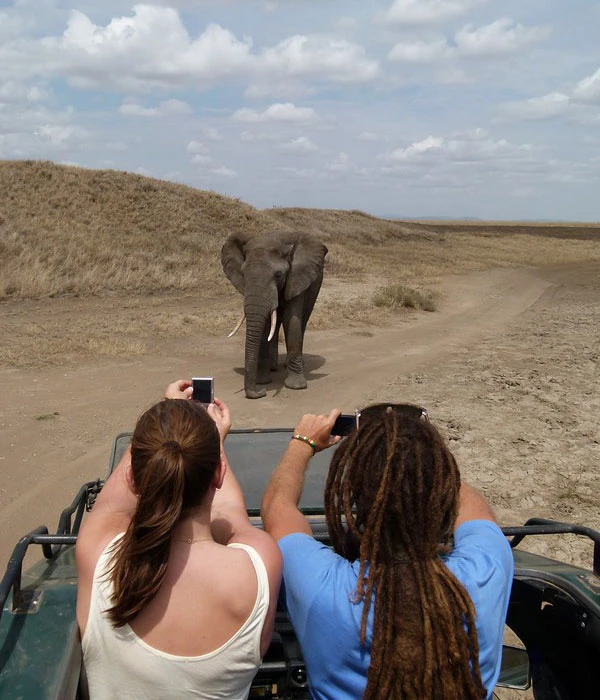
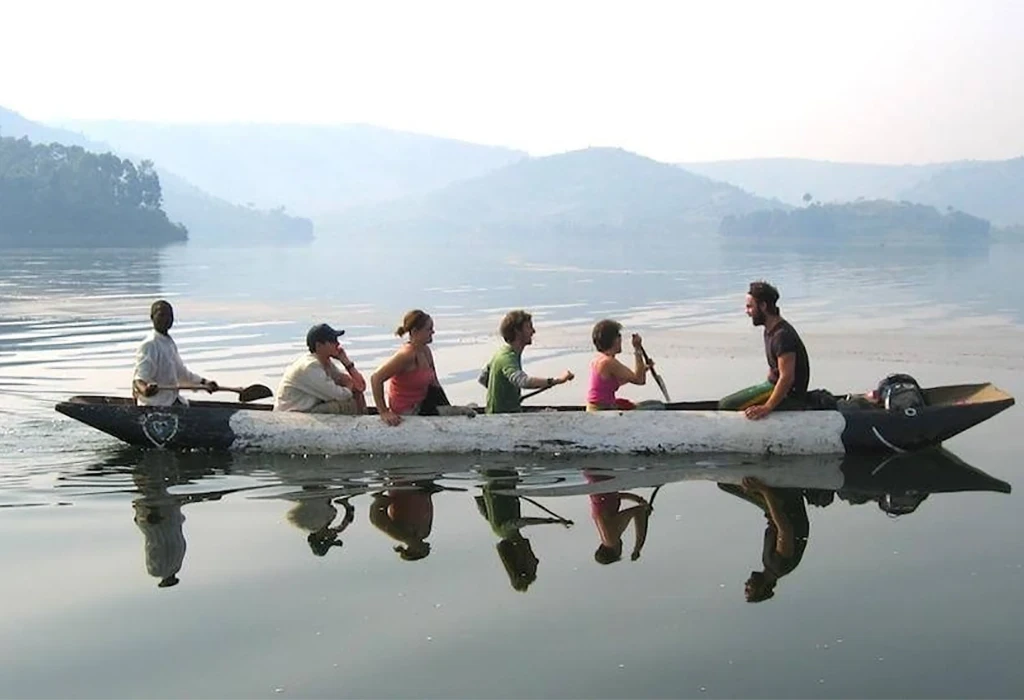
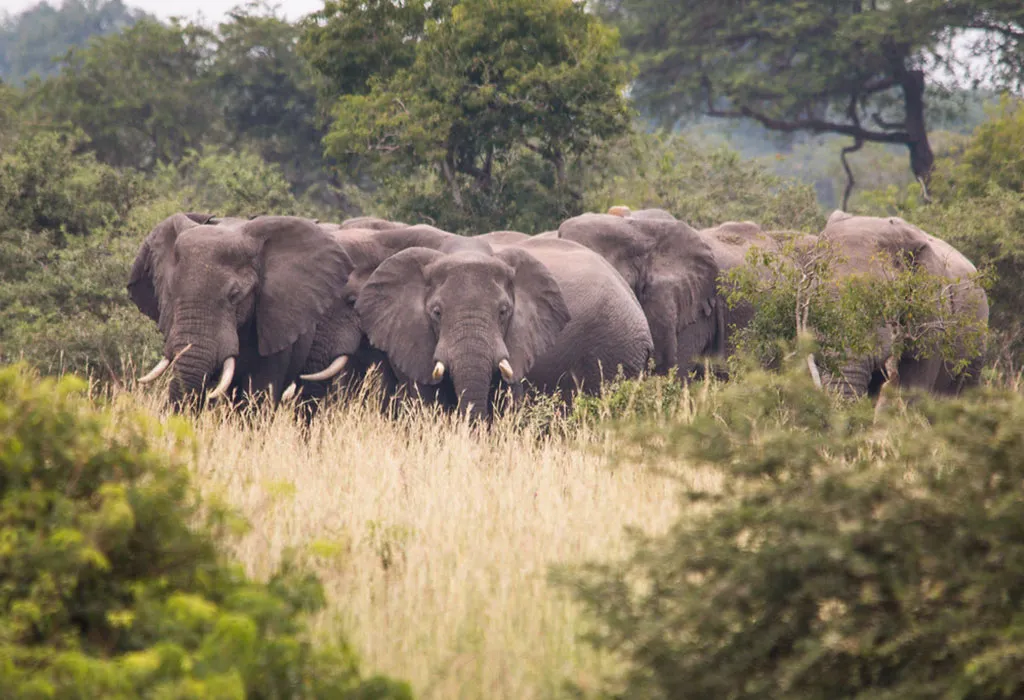
Drive across the Kasenyi Plains in search of elephants, buffaloes, lions and the occasional leopard, alongside Uganda kobs, warthogs, waterbucks, topis and impalas roaming freely across the grassland. In the late afternoon, board a boat for a cruise along the Kazinga Channel, one of Africa’s finest wildlife spectacles. Elephants and buffaloes wade in to drink, hippos bob at the surface, crocodiles bask along the banks, and pelicans and dozens of other bird species crowd the shoreline. Bring your camera for this one.
- Meals: Breakfast, Lunch & Dinner
- Stay: Pumba Safari Lodge
Day 12: Ishasha Game Drive and Drive to Bwindi
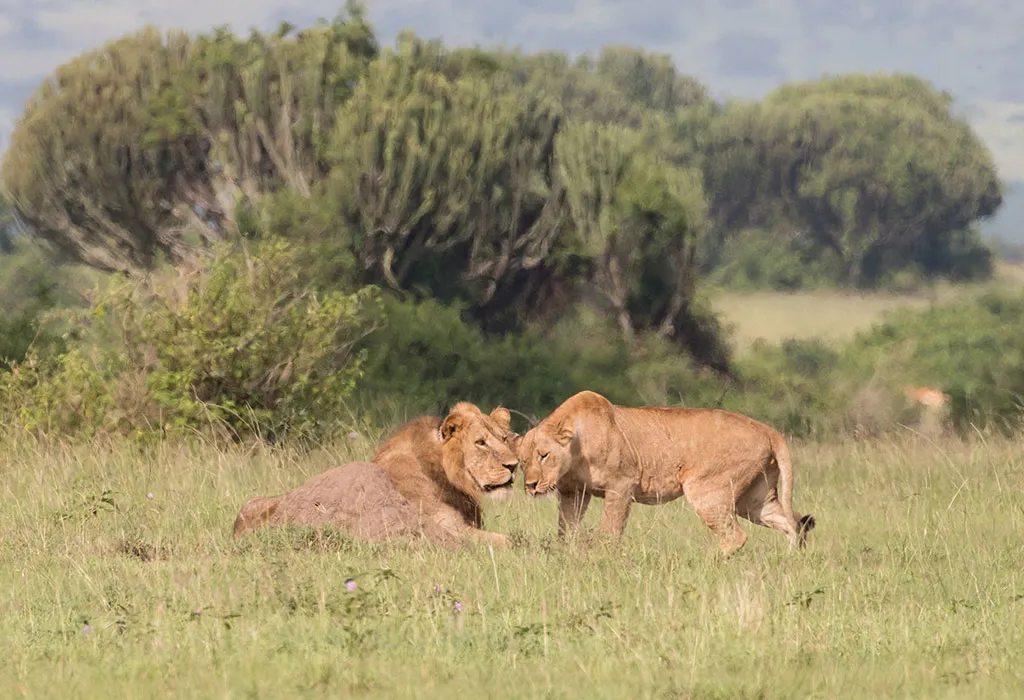
An early 6:00am game drive through Ishasha’s southern sector gives the best chance of spotting the park’s famous tree climbing lions, resting up in the fig trees while keeping watch over the kobs and topis grazing below. After a couple of hours, drive directly to Bwindi Impenetrable Forest, arriving in the mid afternoon with time to rest before the following day’s gorilla trek, the highlight many travellers come on this Uganda Gorillas & Rwenzori Mountains itinerary to experience.
- Meals: Breakfast, Lunch & Dinner
- Stay: Gorilla Valley Lodge
Day 13: Gorilla Trekking
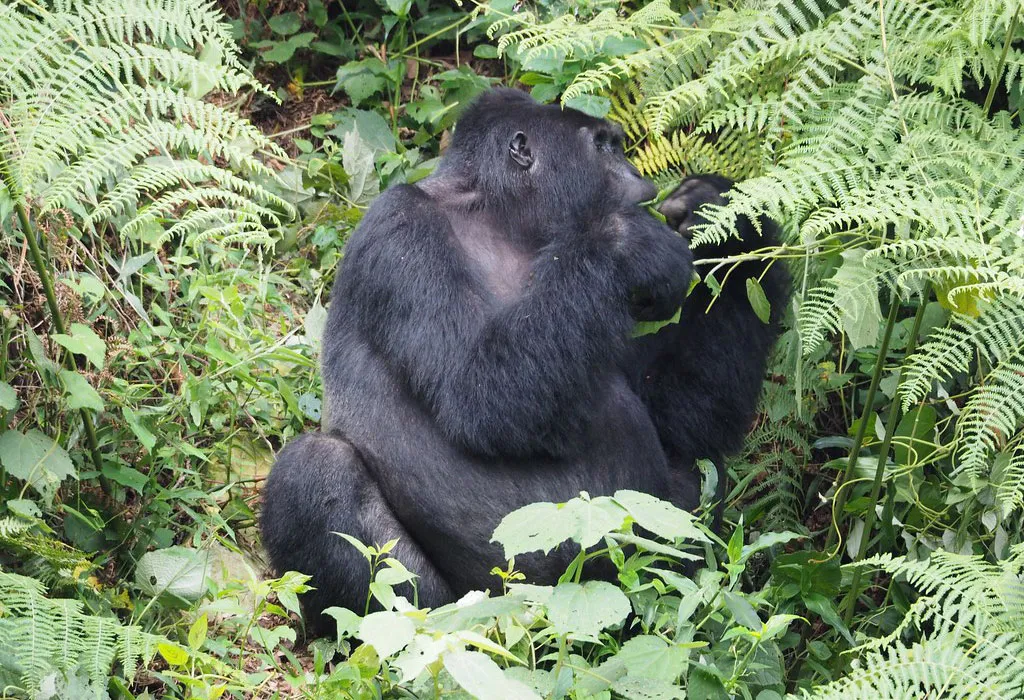
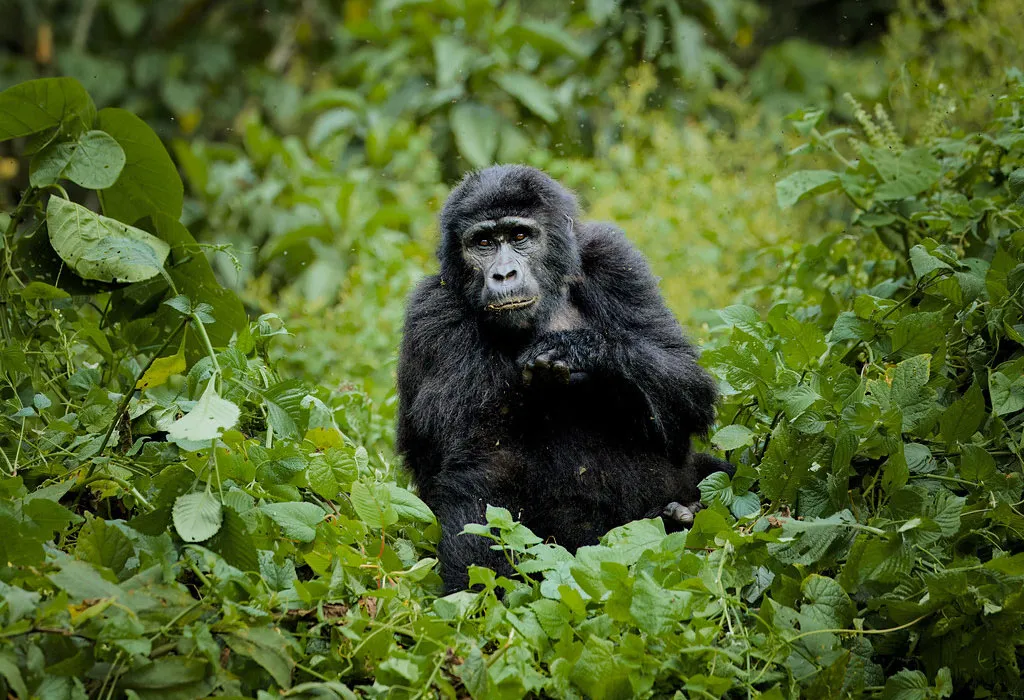
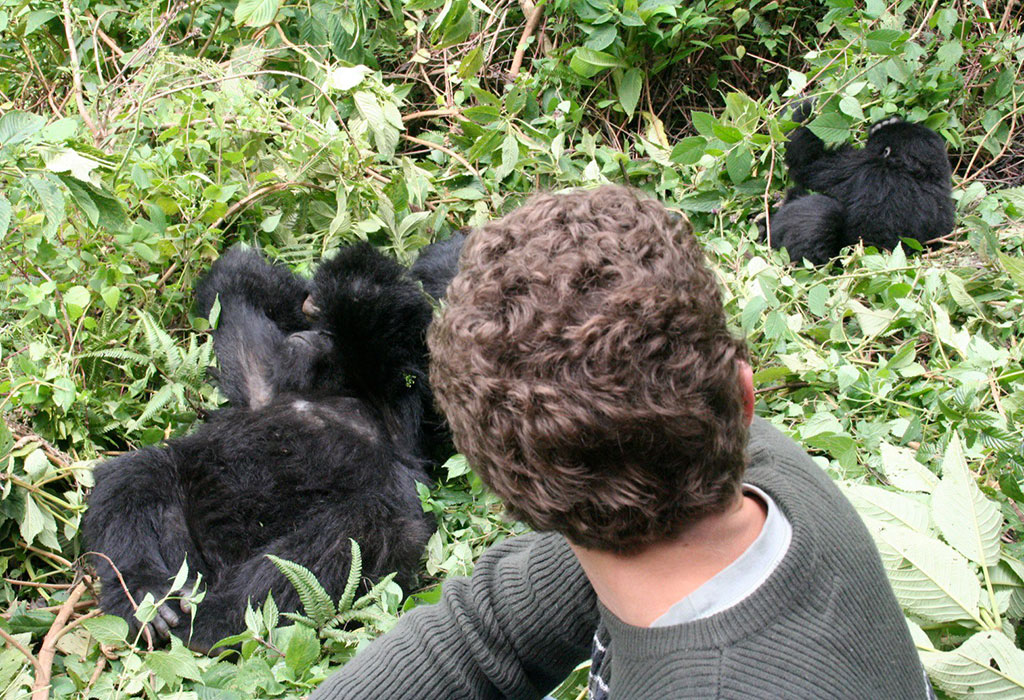
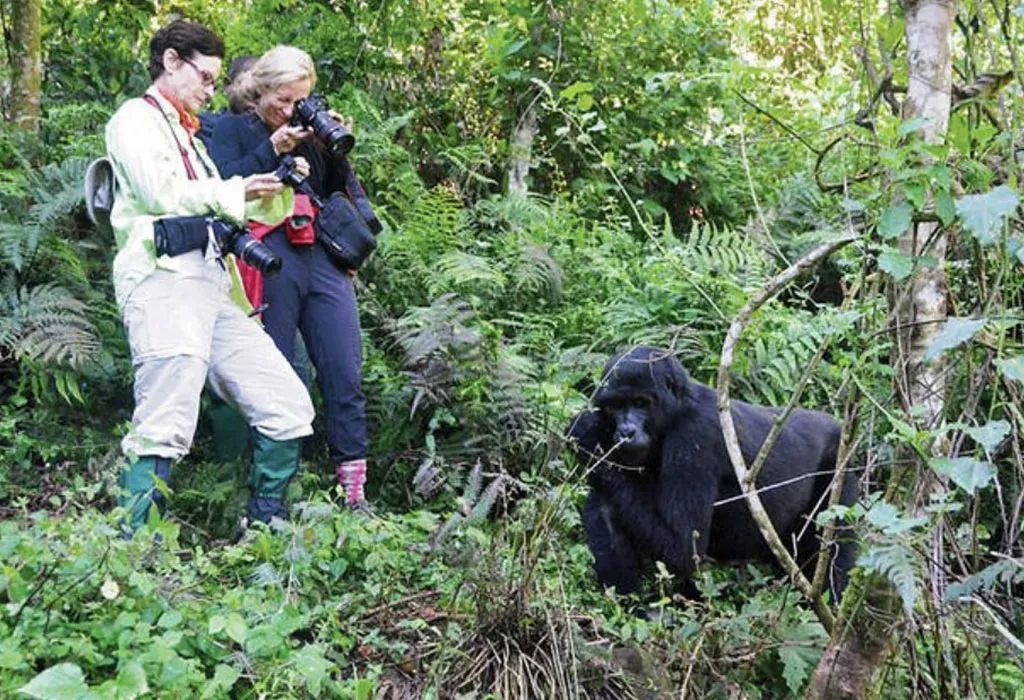
Wake between 5:30 and 6:00am, eat a solid breakfast, and head to park headquarters for the 7:30am briefing. Rangers outline the rules, staying 10 metres from the gorillas, keeping voices low, avoiding flash photography and never touching them. Groups of eight then enter the forest by 8:00am, guided by armed rangers who follow live radio updates from trackers already out ahead. The hike itself can range from thirty minutes to six hours depending on where the gorillas happen to be that day. Finding the family brings an immediate hush over the group. For exactly one hour you watch them eat, groom, play and care for their young, with silverbacks beating their chests and infants tumbling curiously close. Afterwards, collect your trekking certificate at headquarters. Spend the rest of the afternoon resting, browsing local crafts, or joining the optional Batwa Cultural Experience, a fitting and moving close to the gorilla chapter of this Uganda Gorillas & Rwenzori Mountains journey.
- Meals: Breakfast, Lunch & Dinner
- Stay: Gorilla Valley Lodge
Day 14: Drive to Entebbe or Kigali
You get to choose your route home on the final day. Driving to Entebbe takes nine to ten hours, with an Equator stop at Kayabwe for photos along the way. Alternatively, Kigali sits just four to five hours away, and on arrival you can tour the Kigali Genocide Memorial to honour the many lives lost in the 1994 genocide and reflect on Rwanda’s remarkable journey toward healing, explore the Inema or Niyo Art Centres to discover vibrant paintings and sculptures by talented Rwandan artists, or browse the bustling Kimironko Market for colourful fabrics, handwoven baskets, fresh fruit and other authentic souvenirs before heading to the airport.
- Meals: Breakfast & Lunch
- Stay: None, available on request
Answered FAQs
How much does this safari cost, and can it be customized?
How physically demanding is the trekking on this itinerary?
This Uganda Gorillas & Rwenzori Mountains itinerary is one of the most physically demanding trips on offer in East Africa. The Rwenzori section involves multiple consecutive days of high altitude hiking, often six to nine hours a day, over rough, muddy and sometimes boggy terrain, with two optional summit days above 4,800 metres. A good level of fitness, prior hiking experience and some acclimatisation are strongly recommended. The gorilla trekking portion in Bwindi is comparatively gentler, though trails can still be steep and slippery, and the walk to find a gorilla family can last anywhere from thirty minutes to six hours.
Are gorilla permits included in the price?
Yes, gorilla permits are included in the final quoted price.
When is the best time of year to do this Uganda Gorillas & Rwenzori Mountains safari?
Uganda can technically be visited year round, but the two dry seasons, roughly June to September and December to February, are the most comfortable for trekking, since trails are less muddy and slippery underfoot. That said, this Uganda Gorillas & Rwenzori Mountains itinerary still works well in the wetter months if you don’t mind occasional rain showers and a bit more mud, and the months of April, May and November come with discounted gorilla permits, which can make them a good time to travel on a budget.
What should I pack for gorilla trekking and the Rwenzori Mountains?
For the Rwenzori trek, pack sturdy waterproof hiking boots, gaiters, thermal layers, a warm fleece or down jacket, a good rain jacket, gloves and a warm hat for the higher camps and summit attempts, along with trekking poles, a headlamp and a comfortable daypack. Technical summit days require basic mountaineering gear such as crampons, an ice axe and a harness, which your operator will usually arrange or advise on. For gorilla trekking in Bwindi, pack long sleeved shirts and trousers in neutral colours, sturdy waterproof boots, gardening style gloves for gripping vegetation, a light rain jacket, and a good camera or binoculars. Insect repellent, sunscreen, a personal first aid kit and plenty of water are essential for both parts of the trip.
Which travellers can book this Uganda Gorillas & Rwenzori Mountains adventure?
Is it safe to trek with gorillas at close range?
Request A free Qoute